
If it was not for one minor quirk – the sort that only an especially niche clairvoyant could have seen at the time – it would be hard to imagine a more humdrum game than PSV Eindhoven’s meeting with Sparta Rotterdam, early in December 2017. PSV were on the way to the Dutch title. Sparta were en route to relegation. The former won 1-0. Everyone involved instantly forgot it had even happened.
As tends to be the case with the Dutch top flight, there were several teenagers across the two squads, the latest crops reared in the two sides’ academies. In hindsight, it was quite a good batch: six of the players on the pitch that day are present at the 2026 World Cup. Another two were in PSV’s squad, but did not make it off the bench. Here is the quirk: not one of them is playing for the Netherlands.
Instead, five – Jurgen Locadia, Joshua Brenet, Eloy Room, Armando Obispo and Sherel Floranus – will be hoping to feature when the smallest country ever to qualify for a World Cup, Curaçao, meet Germany in Houston. Deroy Duarte, having started his career at Sparta, should play in Cape Verde’s bow at the tournament when they face Spain on Monday. Derrick Luckassen is part of a Ghana squad that lies in England’s path later this month, while fellow defender Santiago Arias will hope to play for Colombia against Uzbekistan on matchday one.
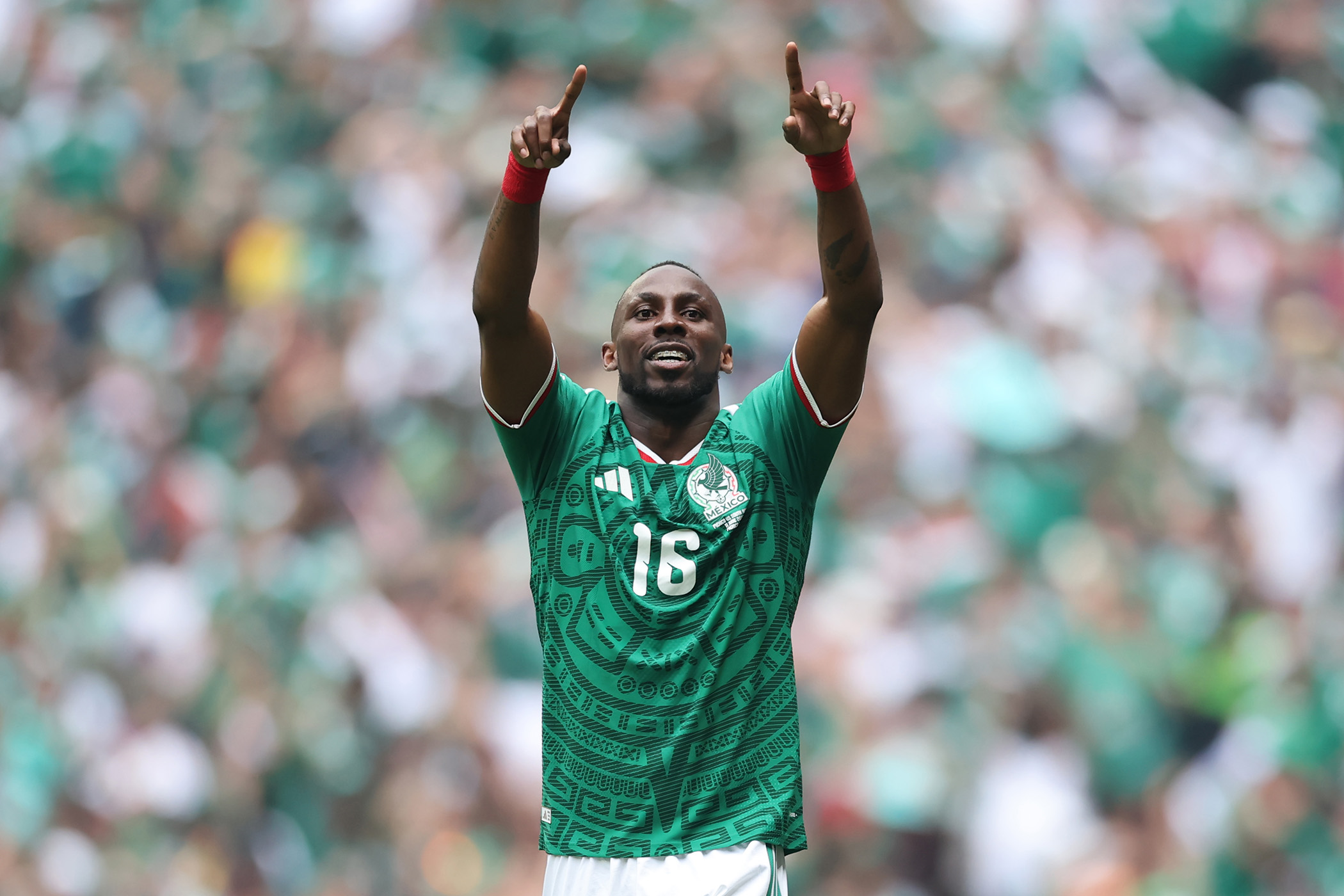
It has become clear, over the opening few days of this tournament, that this will be a diaspora World Cup. On the pitch, Julian Quiñones, scorer of its first goal, was born in Colombia but plays for Mexico. Jovo Lukić, Bosnia’s goalscorer against Canada, was born in what is now Serbia. Folarin Balogun, scorer of two in the United States’s win against Paraguay, was also eligible to represent both England and Nigeria.
But the principle applies to it, too. The flood of European tourists eager to pay vastly inflated hotel prices and not complain at the oxymoron of a culture of compulsory tipping that the host cities had anticipated has not quite materialised. Instead, the World Cup has given the patchwork of different backgrounds and ancestries that comprise the United States and Canada, in particular, a chance to perform their identities.
Almost every country at the tournament, it seems, has a city somewhere in North America to call its own. There is a district of Los Angeles, centered on Westwood Boulevard, that is known as Tehrangeles; this is, by all accounts, the largest Iranian city on the planet outside Tehran. Many of the Bosnian fans on the streets of Toronto on Friday would have come from St. Louis, Missouri, home to the biggest Bosnian community outside Bosnia.
On some level, there is something of an irony here. The basic premise of the World Cup rests on the harsh lines of borders and territories and nation states. The players are here to represent the constructs that we call countries. It is the imagined community of millions distilled into 11 named individuals, war minus the shooting and all that.
And yet almost all of the squads, and a substantial proportion of the stands, are a very clear indication that these distinctions are often so blurred that they might as well be meaningless. There are 1,248 players competing in this tournament. Some 289 of them – not far off a quarter – are representing a place other than the land of their birth.
A few of those examples have their roots in what we might diplomatically call professional considerations. Quiñones elected to change his nationality and obtained Mexican citizenship after being consistently overlooked by his homeland. Cristian Volpato, the Australia forward, grew up in Sydney but had played for Italy’s youth teams before switching back in May.
But in the vast majority of cases, they are proof of the complexity of self-definition, of the difficulty of asking players – people – to decide that they are one thing, not another, when in reality they may well be both.
Newsletters
Choose the newsletters you want to receive
View more
For information about how The Observer protects your data, read our Privacy Policy
Curaçao are, in many ways, the most extreme example of this. All but one of the players in their squad were born in the Netherlands. Those two things are not unrelated: the country, an autonomous constituent of the broader Kingdom of the Netherlands, has spent years deliberately tapping its diaspora population for talent.
It has been supported in that endeavour by Concacaf, the regional federation. All Curaçaoans have Dutch citizenship. They are by definition both. The only criterion those who grew up away from the island have to meet in order to represent the country is that they have a parent or a grandparent who was actually born there.
But they are far from the only country to have cast their net as wide as possible to improve their chances of being here. 16 members of Haiti’s squad were identified as second-generation emigrants; still more were born in the country and fled as children. The squad communicates in French, English and Creole.
Gabriel Zakuani, the former Leyton Orient defender, has spent years lobbying players of Congolese descent in both England and France to play for the country of their parents’ birth. The international career of Roberto Lopes, the Cape Verde defender with the thick Irish accent, started with a LinkedIn message. As is traditional, he initially assumed it was a joke. Nine months later, when the country’s football federation tried again, he realised they were serious. He is one of 13 recruits.
Nor is it the exclusive preserve of relative minnows, something approaching a shortcut to success. Only nine teams here have squads made up entirely of players born within their borders. More than a quarter of the field boasts at least one player who grew up in France. The Dutch have supplied squad members to nine of their potential opponents. Both have representatives playing for Morocco: the 2022 semi-finalists have included 18 players who were born elsewhere in their squad.
And it does not, crucially, only involve players taking the path of least resistance, deciding that their identity just happens to be whatever gets them to the World Cup the fastest. Brian Gutiérrez was born in Berwyn, Illinois; Obed Vargas grew up in Anchorage, Alaska. They both played for multiple United States youth teams. Both were on track to be part of Mauricio Pochettino’s squad here.
But both decided – not without controversy – to switch their international allegiances to Mexico. They did not do so because they thought that would be easier. They certainly did not do so for the commercial benefits or because of the lack of pressure. They did so because that is what they felt, and because that is much more important to them, and to plenty of others, than lines on a map.
Photograph by Hector Vivas/FIFA via Getty Images