The Liverpool manager Bill Shankly famously remarked that football was not a matter of life and death but “much, much more important than that”. In France, football is indeed much, much more than a game. It is also a melee of politics, society, culture and race wrapped up in so-called “republican values”, all of which are coming to a head with the World Cup under way one year from a presidential election.
The far-right anti-immigration National Rally is high in the polls; that a majority of France’s 2026 squad, co-favourites with Spain to win the competition, has migrant roots has not gone unnoticed among those who question its “Frenchness”. For the last 30 years, far-right leaders have sniped from the sidelines about who sang La Marseillaise, who didn’t and whether they were really loyal to France.
Stéphane Beaud, professor of sociology at the elite Sciences Po university in Lille, says football is a conduit for “banal nationalism” but immigration over the last century has transformed Les Bleus into arguably the most successful national team of modern times. And that in a country where football has shallow historic roots.
“The success of football in France is directly linked to the recruitment of players from various waves of immigration, either first or second generation, who mostly come from poorer backgrounds,” Beaud told The Observer.
“For a long time in France, right up to the 1980s, we didn’t say ‘immigrants’, we said ‘immigrant workers’. Immigrant was an adjective. You cannot dissociate immigration from the working class and they were from working-class backgrounds, as were most of the team.”
The first were Polish migrants who worked in the northern coal mines of the iron foundries in the east to fill the massive demographic hole caused by the first world war. “This influx of Polish immigrants produced children who learned to play football in the streets. It was both fun and frenetic,” Beaud said. France’s 1958 World Cup team, which lost against Brazil – the eventual winners – in the semi-finals, included at least five players with Polish roots.
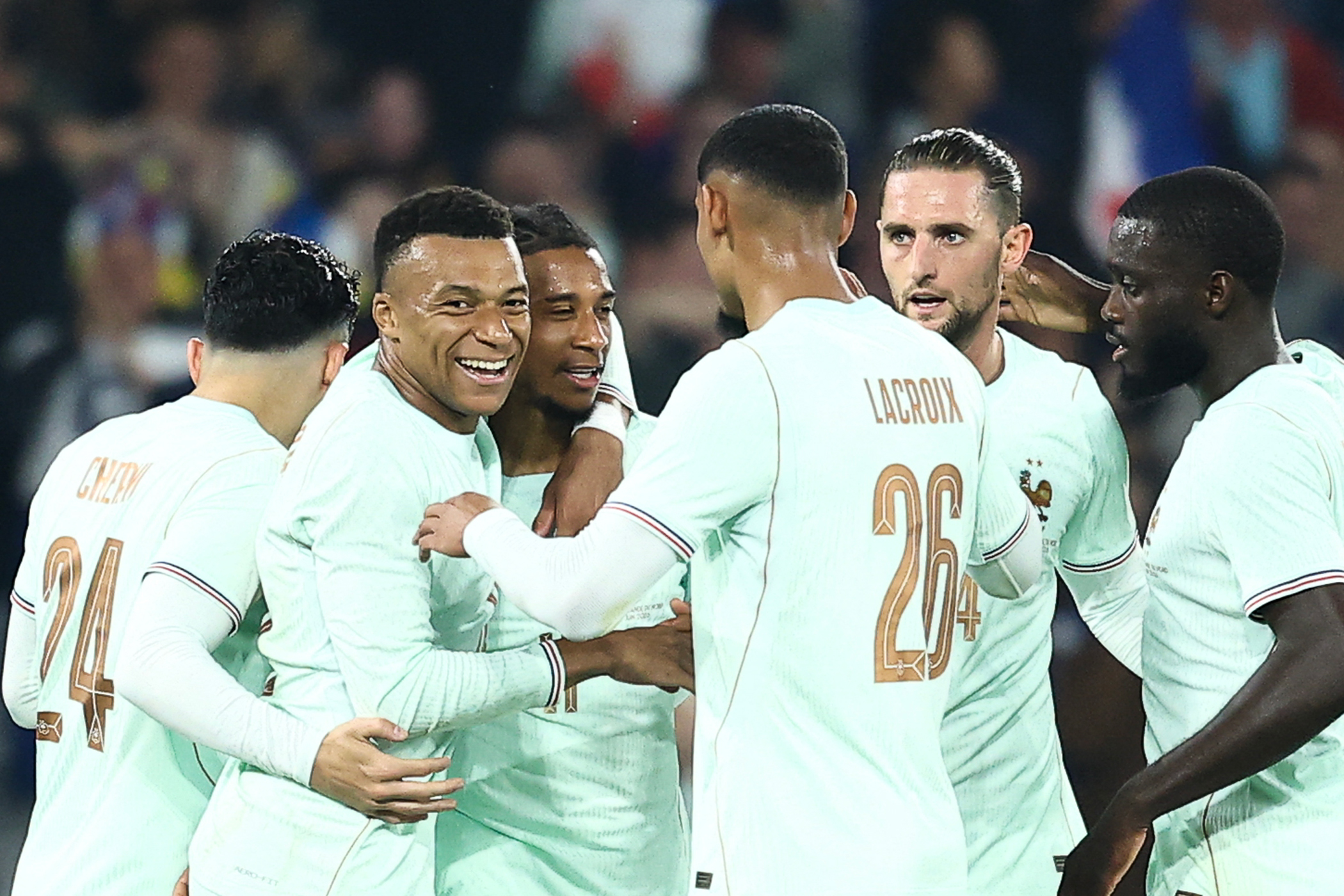
In the 1940s a second wave of migrants from Italy, Spain and Portugal produced a new generation of players, including Michel Platini, followed by migrants from the Maghreb, which produced Zinedine Zidane, and more recently migrants from sub-Saharan Africa, grandparents and parents to Kylian Mbappé, Bradley Barcola and Ousmane Dembele.
Of Didier Deschamps’ 26-man squad this year, 19 have family members from Spain, Portugal, the Maghreb and Africa and four are from France’s overseas territories.
Beaud says that while sociological data relating to football is difficult to come by, directors of the French training centres have noted that black players from poor neighbourhoods often have “a far greater drive and desire to succeed compared to middle-class French players, partly because they feel they have more to prove”.
He added: “They may be almost equal in terms of footballing skills, but there is a kind of rage, a very strong drive to succeed. You could say belonging to a minority, stigmatised group doubles your strength.”
Newsletters
Choose the newsletters you want to receive
View more
For information about how The Observer protects your data, read our Privacy Policy
Tensions between football and far right are not new. In 1996, Jean-Marie Le Pen, founder of the National Front, said it was “artificial to bring in players from abroad and call them the French national team”. He accused players of “not singing or not knowing La Marseillaise”. Deschamps, team captain at the time, said Le Pen was “once again talking nonsense”.
France’s 1998 World Cup victory put a temporary cap on the racism. It was the era of “Black. Blanc. Beur” (Black, White, Arab) utopism, a celebration that Liberté, Egalité, Fraternité were more than just words.
“The National Front was on the defensive because it was hard to attack a winning team,” said Beaud. “For a long time afterwards, Le Pen was silent. Of course, Zidane couldn’t be attacked because he scored two goals [in the final] and was the hero.”
The celebration and supposed social cohesion were short-lived. After France underperformed in 2002 , the 2010 World Cup in South Africa turned into a fiasco when players went on strike against coach Raymond Domenech.
Le Pen’s daughter Marine, who took over the National Front in 2017 and renamed it RN, described the striking players as ”a bunch of ill-behaved kids who didn’t inspire national pride”.
Beaud says many of the post-2010 attacks were racially motivated: “Nicolas Anelka, Patrice Evra, Eric Abidal, players of Caribbean or African origin were blamed, portrayed as immature louts. White players were not.”
In the latest episode in a 30-year history of sniping from the far right aimed at the national team, Jordan Bardella, National Rally leader, tackled France captain Kylian Mbappé over comments the footballer made to Vanity Fair saying he was worried the party would win next year.
“It affects me personally; I know what it means and what consequences it can have for my country when people like that come to power,” Mbappé said. “We are footballers, but we’re also citizens and we can’t simply stand by, tell ourselves that everything will be fine and go and play.”
Bardella responded: “Mbappé, who is a player admired by many French people, needs to understand that there are millions of people who don’t have access to the privileges he enjoys. I would like those who are privileged to show restraint in their comments.”
Could World Cup success or failure influence the way French voters cast their ballots in an election that could see the far right reach its ultimate goal: the Elysée Palace?
Beaud is doubtful. If the team wins it could lead to a brief pause in the xenophobic discourse against immigration, he said. And if it loses? “It depends how it loses.”
He said: “I fear football will not solve the divide in France that has only increased since 1998… or the idea that integration hasn’t really worked. The country’s current economic reality, and the gulf between haves and have nots, along with the xenophobic propaganda we see flourishing everywhere, makes integration more difficult.”
Photograph by Sameer Al-Doumy/ AFP via Getty Images