
In the end, Ted Abela decided to go with the more obviously patriotic shoes. That had been his final conundrum. He had the rest of his wardrobe for watching the United States at a home World Cup ready to go: both the home and the away jerseys, shorts, a polo shirt for a slightly more dressed look.
He had two options for the shoes: Adidas has released special editions of its Samba trainers for each of the 48 nations at the tournament, including the US. Nike has a USA-themed version of its Air Force One. Abela wavered on which would be best when he travels for the hosts’ second group game next week. In the end, he decided that this was no time for subtlety.
“The Nikes are a bit more discreet,” he said. “They’re white with a blue swoosh, and they have USA printed quite small on the heel.” As well as a World Cup logo on the tongue, “the Sambas have the red, white and blue stripes. I wanted something more patriotic. I wanted something that said USA.”
The idea of the World Cup as a unifying, nation-building force is not just struck through its history; in many ways, the historian Eric Hobsbawm’s observation that the “imagined community of millions is never more real than as 11 named individuals” is a central pillar of the tournament’s mythology.
That can apply to the tournament’s winners: the Miracle of Bern in 1954 was midwife to West Germany’s post-war national identity; four years later, Brazil’s maiden triumph was greeted as the consecration of a new, multi-racial republic.
More commonly, though, it is cast as a moment in which the host nation can define – or redefine – how it sees itself.
The Black Blanc Beur team that delivered France to glory on home soil in 1998 was presented as an aspirational vision of the country’s pluralistic future; while Germany fell in the semi-finals in 2006, the enthusiasm and exuberance the team generated was credited with helping the German public to feel at ease with demonstrative patriotism after both unification and the Second World War.
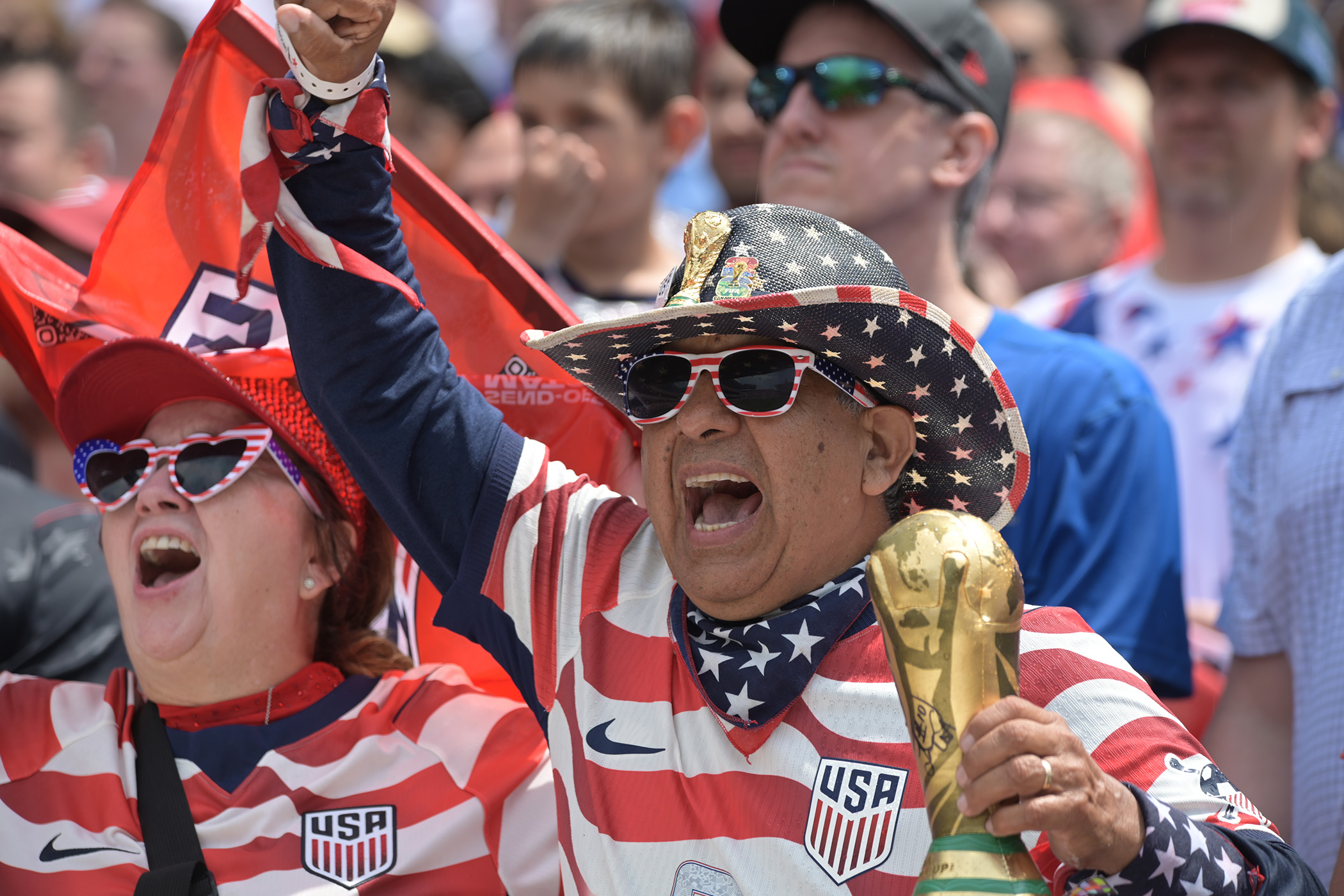
Abela’s hope is that the United States can kickstart a similar effect when they start their tournament against Paraguay in Los Angeles today. “The World Cup can be a unifying force,” he said. “It’s not a political party. It’s our national team. I have my opinions on politics, but when our country plays, I take pride in supporting the players who are wearing the badge.”
He is not alone in that. “Despite their best efforts, no one or two people are bigger than the World Cup,” said Trevin Wurm, a member of the American Outlaws, the national team’s largest fan group. “This team represents much of what is good about this country, and many Americans will see their stories reflected in the team.” It can, he said, be a vehicle for “positive patriotism.”
That fits with both the way the World Cup is seen and sees itself, of course: there is a sincere, if possibly naive belief, that it is an event “that brings people together, regardless of beliefs, at least for 90 minutes,” as Erfan Puthawala, a 45-year-old Angeleño who will be at the Los Angeles Stadium to watch Mauricio Pochettino’s side’s first game.
Newsletters
Choose the newsletters you want to receive
View more
For information about how The Observer protects your data, read our Privacy Policy
The “stereotypical” fan is almost the antithesis of Trump’s base. “Smug, hipster elites from urban centres”
The “stereotypical” fan is almost the antithesis of Trump’s base. “Smug, hipster elites from urban centres”
The current circumstances in the United States, though, will test that contention. Some 18 months into the second Trump administration, and on the eve of its 250th birthday, the country remains locked in the throes of a bitter and increasingly violent argument over the very idea of what it is to be American, who qualifies for that status, and the shared values that underpin that identity.
Rather than healing those rifts, the build-up to the World Cup may have served to calcify them: it has, after all, been a year of travel bans and ICE raids and the shadow of war, both in the form of threats against Mexico and Canada and the continuing bombing of Iran. A political landscape that used to be presented as a quarrelsome family now resembles two distinct tribes, trapped in an intractable feud.
In that context, it is easy to believe that some might be uneasy with public displays of patriotic fervour. As Andy Elrick, the Director of the Sports and Communication Center at Marist University, said: “Soccer fandom in America tends to be coded left, and even properly progressive in a lot of cases.” The “stereotypical” fan, he said, is almost the antithesis of Trump’s base. “Smug, hipster elites from urban centres. Those would be their words, not mine, although we can be a bit smug.”
That core have already had to deal with the cognitive dissonance of seeing Trump co-opt a sport that always felt a little like a safe space; now they must unpick the complexities of publicly and volubly supporting the team, establishing for themselves what they feel the team represents.
“Any time the flag collides with sports, those things are in tension for a lot of people,” said Leander Schaerlaekens, author of The Long Game, a book about the history of the US men’s national side. For decades, after all, “flying the flag, or putting it on your person somehow, has been a very hawkish, Republican thing.”
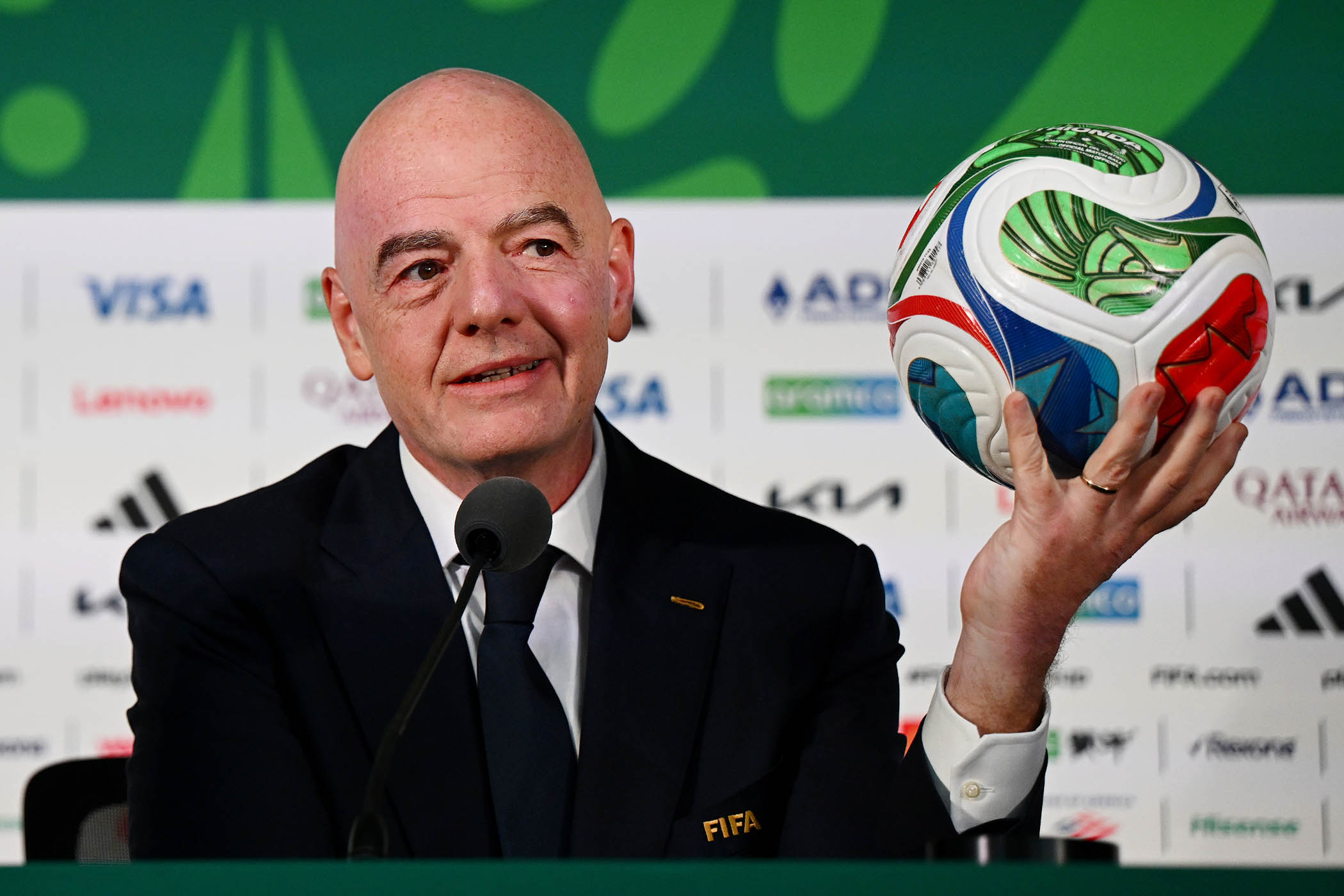
This is the more complex side of football’s role as an avatar of national identity, one that tends not to be highlighted in stirring montages or eulogised by Gianni Infantino in tightly-controlled press conferences.
In Brazil, Jair Bolsonaro’s right-wing regime deliberately tried to colonise the canary yellow of the national team as a symbol, forcing its opponents to “reclaim” it. In England, the meaning of the Cross of St George changes during tournament summers, though its message sometimes lags. Likewise, some of those fans attending the United States’ games, or even watching them remotely, will have to find a way to support the nation without necessarily admiring the state.
“Fans tend to be pretty nimble when it comes to resolving these political and ideological tensions in a way that allows them to enjoy the sport they love,” Dr Elrick said. “I suspect the fan groups will be out in force, decked out in kits, face-paint and rainbow wigs, but many of them will be…taking the opportunity to make a statement about their opposition to the Trump administration and to present an image of America that is welcoming and inclusive.”
That, certainly, is how Puthawala sees it. “I have never considered withholding my support for US soccer due to politics,” he said. “There have been times when I have traveled abroad where I have felt shame for being associated with American politics I didn’t support. But regardless of where I am, when the national team is playing, I’m watching with pride.”
Abela will take the same approach. He will be in the supporters’ section when the US face Australia in Seattle. He will be wearing his jersey, his shorts, and his red, white and blue shoes. He has no intention whatsoever of muting his support for his team and his country. “My plan is not to have a voice on Sunday morning,” he said.
Photograph by Jacek Boczarski/Anadolu via Getty Images