
“You hear the screams,” LA native artist Nico Aviña begins, “you hear people yelling their names because they want family members to know. The only thing you can do is take their name down, take their information.”
In Los Angeles, these screams are far from the typical screams that surround football stadiums and major tournaments. These aren’t goal celebrations or pained commiserations emanating from stadiums and bars as a team tumble spectacularly out of the tournament, but instead mark the horror of people ripped from the streets by immigration enforcement.
The ICE raids that are terrorising the USA have been particularly hard in predominantly Latino communities like Boyle Heights, a neighbourhood on the east side of the LA river where I meet Nico. These communities are often hotbeds of support for football, a sport also known to some in this country as soccer and to many others as fútbol.
“You want to do more, but we can’t,” Nico says, of watching people abducted from the streets. He’s seen ICE agents picking off the elderly and defenceless, people running market stands on the streets, visible members of the community. A terror has taken hold, as those with uncertain status are advised to stay indoors.
Even on the pitch, a necessary form of escapism for many, the impact of the ICE raids is clear: “A group of Guatemalans used to play [football] prior to us and they’re no longer there. I can only imagine they don’t show up because they don’t feel safe going out.”
Like many other immigrants and first-generation Americans, Nico’s whole life has been shaped by two things: football and la migra, border control.
In migrant and Latino communities, few view the expansion of ICE powers and presence under the second Trump administration as a new phenomenon. This is a continuation and an intensification, but similar policies have been in place for decades. They’re a longstanding reality for members of these communities, regardless of their status: Nico has citizenship but his brother was deported.
And more broadly, the undesirability of visible Latino culture – part of that being that football has not become a national sport in the US like in much of the rest of the world – has been clearly signposted for decades.
“Growing up in the 80s,” says Nico, “you had signs in every park around the Eastside with a guy playing soccer and it was crossed out. Not no sport – specifically no soccer and very much targeted in Latino communities.”
With fútbol being restricted in public places, the community would have to find other places to play, anything that could be made into a makeshift pitch - even downtown parking lots - gathering together around football and building their own underground leagues.
Newsletters
Choose the newsletters you want to receive
View more
For information about how The Observer protects your data, read our Privacy Policy
Kathy Pulupa, a first-generation American and current doctoral student whose research focuses on grassroots football in LA, found community in those leagues.
“It’s the only place where I find people exactly like me: first-gen or immigrant Latina women whose lives have been shaped by soccer,” she says.
Today, under the expansion of ICE, even this refuge has come under threat.
Manuel Vincente works for NDLON, a migrant rights group based in Pasadena, and recounts a case in the city where multiple people were taken from a match.
“Football is a religion for our community – it’s ingrained in our DNA,” Manuel explains. Advising people to stay away from the pitch wasn’t an option.
“Now,” he says, dropping into Spanish, the language of the sport in the city, “we are using defence groups to protect matches and create a perimeter. We make sure that we always have groups monitoring the area to ensure a secure space exists.”
‘ICE doesn’t care who you are. At this point, everybody’s scared.’
‘ICE doesn’t care who you are. At this point, everybody’s scared.’
Across the city, similar community groups have formed to protect their neighbours.
Únion del Barrio, an organisation born in the border town of San Diego in 1981, has been a pioneer of this community patrol model, taking inspiration from the Black Panthers. In February 2025, they launched the Community Self-Defense Coalition in Los Angeles with partner organisations and have run trainings for thousands in the city and across the country.
In the aftermath of the violence and deaths inflicted by ICE in Minneapolis earlier this year, they’ve seen a massive increase in demand for community defence training. In these sessions delivered on football pitches, churches, and on Zoom, they teach people how to organise community patrols, what to look for and how to identify undercover vehicles, what to do when ICE activity is identified and how to document that presence. When Únion del Barrio is informed, they confirm any reports before spreading the information.
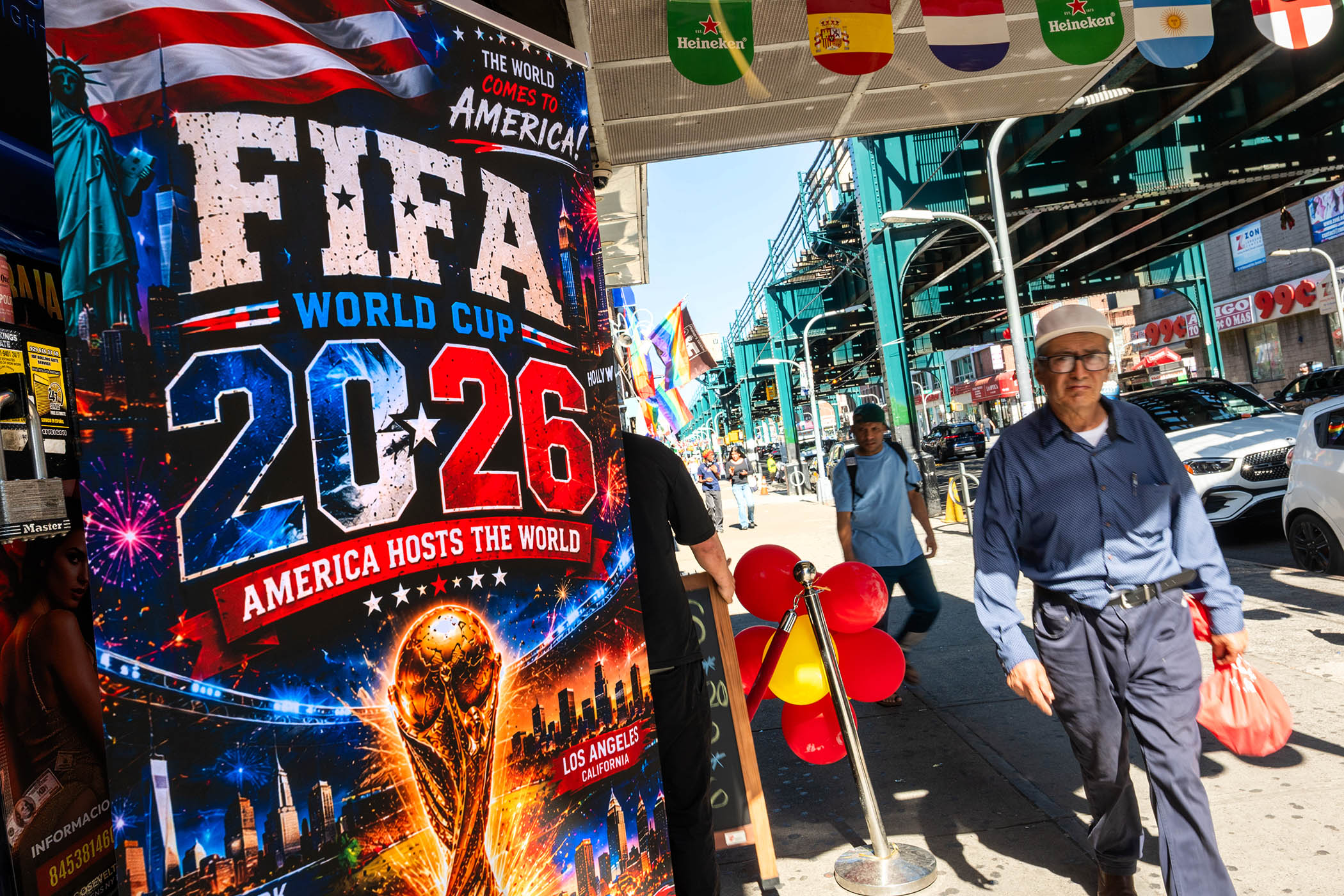
As the city transforms to host the World Cup, the organisation is on high alert.
“Trump has said that ICE will be at the World Cup games; I think, like everything else, it’s a terror tactic,” says Ron Gochez, a member of Únion del Barrio who studied ICE’s changing tactics through the community patrols. “ICE are having a hard time, but we are growing. It’s exhausting, we’re tired, but we don’t have the luxury of giving up and losing.”
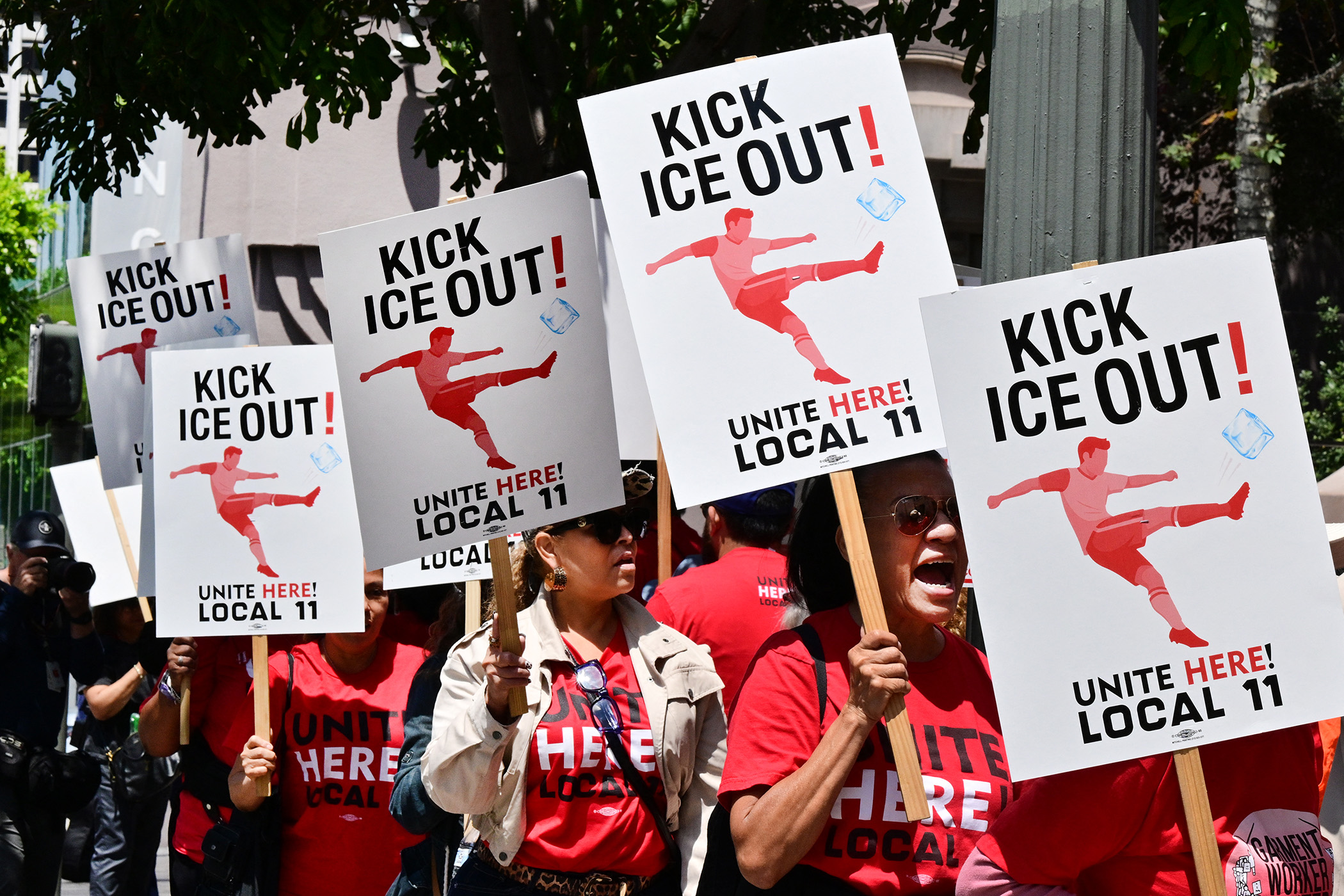
The fear has spread widely throughout the city. Eva Miles works at SoFi Stadium, and is member of UNITE HERE Local 11, a union representing hospitality workers, that won a major new contract under threat of strike that gives workers the right to strike if ICE or Border Control presence threatens worker safety during the World Cup.
“We’re worried for everybody: the community, the workers, the players, the fans. I don’t know what they have up their sleeve,” she told The Observer. “ICE doesn’t care who you are, what you are, how much money you make, or how much money you don’t make. They don’t even care if you’re a United States citizen. At this point, everybody’s scared.”
Still, far from the FIFA mega-events, the grassroots persist even if it means looking for new venues, enclosed or with a vigilant group protecting the area.
One of Kathy’s own teammates was abducted by border control, leaving a visible scar in the team, and yet the players continue to show up, accustomed to living with this fear: “They’re like, it could happen at any time, so I’m not gonna miss my game for it.”
Photograph by Frederic J. Brown/ AFP via Getty Images