

In September 2003, when Paul Tergat broke the world record in the marathon in Berlin, he became the first athlete to finish the race in less than two hours and five minutes. The Kenyan was not only a runner of rare grace, he had an ear for a resonant phrase. After his victory, Tergat told reporters: “I believe records are set to be broken, and to fall lower is possible. But what remains impossible is to run a marathon in under two hours.” He then smiled and said: “Maybe time will chide me.”
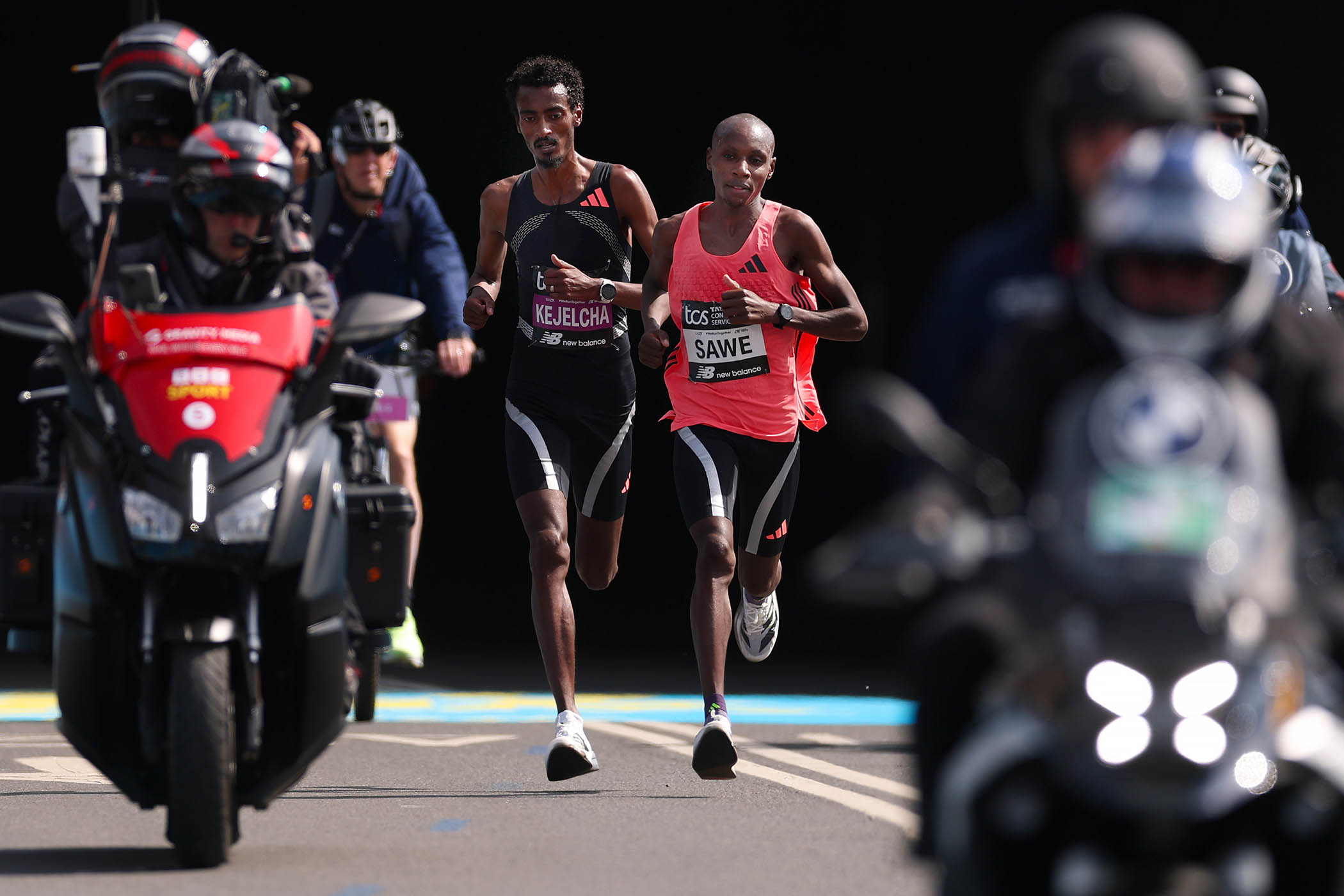
Last Sunday, time chided us all. Sabastian Sawe was approaching Buckingham Palace when I realised for sure that he was not only going to break two hours, but obliterate it. It was strange and magical to watch. When Sawe runs, his feet pronate and his left shoulder leads his right, as if he is trying to make himself small against a headwind. But clearly, his style is effective. As Sawe flew through the final mile in London, his perfect-imperfect gait powering him to the finishing tape, a tear formed at the corner of my eye.
Why did it matter? The marathon is a scruffy distance – 26 miles and 385 yards – set for complicated historical reasons that need not detain us here. Who cares if someone can run it in slightly more, or less, than two hours? But we do care and it does matter. The human brain cleaves to landmarks. In the very first modern Olympic marathon, in Athens in 1896, only one man – Spyridon Louis – broke three hours. Since then, the world’s greatest runners have been working towards a sub-two-hour effort. Advances in shoe technology, training and in-race fuelling have all played their part. But it takes a pioneer to change a sport.
Another Kenyan, Eliud Kipchoge, showed Sawe the way. In 2017 and 2019, he attempted two special time trials that were not eligible for a world record because they featured interchangeable teams of pacemakers. On the first occasion, at the Monza race track in Italy, Kipchoge ran 2 hours and 25 seconds. On the second occasion, in Vienna, he broke two hours by 20 seconds in front of a global television audience of millions. Kipchoge compared the moment with Roger Bannister’s sub-four-minute mile in 1954. A more apt analogy might have been Edmund Hillary and Tenzing Norgay’s first ascent of Everest the previous year. The pair reached the summit with the assistance of a team of porters and supplementary oxygen – a momentous achievement, but with some caveats for the purists. What we witnessed last Sunday in London was more akin to Reinhold Messner and Peter Habeler’s first ascent of Everest without oxygen in 1978.
Sunday’s race was no time trial. It was stirring to watch Sawe fight with a rival, Yomif Kejelcha, for so long. This was old-fashioned sport, one athlete attempting to break another, and it propelled both men to a sub-two, and greatness. Kejelcha’s time, on his marathon debut, was 1:59:41; pity the poor, extraordinary man who has become the Buzz Aldrin of athletics. Pity, too, Tigst Assefa, who broke the women-only world record on Sunday, and whose efforts have been relegated to a footnote.
For those of you who ran last Sunday, I wonder how it felt when you learnt that you had finished a marathon on the same day as the sport took a giant leap. What you should know, as you revel in your blisters and your achievement, is this: Sawe hurt; Kejelcha hurt; Assefa hurt; everybody hurts.
In case you missed our London Marathon supplement featuring every finisher, we have a limited number of additional copies and we’re setting up a way for you to purchase one online and have it posted to you. If you’d like us to contact you about that, please fill in this form and we’ll be in touch:
Ed Caesar is a staff writer for the New Yorker and the author of Two Hours: The Quest to Run the Impossible Marathon
Photograph by Warren Little/Getty Images
Newsletters
Choose the newsletters you want to receive
View more
For information about how The Observer protects your data, read our Privacy Policy