
Summer and Winter Olympic Games are rarely short on drama and intrigue, but the 2026 Winter Games have provided some headlines that will go down in history. Here, we’ve selected some of the most remarkable stories from the past fortnight.
Because he’s happy (eventually)
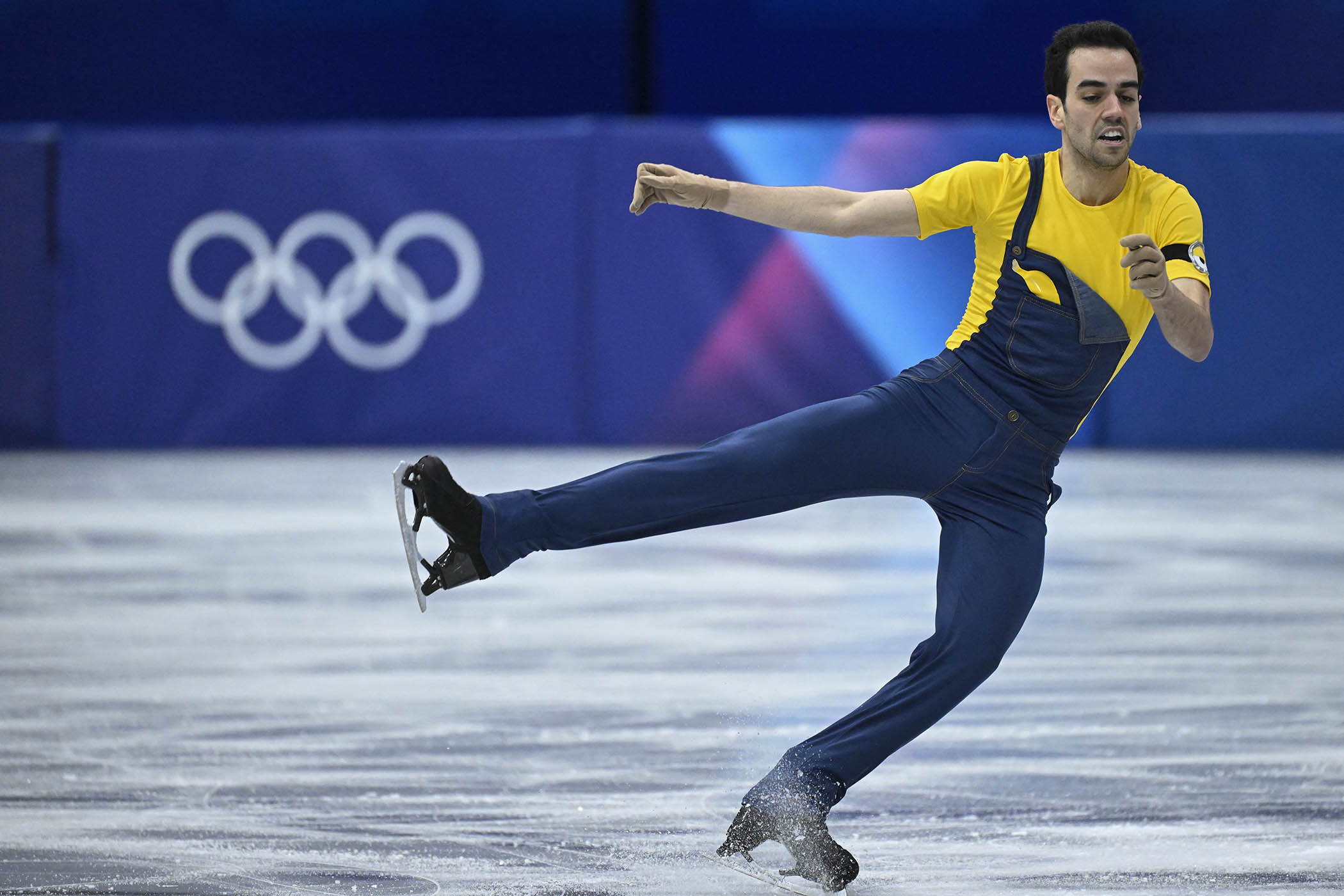
Figure skater Tomàs-Llorenç Guarino Sabaté’s 25th-placed finish with a score of 69.80 wouldn’t ordinarily go down in Winter Olympic lore. He tripped on his first element, made a series of errors and his Games were done. He will, however, be remembered as the man who became a social media cause célèbre, and competed at the Milano Cortina games dressed as a Minion.
Guarino Sabaté, known for offbeat routines, was told eight days before his event that he would not be able to perform to his usual music – a mix of tunes from the Minions film franchise – due to a copyright issue with Universal Studios. Four days later, after legal wrangling which reportedly included negotiations with the producer Pharrell Williams, whose song Happy appeared in the Minion-featuring film Despicable Me 2 and was one of Guarino Sabaté’s selections, the correct licences were obtained and he was able to dance. It is rare to hear a delighted athlete proclaim: “I will be able to skate my Minions program at the Winter Olympics,” but this was the 2026 Games after all.
The best of times, the worst of times
Rarer still is to have an athlete use their medal-winning moment to confess to cheating on his girlfriend, have their infidelity broadcast around the world and, having just earned a bronze medal at a Winter Olympics, say that it was the “worst week” of their life.
But unfortunately for Norway biathlete Sturla Holm Lægreid, this will be what he is likely to be remembered for after his tearful admission following his bronze in the 20km individual event. A gold-medal winner in Beijing four years ago, he is one of the best biathletes in the world, and followed up his bronze with another third-place finish and two silvers – but in the cruel social media age, the internet never forgets. Prior to the Games, there was no “personal life” section on Lægreid’s Wikipedia page. There is now.
A fraudster’s golden run
Which French biathlete convicted of fraud won gold while their scammed team-mate came 80th in the same event? It will, admittedly, be a niche pub quiz question in years to come, but it was still noteworthy in the 2026 Games.
Julia Simon won gold in the women’s 15km individual biathlon, four months after being convicted of credit card fraud, while her scammed team-mate Justine Braisaz-Bouchet finished 79 places behind. Simon was handed a €15,000 fine and a three-month suspended sentence last October after she was found to have spent more than €2,000 using card details belonging to Braisaz-Bouchet, as well as the team physiotherapist.
Newsletters
Choose the newsletters you want to receive
View more
For information about how The Observer protects your data, read our Privacy Policy
For three years she claimed she was the victim of identity fraud, before finally admitting to her crimes last year after photos of the credit cards were found on her phone. Simon went on to win two more golds in the team 4 x 6km relay and mixed 4 x 6km relay.
Shove it like it’s hot
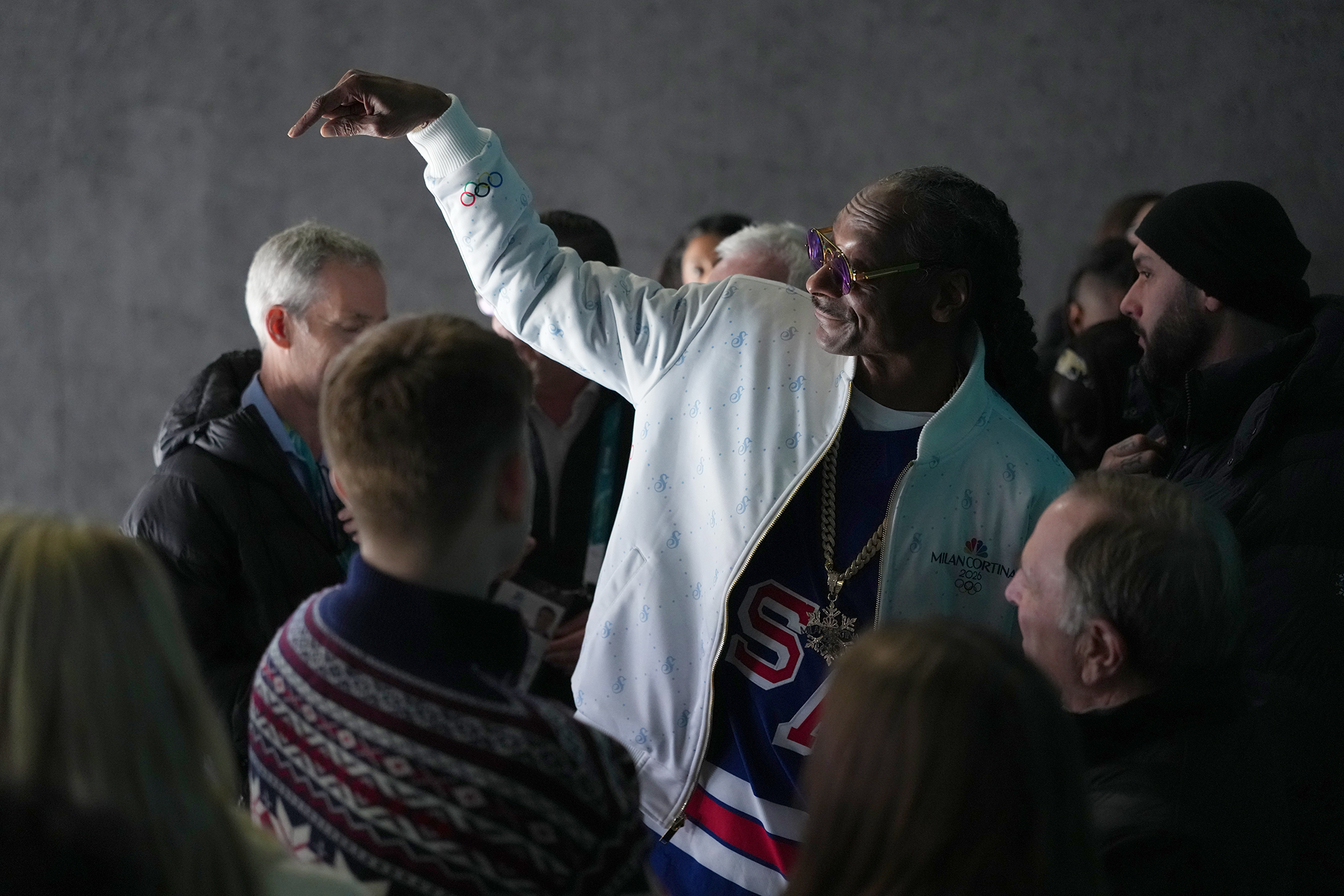
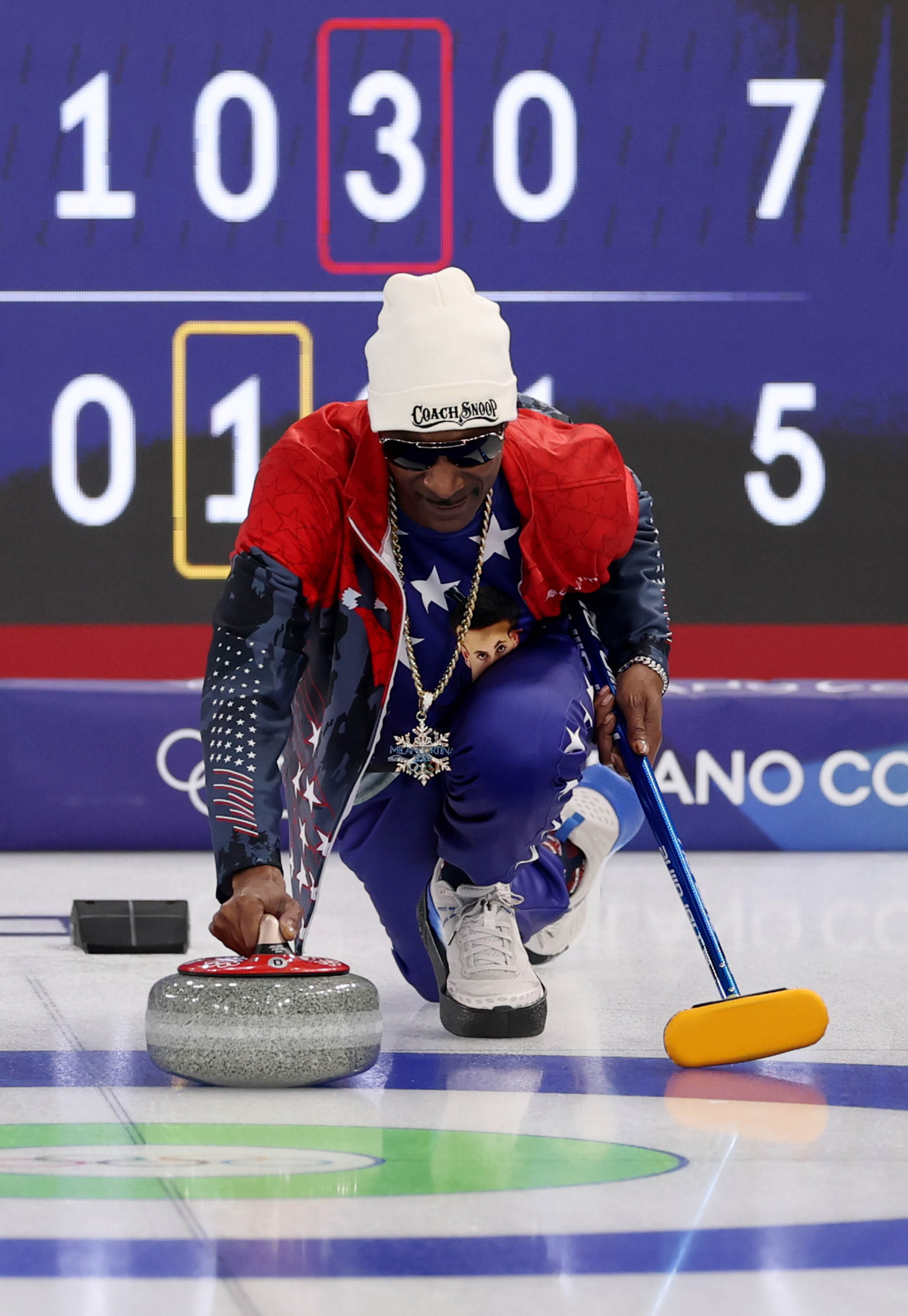
Snoop Dogg has been a welcome presence on the Olympic scene ever since his appearance at the Paris summer Games two years ago in an unofficial role as Team USA hypeman. He arrived in Milan this time with an official role as Team USA’s first ever “honorary coach”, which they described as “a volunteer role celebrating and supporting America’s athletes off the field of play”.
But things turned less cordial between a member of his security team and Dutch TV reporter Marianne Timmer. The former Dutch speed skater alleged that one security guard pushed her in the corridor as she waited to conduct post-race interviews. “I was standing against a wall, and one of the guards pushed me even closer. I said, ‘Will you just act normal?’” Timmer said.
She also told the security guard: “I’m not here waiting for Snoop Dogg, I’m waiting for [Dutch speed skaters] Jenning de Boo, we want to see Joep Wennemars, and talk to Kjeld Nuis.”
Cursing curlers turn air blue
Perhaps the most explosive moment of the Games came in the genteel environs of the Cortina Curling Olympic Stadium as the men’s team match between Canada and Sweden turned into a full-blown swearing contest. Sweden’s Oskar Eriksson accused Canada’s Marc Kennedy of pushing the stone again – known as “double-touching” – with his index finger after releasing it down the ice, which is prohibited in the sport. Verbal back and forth between the two teams ensued, with Kennedy telling Eriksson: “You can fuck off. I haven’t done it [double-touching] once… come on Oskar, just fuck off.” Canada went on to win the match 8-6, but incredibly the drama continued. Merely a day later, Swiss lead Pablo Lachat-Couchepin claimed to see Kennedy do it again in their contest, and the Canadian women’s team as well as Team GB’s men’s team both had stones removed from matches later in the competition for the same violation.
The upshot of the affair has opened up a conversation about whether the video assistant referee is required in curling – which many football fans will wince at – and also launched a new generation of “double-touching” memes to social media (pictured). While the story is perhaps frivolous for the casual, Olympic-only curling watchers, Kennedy said the episode means “the whole spirit of curling is dead”.
Cortina condom-gate
“It is rule 62 of the Olympic Charter that we have to have a condom story. Faster, higher, stronger, together,” joked International Olympic Committee spokesman Mark Adams on Valentine’s Day. Ever since the summer Seoul 1988 Olympics, free condoms have been distributed in the Olympic village. But in Milano Cortina disaster struck as the 10,000 prophylactics given to the 3,000 athletes ran out in three days.
Some 300,000 were distributed at the Paris 2024 Olympics for the athletes – an average of two per day each – but this year demand far outweighed supply ahead of 14 February. “Clearly this shows Valentine’s Day is in full swing at the village,” Adams told a press conference. “Ten thousand have been used – 2,800 athletes – you can go figure, as they say.”
And finally…
Honourable mentions must also go to the scrupulous officials of the Winter Olympics. Three athletes – Japanese snowboarder Masaki Shiba and South Korean skiers Lee Eui-jin and Han Da-som – were disqualified after their equipment had traces of “forever chemicals” on it. PFAS (per- and polyfluoroalkyl substances) are found in fluorinated waxes that have long been a staple in winter sports to help snowboards and skis repel moisture, meaning they can go faster. The disqualification was an Olympic first after the ban was introduced in 2023.
Given Team GB’s stellar skeleton success, it is likely to be forgotten in years to come that the team’s helmets were banned days before the competition started due to their shape. An appeal to the Court of Arbitration for Sport was also unsuccessful, as it found the helmet was designed to specifically enhance aerodynamic performance. Not that it mattered, as Matt Weston’s dominance showed he probably could have won the event wearing a saucepan on his head.
Photography by AP Photo/Carolyn Kaster