
Italy’s Six Nations campaign might have ended on a crushingly disappointing note against Wales following a 31-17 defeat, but it still feels like a lifetime ago that they lost 36 successive games in the tournament and faced repeated questions about their right to retain a seat at northern hemisphere rugby’s top table.
The Azzurri’s misery spanned seven painful years from March 2015, saw them concede almost 1,500 points and sparked lively debate about a need for Six Nations promotion and relegation, with Georgia widely viewed as being the next cab off the rank.
But when the curtains closed on a dramatic, memorable and arguably most competitive of all Six Nations productions on Saturday, Italy could finally view themselves as a team not just there to make up the numbers.
The coveted prize of winning three games in one Six Nations campaign for the first time after defeating Scotland and England might have eluded them, and with it an alternative “triple crown” following an unexpectedly subdued performance at the Principality Stadium, but depressingly familiar wooden-spoon talk is no longer in Italy’s rugby vocabulary.
England had never known anything like it, having won all 32 previous encounters against Italy, but head coach Gonzalo Quesada continues to drive an undoubted revival that also includes victory over Australia and an away draw against France since he took charge little more than two years ago, and it will not be stalled by one blip, albeit a major one.
“We made our history. It was an amazing and emotional day for us,” said Andrea Duodo, the Italian Rugby Federation president, after 69,000 watched the red rose wilt in Rome. “The English team is always one of the best in the world, and always when we play them, we learn something.
“People have to remember that when we had that run of defeats, a few of those games were lost by small margins, such as England at home. In the past, we had a lot of good players, but our strength in the squad wasn’t so deep. Right now, I feel we have more than 30 players who can play at the same level, so the difference between 2015 and right now is we have a good harvest on our investment.”
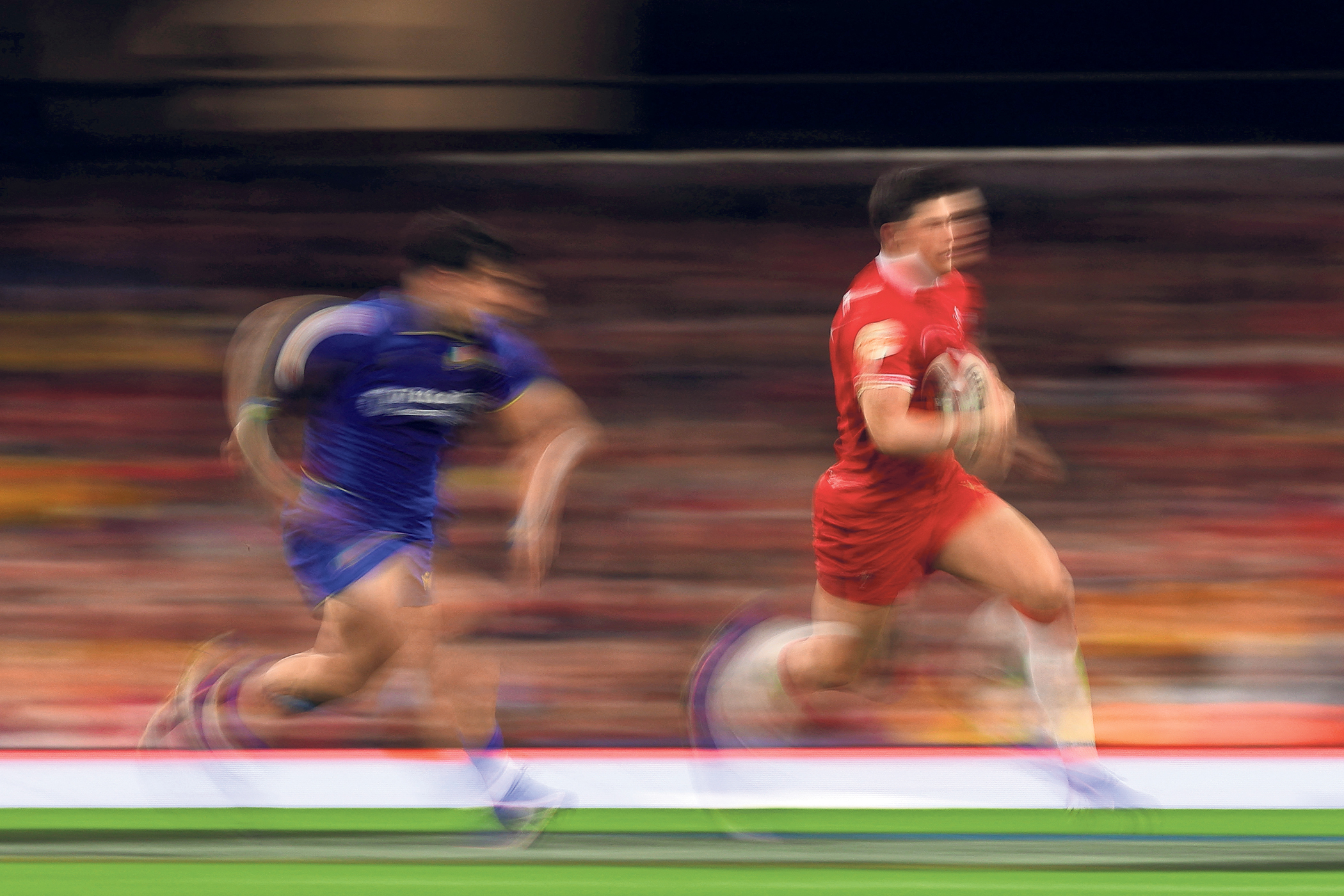
Wales, lifted following encouraging displays in losses to Scotland and Ireland, ended a run of 15 successive Six Nations defeats stretching back three years and avoided a hat-trick of home losses against Italy through storming 21 points clear by half-time via No 8 Aaron Wainwright’s try double, a Dewi Lake touchdown and three Dan Edwards conversions.
Edwards added a try of his own, plus another conversion and a drop-goal, giving him a 16-point haul to leave Italy with very few crumbs of comfort and being restricted to consolation touchdowns from Tommaso Di Bartolomeo, Tommaso Allan and Paolo Garbisi.
‘We have invested in an academy system, and we are collecting what we are sowing there’
‘We have invested in an academy system, and we are collecting what we are sowing there’
Andrea Duodo
It was only Wales’ third win in the past 29 Tests, their first Six Nations home victory since 2022 and just a second success from nine starts for new head coach Steve Tandy.
Newsletters
Choose the newsletters you want to receive
View more
For information about how The Observer protects your data, read our Privacy Policy
Duodo added: “We have invested in an academy system for a long time, and we are collecting what we are sowing from that... there is no school or university system that develops our players, so we have tried to invest in an academy system.
“With the pathways, we can follow the players from 15 and 16 years old to the first team, so for us this kind of pathway is important.”
Italy’s national academy was founded in 2006, while there are also three additional development centres, and anyone who doubts whether they work or not need only take a look at Quesada’s Six Nations squad, with more than half of his personnel having emerged through that route. It is not just any old list of players either, as captain Michele Lamaro, star centre Tommaso Menoncello, fly-half Garbisi and the Cannone brothers Lorenzo and Niccolò are all academy products.
And when a coach of former Argentina international Quesada’s quality is added to the mix, there is undoubted potential for success and a level of consistency that Italy have never really fulfilled. With the inaugural Nations Championship kicking off this summer, followed by a World Cup campaign in Australia next year, optimism levels are high.
“It was massive for us when Gonzalo arrived,” Duodo said. “He has transformed things. He has created a very good climate, a very good relationship between the players. He has created not only a team on the field, but also a real team outside it.
“For sure, we need to keep going upwards. Right now, everyone has been respecting our performance on the field. We have started to create something in terms of maintaining a high level, and there is more respect from other teams.
“We know it is not easy to climb this kind of mountain, and the challenge is to continue to be consistent – not 60-70 minutes of a good performance, but 80 minutes. We understand that we can do it.”
Any team of the tournament should realistically include the galactico Italian centre pairing of Menoncello and Juan Ignacio Brex, while forwards Giacomo Nicotera, the Cannone brothers and Manuel Zuliani have all won admirers across a campaign that saw the Azzurri establish themselves in Britain and France as most people’s second team.
Quesada will demand that the displays against Scotland and England remain a minimum standard as Italy head into the Nations Championship with July appointments with Japan, New Zealand and Australia, before hosting South Africa, Argentina and Fiji in November.
It is a far cry from those barren Six Nations seasons, and while Wales will have given them something of a jolt and removed any hint of complacency following the England result, Italy’s future is bright.
Photograph by Adrian Dennis/AFP via Getty Images