

Spite is the sort of pathogen that can be transmitted in any number of ways. Luke Brennan caught it through song, the massed choir at Elland Road drumming into him that this was part of what it was to be Leeds. “The chant is the introduction,” he said. “You learn it in the ground, and it sort of assimilates into you, the idea that we hate Chelsea.”
At 22, Brennan is far too young to have experienced the games that sit at the root of that enmity. Michael Normanton is a generation older, but he still picked it up second-hand, at least in part, from a VHS tape. “I watched the battles of the 1960s and 70s on Leeds United: The Glory Years,” he said. “And then you saw it at games. They were more aggressive than normal.”
Even James Brown, the author and journalist best-known as the erstwhile editor of Loaded, is not quite old enough to have been an eyewitness. He was four when the rivalry reached its peak, calcified into lasting animosity by the replayed FA Cup final of 1970. It was on at night; he was not one of the 28 million who watched it. For him, too, it is an inherited hatred.
“I hosted a dinner once with Eddie Gray,” Brown said. “He told me that the players never really hated Manchester United. They’re the traditional rivals for the fans, but the players were actually quite close. Johnny Giles and Nobby Stiles were brothers-in-law. For the players, more than anyone else, it was Chelsea.”
That sits at the heart of the accepted history of one of English football’s unlikelier antipathies. Most of football’s rivalries are about something else: geographical proximity, most of the time, but also occasionally class, regional identity, or the Wars of the Roses. The one shared between Leeds and Chelsea – reprised in their FA Cup semi-final – is unusual because it is, ultimately, about football.
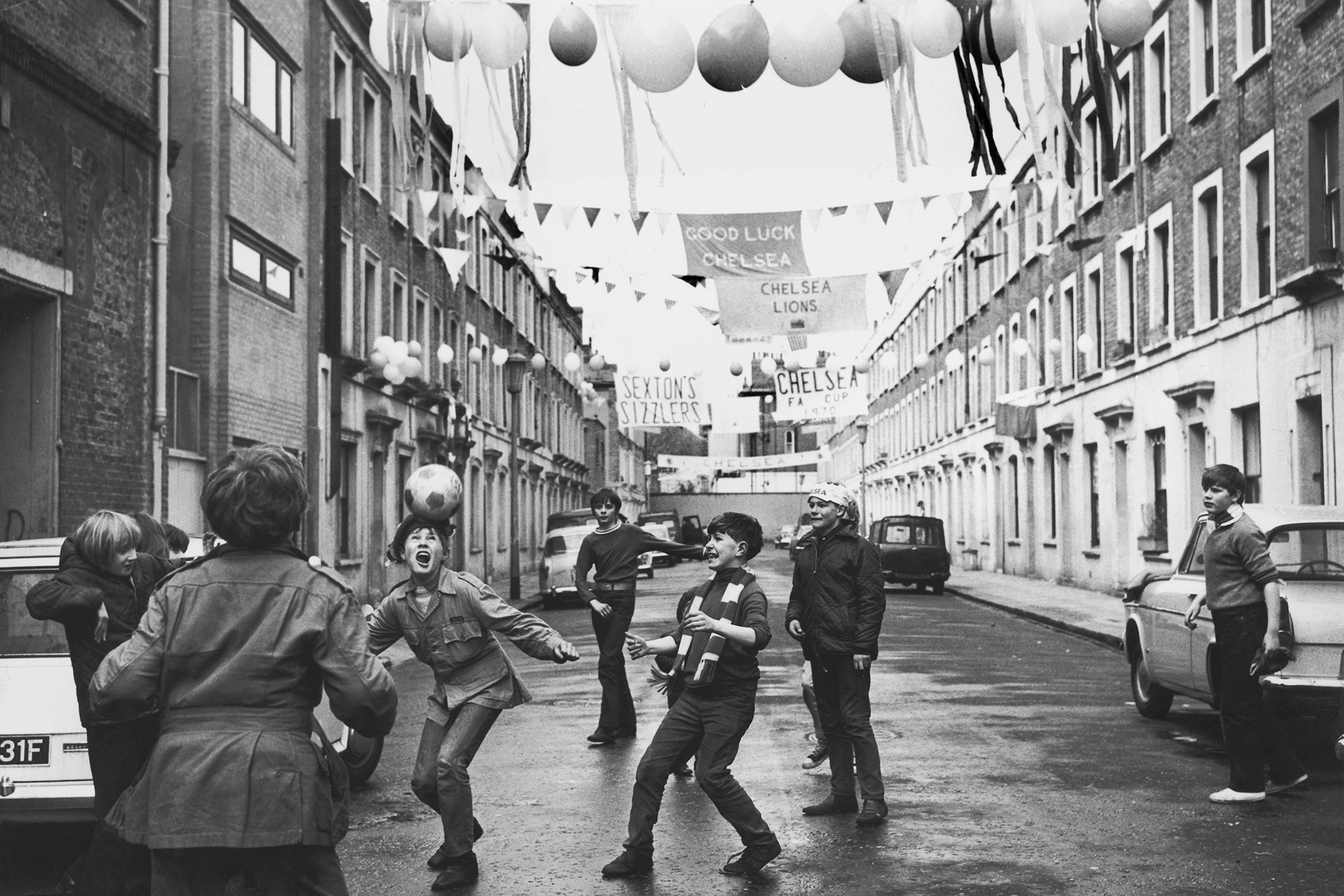
The mutual contempt dates back to a series of fraught encounters in the 1960s, variously described by contemporary accounts as “venomous” and laced with malice. It reached its culmination in the unapologetic brutality of the 1970 Cup final, and the replay in particular. Chelsea won the game, thanks to a goal in extra time from David Webb and to the laissez-faire approach of the referee Eric Jennings. As the great Observer sportswriter Hugh McIlvanney noted, “it appeared Mr Jennings would give a free-kick only on production of a death certificate”.
In the years since, when the game has been reviewed, the verdicts have been markedly different. In 1997, David Elleray determined that he would have shown six red and 20 yellow cards had he been in charge; when Michael Oliver went over the footage during the pandemic in 2020, his estimate was even higher. By modern standards, he decided, four Leeds and seven Chelsea players would have been sent off, Eddie McCreadie twice.
“It was horrible, the way they kicked us off the pitch,” said John Davies, the only one of the fans surveyed (unscientifically) who remembers the games that birthed the hatred, who can declare from personal experience that Chelsea were “lucky to win”.
Davies, now retired, is 71 this week. He first went to Elland Road as a teenager in 1969. To anyone younger than him, the dislike between the two clubs is not only vicarious – the grudges of the players adopted by the fans – but something taught and learned.
‘Football needs rivalries to continue into a future when everything is gamified or AI. Blood and thunder is good’
‘Football needs rivalries to continue into a future when everything is gamified or AI. Blood and thunder is good’
That it has proved so enduring, to his mind, is because the hostility applied off the pitch, too. Like Leeds fans of every generation, Davies has no doubt at all that Manchester United are the real enemy. “It’s silly, really, because I’m a man in my 70s,” he said. “But I do really hate them.”
Newsletters
Choose the newsletters you want to receive
View more
For information about how The Observer protects your data, read our Privacy Policy
When he considers which teams might sit on the next rung down, though, his answers are unexpected. “It’s teams like Nottingham Forest and Wolves,” he said. “It’s the places that were really nasty to go as a fan.”
Chelsea fell into that category. Davies remembered going to Stamford Bridge, a couple of seasons after the FA Cup final, and watching as the home fans marched across the pitch at half-time to try to get to the Leeds contingent. “We left pretty soon after that,” he said. “Going to Chelsea was horrible.” To fans of his vintage, the violence was not something only the players experienced.
When Normanton, editor of the Leeds fanzine The Square Ball, made the same trip earlier this season, he did not need to be quite so vigilant. “The atmosphere was as mild as any game I can remember,” he said.
It should not, perhaps, be a surprise that Chelsea’s side of the feud might have faded in recent years. Not only do they have more immediate enemies than Leeds, they have also had rather loftier concerns in the last two decades.
Since Roman Abramovich bought Chelsea just as Leeds were spiralling to relegation, there has been a “clear asymmetry” to the rivalry, as Ollie Glanvill, a lifelong Chelsea season-ticket holder and contributor to the London Is Blue podcast, put it. “We know it’s a historic rivalry, and it has a particular atmosphere,” he said. “But for the majority of younger supporters, Leeds have been out of sight, out of mind. We only sing about Leeds when we play them. United and Chelsea get sung about at Elland Road most weeks.”
Explanations for that vary. Brennan, the youngest of the sample, points to the toxicity of Ken Bates’ ownership of Leeds between 2005 and 2013, just as he was becoming a fan; that exposed a new generation to what might have been, by that stage, an old malice.
Normanton wonders if it runs deeper still. Just as a clear contrast could be drawn between the sides of the 60s and 70s – the swaggering Kings of the Kings Road against Don Revie’s Leeds, all sensible haircuts and carpet bowls – so the clubs have come to stand for different things in the modern game.
“They’re the new money team, and Leeds are the big traditional northern club,” he said. “If you were being cruel to us, you could say we have a chip on our shoulder about it. You’re a mid-sized club who got lucky. Who do you think you are?” Brown suspects that the spite’s long half-life can be traced to some innate part of being from Leeds . “It’s part of Leeds’ DNA,” he said. “You cherish your heroes, you keep your resentments simmering. Grievances last a long time. It’s like having a stone in your shoe. Keeps you sharp.”
More than anything, that is what Leeds against Chelsea has become: a game that brings back memories, even for people who do not have them. A few years ago, Nick Verlaney, an American Chelsea fan, went to Elland Road. He was aware of the rivalry, the history, but it was only once he experienced it that he appreciated just how real, how relevant it was.
“There’s a bit of nostalgia for what it used to be, what it used to mean,” he said. It was a hatred nourished and maintained as a way of connecting fans, on both sides, to their club’s history. It is part of what it is to be Leeds, to be Chelsea. You keep the flame burning. “Football needs that. It needs harsh rivalries to continue into a future when everything is gamified or AI. Blood and thunder is good.”
Photograph by Michael Webb/Keystone/Hulton Archive/Getty Images