
Before woke, England only ever had to play football teams: 11 v 11, mano a mano, blood, sweat and festering failure. That was the hard way, suffering enough. Now it appears their World Cup depends upon beating three Mexicos: their football team, their people and the land they inhabit, but also a stadium and a city and fate, biology and physics and Mother Earth. They are at the behest of altitude and karma and history and mythology and whether the Valley of Mexico is running low on fireworks after they were all launched at Ecuador’s team hotel.
Thomas Tuchel has spoken about the need to “make peace” with the Estadio Azteca 40 years after England last played there, presumably involving some blood sacrifice, Harry Kane ritually lopping off his pinky with garden shears while an effigy of Diego Maradona burns.
Considering England have played two European Championship finals and a World Cup quarter-final since 2021, tonight’s match seems to have incited a unique madness. Most fans believe that a potential quarter-final against Brazil and semi-final against Argentina are eminently and easily winnable, but that overcoming Mexico requires an undergraduate degree in physiology.
It’s never a good sign when your neighbour starts talking about how different altitudes impact plasma volume, recommending that “Deccers” and “Jude” drink beetroot juice to help convert their nitrite into nitric oxide more effectively. They’ve even heard Viagra helps, but it transpires only for certain extreme conditions, something to do with expanding blood vessels. This is cycling chat, the refuge of sports that need to pass time where little interesting ever happens, so they get really excited about gels. VO2 max is for your mate who’s started ultra-running because he’s realised accountancy might not be his life’s dream. Football is supposed to be better than this.
Or is it? Much of the debate swirling around the past few weeks boils down to: what constitutes good football? Should we believe our hearts or minds? Cognitive dissonance is a fundamental tenet of football in 2026, but the numbers suggest England are basically fine. Going into this weekend, they have created more big chances than any other team (20), but just happen to have missed 15 of them. Only Spain and Argentina allowed fewer expected goals during the group phase. Only France possess more elite-level talent or depth.
So why does living through an England match feel so bad, frustrate and drag quite so aggressively? There is a fair argument that 75% of their game time so far has resembled watching Picasso dutifully following a paint-by-numbers. Part of this is a hindsight-driven misconception of what good international teams tend to look like, only ever really coherent in miraculous flashes. We sometimes forget that every team concedes half-decent chances, that the entire history of English sport has always been defined by individuals temporarily transcending the team around them. Part is that the meat and potatoes of football matches are often quite dull and procedural, not actually meant to constantly stimulate and amuse. Part is the Premier League-pilled exceptionalism that even if it isn’t exactly at the aesthetic vanguard, England hosting the best league should produce the best players. This is the least we deserve for sitting through the Mikel Arteta-ness of it all.
Of course, Arsenal’s place in this matters. During his initial unveiling, Tuchel said he wanted England to play Premier League football, which is effectively Arsenal football. A 4-2-3-1 with physical midfielders and rapid if inconsistent wingers is not exactly unique to Arteta, but the set-piece focus and the risk-assessment tendencies of an insurance broker is obviously in the Arsenal tradition, if not the exact same model. It doesn’t help that only one of Arsenal’s defence is English, with Tuchel increasingly feeling like he’s borrowed the wrong parts from the machine.
Similarly, both systems would love to depend on Bukayo Saka, but have had to settle for the DHgate knock-off. Last week Noni Madueke said: “I thrive in space and [Saka] thrives in congestion.” He talked about this as “healthy competition”, which was sweet if totally misguided, a story he has to tell himself in order to live. Considering how fundamental width and wingers are to what Tuchel is trying to achieve, relying on Madueke’s overwhelming inability to make the right decision at almost any point in the final third has been like trying to juggle with one hand tied behind your back.
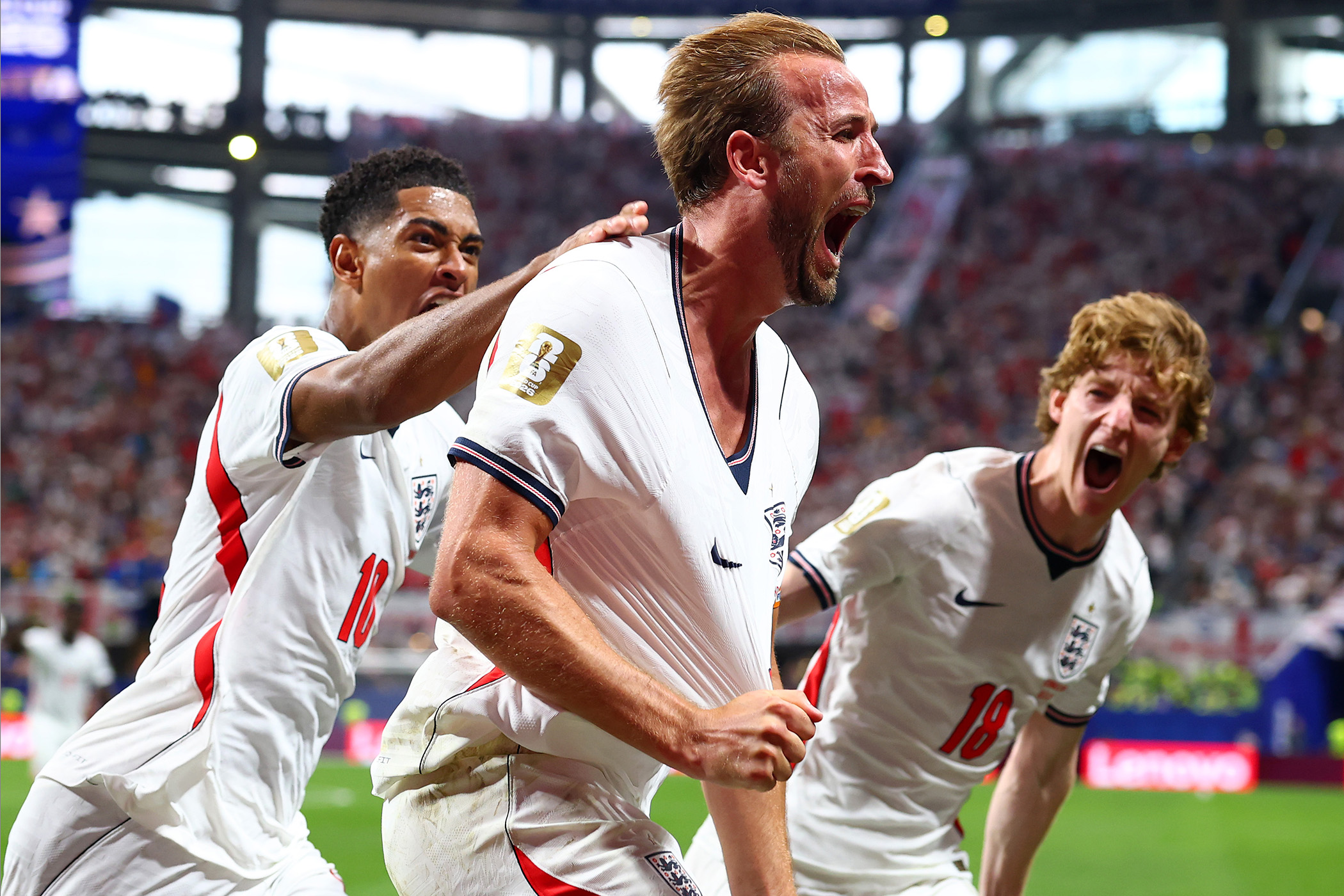
Saka’s four-year quest to win the Premier League has basically torn him limb from limb, left him tentative and incomplete, and yet he has two assists from one start and three sub appearances this World Cup: a scything pass to Marcus Rashford against Croatia and the corner delivery from which Jude Bellingham finally breached the Panamanian resistance. His World Cup record is three goals and three assists, a goal contribution every 71.3 minutes across eight appearances, a better rate than Harry Kane. He might not have been directly involved in Kane’s goals against DR Congo, but he was in the right spaces, occupying defenders and waiting. He has one more cap than Jude Bellingham but six more goals, both with 11 assists. His left-footed corners are clearly a fundamental part of The Plan. Games like these are why Tuchel has been managing his achilles tendonitis so assiduously; Saka has yet to play more than 63 minutes in a match this summer.
And then there’s Declan Rice, similarly damaged in sisyphean service of the greater goal, managing long-term neural pain in his hip. Very few teams ever would function better without a fully fit Saka and Rice, both seemingly playing chicken with their bodies’ limits. Tuchel said that when Rice was substituted against DR Congo he was in “terrible pain”, not helped by 12 minutes at right-back which he made very clear he had little interest in doing again. Meanwhile Reece James said he was feeling good, which we have to know by now is basically meaningless.
Newsletters
Choose the newsletters you want to receive
View more
For information about how The Observer protects your data, read our Privacy Policy
Right-back is probably the least sexy position for a crisis, but England have always done a roaring trade in unsexy. Moving Rice there against Mexico would facilitate shifting Bellingham into central midfield, clearly his favourite position and one he excelled in against Panama, largely because it stopped him and Harry Kane running into each other. Rice feels like a right-back insofar as he can cross and is relentlessly physical, much like Trent Alexander-Arnold always felt like a central midfielder (has anyone considered the two positions might just require very similar skill sets?), but is this what we’re betting the house on? Bellingham sitting deeper would also inevitably open up a game England will be doing everything possible to slow down and stodge up, to dictate possession and time when the air is attempting to suffocate them one by one, while also putting Rice’s hip under massive and unnecessary strain.
So the realistic options are Ezri Konsa or Djed Spence – playing James in conditions already designed to hurt you feels almost cruel. Hopefully Jarell Quansah starting a 2026 World Cup match at right-back remains a pub quiz answer and not a trend. Tuchel has always had a penchant for odd favourites, his ability to identify talent accurately one of the few genuine questions over his club career. Spence is a perfectly functional mid-table Premier League right-back, perhaps better than that defensively but incredibly limited going forward, a fact his outrageous pace poorly conceals. He and Madueke have too many similar flaws to ever work together, but there are clear defensive benefits to a partnership as defensively intelligent and dedicated as Spence and Saka.
Konsa would allow John Stones to partner Marc Guéhi, as at Euro 24, and Unai Emery often shunts him wide in significant games for Aston Villa. Neither he nor Spence would contribute much to the attack, but perhaps Konsa would provide Nico O’Reilly greater licence to loiter around the penalty area as he did in the second half on Wednesday, a genuinely underrated weapon.
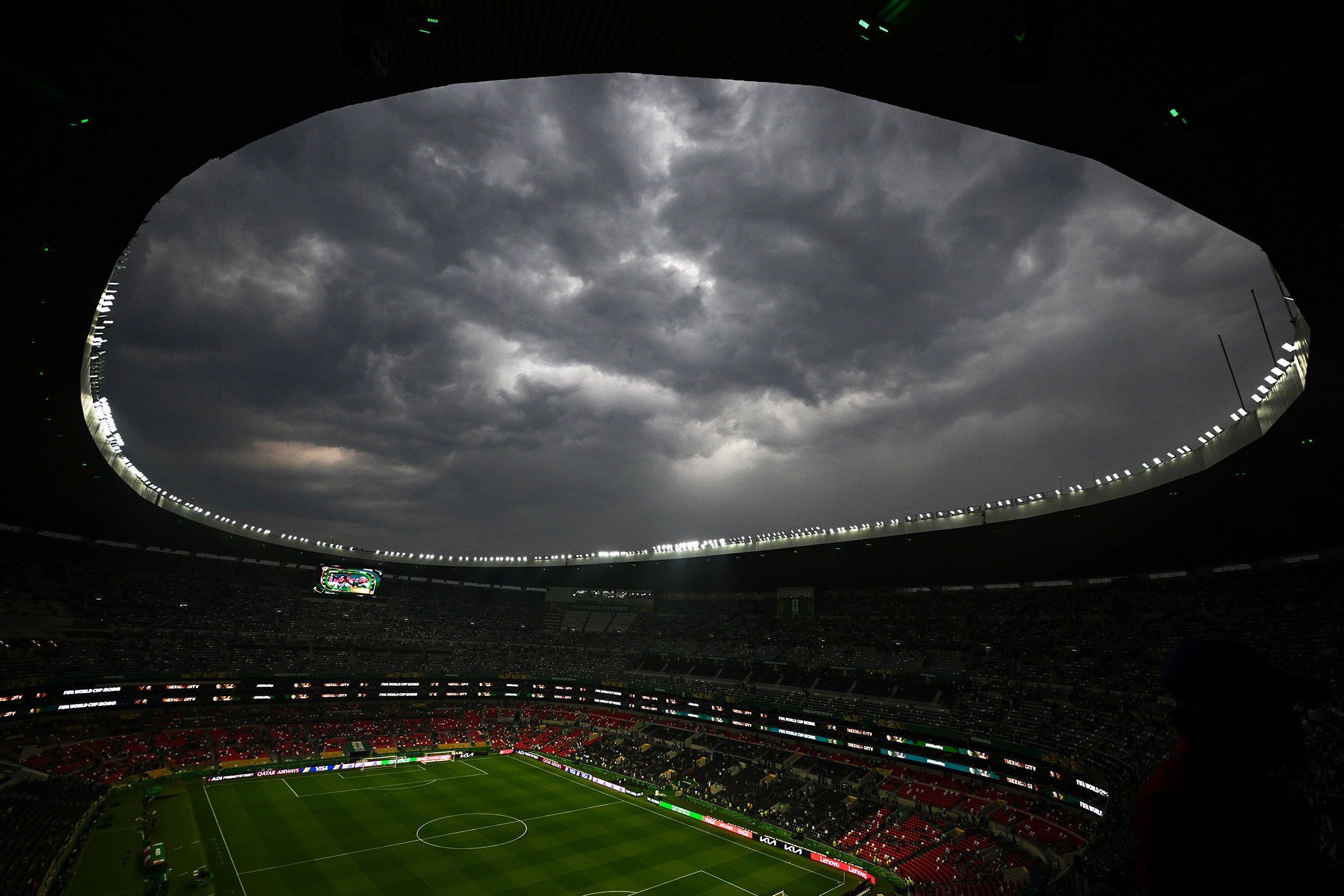
And so begins what will inevitably become one of the great England occasions, all pageantry and pubs open past sunrise, a momentary glimpse of a different world. The Azteca is a perfect theatre for perfect theatre, Mexico City already bubbling and boiling. This game will define what this squad is, define Tuchel as an England manager, unlike any other – say your Hail Harrys.
Despite almost no evidence and 60 years of well-documented history suggesting otherwise, Tuchel maintains that his team will grow with their opposition, with the scale of the moment. But how much will they have to grow to beat three Mexicos?
Photograph by Chris Brunskill/Fantasista/Getty Images