

When the staff rota came out for Non-League Finals Day earlier this year, escalator engineer Jay Lovell immediately put his name down. Having worked at Wembley during the event last season, he expected another undemanding shift: “It’s a nice easy one. Not a lot happens.”
This year turned out differently. In his fourth season as a semi-professional footballer at Cockfosters, centre-back Lovell has spent the last few months standing in as captain during an historic FA Vase run. Today, he returns to his irregular Wembley workplace. Only this time he will lead his side out on to the pitch for the biggest occasion in both his sporting career and the club’s history.
“It’s a boyhood dream,” he says. “It’s like winning the lottery. A normal, hard-working person like me playing at Wembley. That’s what makes the FA Vase so great.”
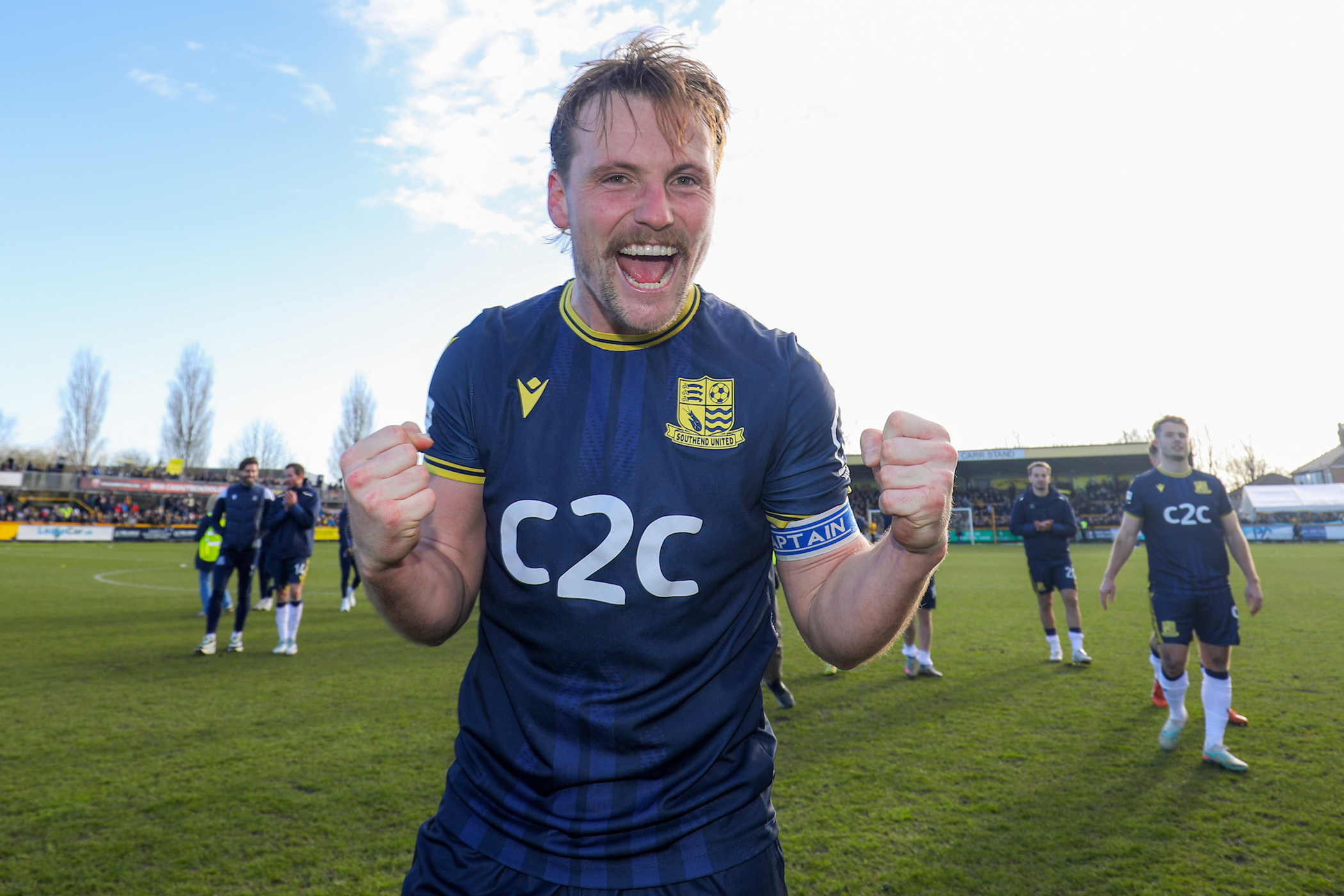
Cockfosters play Stoneham in the final of the Vase, which is contested by clubs in the fifth and sixth tiers of non-league football, and forms the first part of a Wembley double-header that concludes when Southend United face Wealdstone in the FA Trophy final, for clubs in non-league’s top four tiers.
From unpaid volunteers deciding who should sit in the royal box, to thousands of Southend supporters revelling in their club’s survival after near-extinction, it is an occasion laden with meaning.
For a Spartan South Midlands Premier Division club the size of Cockfosters, it is an improbable situation to find themselves in having reached Wembley courtesy of four penalty shootout wins from eight FA Vase matches.
Sandwiched between two cricket pitches in a leafy suburb of north London, the football club is easy to miss. When they sold out the ground for the home leg of their semi-final triumph over Punjab United, they drafted in food and drink facilities to cater for a 700-strong crowd far beyond the usual gate of around 100.
“Someone asked me what the buzz had been like around the town,” says Lovell. “But, to be honest, nobody actually knows we are there.
“The cricket clubs are a bit more prestigious and do a lot better than us. So people walk into our ground thinking it’s another cricket club. We’re quite under the radar.”
Stoneham, by contrast, carry the tag of the second largest grassroots football club in the country. When chairman Mark Stupple first watched his son play for them 12 years ago, the Hampshire outfit had only nine teams. This season they fielded 161, ranging from Under-7s to the men’s first XI, who head to Wembley after winning the Wessex Premier Division title, gaining promotion to non-league’s fourth tier for the first time in their 107-year history.
Newsletters
Choose the newsletters you want to receive
View more
For information about how The Observer protects your data, read our Privacy Policy
“I grew up in non-league football and I’ve come from the journey where Wembley is the dream,” says Stupple.
“You can’t put into words the excitement, fulfilment, pride and emotion. Wembley are talking to us exactly like they talk to Manchester City and Chelsea for the FA Cup final – everything from the mascots, to the hotel, to guests, there’s so much to do. The only difference is we’re all volunteers, whereas Manchester City and Chelsea probably have 50 people each to arrange this kind of stuff.
“I had a fairly good job but I was able to retire at 55, and I now do 60 or 70 hours a week unpaid. I’ve never worked harder, but it’s all worth it for days like this. It’s going to be the greatest moment of the players’ lives. In 50 years’ time they will still be telling their grandchildren about it.” If Cockfosters and Stoneham represent the dream end of non-league football, Southend embody its fragility.
Close to 25,000 of their fans will travel to Wembley for a second time in 12 months, after watching their side lose the National League playoff final in extra-time last season. The club are the best supported in non-league football – averaging more than 8,000 per game – yet less than 20 years ago, they counted the likes of Sunderland, Crystal Palace and Wolves as opponents in a 2006-07 Championship season that ended with relegation alongside Leeds United. Financial turmoil saw them plummet down the pyramid, and they almost went bust in 2024 before a fan-led takeover.
“It was a real concern,” says lifelong supporter, chief executive and shareholder Tom Lawrence. “It was when I took a call from our east of England ambulance guy about putting in a mental-health coping plan in the event that the club died that it really hit home about how serious the situation was. Thankfully, we’re now out the other side, which is a relief.”
The last time their Wealdstone opponents played at Wembley in 1985, a young Vinnie Jones was an unused squad member as they became the first club to complete a fifth-tier and FA Trophy double.
Best known outside non-league circles for their fan Gordon Hill, who achieved internet fame as the Wealdstone Raider, the west Londoners return to Wembley at the end of a rollercoaster season. The club sacked their manager three months ago, and were last month taken over by American businessman and former Leyton Orient director Nick Semaca.
It is unlikely Cockfosters captain Lovell will be watching by the time they play, with planned festivities in store regardless of his side’s FA Vase final outcome. The next time he sets foot inside Wembley, it will be back to repairing escalators.
Photograph by Graham Whitby Boot