The Sunday Stat: The Trent Bridge Test is the second ever played in England in which both sides reached 180 in their first innings before the fall of their second wicket. The two teams third-to-10th-wicket stands totalled 286 first-innings runs – the lowest in 37 Tests at Trent Bridge since 1980.
The many moods of Test cricket have been on spectacular display in the series decider in Nottingham. No wickets for 317, then ten for 121. Two for 224, then eight for 130.
The Trent Bridge Test, and its surface, have fluctuated and confounded. Midway through the third session on the first day, the pitch was given full “Road” status, and England were in the realms of trying to achieve the completely unprecedented. In the history of first-class cricket, encompassing more than 60,000 matches, no team have ever won after bowling first and conceding a triple-century opening stand.
By the end of the first day, they had recovered to a better position than those from which they achieved come-from-behind victories against New Zealand at Trent Bridge in 2022, against Pakistan in Multan in 2024 and last summer against India at Headingley.
By the end of the second day, England were favourites. Half an hour into the third day, they were floundering. By tea, despite a fine innings by Harry Brook and anti-Bazballistic resistance by Gus Atkinson, they were facing a first-innings deficit of 84 on an increasingly difficult pitch producing occasional extreme movement.
After the uncomfortable echoes of the pre-Bazballistic era at the Oval, the first two days were laced with 2022 nostalgia. Ben Stokes, returning after one of cricket’s oddest and briefest absences, drove his team to conjure a dominant position from apparent hopelessness on a prime batting surface.
Then, with the bat, England threatened or broke speed-scoring records. A new mark was set for the fewest deliveries faced by a batting team to reach 150 in a Test innings in England. Ben Duckett’s century was the joint second-quickest in Tests by an England opener – all seven of his hundreds are in the top 11 on that list. Boundaries crackled – 26 fours in the first 26 overs.
Opposition bowling figures looked like a team being flayed in a one-day match – an opening spell of 0 for 27 off 4 overs, a spinner with 0 for 55 off 8.
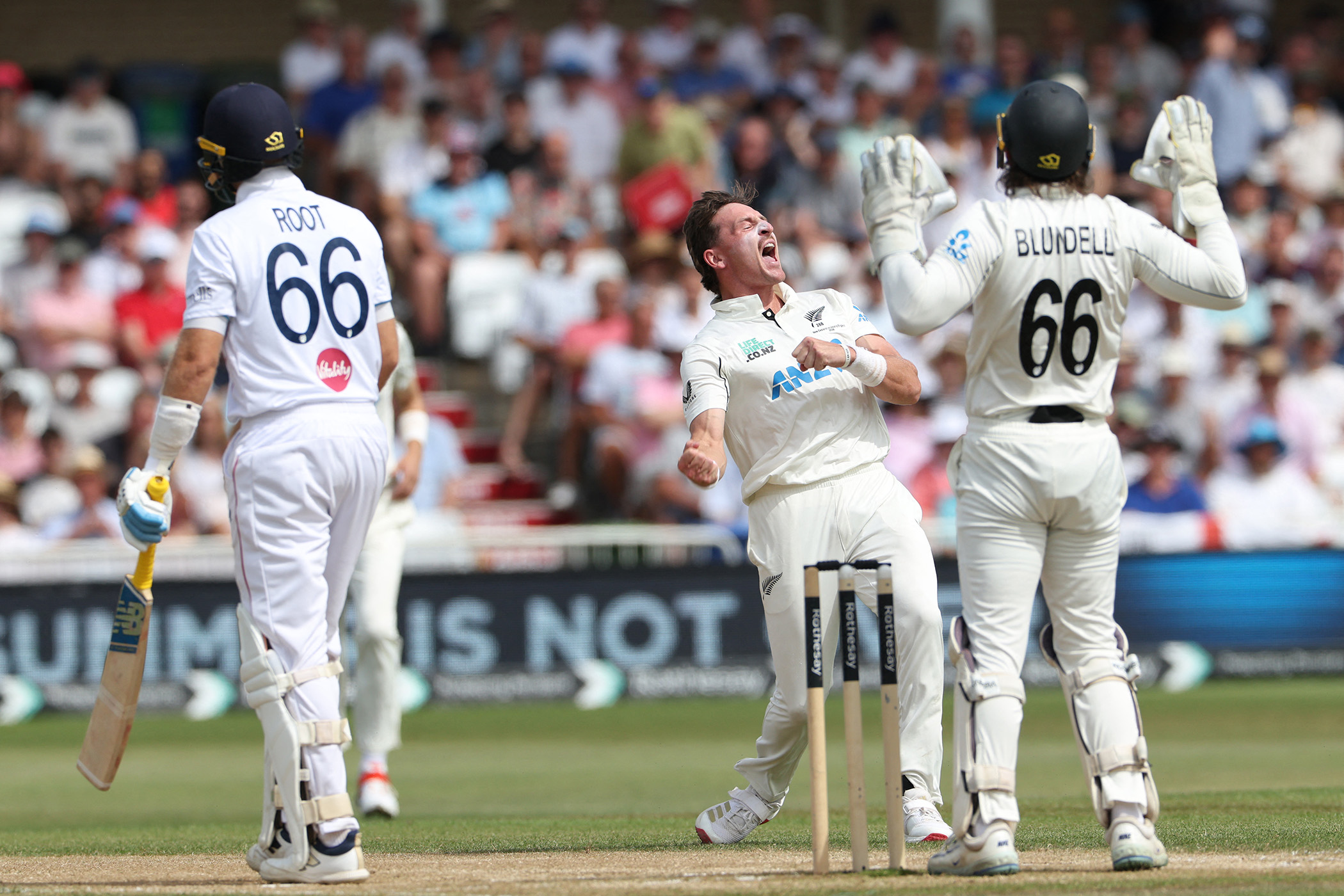
From a position from which no team had ever won, England had become bookmakers’ favourites to win. Then, on the third day, the unpredictabilities of Test cricket struck again. Joe Root was leg before wicket to a seamer for the sixth time in his last eight innings – he had been lbw to a pace bowler just six times in his previous 105 innings. Jacob Bethell and Jamie Smith edged balls they could have left, the apparently somnolent pitch began to misbehave, Ben Stokes was bowled for the eighth time in his last 16 innings. Brook batted with precision and discernment before being bowled for 58. In England’s last eight Tests, Brook has reached 30 ten times, but only once scored more than 60.
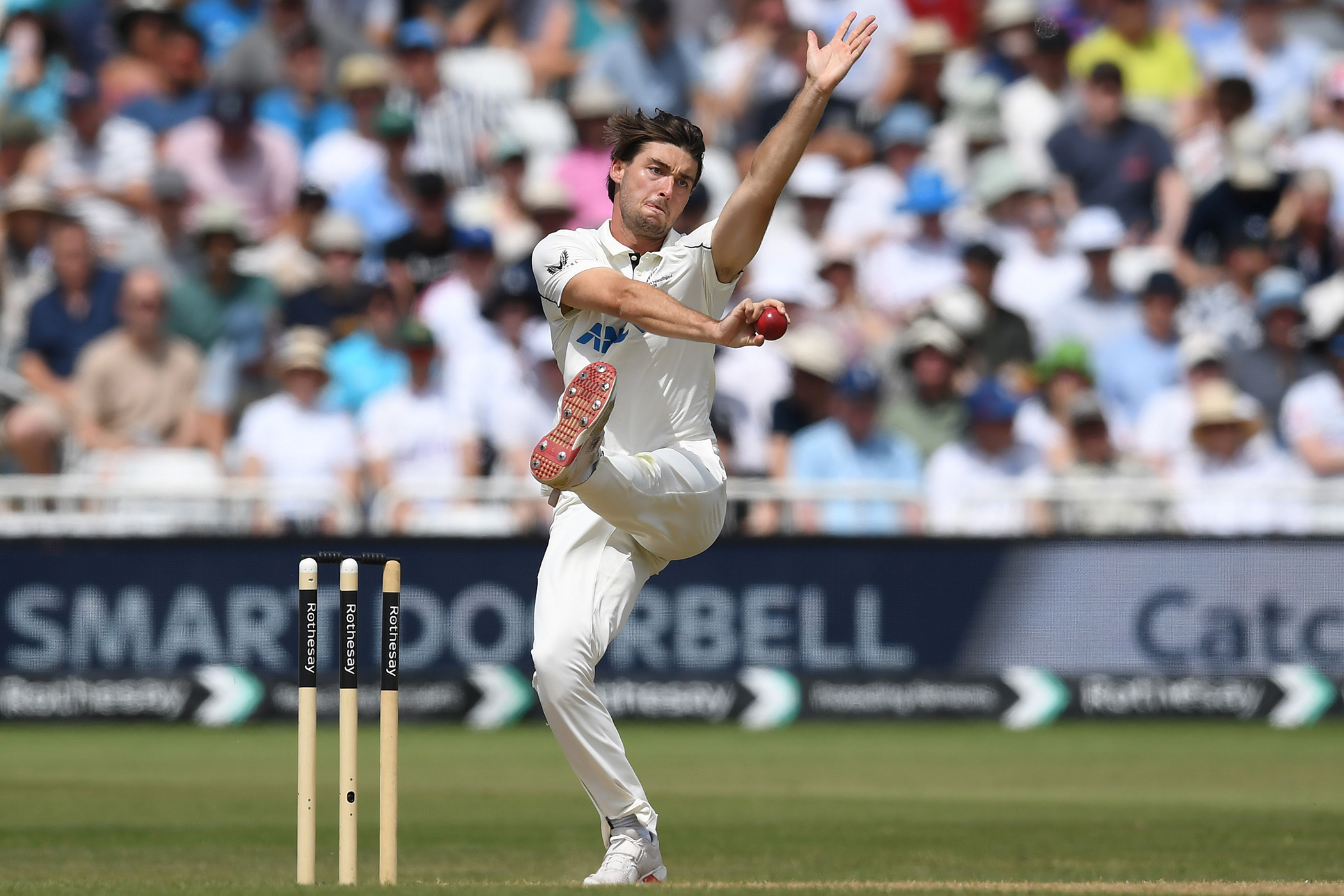
By the time Brook’s innings was ended by a superb delivery by Zak Foulkes, batting had seemingly become a different job than it was two days previously.
Newsletters
Choose the newsletters you want to receive
View more
For information about how The Observer protects your data, read our Privacy Policy
The 317-run Latham-Conway partnership made up 72.4% of New Zealand’s total, the third-highest proportion of an all-out team innings by a first-wicket partnership in Test history, and second-highest in the opening innings of a match. It lies behind only the 276 out of 365 all out added by Adrian Griffith and Sherwin Campbell for West Indies against New Zealand in Hamilton in December 1999, which is the the only instance in Test history of the team batting first putting on more than 180 for the first wicket, and still losing.
This was the 17th triple-century opening stand, and only the third in which the batting team has been bowled out in that innings – 11 were followed by declarations, and three innings were unfinished when the match ended. The two all-out scores were 608 (England in Johannesburg in 1948-49, after Hutton and Washbrook added 359 for the first wicket), and 589 (England in Melbourne in 1911-12, after openers Hobbs and Rhodes put on 323).
Only twice previously had an opening partnership of more than 200 been followed by a team losing all ten wickets for fewer than 140 runs. Slumping from 317 for 0 to 438 all out was therefore a historically unprecedented failure to capitalise on being a triple-century opening stand at the start of a Test match, and a statistically phenomenal recovery by England’s bowlers.
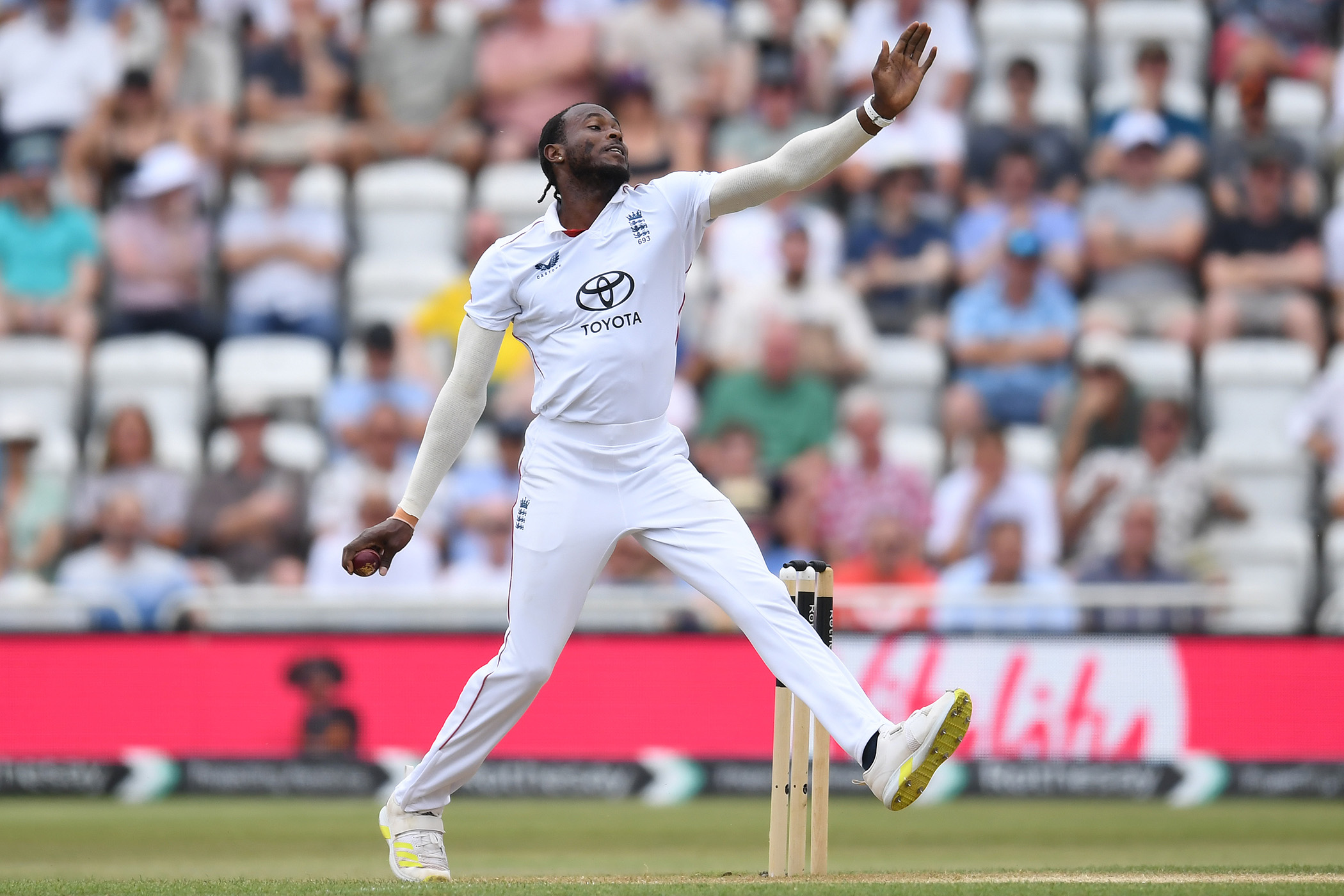
Stokes sparked the turnaround. After the first innings in Nottingham, Stokes had taken 47 wickets, averaging 24.0 in his last 13-and-a-half Tests since the second Test in New Zealand in December 2024. He had never taken more than 41 in a 14-Test sequence in his career, and, hampered by injuries, had taken 11 wickets, averaging over 50, in his previous 22 matches.
Highlighting the fickle nature of cricketing fate, while Duckett avoided a 15th consecutive innings without a half-century courtesy of Henry Nicholls dropping a slip catch, and then eviscerated the injury-stripped New Zealand attack. Emilio Gay feathered a leg-side fend and became only the second opener in Test history to make a duck in a match in which the other three openers all made first-innings hundreds. He joins West Indies’s Wavell Hinds, who, in Antigua in 2005, having fielded while South Africa’s Graeme Smith and AB de Villiers made centuries, was out first ball, before his partner Chris Gayle made 317.
That match ended in one of the most drawn draws in Test history – 1,462 runs for 17 wickets (including two runouts), in 429 overs of cosmic pointlessness, Hinds’s golden duck standing out as a heroic rejection of docile pitches and batting-dominated cricket. In times past, this match might be heading in a similar direction.
Photograph by Darren Staples/AFP via Getty Images