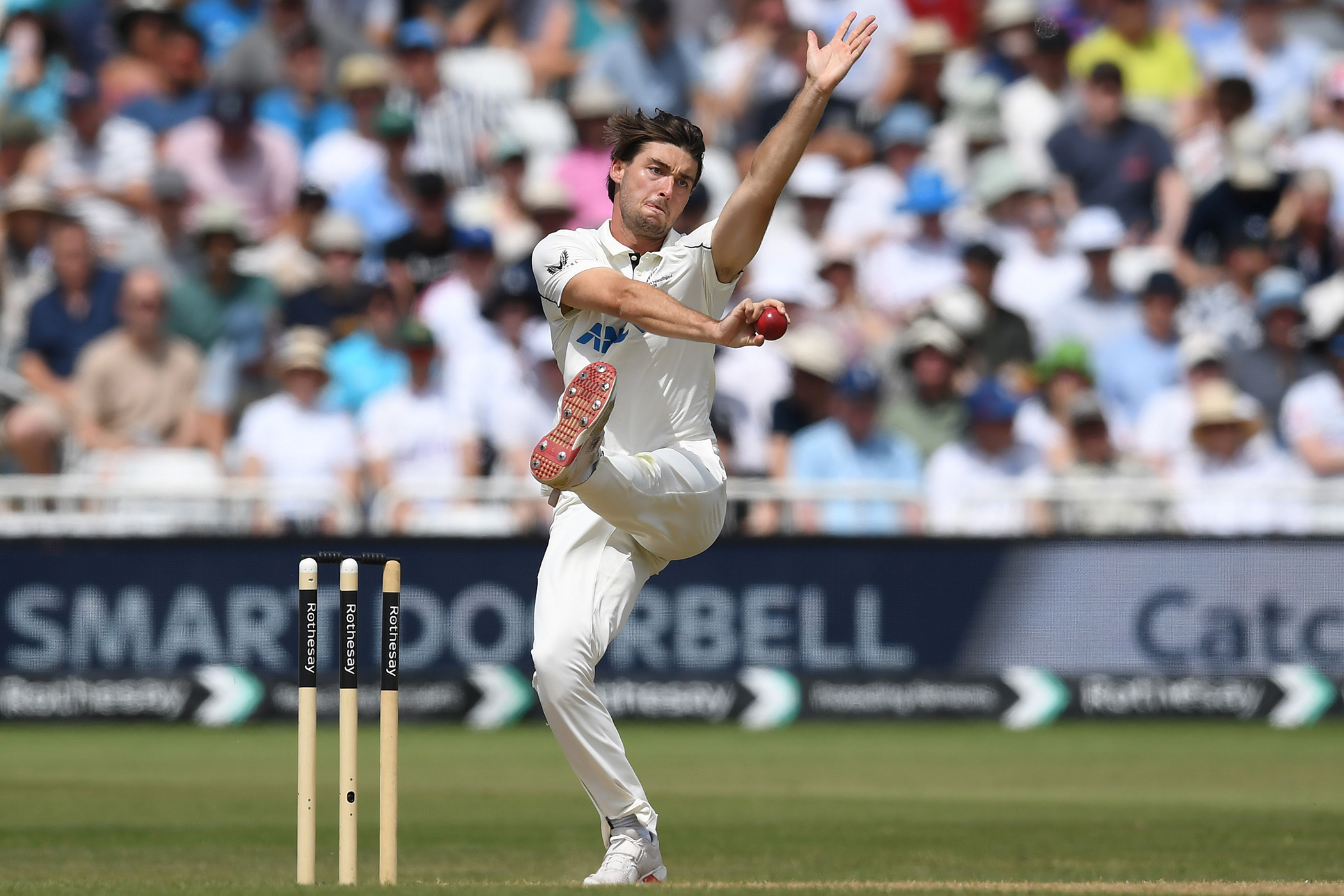

Zak Foulkes, New Zealand’s eighth-choice seamer, runs in to bowl at England captain Ben Stokes. Landing it on a length, he gets one to seam back in slightly and Stokes is clean bowled.
An hour or so later, Foulkes, New Zealand’s eighth-choice seamer, is running in to bowl at Harry Brook. The ball is angled into the right-hander, then nips away off the seam to see Brook clean bowled. New Zealand’s depth, on two occasions, was more than good enough for England’s strength.
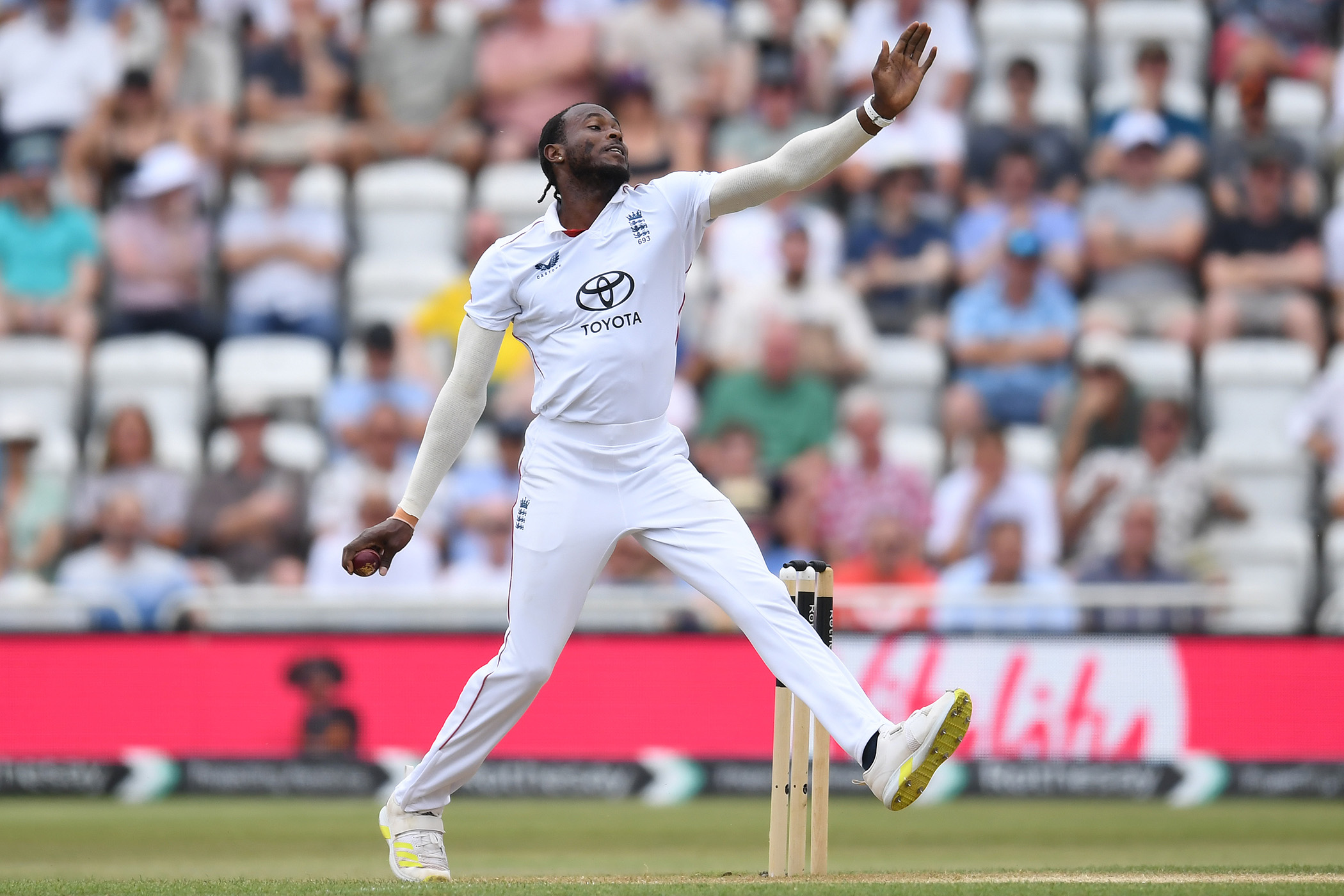
Foulkes wasn’t meant to be playing this Test. Selected behind Blair Tickner, he was called into the contest after Tickner was forced to withdraw from the match with concussion after he had been struck by a bouncer from Jofra Archer. Foulkes, with his unorthodox, over-the-top-of-his-head action and pace in the low 80s settled in immediately. He has been the most economical bowler at Trent Bridge from either side, in what has been a sun-drenched, run-baked Test.
The thing is, however, that Foulkes represents the rule of New Zealand cricket, rather than the exception.
There is an apocryphal tale of a conversation that once happened between two cricketing greats in Sachin Tendulkar and Garfield Sobers. Tendulkar, hailing from India, asked Sobers, who grew up in Barbados, how an island of fewer than 300,000 people had produced a conveyor belt of world-class cricketers.
“Because if we have a good player,” Sobers said. “We know about it.”
The same is true for New Zealand, whose population of five million is the lowest of any Test playing nation and yet in the last decade has seen them win the inaugural World Test Championship in 2021, and make five ICC finals between 2015-2026.
Their success is no accident. Across the 21st century, New Zealand cricket have made several decisions focused on keeping their national team competing at the highest level. Two of which have stood out in particular: a national team-first culture and a focus on international A-team cricket.
In acknowledging that the strength and depth of their first-class set-up would be limited given a small playing population, in 2018 New Zealand culled two rounds from their first-class competition in order to fund more A-team cricket and allow their best players to be exposed to the toughest conditions and the best young players that other nations would have to offer. Earlier this year, during the IPL and PSL where Kiwi players were present, the Black Caps played a white-ball series in Bangladesh, while the A team played a multi-format tour of Sri Lanka. The result was 54 Kiwi cricketers experiencing the subcontinent all at the same time.
“It’s just under half of our contracted players in the country,” said head coach Rob Walter at the time. “We are giving a large number of players international experience at different levels, trying to make sure that we strengthen our whole system and not just a small group of players.”
Newsletters
Choose the newsletters you want to receive
View more
For information about how The Observer protects your data, read our Privacy Policy
To ensure a national team-first approach is taken, New Zealand Cricket pay a proportion of each domestic head coach’s salaries. The result is that when judgement calls are to be made, the national board can press their thumb on the scale to make sure that the player they see doing a specific role in the national team is performing the same role at domestic level.
One example of this, highlighted in The History of Test Cricket by Tim Wigmore, was when former Black Caps head coach Mike Hesson asked Northern Districts in 2012 if they’d mind moving their specialist opening batsman BJ Watling down the order and to ask him to keep wicket. Watling retired almost a decade later as New Zealand’s most successful ever wicketkeeper-batsman.
If you can measure New Zealand’s success on the pitch, their unity off it plays a factor too. Across the team and staff, almost 20 children are accompanying them on tour. The cliché that everyone knows everyone is, by the looks of it, well, true. The media manager played club cricket with Will O’Rourke and claims to have kept him out of the first XI, while the videographer played Rachin Ravindra growing up and claims to have hit him for four twice. He also concedes that he has got out to Ravindra more than twice.
A week ago at the Oval, England were forced to reach into the bottom of their depth chart and hand eighth-choice Sonny Baker a debut and seventh-choice Matt Fisher a second cap. A humbling, 253-run defeat followed.
For New Zealand, however, the further they have been stretched, the stronger they have appeared. Foulkes, for what it’s worth, has opened the batting in first-class cricket as well. And if you want another name, write down Thomas O’Connor. A 21-year-old “freak” left-armer who made his first-class professional debut last year and went on to dominate New Zealand’s first-class competition. No doubt he’ll be on the Black Caps’s next tour of England. And whether he’s first choice, or tenth choice, he’ll get the job done.
Photograph by Philip Brown/Getty Images