
On 29 June, Saleem Khader al-Ashqar got on his motorbike and headed out to find a cooking gas cylinder at the request of his pregnant wife. The 32-year-old goalkeeper, who had played for a number of teams in Gaza, got married in January and the couple were expecting his first child. He never returned home.
Israeli tanks opened fire in al-Qarara, southern Gaza, according to health officials and emergency services. Al-Ashqar was hit by bullets and died. He was the 567th Palestinian footballer to have been killed by Israel since the war began in October 2023, according to the Palestinian Football Association.
“Anyone who does not feel the suffering of the Palestinian people has lost their humanity,” said Egypt manager Hossam Hassan before his side’s last-16 match against Argentina, which they lost 3-2.
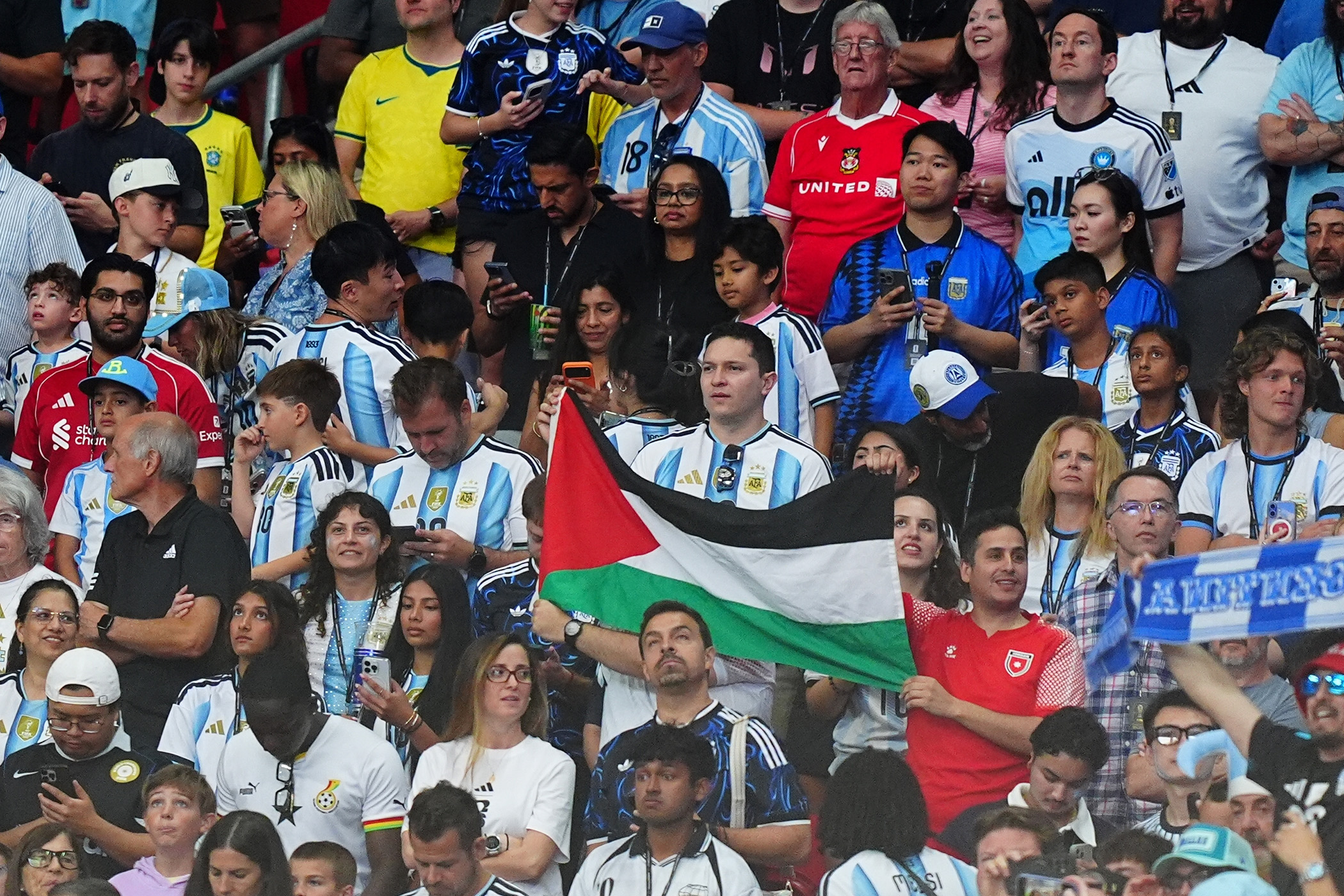
Hassan has been outspoken about the conflict in Palestine throughout the tournament. He dedicated his side’s win over Australia in the previous round to both the Egyptian people and the Palestinian people. An Argentina fan was pictured holding an Israeli flag during the subsequent fixture between the two nations in apparent response.
“Through football… I want to send a message: please let the Palestinian people live,” Hassan said. “I ask athletes and journalists everywhere to help deliver that message.”
As Israel’s assault on Gaza and the West Bank has continued during the World Cup, Palestine have become the 49th team at the tournament.
Ahead of the World Cup opener between Mexico and South Africa on 11 June, activists in Mexico City gathered to form the image of a Palestinian flag in the street. That match was attended by the head of the Palestinian FA, Jibril Rajoub. He was unable to watch matches in the United States because he was not permitted a visa. It is traditional for heads of international associations to travel to World Cup matches regardless of whether their team qualified.
The group-stage match between Jordan and Algeria on 23 June attracted fans holding Palestinian flags and Jordanian flags, which share colours due to both paying homage to the flag of the 1916 Arab Revolt. Some fans also wore the black and white keffiyehs associated with Palestine as well as their own Jordanian red and white keffiyehs.
Jordan has more than two million Palestinian refugees, with many more Jordanians descended from Palestinians. Meanwhile the Algerian team displayed the Palestine flag after they qualified for the World Cup.
Fans of Bosnia-Herzegovina chanted “Palestine, Palestine” during their games. Some Bosnian Muslims believe there is a commonality between their experiences in the 1990s, including the massacre of around 8,000 Bosniak men and boys at Srebenica in 1995, with the struggle faced by the Palestinian people today.
Newsletters
Choose the newsletters you want to receive
View more
For information about how The Observer protects your data, read our Privacy Policy
Awareness-raising on its own can appear inconsequential, but refusing to be silenced has an impact.
Last year, green-card holder Mahmoud Khalil, who was involved in the Gaza Solidarity Encampment at New York’s Columbia University, was detained by Immigration and Customs Enforcement (ICE) officials. Khalil was held for 104 days without criminal charge, with the US government attempting to have him deported under the Immigration and Nationality Act. Khalil missed the birth of his first child as a result and his legal case remains ongoing.
In Britain, the proscription of Palestine Action has led to more than 2,000 people being arrested for expressing their support for the group, including one man being arrested for wearing a T-shirt with the slogan “Plasticine Action”.
Neither Israeli nor Palestinian flags are permitted at Premier League grounds, but both are allowed by Fifa at World Cup games because they are member nations of Fifa.
Whatever limitations that footballing institutions try to place on the political element of the sport, politics contrives to get back in the way.
Just before Tuesday’s World Cup match between Argentina and Egypt, a taxi was hit by an Israeli missile in the Sabra district of Gaza City. The Israeli military said that 57-year-old aid worker Mohamed al-Wahidi was killed by the strike. He was on his way to a screening of the game which he had organised as part of a series of World Cup matches shown in Gaza. The Israeli sources told Reuters that they had been targeting a Hamas terrorist.
Also killed in the blast were two brothers, Fari and Hamza al-Deri, who were eight and 10 years old. They were on their way home from playing football.
Photograph by Evrim Aydin/Anadolu via Getty Images