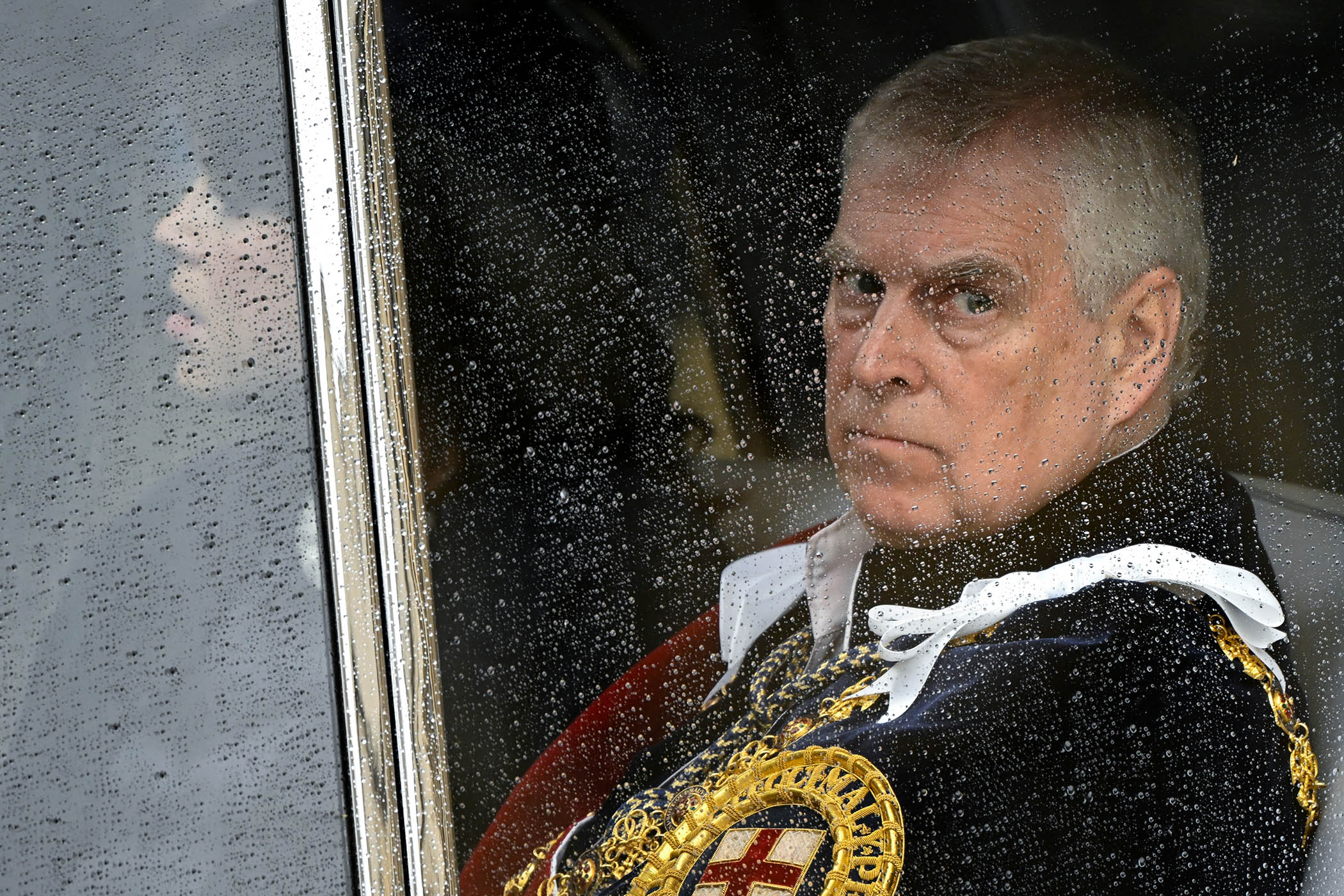


Thames Valley police arrested a man on suspicion of misconduct in public office this morning.
So what? That man is Andrew Mountbatten-Windsor, formerly Prince Andrew. Police have been assessing allegations that Mountbatten-Windsor shared sensitive information with the convicted sex offender Jeffrey Epstein while he was the UK’s trade envoy. Mountbatten-Windsor has consistently denied any wrongdoing in relation to Epstein, but his arrest in Norfolk
•
will test the limits of an ill-defined law to deal with a high-profile public figure;
•
raises questions about the specific allegations being investigated by police; and
•
marks the most significant royal scandal since the abdication of King Edward VIII.
The moment. Unmarked police cars and plainclothes officers arrived at Sandringham Estate in Norfolk to arrest Mountbatten-Windsor. Shortly after 7pm he was pictured in the back of a Range Rover leaving Aylsham station.
The offence. Misconduct in a public office is defined by the Crown Prosecution Service as “serious wilful abuse or neglect of the power or responsibilities of the public office held”. It is tried by a jury.
The small print. A common law offence dating back to the 13th century, misconduct in public office is not on the statute books and is poorly defined. Two new statutory offences, known as the Hillsborough Law, are intended to replace it but are still moving through parliament.
The numbers. The offence had largely fallen into disuse, but a Law Commission report in 2020 found that annual prosecutions had risen from single figures at the turn of the century to more than 80 per year. However, there remains a high bar for conviction.
•
More than 90% of the 191 people convicted of the offence between 2014 and 2024 were prison or police officers, often those accused of having inappropriate relationships.
•
Only four were people in senior positions, including a bishop convicted of sexual offences and a Ministry of Defence official who received more than £70,000 in kickbacks.
•
No politician in modern history, even during the expenses scandal, has been convicted of the offence and certainly not any royal.
The burden of proof. The CPS says that for an offence to be committed there must be a “direct link between the misconduct and an abuse of those powers or responsibilities”.
The barrier. What is normally hardest to prove is that an instance of alleged misconduct amounts to an “abuse of the public’s trust” that justifies a criminal prosecution.
The possible outcome. Mountbatten-Windsor, who turned 66 today and is eighth in line to the British throne, is suspected of an offence that carries a maximum sentence of life in prison.
The other claim. Thames Valley police have also been looking into allegations that a second woman was sent to the UK by Epstein to have a sexual encounter with Mountbatten-Windsor. It is understood that today’s arrest relates only to misconduct in public office.
Newsletters
Choose the newsletters you want to receive
View more
For information about how The Observer protects your data, read our Privacy Policy
What we can say. Mountbatten-Windsor has been under heavy scrutiny for his alleged appearances in the Epstein files, not least in terms of how they relate to his public role in the royal household. His fall from grace has included being stripped of his titles.
What we know. Mountbatten-Windsor was released under investigation and has not been charged with a crime. The Home Office reportedly had advanced warning of the arrest, but King Charles did not.
Regal bind. Even if Mountbatten-Windsor is never charged, this is a royal crisis that puts the ongoing hoo-ha over Prince Harry and Meghan Markle into perspective. The legitimacy of the House of Windsor as a family committed to public service could be imperilled by questions over
•
what members knew about Mountbatten-Windsor’s alleged behaviour and when;
•
what role, if any, they have played in supporting him through his legal battles; and
•
whether they acted fast enough to remove his titles and excise him from public life.
What’s more… Following the arrest, King Charles said that the “law must take its course”.