
This article first appeared as part of the Daily Sensemaker newsletter – one story a day to make sense of the world. To receive it in your inbox, featuring content exclusive to the newsletter, sign up for free here.
The US and Iran have claimed victory after a two-week ceasefire was struck between the warring nations.
So what? Both cannot be right and the ceasefire is hardly a ceasefire. Six weeks of conflict have decapitated most of Iran’s senior leadership, while also proving that firepower alone cannot topple a regime as sprawling and deep-rooted as the Islamic Republic. But Tehran has the upper hand and despite Donald Trump saying Washington has “exceeded” its objectives,
•
it is Iran’s ten-point plan that will form the basis of negotiations in Pakistan;
•
Tehran still controls the Strait of Hormuz, wielding power over global shipping; and
•
Israeli attacks on Lebanon risk the truce falling apart before it has barely got started.
Same old. Trump suspended fighting for two weeks on Monday night to allow talks on a permanent ceasefire. Pete Hegseth, his defence secretary, says the US is dealing with a new group of people with “a new calculus about what it means to negotiate”. But Iran’s leadership is more hardline than ever – not least the new supreme leader, Mojtaba Khamenei.
Any deal will do. Iran’s supreme national security council said it had “achieved a great victory” by persuading the US to accept its 10-point proposal as the basis for upcoming talks. Even Trump conceded the plan was “a workable basis on which to negotiate”, although the White House later tried to walk this back.
Is it workable? No. The proposal comprises a laundry list of items long seen as a non-starter for both Trump and Netanyahu. In its current form it would enshrine Iranian control of the Strait of Hormuz, lift all sanctions, pay the country war reparations and require the US to withdraw its forces from the Middle East. The version released in Farsi, and a graphic put out by one embassy, would also allow nuclear enrichment.
Reality check. Dina Esfandiary of Bloomberg Economics said basing talks on these conditions means that they are doomed unless Trump accepts “a significant chunk of Iran’s demands”.
Peace talk. Trump continues to insist that there will be no enrichment of uranium in Iran and even that Washington will work with Tehran to dig up what he called “nuclear dust”. Hegseth said the US could strike Iran again if it refuses to hand over its enriched material.
Always leave things worse than before. Whatever happens to its nuclear stocks, Iran’s effective control of the Strait of Hormuz gives it enormous power over the global supply of energy. It bears repeating that a fifth of the world’s oil and gas transits the channel. According to a JP Morgan analyst, Iran’s proposal to charge a $2m toll for as many as 130 vessels per day could net the regime $90bn a year in fees. This would be a lifeline for a struggling economy.
If Tehran gets anyone to pay. More than a thousand large commercial ships are stuck in the Persian Gulf but a fragile ceasefire has not been enough for them to risk going through Hormuz.
War on truth. Trump’s suggestion that Washington might seek to share toll fees in the channel suggests a fundamental misreading of where power currently lies on the ground. Despite his boasts of “total and complete victory”, the Islamic Republic can claim success in its survival, even if it has permanently alienated many of its neighbours. Negotiations begin on Friday.
That is, if the truce holds. Israel killed more than 250 people across Lebanon yesterday, prompting Iran to close the strait again and threaten to withdraw from the ceasefire.
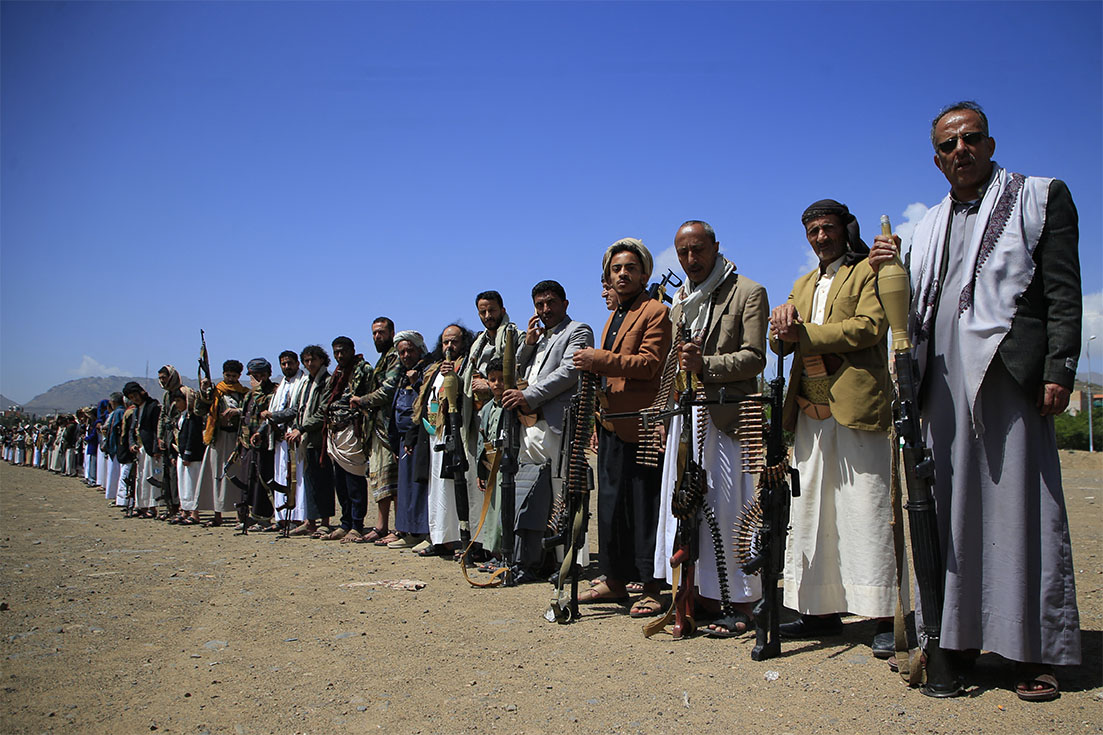
Photograph by Mohammed Huwais / Getty Images
Newsletters
Choose the newsletters you want to receive
View more
For information about how The Observer protects your data, read our Privacy Policy