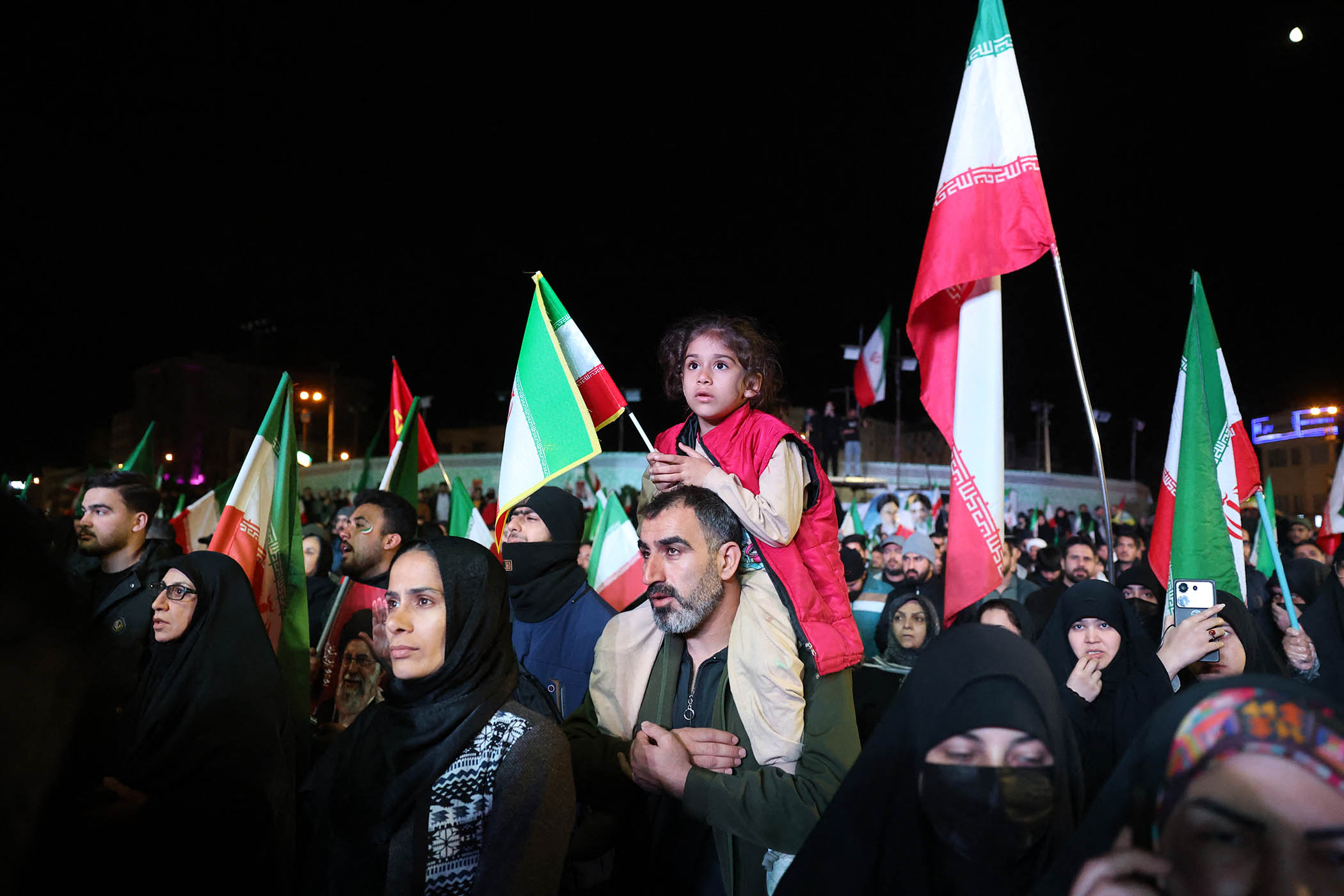


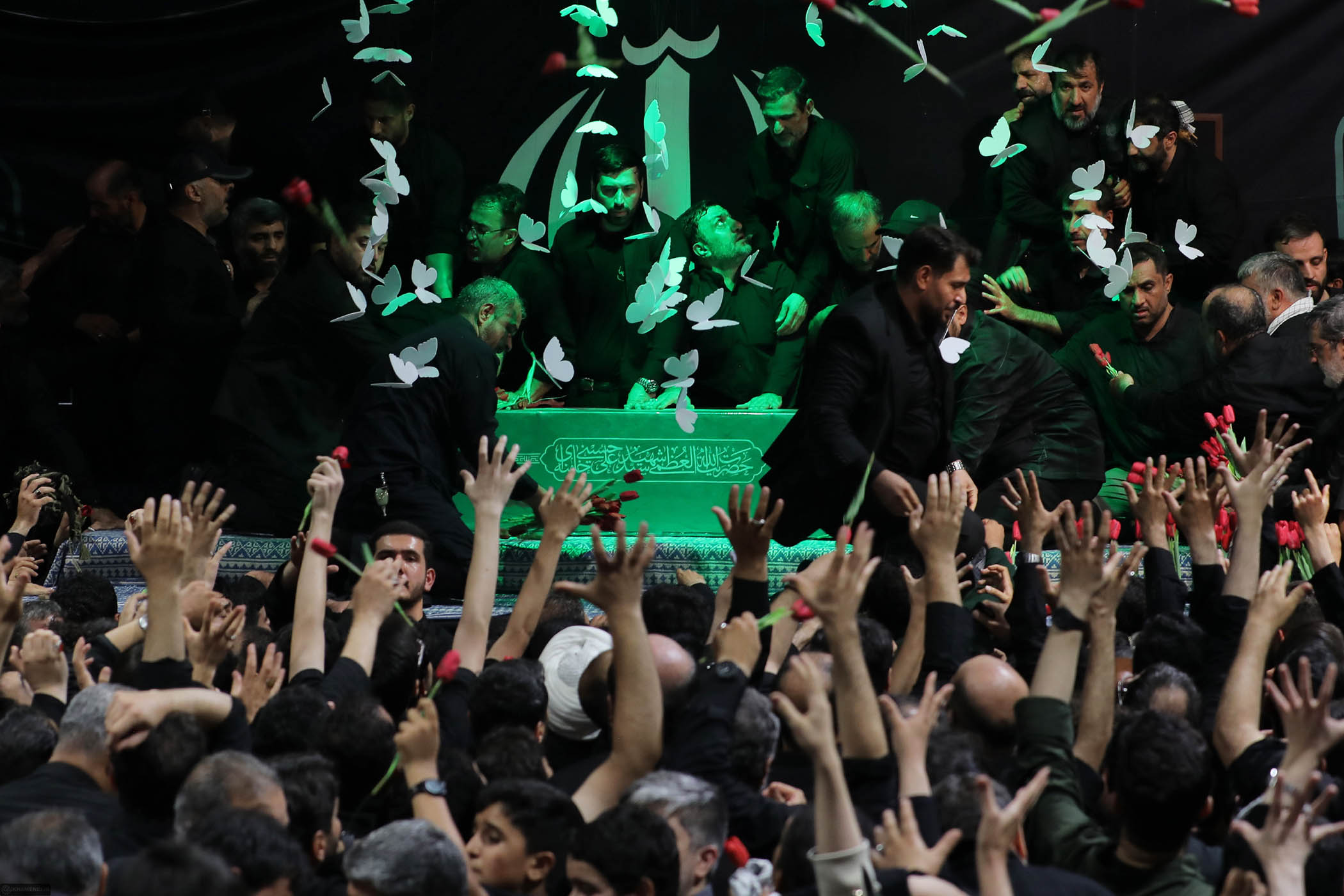
News of a last-minute reprieve from Donald Trump’s threats brought the people of Tehran out on to the streets on Tuesday night. Some waved flags and clutched pictures of the new ayatollah, Mojtaba Khamenei, who is still yet to appear in public. The noise of a victory march echoed through the damaged streets of the capital, patriotic songs blaring from speakers fitted to a van, accompanied by motorcyclists chanting in support of Iranian fighters.
For others the truce was little more than a chance to exhale and to grieve after 40 days of war. Parisa, a writer in western Tehran, wept on hearing news of the ceasefire. “Trump said he wouldn’t leave us alone – so why does he want to make a deal with the devil?” she said in a message.
Trump’s declaration of a two-week ceasefire appears to leave the regime in Tehran with the upper hand going into negotiations, despite his claim to have achieved “all military objectives”. The pause in fighting, the US president said, would allow time for talks to secure a permanent peace, dismissing “the various points of past contention” – such as Iran’s nuclear programme, proxies and control of the Strait of Hormuz – as a thing of the past.
Parisa had spent the evening cleaning her apartment and filling every container she had with water in case Trump’s threatened wave of apocalyptic strikes on Iranian power plants and infrastructure knocked out the electricity, water and what little remains of the internet. Trump had posted on his Truth Social platform on Tuesday: “A whole civilisation will die tonight, never to be brought back again. I don’t want that to happen, but it probably will.”
Parisa texted her mother while she still could, promising to take care of herself if the worst happened. But when news of the ceasefire reached her, she despaired: despite a reprieve from the strikes, Iranians are still living under the regime she despises. Tehran remained smothered in a maze of government checkpoints, with convoys of Shia militias from Iraq and Afghanistan parading in a show of regime support.
As the ceasefire was announced, Iran claimed victory over its ultimate adversary, pointing to its many gains – chief among them: regime survival.
The supreme national security council in Tehran boasted that Trump had not only failed to achieve any of his stated goals of regime collapse on the first day of the war but had even conceded that Tehran’s 10-point plan will form the basis of negotiations.
Trump and his negotiators are now forced to consider the Iranian regime’s proposal, which includes several items that Washington previously balked at: accepting Iran’s nuclear enrichment programme, lifting all sanctions, paying Iran compensation, accepting Tehran’s regional proxies and withdrawing all US troops from the Middle East. Washington also appeared to have handed Tehran an even larger prize: “continued Iranian control over the Strait of Hormuz.”
In recent weeks Tehran has choked off traffic in the essential waterway – normally a key transit route for about 20% of the world’s oil and liquid natural gas supply, as well as other essentials such as helium – and reportedly proposed a complex web of transit fees paid to the Islamic Revolutionary Guard Corps for any ships wishing to cross without threat of attack.
According to analysis by Michael Cembalest at JP Morgan, the Iranian proposal to charge as many as 130 vessels a day about $2m each to transit the strait would bring the regime as much as $90bn in fees annually, a boon to Iran’s crumbling economy.
Newsletters
Choose the newsletters you want to receive
View more
For information about how The Observer protects your data, read our Privacy Policy
Despite the reluctance by most shipping companies to pay for a transit that was previously free, if Iran succeeds in exacting that sum from the 1,129 large vessels currently stranded in the Gulf, it would net Tehran over $2bn – more than the annual fees drawn by governments in Germany and Turkey for major waterways there, and already comparable to annual revenues drawn from the Panama and Suez canals.
“Iran probably did not expect its Hormuz strategy to be this successful. The lesson Iran has learned from this war is that holding the global economy hostage is cheaper and easier than anticipated,” said Dina Esfandiary, head of the Middle East programme at the thinktank Bloomberg Economics. “From Tehran’s perspective it’s a huge win. They knew they had this leverage but had never tested it – and when they did they didn’t realise it would be so successful.”
Tehran’s definition of victory differs from Washington’s, she added: “Iran’s objectives were survival, literally just staying standing and outlasting the US, and the second was exacting a cost so significant to the global economy that it would deter another round of this war.” As a result, Esfandiary believes that the truce is unlikely to last, while some within the regime, notably the IRGC, advocate for salvos to deter any future attack.
Much of Iran’s 10-point plan, she said, “is not acceptable to the US and Israel, and it can only be converted to a permanent ceasefire if Trump says yes to a significant chunk of Iran’s demands ... but that would leave a lot of people quite angry, including the Gulf states and Israel”.
Despite Iranian claims that Oman, which has territory on the other side of the strait, could join in their efforts to charge ships, the country’s transport minister, Said al-Maawali, has made clear it has no intention of doing so. Muscat is a signatory to “all relevant international maritime transport agreements, and fees cannot be imposed under these agreements”, he said.
Others, including the secretary general of the Gulf Cooperation Council, Jasem Mohamed Al-Budaiwi, pointed out that Iran charging vessels to pass through the strait is illegal and “a violation of the UN convention on the law of the sea”. Tehran, he added, cannot unilaterally claim control of a naturally occurring strait: unlike the Panama or Suez canals, it is not a man-made waterway within a single territory.
With Iran moving to formalise long term control over the strait, the global shipping industry remained in limbo: less than a day after Trump’s declaration that the strait would reopen immediately, Iranian state news channels said Tehran had closed it again in response to Israeli attacks in Beirut. Washington and Israeli officials had claimed Lebanon is exempt from the ceasefire agreement – Iran showcased its disagreement by shuttering the strait.
Uncertainty reigned while Iran flexed its ability to control the key waterway. Richard Meade of the shipping outlet Lloyds List wrote that owners of stranded vessels had begun preparations for them to flee the Persian Gulf following the news of the ceasefire announcement – but with many of the details, including the terms of the truce and the transit protocols, still unknown, none had been willing to take the risk of attempting to cross the strait.
“Iran’s controls over Hormuz traffic – including documentation checks, pre‑approvals and IRGC‑escorted transits – is causing industry hesitation and delaying immediate movement,” Meade explained.
Trump may have declared the strait open, he added, but there was no clarity about “when the truce takes effect”, or if Iran will enshrine its efforts to charge vessels to cross. Without better understanding of these terms, he said, none so far dared to cross.
Back in Tehran, Parisa felt exhausted as the regime claimed victory. The web of government checkpoints outside her window served only to remind her of the feeling that she no longer felt comfortable in her hometown.
“The city is not ours any more,” she said. Trump’s version of a ceasefire was bitter, she added, because, despite his claims of regime change, Iranians like her were left living under the same regime they rose up against three months ago.
“What have we done to the people of the world that they hate us so much?” she asked. “We have nothing to do with anyone. We just have a very bad government.”
Photograph by AFP via Getty Images