

This article first appeared as part of the Daily Sensemaker newsletter – one story a day to make sense of the world. To receive it in your inbox, featuring content exclusive to the newsletter, sign up for free here.
Germany has become the latest European country to bring back military service.
So what? These conscription programmes are much smaller than the near universal obligation in the Second World War. Tens of thousands of people are likely to be called up rather than millions. But they’re still a significant change of direction, driven by
•
fears that Russia will one day attack Nato;
•
recruitment struggles across the continent; and
•
a sense that the US may no longer be a reliable ally.
From Paris. On 27 November, France announced that volunteers aged 18 and 19 would be able to take part in a 10-month military service programme. Emmanuel Macron, the French president, said there was a generation “ready to rise up for the fatherland”.
To Berlin. A week later, Germany passed a law to reintroduce voluntary military service. If not enough people are enlisted, then needs-based conscription may be introduced. The defence minister Boris Pistorius said the country’s allies were “looking at Germany”.
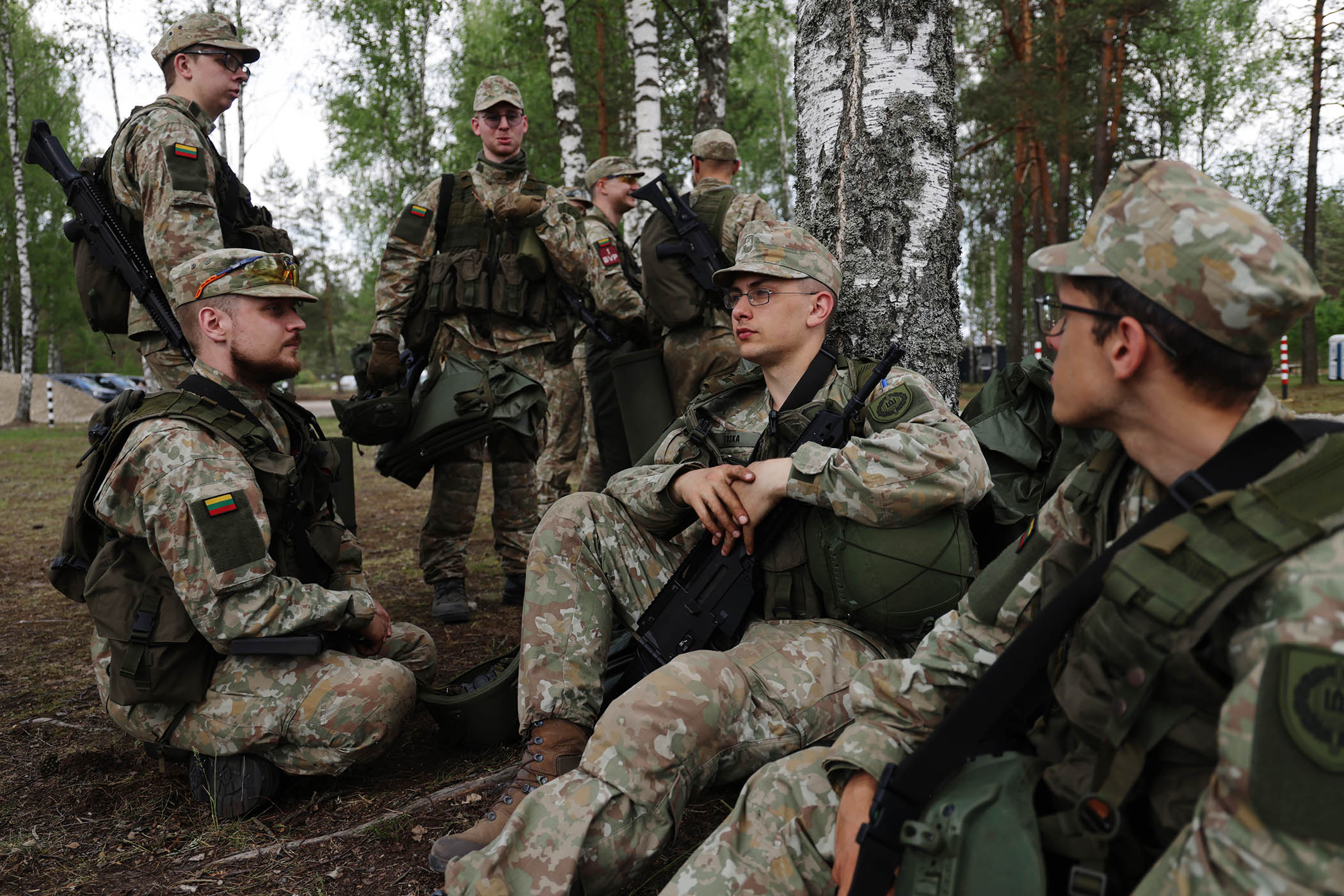
Different strokes. Neither France nor Germany are trailblazers. Norway, Finland, Denmark, Estonia, Greece and Turkey never completely abandoned national service. Sweden, Latvia and Lithuania have re-introduced conscription in the past decade.
Different folks. Smaller countries, such as the Baltic states, are afraid of Russia, while the Scandinavians have a long tradition of reservists being called to the colours. Greece and Turkey have more of an eye on each other than anyone else.
If you fancy it. But it’s the introduction of a form of voluntary national service in larger European capitals that has caused the current excitement, kicked off by Poland in 2022 and now to be followed in Western Europe.
Big and small. Broadly the closer you are to Ukraine, the larger the programme.
•
Poland intends to increase the size of its army from 200,000 to 500,000 soldiers over the next decade. Donald Tusk, the Polish prime minister, said earlier this year that he wanted military training for every adult male.
•
Germany wants to train at least 200,000 reservists by 2035. All men born in 2008 will have to undergo a medical to measure their ability to serve by mid-2027.
•
France is proposing a much more limited scheme, with 3,000 receiving military training in 2026. This will rise to 50,000 by 2035.
Gender divide. Germany is allowing women to volunteer for screening, but it is not mandatory as it will be for men. Most other countries are only recruiting young men.
Newsletters
Choose the newsletters you want to receive
View more
For information about how The Observer protects your data, read our Privacy Policy
Is this about Russia? Primarily, but many European armies are having recruitment issues so there are broader benefits to increasing numbers. In addition there is an increasing distance between the military and civil society. Some politicians are keen to bridge that gap.
Don’t forget the Donald. Minds may be focused by the new US security strategy, which the Kremlin claims is largely consistent with Moscow’s vision. The document did not classify Russia as a threat to American interests. Donald Trump said yesterday that Europe was “decaying”.
Hot and cold. There is broad support for compulsory service in Scandinavia and Poland, but nearly two-thirds of young people in Germany oppose it. Some 42% of young Brits would not go to war for Britain under any circumstances. An identical percentage would.
So will the UK follow its allies? Unlikely. Rishi Sunak proposed mandatory national service before the 2024 election, but this disappeared when he did. The British Army is not keen to use scarce resources training people who then leave. The process also costs a lot of money.
What’s more… Labour said on Monday that it would provide more than 50,000 taxpayer-funded jobs for young people out of work. The military didn’t get a mention.