
This article first appeared as part of the Daily Sensemaker newsletter – one story a day to make sense of the world. To receive it in your inbox, featuring content exclusive to the newsletter, sign up for free here.
For the past two weeks Iran’s theocracy has been confronted with a choice between repression and conciliation as protests over its misrule spread throughout the country.
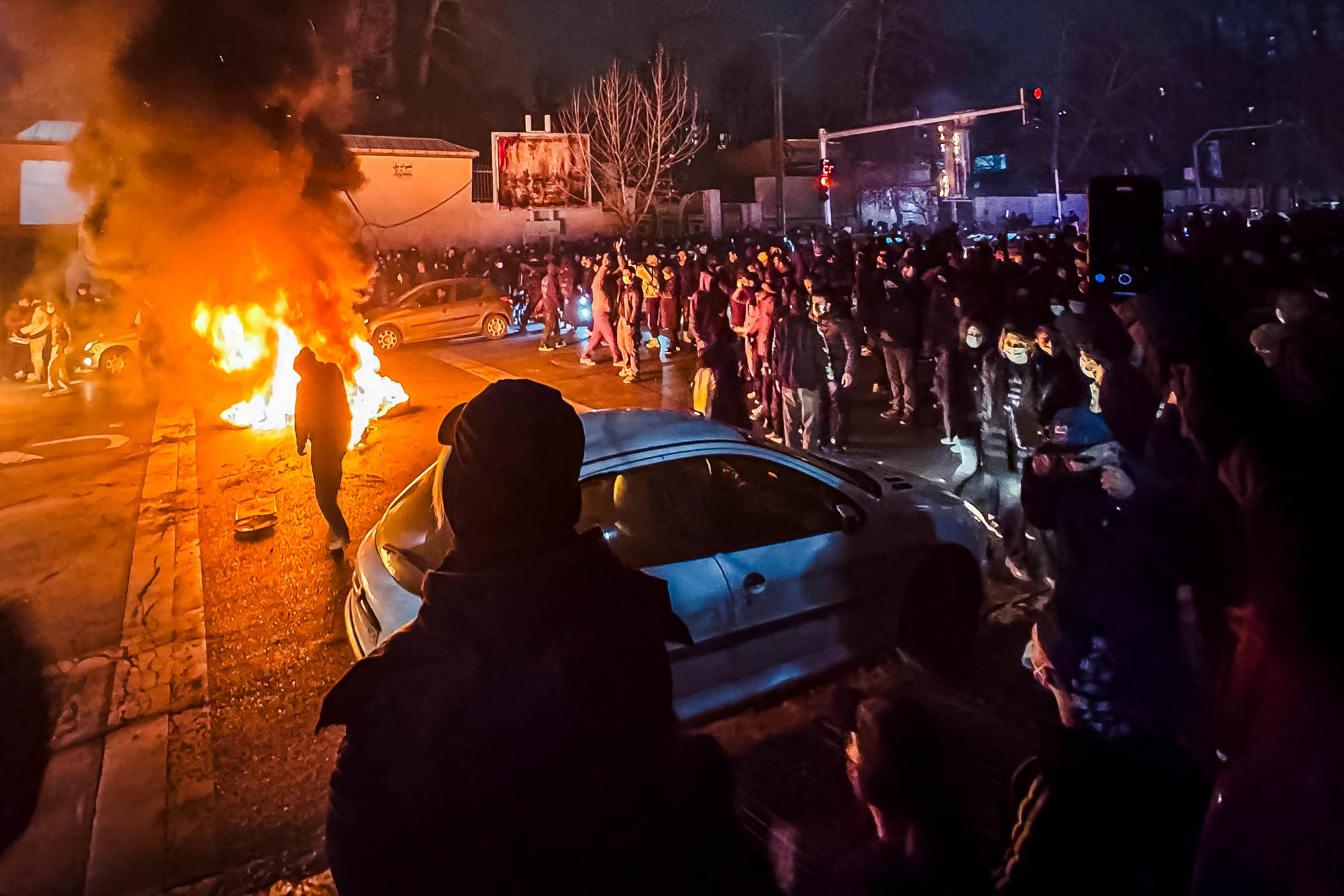
So what? It has opted for repression. The government has imposed an almost total internet blackout, making it difficult to gauge the extent of the backlash by security forces and religious police. But some footage has leaked out of the country, showing vehicles ablaze and morgues piled high with bodies, and rights groups are reporting hundreds of deaths. The unrest
•
has spread to all 31 provinces of Iran;
•
drawn threats of military intervention from Donald Trump; and
•
represents one of the biggest challenges to the regime after 47 years of clerical rule.
Snowballing. The protests began on 28 December, sparked by the sudden collapse of Iran’s currency. They have since morphed into a call for broad political change.
Shift in tone. President Masoud Pezeshkian, a reformist by Iran’s standards, initially struck a sympathetic tone and called the demands of protesters “legitimate”. But other parts of the regime have taken a harder line, especially after the internet went dark on Thursday. Iran’s supreme leader, Ayatollah Ali Khamenei, said on Friday that the regime “will not shirk from dealing with destructive elements”.
The two satans. The authorities have accused the US and Israel of stoking the unrest. “That's why the demonstrations turned violent and bloody, Iran’s foreign minister said on Monday. “To give an excuse to the American president to intervene.”
Breaking the blockade. Few international news outlets can report from inside Iran, but activists appear to have used Starlink connections to circumvent the blackout. Footage posted on social media over the weekend showed dozens of bodies in a warehouse on the outskirts of Tehran. Another video showed a government building burning in the city of Karaj.
Bloodshed. Hospital workers have described wards overflowing with gunshot victims. One told BBC Persian that many had “direct shots to the heads”. Iran Human Rights, a Norway-based group, put the number of dead at 648 on Monday. The Human Rights Activists News Agency, based in the US, said it had confirmed the deaths of 646 people and more than 10,000 arrests.
The Trump card. Trump had threatened to intervene if the regime resorted to violence. Although he has already authorised military action against Iran during his second term, his warnings haven’t worked. Last night, he declared any country “doing business” with Iran would immediately face a 25% tariff “on any and all business” with the US. Cyberattacks, more sanctions and military strikes are still said to be on the table.
Tehran’s response. Iran says it is open to negotiating with the US, but has also threatened to attack American bases in the Middle East if Trump acts. A previous Iranian strike on a US base in Qatar – in retaliation for the bombing of nuclear facilities in June – was largely performative.
Newsletters
Choose the newsletters you want to receive
View more
For information about how The Observer protects your data, read our Privacy Policy
Piling up. The protests come at a moment of acute vulnerability for the regime. Its spiralling economic crisis – a result of corruption, mismanagement and sanctions – has driven up the price of essential goods. There are also gas, electricity and water shortages, and its military was hit hard during last year’s brief war with Israel. Iran’s web of proxies, and therefore its regional clout, has been severely weakened too.
An unlikely figurehead. Some protestors have voiced support for Reza Pahlavi, the son of the late exiled Shah of Iran. It’s not clear how much public backing he commands, but the regime seems to be rattled. Last week, he called for demonstrations at 8pm on Thursday. The internet was cut around this time. Afterwards, he called on protesters to “seize city centres”.
What’s more… Iran has put down previous demonstrations using brutal force, notably in 2009 and 2019. On Friday the country’s foreign minister said the current situation was under “total control”, but didn’t explain how.
Photograph by Masha/ Middle East Images / AFP via Getty Images.