
This article first appeared as part of the Daily Sensemaker newsletter – one story a day to make sense of the world. To receive it in your inbox, featuring content exclusive to the newsletter, sign up for free here.
The head of Iran’s atomic energy agency has said that Tehran is prepared to dilute its stockpile of highly-enriched uranium if the US lifts sanctions.
So what? The fate of this uranium remains a mystery. When the US struck Iran’s nuclear facilities last summer, it was believed that enough material to make 10 nuclear bombs could have been moved out of harm’s way. The uncertainty this has sown is Tehran’s key bargaining chip during talks with Washington in Oman, which
•
still lack a clear framework;
•
follow Iran’s brutal suppression of mass protests; and
•
are stalked by Donald Trump’s threats of military action.
Baby steps. Steve Witkoff, Donald Trump’s special envoy, and Jared Kushner, the president’s son-in-law, held indirect talks with Iranian foreign minister Abbas Araghchi last week. Araghchi called them “a good start”. Another round is expected at a future date.
Firepower. Looming in the background is an armada that Trump has assembled in the region, ready to strike if there is no deal. The US president claims Iran wants an agreement “very badly”. But the two sides are wrangling over the scope of the talks.
Red line. Benjamin Netanyahu, who is due in Washington tomorrow, wants the process to cover Iran’s ballistic missiles and regional proxies. Tehran wants these to be off the table and is seeking a dialogue narrowly focused on its nuclear programme.
Recap. Donald Trump claimed last year this programme had been “completely and totally obliterated”. But a US military assessment concluded that it had probably only been set back by one or two years.
Damage report. Iran’s main nuclear sites at Fordow, Natanz and Esfahan were “largely destroyed” by the bombing, according to an assessment published in November by the Institute for Science and International Security. Isis also concluded that Iran is unable to produce “significant numbers” of centrifuges needed to enrich uranium.
Known unknown. What is less clear is the location of the stockpile already possessed by Iran. This comprised 440kg of uranium enriched to 60% purity, a step from weapons-grade levels.
In the dark. Before Israel’s brief war with Iran, this material was subject to monitoring by the UN’s International Atomic Energy Agency. But it has not been seen since June.
Newsletters
Choose the newsletters you want to receive
View more
For information about how The Observer protects your data, read our Privacy Policy
Holy grail. Experts say the stockpile could have been stored in canisters small enough to be transported in one lorry. Rafael Grossi, the IAEA chief, believes it was moved before the strikes.
Expert view. “My sense is it is probably split between various facilities, especially those that were struck by the US last year, where it could be buried under rubble,” said Farzan Sabet from the Geneva Graduate Institute.
Jigsaw pieces. Sabet said that Iran has other stockpiles which could theoretically be enriched to weapons-grade levels. “We don’t know very much about their status,” he said.
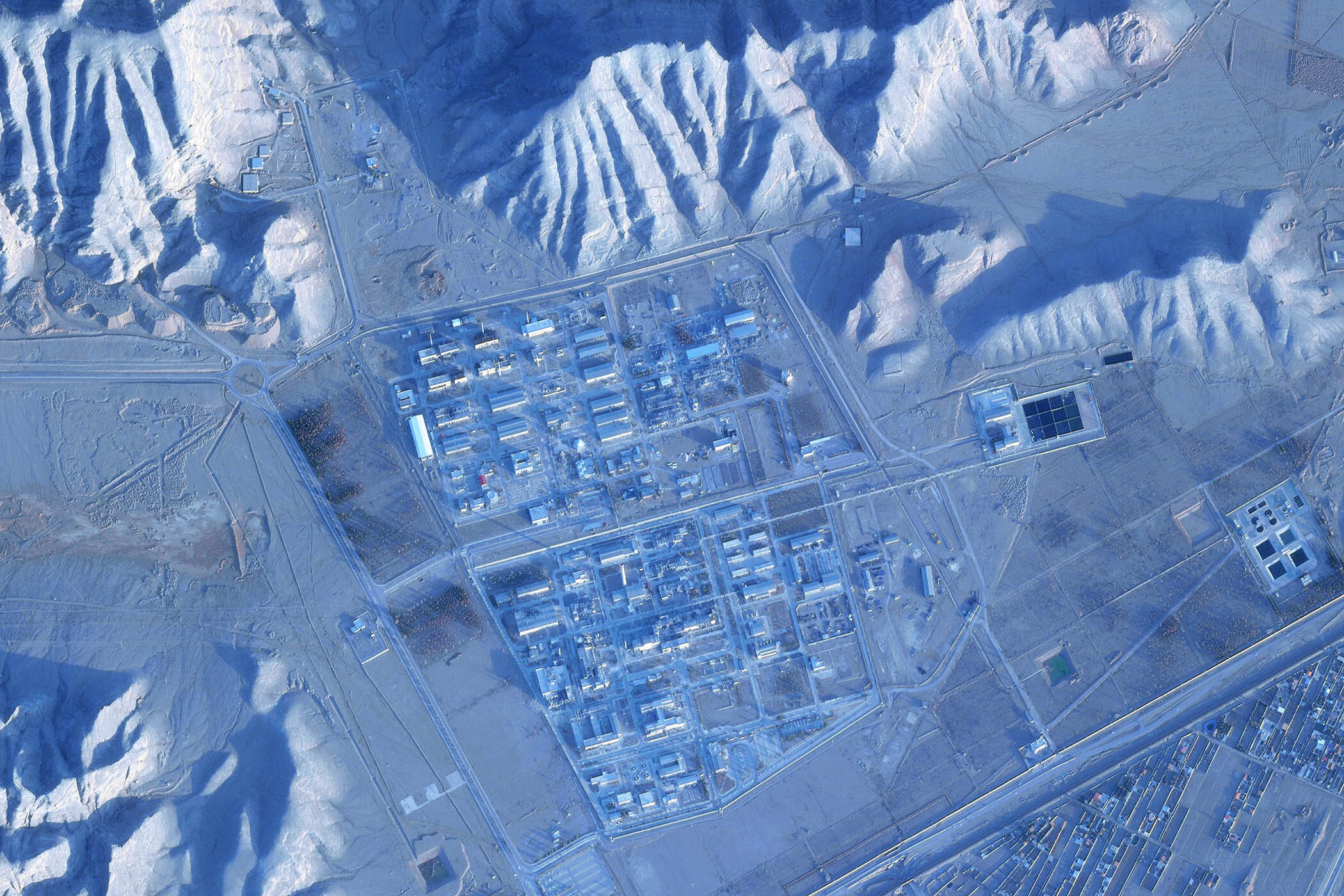
In the meantime. Satellite images show activity at the destroyed nuclear facilities, including recent measures at Esfahan that appear designed to guard against future strikes. They also indicate construction works at Taleghan 2, a former nuclear weapons site not struck last year.
Unintended consequences. The US strikes may have convinced Iran that it needs a bomb more than ever. It has not gone unnoticed in Tehran that North Korea, which has an estimated 50 nuclear warheads, has so far avoided threats from Trump. Araghchi recently told a diplomatic summit that “our atomic bomb is the power to say no to the great powers”.
What’s more… There is little sign that the talks between Tehran and Washington will stay Iran’s hand against protesters to the regime. Despite Trump’s overtures of help, as many as 33,000 people have been killed and 50,000 arrested. Many face the death penalty.
Photograph by Planet Labs PBC via AP