
This article first appeared as part of the Daily Sensemaker newsletter – one story a day to make sense of the world. To receive it in your inbox, featuring content exclusive to the newsletter, sign up for free here.
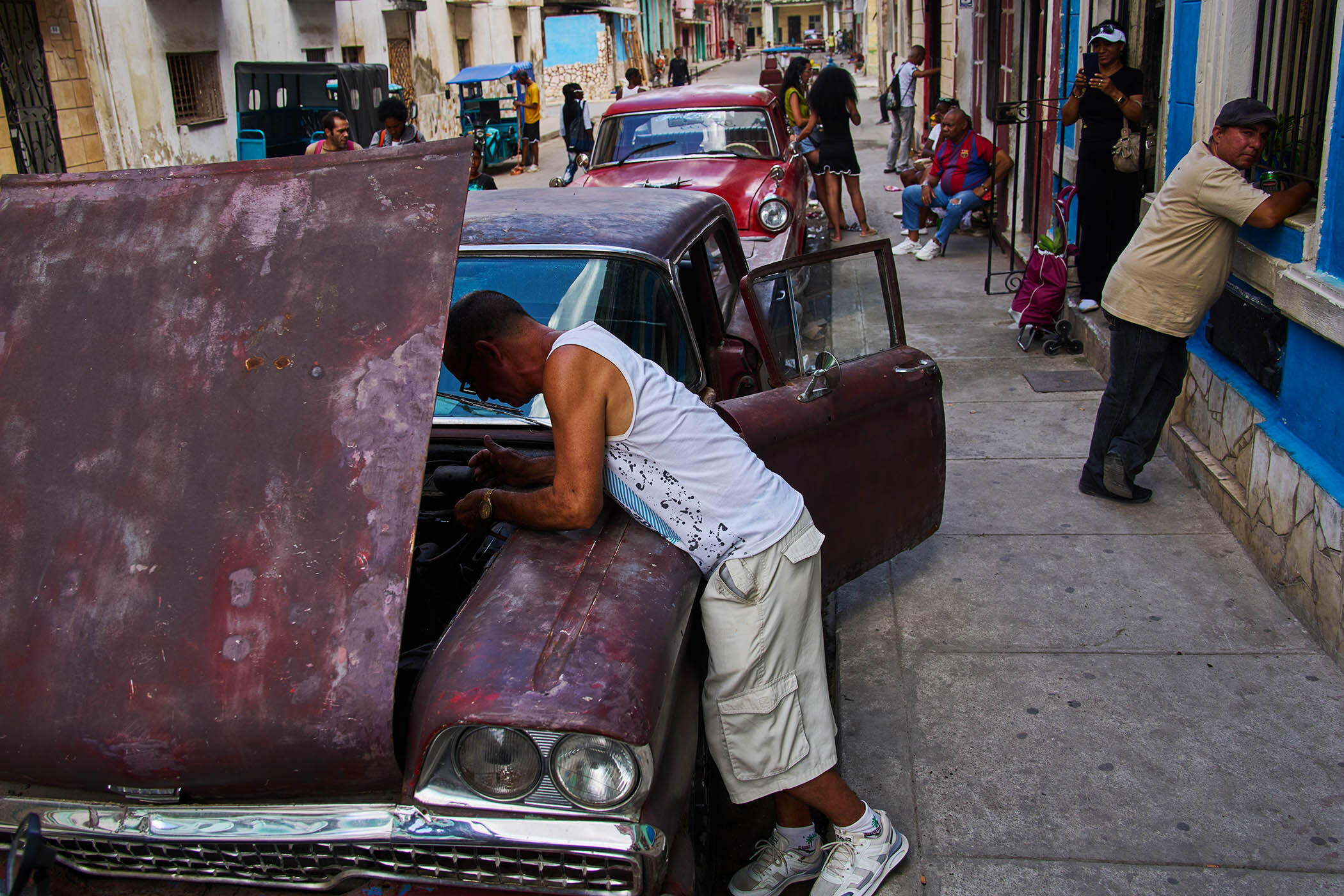
Starved of oil by a US blockade, Cuba’s electrical grid collapsed on Monday and left roughly ten million people without power.
So what? Power crept back online over the course of the week, but blackouts on the Caribbean island are worsening and its economy is close to collapse. The Trump administration’s pressure campaign has forced the Cuban regime into negotiations that could loosen its grip on power. But it also risks
•
creating a humanitarian crisis;
•
driving a wave of mass emigration; and
•
ultimately leaving much of the leadership in place.
The hegemony. When Fidel Castro overthrew the government in 1959, he turned Cuba into a socialist state. Today the regime holds onto power through repression. Fidel’s brother, Raúl, is still alive, and the Castro family wields huge influence within the ruling coalition of the military, the Communist Party and a corrupt elite.
The feud. The US has strived to overthrow the Cuban dictatorship for decades. In 1961, it funded the failed military operation by Cuban exiles at the Bay of Pigs. Since then it has maintained an economic embargo on Cuba, banning almost all trade between the countries, and tried to undermine the regime through covert operations and by promoting democracy.
Stranglehold. Now Trump has cut off Venezuelan oil shipments and threatened tariffs on any country that sells oil to Cuba. Cuba says that no fuel has arrived in three months.
To the rescue? International allies have propped Cuba up for decades and today is no different.
•
China is helping Cuba to install solar panels;
•
Mexico has sent thousands of tonnes of supplies; and
•
a tanker carrying Russian oil is expected to test the US blockade.
Breaking point. That won’t be enough to stop the developing crisis. Transport has come to a halt, businesses have closed, and everything is in short supply. Many Cubans no doubt want to escape the island but they lack fuel for boat engines. Rare protests have begun to break out.
Chaos reigns. In a bizarre episode, ten armed Cubans set sail from Florida in late February, apparently trying to seize the moment and bring down the regime. They ended up in a firefight with the Cuban coast guard. Five died and the rest were arrested.
Coup-proof. Cuba has previously survived severe pressure campaigns and economic instability. The domestic intelligence and repression apparatus is notorious, and has kept the regime united while crushing protest movements.
Gulf of America. But this time could be different. The Trump administration has marked the Americas as its patch, or hemisphere, and showed willingness to use military force in January when it launched a strike to capture Venezuela’s Nicolás Maduro, Cuba’s staunchest ally in the region.
Naked threat. Trump said this week that he expects to have “the honour of taking Cuba”. Asked whether this meant military action, he said: “Whether I free it, take it, I think I can do anything I want with it, if you want to know the truth.”
The blueprint. There are signs that Trump may want a repeat of Venezuela, where he abducted Maduro and then elevated a new leader from within the regime, who, under constant threat, does his bidding. The White House is now reportedly negotiating to oust Miguel Díaz-Canel, the Cuban president, while leaving the regime intact and not going after the Castro family.
What’s more… Trump shouldn’t count on this going down well in Miami. Cuban Americans are an important political constituency for the Republicans. They might not be thrilled by a deal that leaves the regime they despise in power, even if only for the time being.
Photograph by Ramon Espinosa/AP
Newsletters
Choose the newsletters you want to receive
View more
For information about how The Observer protects your data, read our Privacy Policy