

This article first appeared as part of the Daily Sensemaker newsletter – one story a day to make sense of the world. To receive it in your inbox, featuring content exclusive to the newsletter, sign up for free here.
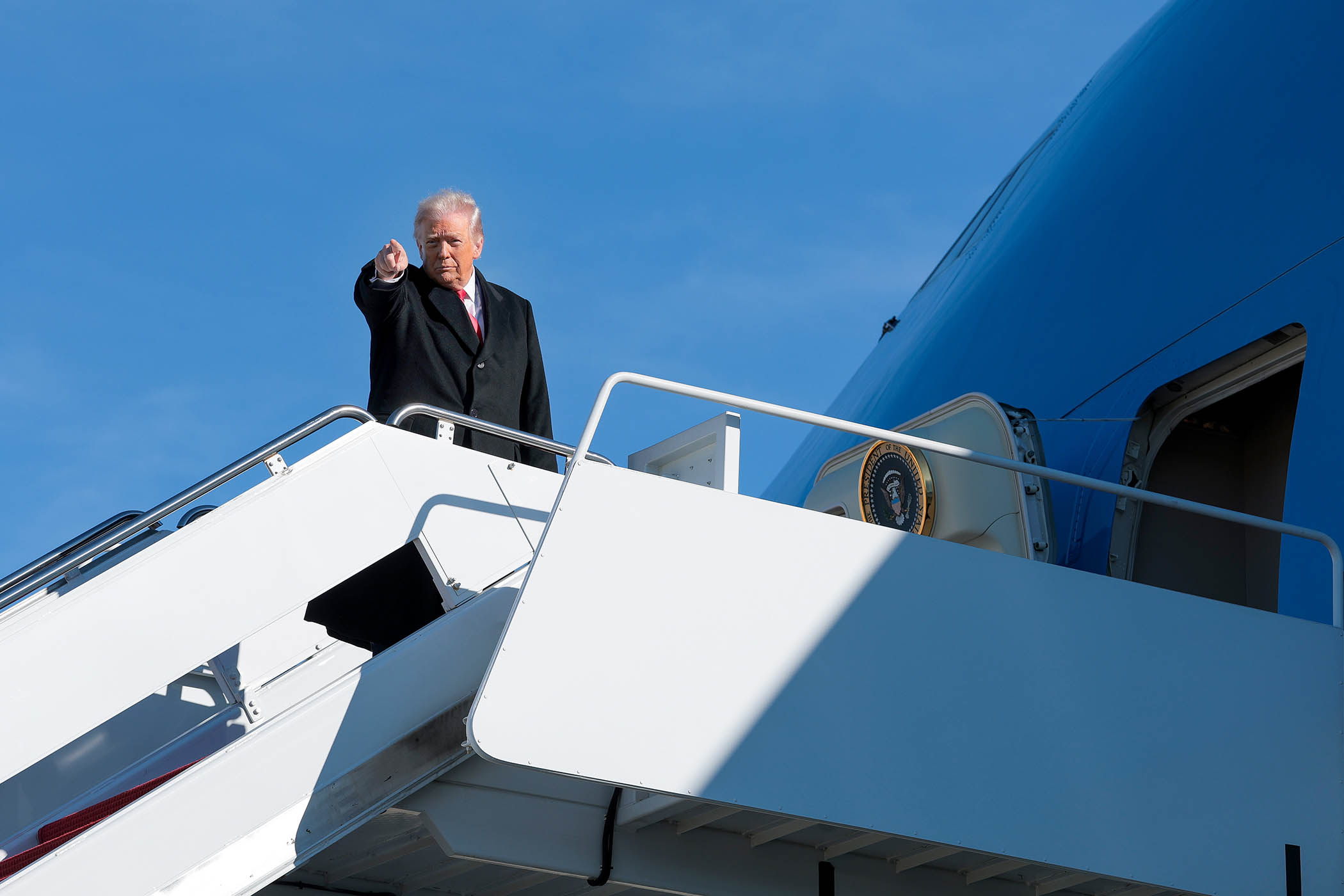
The Danish foreign minister said yesterday that Trump was intent on “conquering” Greenland after White House talks with US officials.
So what? This is not new information but complacency is the devil. Greenland is key to Trump’s bid to dominate the Western hemisphere and yesterday suggests he isn’t budging. The issue is that buying the island appears to be a non-starter, while a military move on the territory would
•
pit the US against Copenhagen and its allies;
•
quite possibly lead to the collapse of Nato; and
•
undermine the principle of sovereignty that underpins the post-war order.
Old ties. A Danish-Norwegian missionary landed in Greenland in 1721, marking the beginning of colonial rule over its indigenous Inuit population. Danish trading posts essentially administered the island under a state monopoly from 1774, exchanging local products such as furs, sealskin and whale blubber for Danish goods.
Growing and waning. A 1951 agreement allowed the US to “construct, maintain and operate” military bases – and still does – but its presence has fluctuated. At the height of the Cold War, the US had roughly 10,000 military personnel in Greenland. Today there are no more than 250.
Close friends. Danish troops fought alongside the US in Iraq and Afghanistan and suffered the third highest casualty rate per capita of all Nato members across both wars. The biggest Fourth of July celebration outside the US takes place at the Rebild National Park in Denmark.
Or not. Trump has accused Denmark of failing to protect Greenland, saying on Wednesday that if China or Russia wanted to occupy Greenland “there’s not a thing” the Danes could do. Denmark disputes the assessment and also sees Washington as a danger.
Western flanks. Copenhagen committed $13.7bn to Arctic defence last year, while the Danish armed forces announced yesterday that they would expand their presence in Greenland. Both of these moves may be more about Trump than Xi or Putin.
Ties that bind. Greenland ceased to be a colony of Denmark in 1953 and now controls its internal affairs, including natural resources, culture and health. But it is still part of the Danish kingdom. Its foreign policy and defence are controlled by Copenhagen, while half the island’s budget comes from there. Greenlanders are Danish citizens and mixed families are common.
Variations on a theme. Trump floated the idea of buying Greenland during his first term but US interest dates back to the 19th century and there is precedent for territorial horse-trading. Denmark sold what are now the Virgin Islands to the US for $25m in gold in 1917. Roughly 40% of the US was bought, including Alaska, purchased from Russia for $7.2m in gold in 1867. Trump recently said ownership gives you things “you can’t get from just signing a document”.
Newsletters
Choose the newsletters you want to receive
View more
For information about how The Observer protects your data, read our Privacy Policy
Read the small print. Even if Denmark wanted to sell Greenland, it wouldn’t be able to because the island has the right to self-governance under a 2009 law. As part of the Danish realm, Greenland cannot sell itself unless it first achieves independence.
Let us go. More than half of Greenlanders do ultimately want independence, even if there is disagreement over the terms and timelines. A 2009 act gave the former colony the right to hold a referendum on independence, although the Danish parliament would have to ratify the result.
But not to them. This doesn’t mean the territory wants to be a 51st state, despite the deep scars left by two centuries of Danish rule. Last year, 85% of Greenlanders said they didn’t want to leave the Danish realm and become part of the US.
No discouragement. Denmark summoned the top US diplomat in Copenhagen last year over accusations of a covert influence campaign to promote Greenland’s secession. Americans with ties to Trump have allegedly compiled lists of US-friendly Greenlanders and collected information to paint Denmark in a negative light in the media.
What Trump really wants. Greenland ranks eighth in the world for rare earth reserves. Access would help the US ease China’s stranglehold on an essential supply chain for modern tech.
The catch. No rare earth mining has taken place on the island to date. The Arctic climate and lack of infrastructure make it extremely challenging. Roughly 80% of Greenland is icebound and there are no roads in the interior. With a population of 57,000, labour is also scarce.
What is Trump willing to do? Only he knows. Military posturing may be little more than a negotiating strategy but many wrongly assumed that was the case with Venezuela.
What’s more… Climate change may increase Trump’s desire for drastic action. Melting ice will unlock rare earth deposits and open up shipping routes. The US is less subtle than its rivals but Russia and China are also clamouring for access.
Photograph by Anna Moneymaker/Getty Images