

This article first appeared as part of the Daily Sensemaker newsletter – one story a day to make sense of the world. To receive it in your inbox, featuring content exclusive to the newsletter, sign up for free here.
The removal of China’s top general, Zhang Youxia, has sparked speculation about Chinese military preparedness and a future invasion of Taiwan.
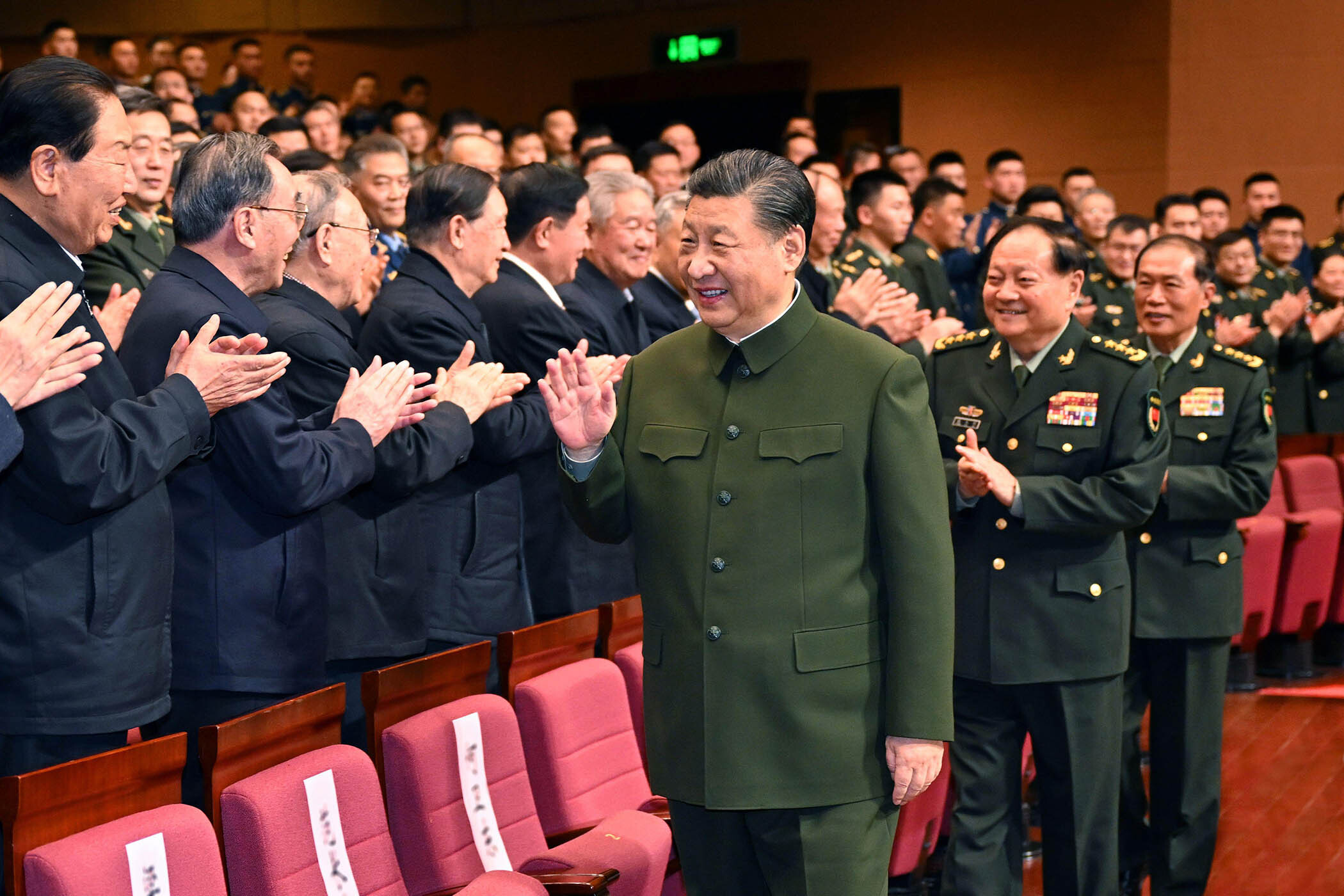
So what? There have been extensive high-level purges within the People’s Liberation Army, but Zhang’s sudden removal is the biggest shake-up yet. He was the second most powerful figure in the military and was said to be a close confidant of president Xi Jinping. Zhang’s defenestration
•
hints at a power struggle at the top of the Chinese communist party;
•
could make an invasion of Taiwan more likely; and
•
consolidates Xi’s now near-total control over China’s military.
J’accuse. Zhang is a vice chairman of the Central Military Commission, the body that oversees the armed forces. Along with another general, he has been placed under investigation for “violations of discipline and law”. The official newspaper of the People’s Liberation Army (PLA) accused them of having “trampled on” Xi’s authority and hinted at corruption allegations.
Crown jewels. Most seriously, Zhang’s colleagues were reportedly told he had passed nuclear secrets to the US. This would represent the most serious breach of Chinese national security in recent history, and a resounding US espionage coup. Few analysts are buying it.
Expert opinion. “I think there are disagreements between Xi and Zhang over military and political issues,” said Yun Sun, director of the China programme at the Stimson Centre.
In charge. Whatever the reason, the impact is clear. With Zhang gone, Xi no longer has any seasoned party stalwarts in his circle to contest his views and decisions. This confirms him as China’s most powerful leader since Mao Zedong, the father of Chinese communism.
Backstory. Like Xi, Zhang is a “red princeling”: descendants of senior Chinese Communist Party (CCP) leaders. Their fathers were friends who served alongside each other as generals – a personal connection that is thought to have underpinned their relationship. Zhang joined the military at 18 and served in the border war with Vietnam that began in 1979, making him one of the few Chinese generals to have seen combat.
Right-hand man. When Xi came to power in 2012, he tasked Zhang with helping to overhaul China’s corruption-ridden and antiquated military. It now has the world’s largest navy and a modern force of ballistic missiles, designed to challenge US supremacy in the Pacific. At 75, he was kept on past retirement age and was responsible for the day-to-day running of the PLA’s 2 million-strong force.
Clear-out. Since coming to power Xi has thoroughly purged China’s institutions. In 2025 alone, 983,000 people were disciplined, the highest number on record. This includes the removal of nine top generals in October. The stated aim of the campaign is to root out corruption, but analysts say it has also targeted Xi’s potential rivals.
Newsletters
Choose the newsletters you want to receive
View more
For information about how The Observer protects your data, read our Privacy Policy
Downfall. Zhang was thought to be above suspicion. Xi may have seen him as a threat after the removal of other generals concentrated vast amounts of power in his hands. There were also rumours of tension over Taiwan. Zhang favoured a more conservative approach towards the island than Xi, who has ordered the PLA to be ready for an invasion by 2027.
Committee of one. Xi has now removed all but one of the five generals he has appointed to the Central Military Commission, the CCP’s military leadership, since 2022. Only Zhang Shengmin, the career political commissar who has overseen the purges, remains, and Xi himself, as chair.
Weighing the cost. The disarray caused by Zhang’s ouster may make an invasion of Taiwan less likely in the short term while increasing the chances in the longer. “Removing him removes the internal opposition to Xi’s attack plan,” said Sun. “But the instability it creates within the PLA also challenges the institution’s capabilities.” Former Pentagon official Drew Thompson has written that “without Zhang Youxia on the [Central Military Commission], the risk of miscalculation goes up.”
What’s more… Xi is expected to seek a fourth term as leader next year. He may have also seen Zhang as a threat to this plan.
Photograph by Li Gang/Xinhua/Alamy