The leader of Reform UK doesn’t want to talk about his money and it’s starting to become clear why. He is not sure what to say.
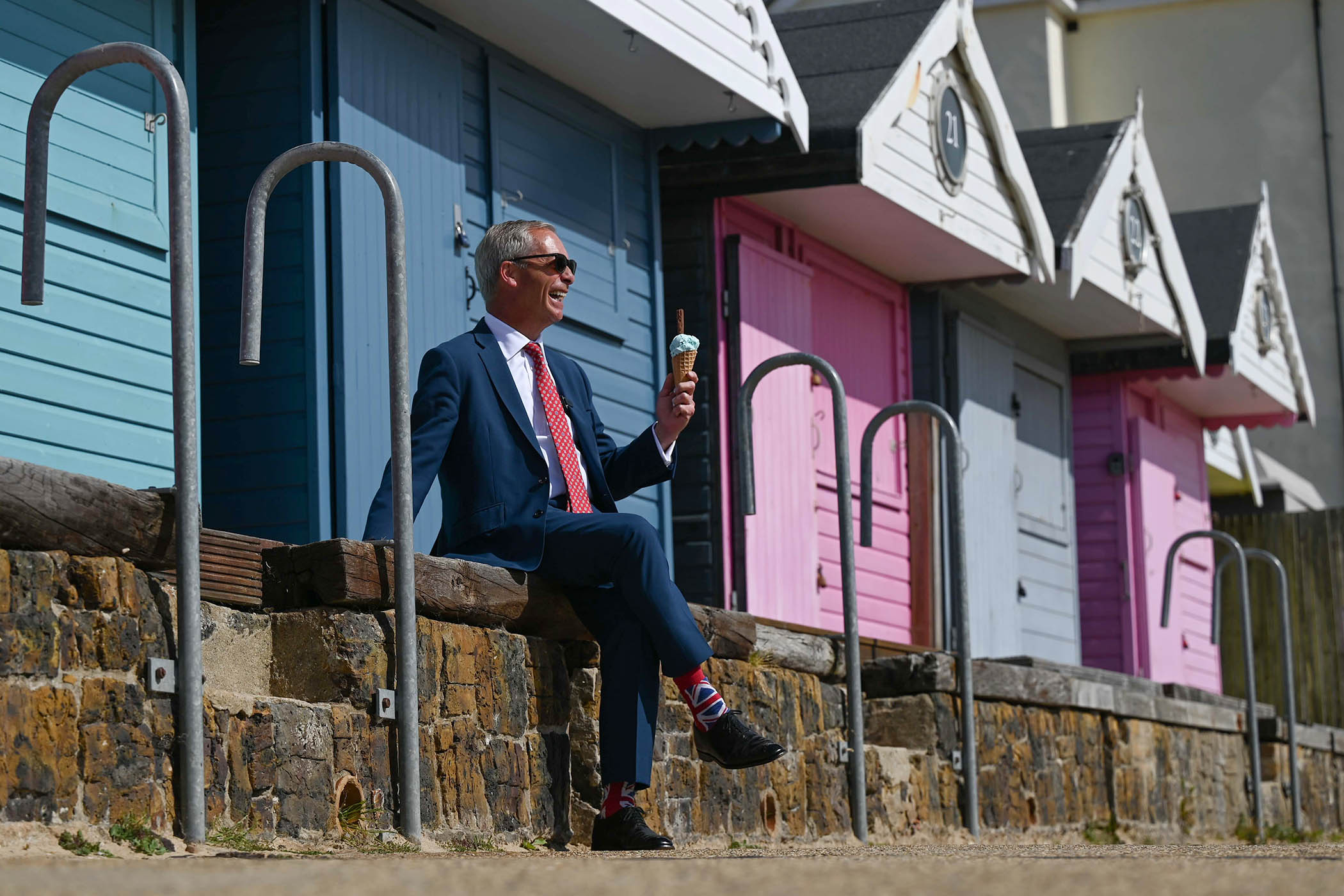
For months, Nigel Farage had good reason to look forward to 8 May as the day he would start celebrating his party’s sensational results in England’s local elections. They were indeed remarkable: more than 1,450 council seats won and 32 councils now under Reform control. But the celebrations kept being interrupted by reporters asking about the £5m gift he had accepted from Christopher Harborne and not declared.
As Farage manoeuvres for the job of prime minister, questions about the £5m have become an undodgeable test of his leadership, character and honesty.
When the gift was first reported by the Guardian on 29 April, Farage tried to get ahead of the story by telling the Telegraph his home had been firebombed in 2025 and mentioning the gift as intended for his personal security. When Sky News asked about the money on 8 May, he called the line of questioning a “waste of space”. When pressed, he claimed information about the gift had been illegally obtained. Asked why he hadn’t declared it, he said the rules did not require it.
Really? The House of Commons code of conduct requires MPs and soon-to-be MPs to declare gifts if there is “any doubt” about the giver’s motive or the use to which the gift might be put. Shortly after Farage received the money, he U-turned on his decision to quit politics and entered parliament.
Farage has since changed his tune on the £5m. It was a reward for campaigning for Brexit, he told the Sun in an interview last Thursday in which he also claimed he had turned down a large donation from Elon Musk. Musk says not so.
There is a pattern here. Farage blurs facts to suit the moment. He has two stories about a house in his Clacton constituency, which he claimed at first to have bought himself but later said was bought by his partner. He intimidated a Guardian photographer by posting a picture of his press card online. He faces at least one investigation into the £5m gift by the parliamentary standards commissioner and possibly another by the Electoral Commission. He would like to run the country but has difficulty getting his stories straight.
Specifically, he needs to clarify how the Clacton house was bought, why he changed his mind about returning to politics, and whether the £5m is for political purposes, or services rendered, or not.
Donald Trump has normalised using public power for personal gain but also not being able to know what’s true. Farage cannot be allowed to do the same in the UK. Reporters ask the darnedest questions, and if he really wants to run a free country he should get used to answering them. Honestly.
The Thucydides trap
Newsletters
Choose the newsletters you want to receive
View more
For information about how The Observer protects your data, read our Privacy Policy
Xi Jinping used one of his favourite historical allusions to urge Donald Trump last week not to risk war with China. Can their two countries “transcend the so-called Thucydides trap and forge a new paradigm for major power relations?” Xi asked.
They can and they should. The trap in question is the one Sparta fell into by resorting to military conflict with the rising power of Athens in the fifth century BC, but there’s more to read into Xi’s remark than a warning. It was a suggestion, too. Looking back 30 years, rather than 2,500, it was a reminder of the mutual economic embrace by China and the US in the Clinton years that lifted hundreds of millions of Chinese out of poverty, funded American deficits and served as the foundation for globalisation.
The historian Niall Ferguson called this Chimerica and accurately predicted its demise, but as a global growth engine and platform for world peace it had much to recommend it. It’s convenient for Xi to argue for a new version now, when China’s deep strength in tech, skills, manufacturing, rare earths and renewables – all at relatively low cost – positions it so well to compete, but you can be pretty sure it was all Greek to Trump.
Photograph by Rasid Necati Aslim/Anadolu via Getty Images