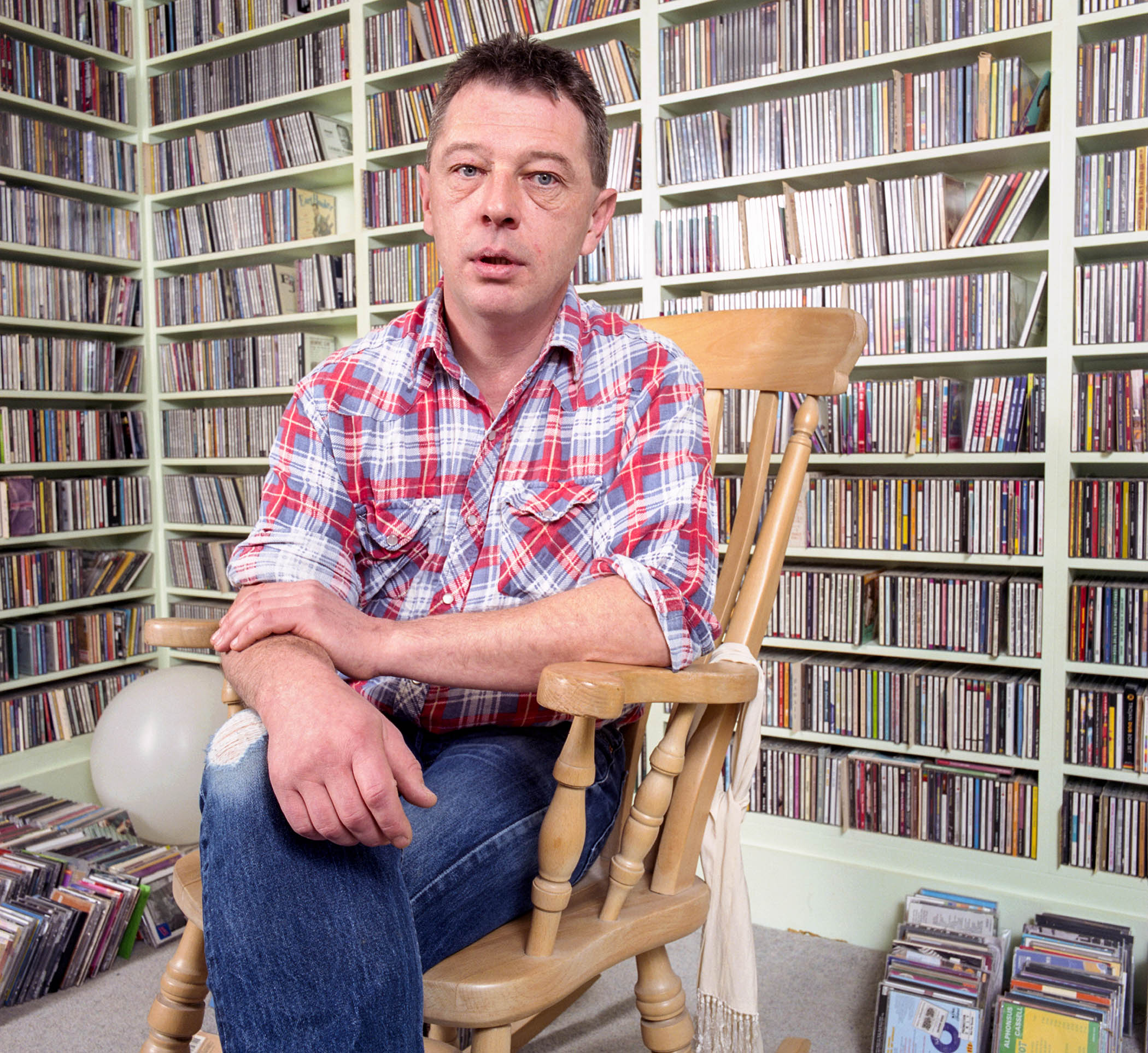

When Andy Kershaw met Nelson Mandela in 1990, he felt moved to express sympathy for the South African politician’s awful treatment. “You spend 27 years in prison, you get out, and they give you a Simple Minds concert,” Kershaw said. “I’d have gone back to Robben Island.”
The programme for Mandela’s liberation concert at Wembley had not impressed Kershaw, a BBC disc jockey with an enthusiasm for unearthing and promoting little-known world music acts rather than safe, middle-of-the-road Scottish rock bands. Like his mentor John Peel, with whom he shared Room 318 of the old Radio 1 building beside Broadcasting House, Kershaw had the philosophy: “We’re not here to give the public what it wants. We’re here to give the public what it didn’t know it wanted.”
Many mainstream acts had his contempt, especially U2. If he went too far, provoking a Twitter uproar in 2016 by describing George Michael, who had just died, as “frivolous, glib and fleeting”, his fans appreciated his sincerity for wanting to introduce them to then unknown musicians such as the Bhundu Boys from Zimbabwe, the Senegalese singer Youssou N’Dour or Ali Farka Touré, the Malian pioneer of African desert blues. He also championed Seasick Steve, an American hobo who played a three-stringed guitar and won the Mojo best breakthrough act aged 57.
‘I’d rather be reporting from a war in Africa than listening to Lionel Richie’
‘I’d rather be reporting from a war in Africa than listening to Lionel Richie’
Andy Kershaw
His enthusiasm for exploring the world’s music made him an excellent foreign correspondent, both for Radio 3, whose then controller Roger Wright snapped him up when he was sacked after 15 years on Radio 1 in 2000, and for Channel 4’s Travelog. Kershaw claimed to have reported from 97 countries. For his radio series World Routes, he learned throat singing in deepest Siberia, while elsewhere he explored folk music in Turkmenistan, attended a festival on the Mekong in Laos and tried jazz yodelling in Switzerland.
He also made documentaries in what George W Bush had called the “axis of evil”, eating dog stew and going to a karaoke night in North Korea, discovering Gypsy music in Iraq and meeting young Iranians desperate for political change at an illegal rave in Tehran – an experience he described as “putting the fun into fundamentalism”.
In 1994, he was sent to report on the Rwandan genocide and sobbed as he spoke of seeing a beheaded child wearing a Manchester United shirt. He said walking down an unlit road full of anti-personnel mines at night was the most frightening experience of his life. He also covered conflicts in Angola and Sierra Leone, but reflected: “I’d rather be reporting from a war in Africa than listening to Lionel Richie.”
Kershaw was born in Littleborough, Lancashire, in 1959. His older sister, Liz, also became a disc jockey, to the disapproval of their headmaster father, who banned Top of the Pops in the house and viewed pop as “subversive”. In 2011, she wrote that he paraphrased Lady Bracknell when considering their careers: “To lose one child to Radio 1 may be regarded as a misfortune. To lose both looks like carelessness.” Her brother bluntly told him that he did not want to spend his life “house conveyancing in the Rochdale area”.
In 1978, Kershaw went to Leeds University and became the entertainments officer, booking acts such as Elvis Costello and the Clash. He left without a degree and worked for a local radio station. In 1982, he oversaw the Rolling Stones concert in the city’s Roundhay Park but found their demands for a Japanese water garden set, complete with koi carp, so preposterous that he arranged for the words: “Fuck you, Rolling Stones” to be painted on it in Japanese.
After sending a fan letter to the punk folk singer Billy Bragg, he was offered a job as his roadie and tour manager and drove him all over Europe in a battered Volvo estate. In 1984, he met Trevor Dann, producer of the BBC music programme The Old Grey Whistle Test, who offered him a presenting role with the likes of Mark Ellen and David Hepworth. This led to a job co-presenting the BBC’s coverage of Live Aid and a regular Radio 1 show.
Twenty years later, he would criticise Bob Geldof for how few African acts he invited to perform at the Live 8 concert. He was often outspoken about his employer, describing the BBC as the “British Narrowcasting Corporation”. He criticised it for protecting the predatory DJ Jimmy Savile and blamed it for bringing on the sudden death of his friend Peel in 2004 by moving him to a late-night show.
Newsletters
Choose the newsletters you want to receive
View more
For information about how The Observer protects your data, read our Privacy Policy
In 2006, Kershaw moved his family from London to the Isle of Man, piquantly choosing a house in the fishing port of Peel. His 17-year relationship with Juliette Banner, with whom he had two children, ended in 2007 over his infidelity. He took it badly, was convicted of breaching a restraining order and sentenced to three months in prison. Terry Waite, the ex-Beirut hostage, was one of those who wrote to him in sympathy.
This briefly halted his broadcasting career but he returned to Radio 3 in 2011 to present Music Planet with Lucy Durán, a show that sought “extraordinary music” in “isolated locations”. It had been his life’s goal to expand his – and his audience’s – horizons. When he appeared on Desert Island Discs in 2007, he chose as his luxury “an endless supply of bog roll”.
As one reviewer noted: “There... spoke a man who has found himself in too many third world outhouses with nothing more absorbent than a Lonely Planet guidebook.”
Andy Kershaw, broadcaster, was born on 9 November 1959, and died on 16 April 2026, aged 66
Photograph by Edd Westmacott/Avalon/Getty Images