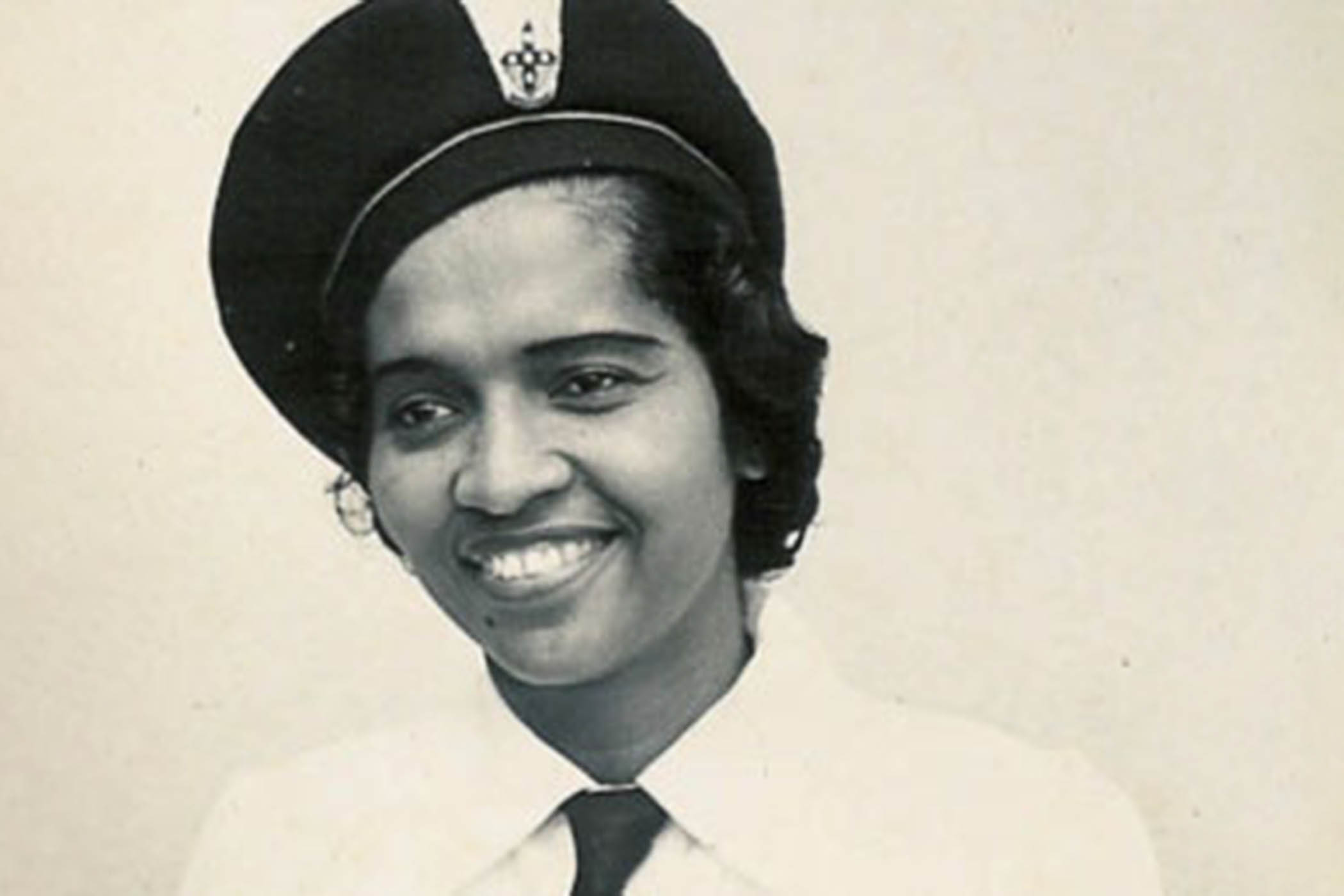

Ena Collymore raised eyebrows when she applied for a job as an administrative clerk in a magistrates court in Kingston, Jamaica, in 1937. No women worked there – they were not even allowed to sit on juries until 1945 – and it had been assumed that only men would apply. “We haven’t got any time to nurse babies here,” she was told.
Collymore recalled people dropping by out of curiosity to see “this young miss who applied for the job of male clerk” and she felt her bosses' awkwardness when she was asked to type up cases of rape, though at the time she didn’t know what the offence meant. It did not put her off a career in the law.
Forty years later, she retired from the Jamaican bench having been the island’s first female crown solicitor and resident magistrate. “I was looked upon as quite a novelty for many years,” she said in 1975.
She never considered the judiciary to be unsuitable for a woman. “I locked up just as much as the men,” she joked. And despite that early warning, she discovered she could actually nurse babies and work as a barrister. When she became the first woman to sit on the bench in 1959, the Gleaner, Jamaica’s leading newspaper, marvelled that she “combines the two demanding worlds of homemaking and career”. Her son would sleep in his cradle in the courtroom and later her children would sit at her feet and listen as she passed judgment.
Ena Joyce St Clare Collymore was born in 1917 in Spanish Town, the former capital of Jamaica. Her father was a stationmaster who had lost an arm in a train accident and her mother a postmistress who moved Ena and her three siblings to Kingston after her father died. She attended St Hugh’s high school and, after her mother also died, lived with one of her older married sisters. She briefly worked as a book-keeper before becoming a clerk.
She joined the Auxiliary Territorial Service, the women’s branch of the British army, as a stenographer, surviving a torpedo attack on the crossing to England in 1943. One of her first dispatches to the war office was a personal memo saying that she hadn’t signed up to type and seeking a transfer to something more testing. “I wanted to do my part,” she later said. “There weren't that many women in the army. Very few women of colour either. I felt special.”
She was accepted into the Anti-Aircraft Corps, becoming the first West Indian radar operator, and worked in Oswestry and then outside Brussels. For the last two years of her life, she was the oldest surviving female veteran of the British army. In December 2020, she had high tea with Cpt Tom Moore, the centenarian fundraiser, at the officers’ mess in Saint Ann’s Fort in Barbados.
In 1946, she took a secretarial job in the war office while she studied for a law degree at Gray’s Inn, the first black woman to do so. One of her fellow students was Vivian Blake, a future chief justice of the Bahamas. Collymore was the only woman member of the student union’s debating society and treasurer of the West Indian group of aspiring lawyers. She was called to the Bar in 1948 and before returning to Jamaica attended an international youth conference in Czechoslovakia. She also took a course in psychology, specialising in the treatment of juvenile delinquents.
Two years after returning home, Collymore was appointed court clerk in St James, the first Jamaican woman to hold the post. She married Victor Woodstock, a civil servant, in 1951 and had three children. In 1953, she became assistant crown solicitor, making history again six years later as the first woman resident magistrate in the civil court.
When juvenile courts were introduced on the island in 1964, she served as their chair for three years, helping to shape Jamaica’s early child justice framework. While she was described as a “terror to delinquent fathers”, she believed strongly in youth rehabilitation and travelled for four months in the US to see how their system worked, reflecting that America had a bigger problem with juvenile crime than Jamaica. “I find I relax most of all at court helping people to sort out their problems,” she said in 1975.
Newsletters
Choose the newsletters you want to receive
View more
For information about how The Observer protects your data, read our Privacy Policy
Throughout this time, she was also very active in the Girl Guides, serving for 10 years as chief commissioner for Jamaica, for which she was appointed MBE. She represented the country at three Girl Guide conferences, in Japan, Finland and Canada, organised the association’s first overseas conference of Commonwealth commissioners in 1972 and ran a literacy project under the slogan “each one, teach one”.
She was also president of the Caribbean area council for Soroptimist International, a global women’s volunteering organisation, and worked to boost tourism in the Turks and Caicos islands and Anguilla. Her granddaughter Amanda Riley-Jordan, from the family’s third generation of lawyers, said that community spirit was a huge theme of her life, a lesson in “selflessness” that Ena had passed down. “You cannot have a full life if you are only living for yourself,” she said. “You have to live for other people.”
Ena Collymore-Woodstock, magistrate and Girl Guides commissioner, was born on 10 September 1917, and died on 2 December 2025, aged 108
Photograph courtesy of Ena Collymore-Woodstock family