
In June 2019 a painting was auctioned in aid of the Anne Frank Trust that showed a young Jewish girl with dreams of being a writer beside a sink in the attic where her family hid from the Nazis. In a mirror, an old woman smiles at her, a vision of a future she never had. The girl was Anne Frank, who would have turned 90 on the day the painting was sold. The face of her older self was the imagination of the artist, Fiona Graham-Mackay, but the hands were real, modelled on those of a childhood friend.
Eva Schloss, born Geiringer, had also gone into hiding in Amsterdam, been betrayed and sent to a concentration camp. She survived, with her mother, Fritzi, who later married Anne’s father. While her step-sister’s experience became known to millions through the publication of her teenage diary, Schloss kept the memories that haunted her at night a secret for 40 years, even from family. She told her grandchildren that the tattoo on her arm, given in Auschwitz, had been her phone number.
Her silence ended in 1986 at the opening of an exhibition about Frank in London, when the politician Ken Livingstone, without warning her, announced that Schloss would say a few words. “I wanted to crawl under the table,” she wrote in a memoir. “I had never spoken of my experiences. Then everything came flooding out.
“As soon as I began talking, I didn’t have nightmares any more.”
Yet, as Schloss would insist in the many talks she then gave around the world, it was not her story she wanted to tell but that of her older brother, Heinz, a talented artist who died aged 18, a month before the end of the war.
The last time Schloss saw him, on the three-day train journey to Auschwitz, he had told her about the paintings and poems he had created in captivity and hidden under the floorboards of an attic. He made her promise that if he died and she survived, she would retrieve them. This she did, and gave them to Amsterdam’s Resistance Museum. Some of the 30 paintings are optimistic – memories of sailing and playing tennis – while others are sombre, such as one of a death mask beside a sand timer, or a boy slumped over a desk in a dark room.
This story was movingly told in 2022 in a documentary called Eva’s Promise. It came from a friendship Schloss had formed with Susan Kerner, producer of a play about Frank’s circle called And Then They Came for Me, who introduced her to the film-maker Steve McCarthy. It opens with the only known footage of Frank, watching a wedding party from a balcony. Then the camera pans to Heinz on a bicycle.
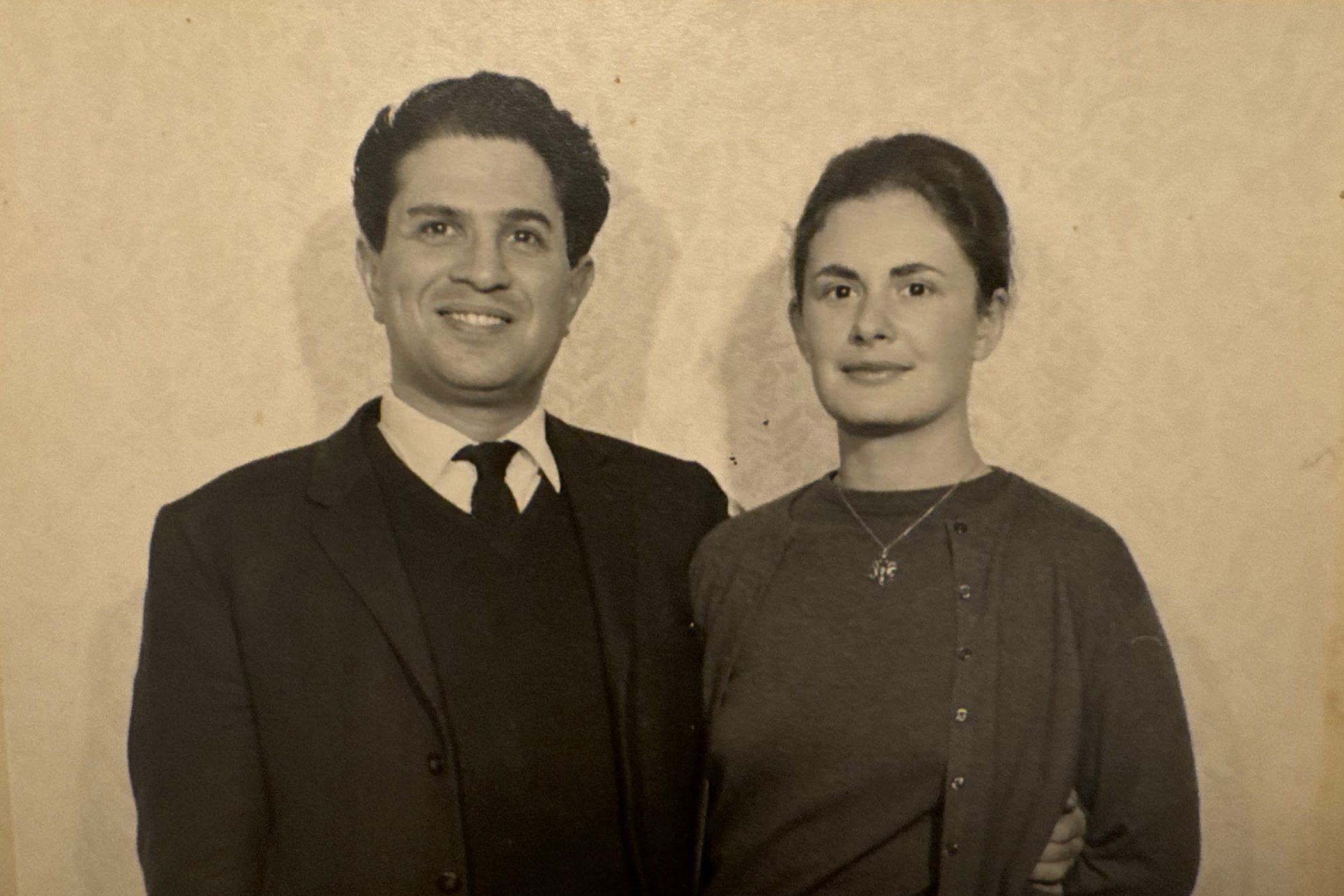
The Geiringers lived in Vienna, where the father, Erich, ran a shoe factory, but after the annexation of Austria in 1938 fled with other Jewish families. In Amsterdam, they lived at 46 Merwedeplein, nine doors from the Franks. The children played together, though Anne (“a chatterbox”) was more outgoing than the shy Eva.
When Heinz received a summons to a “work camp” in Germany in 1942, his family went into hiding. They split into pairs and stayed at six addresses until they were betrayed by a nurse. On Eva’s 15th birthday, the Gestapo seized all four and sent them to Auschwitz, where they were separated. Eva and Fritzi worked at Birkenau, breaking rocks and sorting prisoners’ belongings. Fritzi was selected for the gas chamber but saved by a cousin who worked in Josef Mengele’s office and took her name off the list. When the Russians liberated the camp in January 1945, Eva had the strength to walk to seek her father and brother. Both had died. Later, on the journey back to the Netherlands, she met a skeletal Otto Frank, who remembered her.
Immediately after the war, Schloss went to stay in Darwen with family who had fled to Lancashire. One night she confided all her nightmares about Auschwitz to her 10-year-old cousin Tom Greenwood, with whom she shared a room. She later admitted that it was “a frightening burden to put on a little boy” and felt she only opened up to him because he was too young properly to understand. She resolved then not to tell anyone else, a vow she kept for 40 years.
Newsletters
Choose the newsletters you want to receive
View more
For information about how The Observer protects your data, read our Privacy Policy
Otto visited Eva and Fritzi in their original Amsterdam flat, which they had found unoccupied and still containing their possessions. Otto encouraged Eva’s interest in photography, giving her his Leica, and she moved to London to study, where she married Zvi Schloss, an economist from Israel, in 1952. They had three daughters. Otto and Fritzi married in 1953.
Schloss ran an antiques shop in northwest London. After ending her silence, she co-founded the Anne Frank Trust UK and among many educational talks was recorded by California’s Shoah Foundation so that a 3D image of her could answer questions in a museum.
“Eva Schloss was one of the most powerful people I have met in my 40 years as a film-maker,” said McCarthy, who has also interviewed Colonel Muammar Gaddafi and Mick Jagger. “She spoke for millions of victims of hate and aimed her message to young people about the evil of hating someone because of their skin colour, religion or political beliefs.”
One memory that drove her was of a conversation with her brother in 1940, in which he said he was scared of dying. Her father wrapped them in his arms and told them that we are all links in a chain and will live on through our children. “What if we don’t have children?” Heinz asked. “Everything you do leaves something behind,” Erich told him. “All the good you have accomplished will continue in the lives of the people you have touched.”
It became Eva’s duty to help Heinz to live on long after his death.
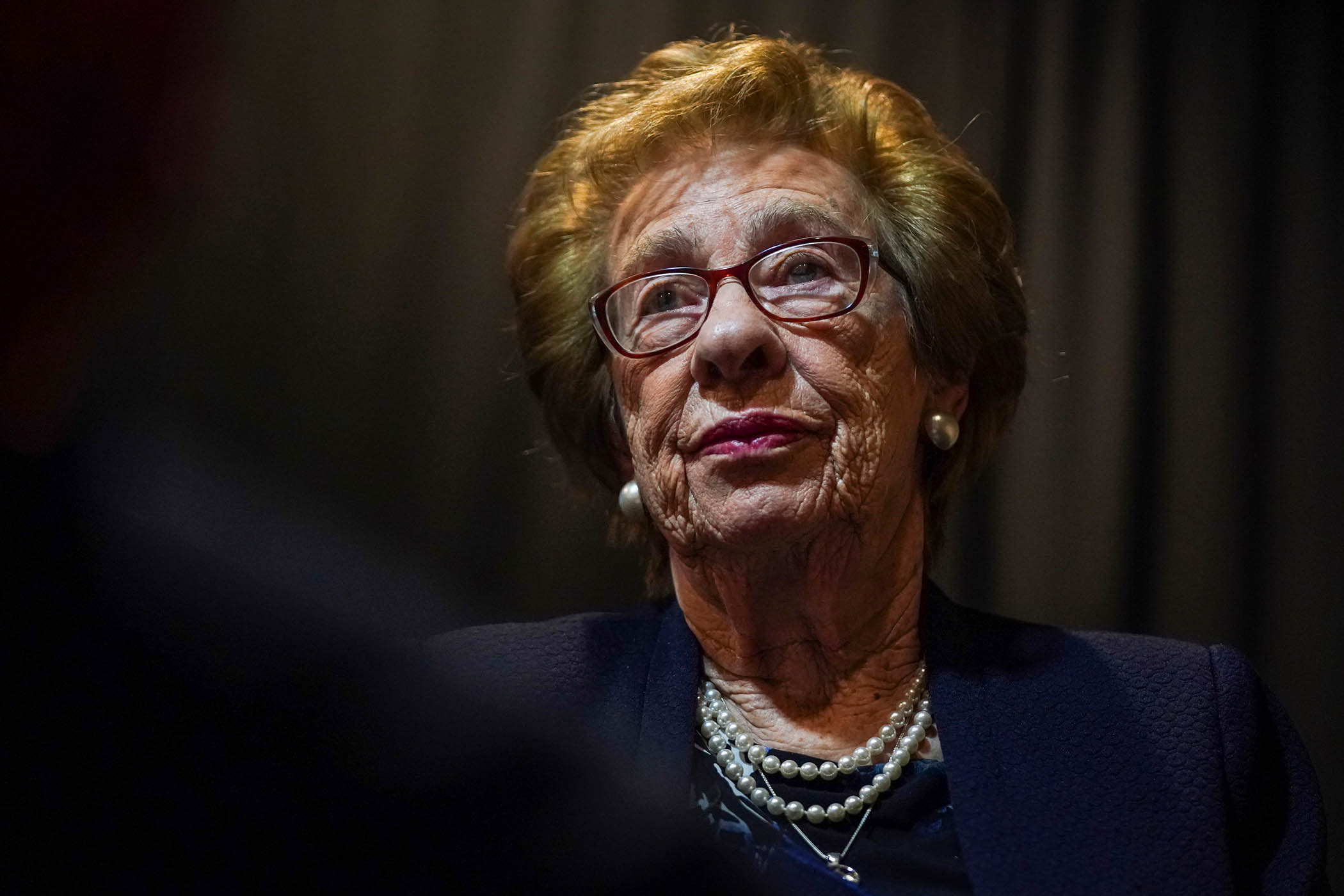
Eva Schloss, author and Holocaust survivor, was born on 11 May 1929, and died on 3 January 2026, aged 96
Photograph by Jahi Chikwendiu/The Washington Post via Getty Images