

Related articles:
This article first appeared as part of The Puzzle edit newsletter – trends, histories, insights and brain teasers all in one place. To receive it in your inbox, featuring content exclusive to the newsletter, sign up here.
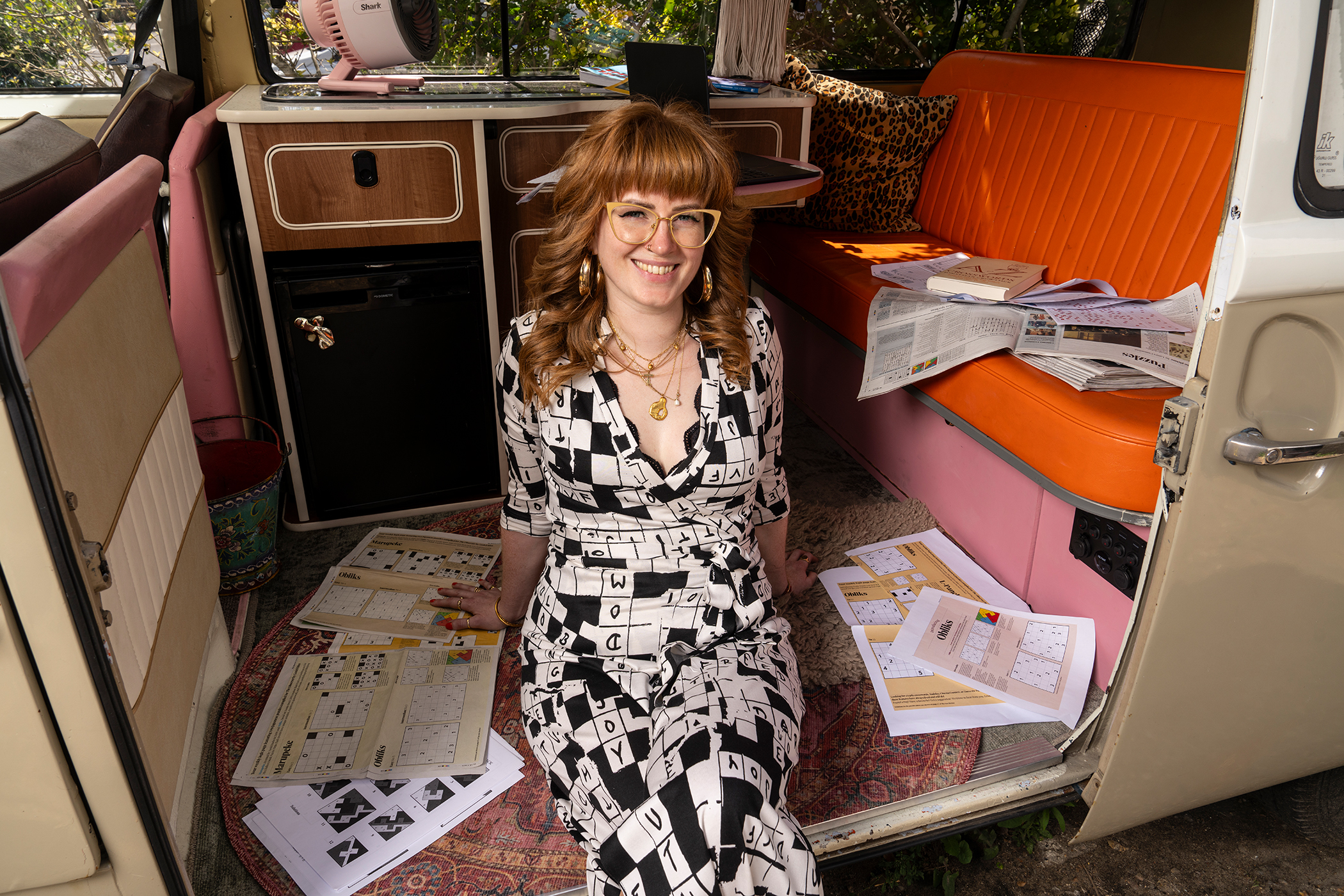
People assume that being a puzzles editor means I spend my days doing crosswords and sudoku. Sometimes. But the real privilege of the role is helping readers choose how to spend their downtime and understanding how many different forms that can take.
I never set out with a theme for these picks. They always reveal themselves once the three are chosen. This month’s connection: the unexpected places puzzling shows up – not always in a grid, and not always in the format you’d expect.
Arrows: Puzzle Escape
There is a whole universe of games in the App Store, and I find almost none of them enjoyable.
Which is why I want to tell you about Arrows.
It’s a free mobile puzzle game with a simple premise: you’re presented with a grid of arrows pointing in different directions, but each arrow can only leave the board if its path is clear, so the order in which you clear them matters. It isn’t hard, so much as casually strategic. A school-mum friend blazed through to level 50 and still found it too easy. I’m on level 71 and perfectly content.
I play it on the commute home, when my head is crammed with everything I haven’t finished, and reading feels like another task, and solving a crossword feels like work (because it is). Arrows quiets my mind in a way nothing else quite manages.
One caveat: I only count a level as completed if I get out with all three hearts intact. No damage, no compromise. Make of that what you will.
Related articles:
The Killer Question, by Janice Hallett
This one was recommended to me at the start of the week by my best friend Dani’s mum. After hearing about the pub quiz I hosted, she thought I should know about a murder mystery novel set in the world of pub quizzing.
The Killer Question is by Janice Hallett, whose previous novel, The Appeal, has a devoted fanbase. The premise is slightly corny, but it works: a nephew tries to turn his aunt and uncle’s murder case into a Netflix documentary. A TV producer finally bites, and the nephew asks her not to Google the case but to let him share the evidence himself, piece by piece. The whole book is that evidence: texts, emails, group chats, pub quiz sheets, promotional posters. No conventional narrative. You’re the producer, receiving information in the order in which the nephew chooses to give it to you, which means you’re being managed by a character even as you’re trying to solve the case.
Newsletters
Choose the newsletters you want to receive
View more
For information about how The Observer protects your data, read our Privacy Policy
The pub quiz element isn’t a backdrop: it’s the engine. The aunt and uncle have taken over a pub in the middle of nowhere on a road called Bell End, which leads to some amusing prank messages early on. They’re part of a small circuit of local pubs that run weekly quizzes, and there’s a local cheating ring making the rounds. But when a suspicious new team shows up, cleaning up the weekly quiz – sometimes not getting a single question wrong – things take a turn. Nobody can work out how they’re cheating, particularly as this pub quiz is written by hand. Even the regulars’ reactions to the newcomers taking the prize feel painfully familiar from quizzes I’ve both attended and written.
I’m about halfway through and not stopping…
Giiker
Last September, my daughter Theía was given a once-in-a-lifetime trip to Disneyland Paris, a gift from Great Ormond Street hospital in recognition of the treatment she received as a baby. It’s run every year by the Worshipful Company of Hackney Carriage Drivers, which fundraises to make the trip happen: around 300 children from London hospitals, each allowed a parent and a friend or sibling to accompany them. The year we went was their 30th anniversary. As an only child, Theía brought her cousin Arianna.
Which left me with a practical problem: how do you keep a five-year-old and a 14-year-old entertained for six to eight hours in the back of a cab without giving them a phone? Theía has no interactive screen of her own: no iPad, no games console, no phone. The most screen time she can expect in a day is 20 minutes of television. I wasn’t about to change this on the way to Disneyland.
That’s when I found Giiker. They make physical, screen-free puzzle games: tactile, colourful, satisfying to handle. I bought two for the trip: Super Slide and Super Decoder. We’ve since been given Super Blocks by Dani (whose mum recommended The Killer Question).
Super Decoder bears a striking resemblance to Mastermind: coloured pegs, a hidden code, a limited number of attempts. Wordle players will recognise the logic immediately, because Wordle is built on exactly the same principle. It looks like something from the future that harks back to the past, part retro sci-fi prop, part childhood classic. Super Slide is the sliding tile puzzle you probably remember, shifting everything around to manoeuvre one piece into position. The Giiker version has a small screen at the top that shows you how to set up the puzzle; then it’s up to you to get the big pink tile into place. It took Theía longer to get into this one, but it’s now her favourite. Super Blocks is mine: Tetris-like pieces in different shapes, each one snapping satisfyingly into the board.
None of them is a game you play alone in silence. They invite commentary, competition and collaboration. Theía taught our neighbour to play Super Blocks, then raced him to finish a level. We take turns on Super Slide. Super Decoder has a built-in two-player mode in which you set and crack each other’s codes in turn. They’re conversation pieces as much as puzzle games.
All three share the same quality: they click, sit satisfyingly in your hands, and reward you in a way that makes you forget that whole universe of games sitting on your phone.
Full disclosure: they aren’t cheap. Super Blocks and Super Slide are both priced around £45-£50 on Amazon, though the Super Decoder can be found for as little as £27 if you shop around. I haven’t regretted a single penny spent.
Beyond the three I’ve recommended, there’s also Smart Sudoku, a Super Slide expansion pack, and Tic-Tac-Toe (noughts and crosses). I’d expect more to follow. A brand worth having on your radar.
Photographs by Antonio Olmos, Minna Pang