Photographs by Celine Levain for The Observer
There are few spots in France more lovely – or more hidden – than the Jura. When I visited in late March, winter still held on in the mountains marking the Swiss-French border. But once over the high passes, the land relaxed. In the hamlet of Pupillin, above the town of Arbois, there was birdsong, sunshine on old stone and the sweet smell of ripening fruit. Wine country in springtime.
Until his mid-teens, this was Benjamin Benoit’s world. As a fourth-generation vigneron, he had never really questioned that he would become a winemaker. In the summer, his mates would be swimming in the river, or mucking about in the woods. Meanwhile, Benoit would be bent double among the vines, sweat in his eyes, the sun on his back. His family had cultivated grapes in the area since the 1930s; in this community of less than 300, almost everyone did. It was graft – the steep, irregular slopes make mechanisation a chore, and pretty much everything is done by hand.
In 2004, Benoit’s father dedicated the family’s seven hectares to winemaking, selling their cows and grooming his only son to take over. Aged 15, Benoit packed himself off to the Lycée Viticole in the city of Dole to study winemaking. There, he began to appreciate the craft, its dance of husbandry, chemistry and care. After graduating, he moved to the vineyards of Burgundy. He thought he’d have decades before he had to return home to take over the family estate.
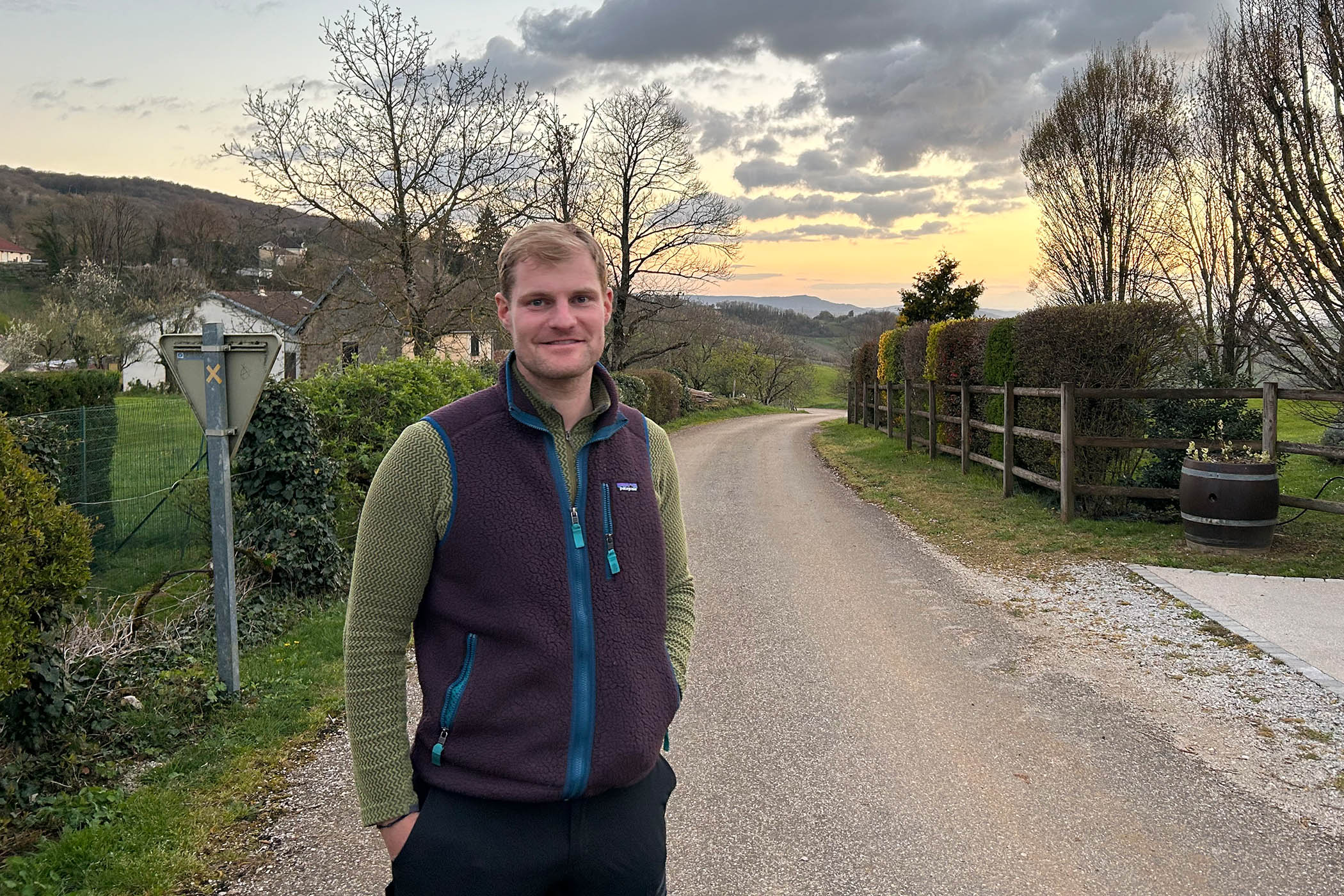
Cellier Saint Benoit in Pupillin, Jura region. It’s run by Benjamin Benoit
Benoit, now 30, is talking to me in the top-floor tasting room of his domaine. From its window, you can see his vines, the house he grew up in and his grandparents’ home. Propped against the walls are black-and-white photos of four generations of his family, including the great-grandparents who planted the first vines. He’s two staff down, and has been out since first light, but he’s a warm, generous host, telling me his story in flawless English. He pauses here, though. Discussing the difficulties of winemaking is tough: it is the work Benoit’s father dedicated his life to – and which took it.
“I was in Burgundy at the time, but I came back for the weekend,” Benoit says. “We watched rugby and served customers together. It was normal. He was probably very tired, but he showed nothing.”
A few days later, Benoit got a call. His father had killed himself.
“Your life changes – like whoosh…!”
Benoit rushed to be with his mother and sister. With the help of friends and fellow winemakers, they brought in his father’s final harvest. Aged 23, Benoit took charge of the estate, a business that had left his father in despair.
“My dad had periods of depression. It was burnout. It’s not easy – [winemakers] face pressure everywhere. People think it’s a holiday way of life, but it’s really hard. It’s unbelievable the things that are asked of us.
Newsletters
Choose the newsletters you want to receive
View more
For information about how The Observer protects your data, read our Privacy Policy
“We will never have the reason, an explanation. So what can we do? We have to keep working with what he built. That’s it. To be proud of what he made and just continue.”
‘It feels like an epidemic. The winemakers I know are psychologically exhausted… Nature seems to be against them, the government seems to be against them, bureaucracy is against them’
‘It feels like an epidemic. The winemakers I know are psychologically exhausted… Nature seems to be against them, the government seems to be against them, bureaucracy is against them’
Doug Wregg, Les Caves de Pyrene
Benoit’s father died in 2019. In the years since, across France, at least half a dozen prominent vignerons have taken their own lives. Three years after Benoit’s father’s death, four winemakers died by suicide in a two-month period during 2021. One was Pascal Clairet, a close friend who farmed in the neighbouring town of Arbois. Pascal and his wife, Evelyne, had been among those who helped bring in Benoit’s father’s last harvest.
Clairet’s death was followed by that of Dominique Belluard in the nearby Haute-Savoie region. Further afield, Olivier Lemasson in the Loire and Laurent Vaillé in the Languedoc also took their own lives. And last year, both Jonathan Mayer and Christophe Blanc – leading lights in Bordeaux – died by suicide. The winemaking world is tight-knit and interconnected. The deaths have left a bitter tang.
“It’s like a small town, everyone knows everyone,” says David Crossley of the Wide World of Wine blog. “So it’s absolutely devastating when something like this occurs. And I can’t imagine what it’s like for those left behind.”
Doug Wregg, marketing director for Les Caves de Pyrene, the UK’s largest natural wine importer, agrees. “It feels like an epidemic. The winemakers I know are psychologically exhausted. Two out of three years in a row feels like wipeout time. Nature seems to be against them, the government seems to be against them, bureaucracy is against them.”
Among those who knew the vignerons, various explanations are offered, from depression, family troubles to – in one case – the loss of smell and taste after contracting Covid. But across France, the same “pressures” Benoit’s father faced are being felt: climate chaos, economic headwinds, and changing drinking habits. Over the past few months, I’ve spoken to scores of winemakers and industry insiders, all of whom have testified to an industry in slow, smouldering crisis.
‘There’s an old saying: ‘To make a small fortune in wine, start with a large one,’” laughs Gavin Quinney. A British producer based in Bordeaux, he’s seen the truth of this adage first-hand. Quinney has “always been a wine geek”, having first made his career in the computer industry. But in the early 2000s, he sold his shares and bought a vineyard “almost by accident”, uprooting his wife and two young daughters to southern France, and Château Bauduc.
“For the first few years, we had a bit of a honeymoon period. But then we ran out of money… And the next five years were monstrously tough. Things have stabilised only recently.”
Now Quinney’s estate mainly supplies restaurants in the UK, including Rick Stein and Gordon Ramsay’s. But back then, “we went into administration. We really hit the bottom. And very few people get out of [that position] and save their business. It’s not like a restaurant or a pub. A vineyard is your home, your livelihood, your identity – all wrapped up into one.”
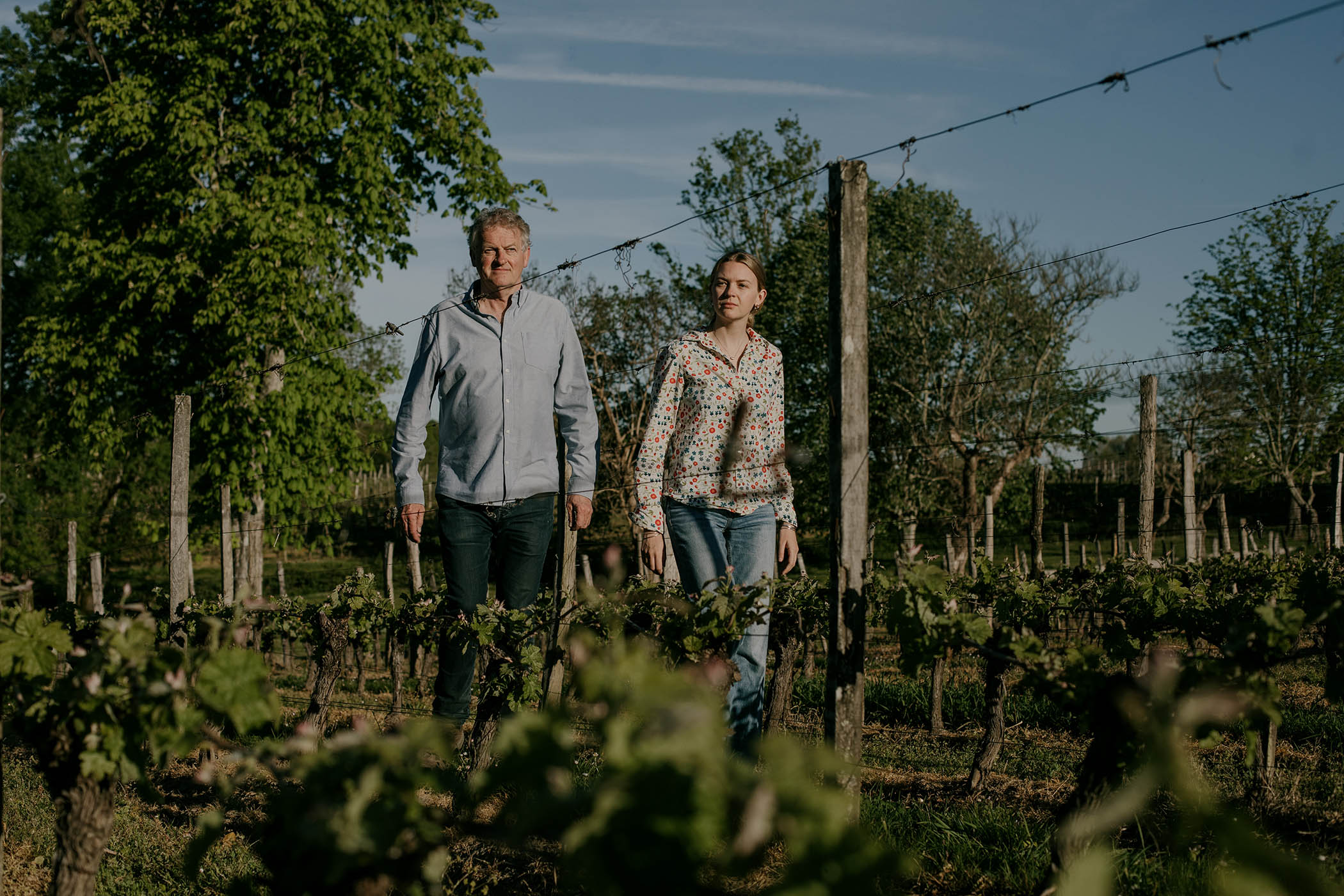
Gavin Quinney, owner of Château Bauduc and his daughter Georgie in their vineyard. in Créon, Gironde, France
Quinney is rueful about the gap between the perception and reality of winemaking. “I’ve got a friend who would phone me up and ask: ‘How is living the dream?’ And I’d be like, ‘Yeah, it’s great, mate. Let me just show the bailiff out.’”
I ask about the deaths. “There’s a shame when you can’t make it work,” Quinney reflects. “When we had a difficult time, I don’t think I spoke about it with anyone. Because you have to put on a brave face and pretend everything’s rosy for your visitors. If you’re at a real low, you can’t let the cat out of the bag because it will affect perception of your product.”
Each year, he says, is a roll of the dice – blindfolded. Climate has been one of the most pressing factors.
“My father used to say one in every 20 years was a frost year – now it’s one in two,” says Benoit. Vines, like most plants, thrive on predictability. During the winter, their low, gnarled trunks offer protection from cold and storms. But come spring, when the points verts – the buds which fruit into grapes – begin to push out, they are at their most vulnerable. A late frost can devastate a harvest, radically altering the amount of bottles produced. On Benoit’s estate, for instance, in 2019 – a frost year – they only managed 10,000 bottles; by contrast, in 2023 he produced 48,000. Benoit also noted grimly that, in the Jura, each frost year has been followed by suicides, including his father’s.
Climate change will not mean a total collapse in the wine industry. In fact, it has some benefits: higher summer temperatures typically mean lighter, lower-alcohol wines that suit modern palates and drinking styles. And it has meant that winemaking is now sustainable further north, as the UK’s booming vineyards attest. Vines have been cultivated in France for more than 2,000 years and, in that time, winemaking regions have come and gone. The trouble is that, for most, it’s not a peripatetic business: individual producers cannot simply up sticks and move to easier climates. Climate chaos is also making a mockery of France’s rigid appellation system as, more years than not, producers are having to buy in grapes to make up shortfalls, diluting their terroir.
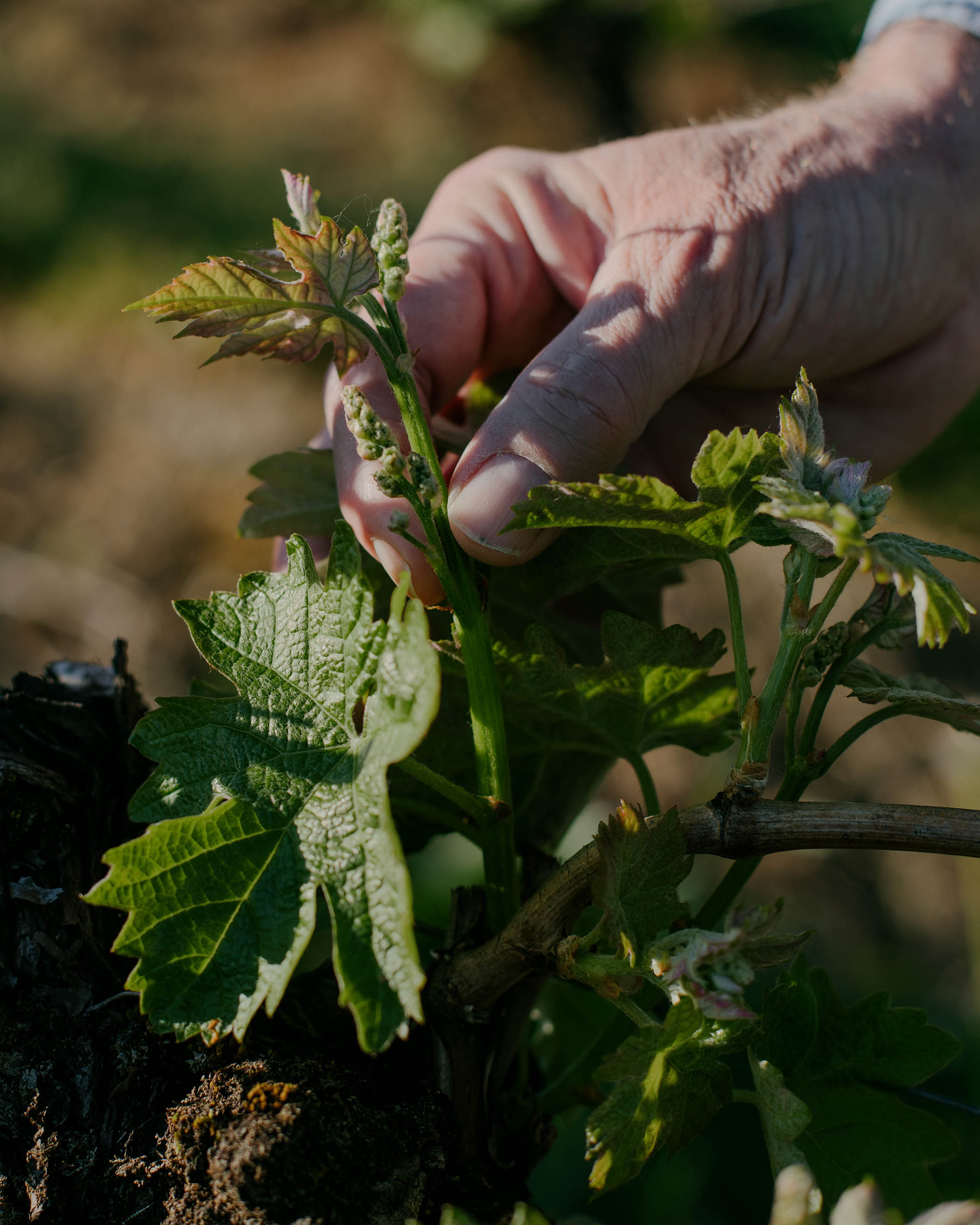
Close-up of young grape clusters in the Entre-Deux-Mers region around Bordeaux
Alongside the climate, artisan producers must survive geopolitical storms. Tellingly, many mentioned Trump and les tariffs in the same way they discussed the weather – an implacable force that struck with the same randomness.
Wregg said that Les Caves de Pyrene had stepped in to help producers. “They’ve seen their markets disappear overnight and have to scramble to find new ones.” Brexit had also increased transport costs and logistics. “It’s a nightmare exporting to the UK right now,” notes Crossley, the wine writer. “If you’re a small-scale producer only making 10,000 bottles a year, and Britain used to represent 50-60% of your sales, that’s a big problem.” The Ukraine war had also significantly steepened the price of materials, from fertiliser to corks to paper labels.
Producers shoulder the heaviest burden for this unpredictability. But the costs shiver down the supply chain all the way to consumers. “People still have a glass ceiling when they go out,” argues Wregg. “I started my career as a sommelier 30 years ago and, back then, mark-up on a bottle was two or three times the market price. Now, a €7 bottle might be sold for £70. The bottom end of wine lists in restaurants in the UK is now really poor value – there might be only two or three euros of wine in a bottle. Our growers are shocked when they learn how much their wine sells for in London restaurants.”
Talk to any producer, and soon enough they’ll mention the dreaded paperasse. French bureaucracy – never shy when it comes to burdening its own citizens – has become untenable in recent years. Most producers, as Benoit points out, “are outside people. They choose this life because they don’t want to be in an office. They want to be working with the soil, in the vines.”
‘There were some beautiful moments, working as a family. But the responsibilities were very hard from beginning to the end. We lost ourselves, and our family, to the job’
‘There were some beautiful moments, working as a family. But the responsibilities were very hard from beginning to the end. We lost ourselves, and our family, to the job’
Sandrine Héraud, former winemaker
Very few can afford administrative staff, so they are left to pick up the paperwork themselves. Benoit says he rarely gets to bed before midnight. They were “stupid things” that stole the joy from the job: each time he sprayed the crops, for instance, he would have to log it electronically that same day. “My [dad’s death] was due to lots of things, but 2019 was the first year we had to fill in monthly customs declarations online – and the software never worked properly.”
In Arbois, wine is inescapable. The town wears its heritage with pride: every other shop seemed to be a cave, and the names of family winemakers were advertised on each street corner. But it felt uncanny, like the set-dressing for a museum. Many winemakers, with varying degrees of humour, saw themselves against “the hygienists”: health-conscious consumers, particularly younger generations, who drink far less than their parents – or not at all. In 2015, global consumption of wine stood at 241m hectolitres; a decade later, it had fallen to 214m hectolitres: an 11% drop. It’s estimated that production has outstripped demand by 10% for the last 15 years. That's an awful lot of wine being produced, and far too few drinkers. “We’ve forgotten that wine is for drinking,” one producer told me. “The civilisation of wine is disappearing.”
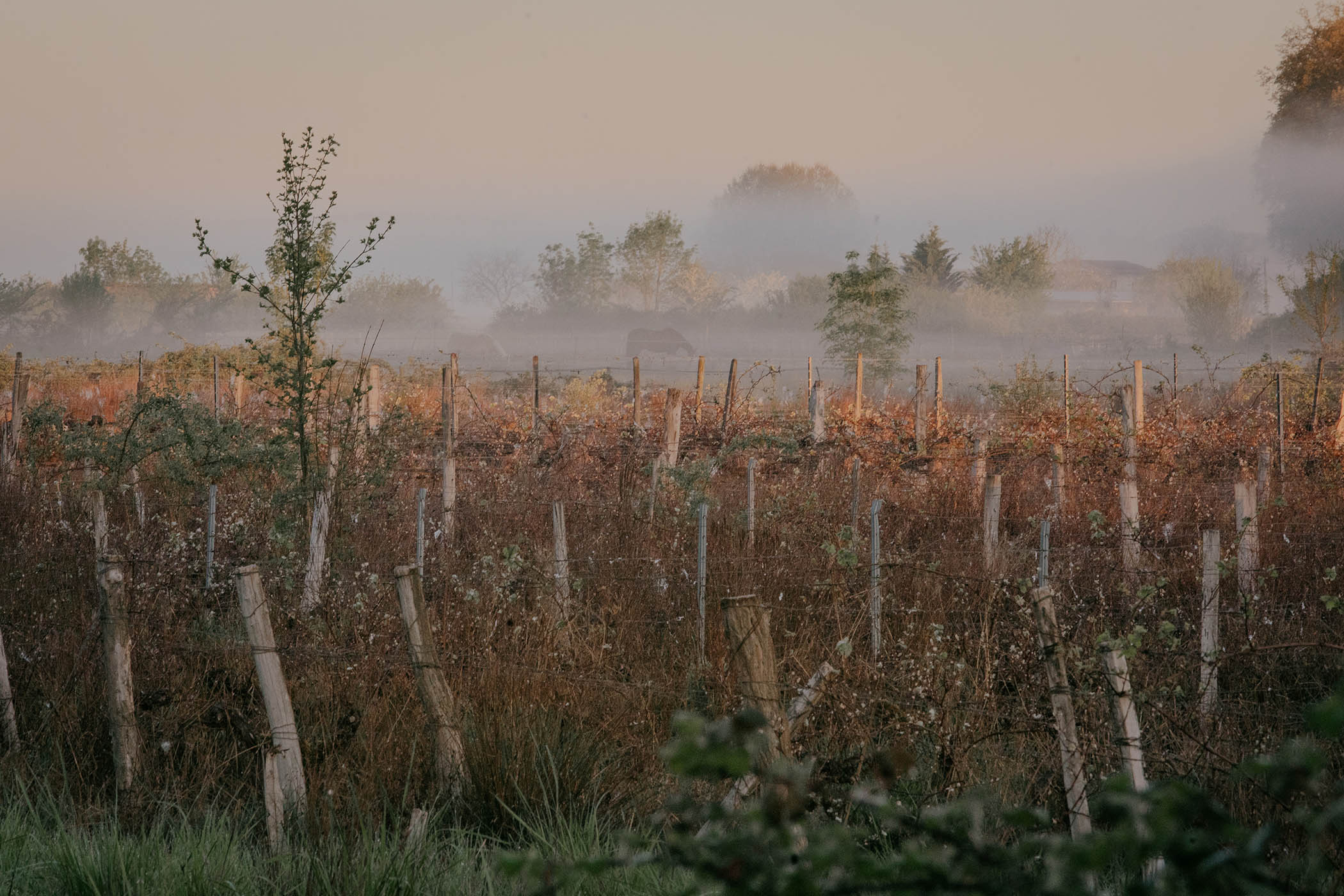
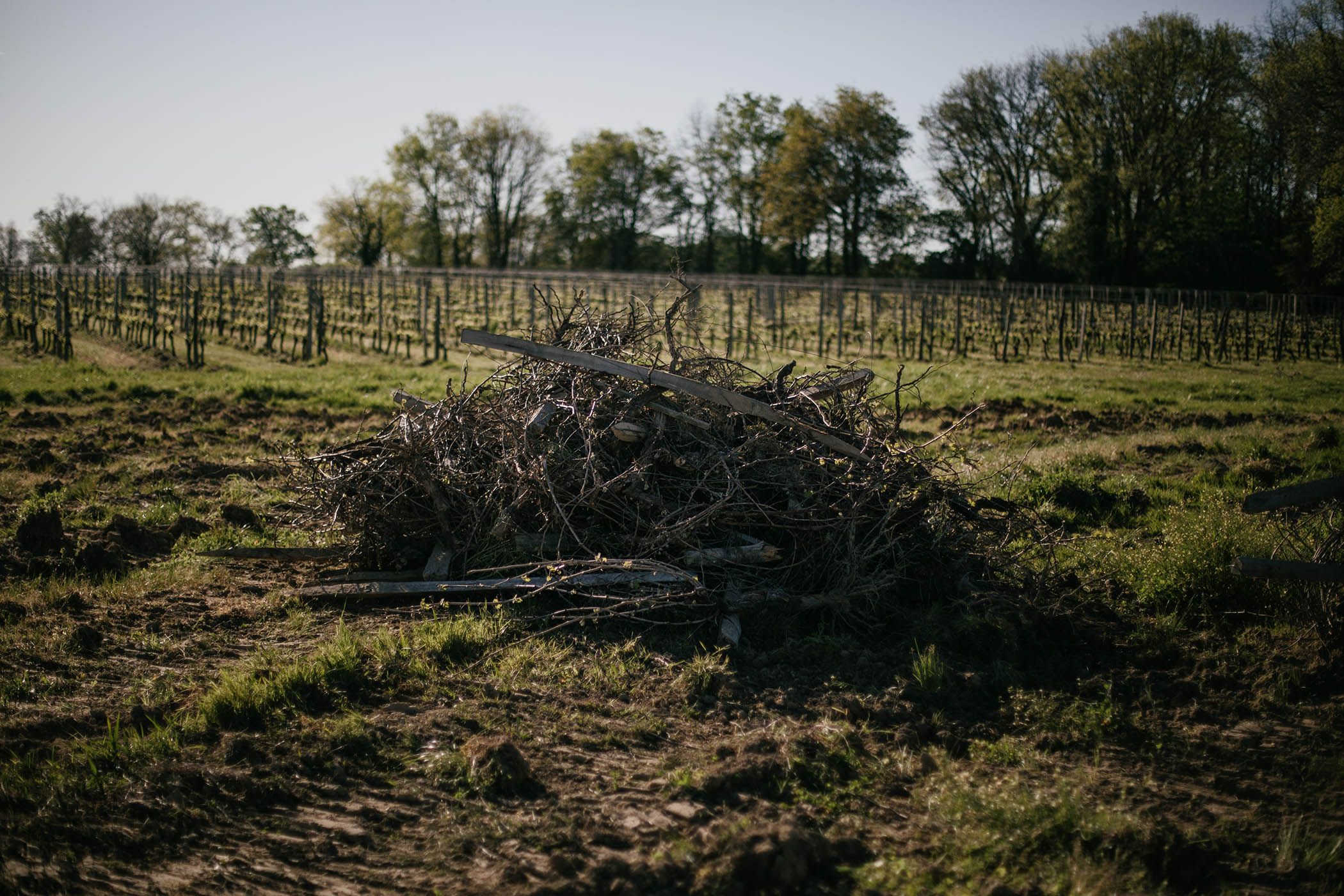
Along the roads of the Entre-Deux-Mers region around Bordeaux, several vineyards appear to be abandoned,
The French government epitomises this attitude. On some level, it champions farmer-vignerons – les paysans – as guardians of French identity: embodiments of its deep, rural spirit, La France profonde. But, in practice, many vignerons feel patronised and forgotten, their way of life seen as backward, their goods suspect. For example, from the 2024 vintage, each bottle of wine will have to display a nutri-score – useful when deciding which tin of Carrefour cassoulet is slightly less awful for you; less enticing when looking to splash out on a €30 bottle of artisan natural wine. France’s Evin Law, too, effectively prohibits the positive advertisement of alcohol, including wine. It’s hard to argue for the pleasures of La bonne vie, when your products are relegated to the naughty end of the hypermarket, with the fags and freeze-dried lasagnes.
France without its artisan winemakers is inconceivable – nor is that vision likely to come to pass soon. But throughout my conversations, there was the sense that a thread of cultural identity is fraying, already beyond repair.
Nowhere is this more true than in Burgundy, and few are more attuned to this feeling than Sandrine Héraud, a seventh-generation Bordeaux vigneron. By her telling, her family were torn apart by – and over – their vineyard. Her family had owned vines in the Medoc region since the 1850s, but when her father took the farm, he converted all of their fields into a 30-hectare vineyard.
Héraud’s sister was born for the work, winning tractor-driving contests at only 14 and studying viticulture. “But I was a dreamer,” Héraud says. “I wanted to write, study, act in plays. My father told us we were free to do what we wanted. But my grandfather told us to love the soil – he was a big factor in my decision to return after university.”
The two sisters and their father tried to make it work. “But we had difficulties every year. There were some beautiful moments, working as a family. But the responsibilities were very hard from beginning to the end. We lost ourselves, and our family, to the job. It became a war between myself, my father and my sister.”
In 2003, they lost their Cru Bourgeois classification, and spent five years fighting to get it back, eventually going all the way to court. They won. “But we lost our credibility in the Bordeaux wine world.” Exhausted, in 2010 her father handed the estate over to his two daughters, while helping with some of its day-to-day running.
“The first year we took it over, the MSA [an agricultural body] said we owed €250,000. We had no stocks, no money and we never understood why.” They were forced to go to the banks for help.
The bodyblow came in 2016. Her father had been out spraying de-grassing chemicals between the vines. Somehow, though, he managed to spray the vines instead, destroying more than half their crop.
Three days later, “he was a hunter. He took his gun against himself,” Héraud remembers. “My sister found him in the vines. It was five days before my wedding and the baptism of my son. We had tried to tell him that everyone makes mistakes. We would be OK and pull through. But he couldn’t understand… He didn’t want to understand.”
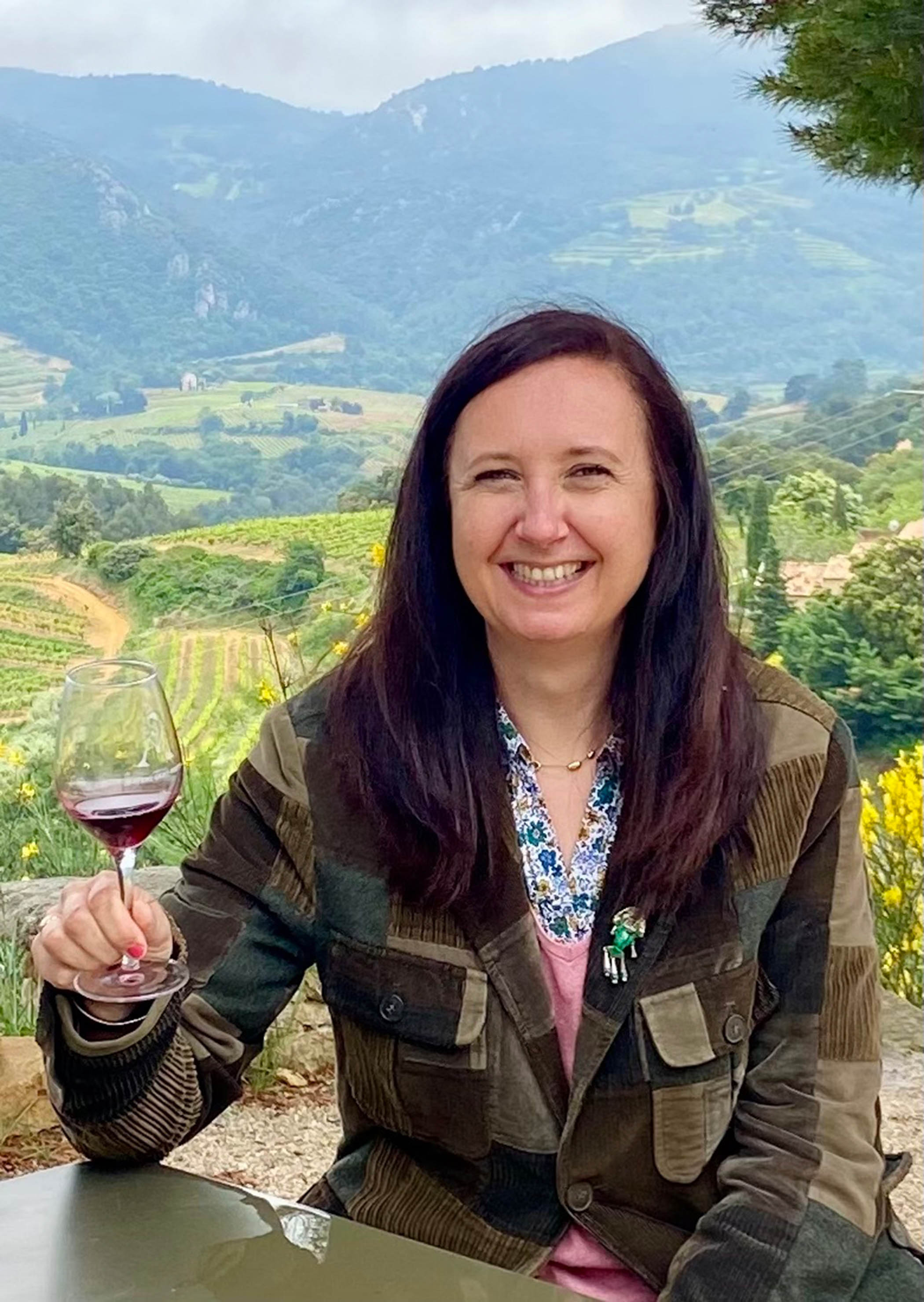
Sandrine Héraud
In 2020, Héraud sold her portion of the remaining estate to her sister. Her sister – “who loved the land and loved the vines” – tried to keep going. But she couldn’t recoup her losses, so she put the property up for sale. She also took advantage of a controversial national scheme, whereby the French government subsidises growers to arracher – tear out – their vineyards in a bid to better manage wine production and prevent surpluses of unsold stock. The going rate is €4,000 a hectare: scant compensation for land that has provided a living, as well as a sense of rootedness and identity.
Héraud reckons that up to 40% of the vineyards in Bordeaux have been taken up in this way, and many growers are bankrupt. “It’s a secret – no one wants to talk about it. There are so many generations before them, how can they admit they’ve failed? Bordeaux was so proud of its wine, so it’s complicated to admit that Bordeaux has failed.”
Today, Héraud lives in Paris, and has published a memoir, La vigne dans le sang – Wine in the Blood. “I was glad to leave the vines,” she says. “With my father’s death, everything changed. I didn’t want my children to inherit it. Whenever I thought about them taking over, an image of my father and what he did would come to mind…”
She pauses. “We thought the vines belonged to us – but we belonged to the vines.”
‘They returned to it always, bent and stubborn, as if chained to its clods…The land kept them, possessed them, like a vice that tightens with every generation,” wrote Émile Zola in his 1887 novel, La Terre. Today at least one farmer dies in France by their own hand every two days.
Yet the problems facing French winemakers are modern – and acute. The work, especially for small-scale, organic producers, remains as it has been for centuries: long hours of hard slog, in all weathers. Today’s producers, though, are confronting pressures that their predecessors never had to face. But despite this, most I spoke to were convinced of the value of their work. Quinney, for instance, wants to hand the estate on to his daughters. “Winemaking is a noble thing,” he says.
There has been a generational shift, too. “If there’s hope, it lies with the younger growers,” observes Wregg, the importer. “They’ve travelled, seen the world, and they’re more prepared to adapt to the winds of change and ask for help.”
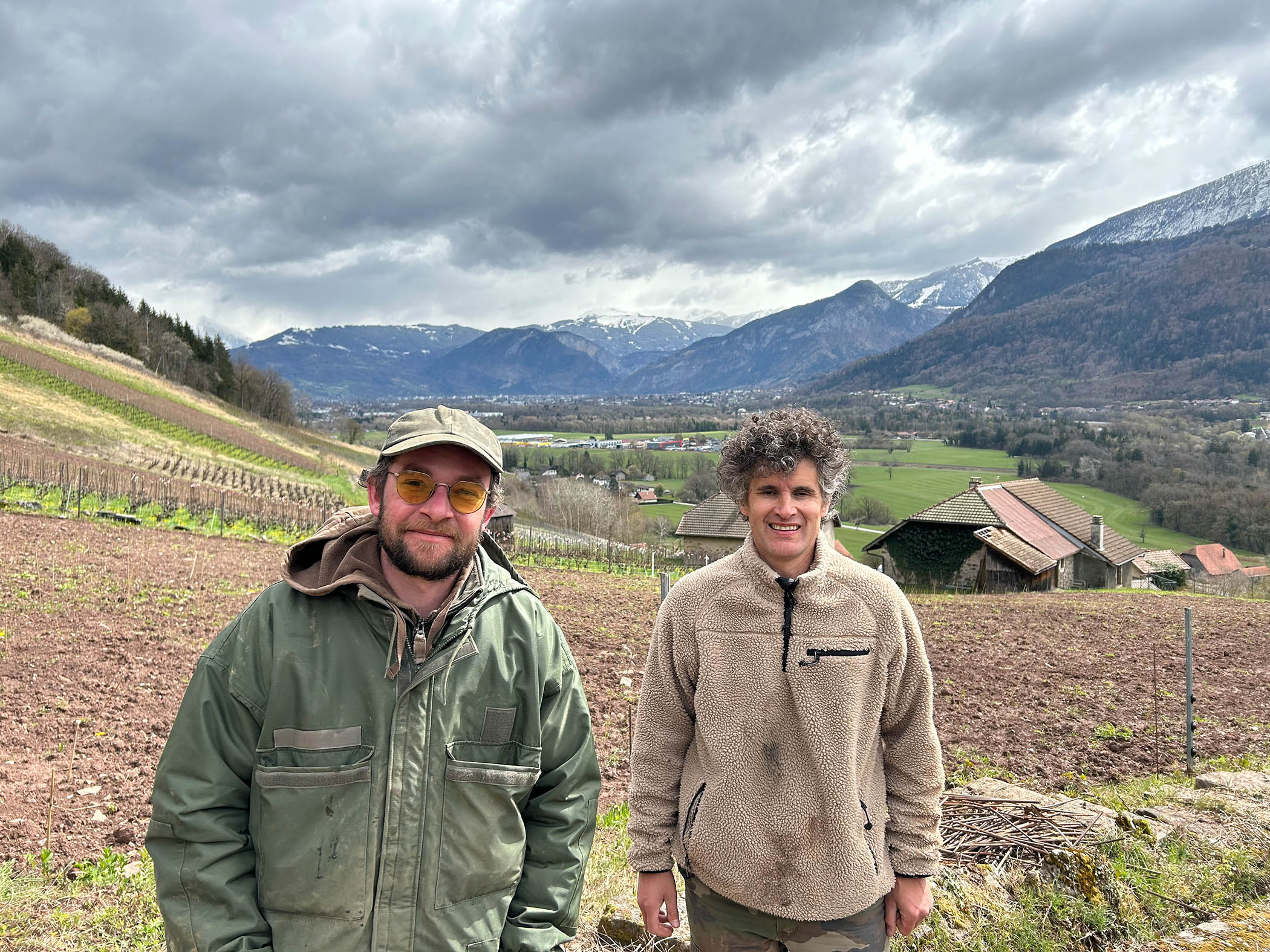
Domaine du Gringet (formerly Belluard) in the Haute Savoie, run by Vincent Ruiz (left) Miguel Sarzier
Towards the end of the evening, as the sun left the valley, Benoit told me about his plans for the future. He has no children, and isn’t sure he would pass the business on if he did. But he seemed determined to shoulder the burden.
“Only one small part of my vineyard is younger than me,” he says. “I can only do my work today because, in the past, someone else has done theirs. It’s like caring for a living museum. My great-grandmother planted the first vines in 1938. The year after, the second world war started and we were occupied, and the Resistance fought around here… The plants saw all that.”
Opening a bottle of wine is a form of time travel, he says. “Each vintage captures a year – you could blindfold me and it would take me back to ’21, ’22.”
It was in recognition of the way that wine plays with time that, after his father’s death, he chose a new label for the estate: a sharp, stylised hourglass, its grains in motion. “My dad isn’t here anymore, but I can drink a bottle of him – a bottle that he made,” Benoit says.
He didn’t need to add that an hourglass also offers a final grace: when its sands run out, you can turn it over, start again.
For details of the winemakers featured, see: Cellier Saint Benoit; Château Bauduc; Les Caves de Pyrene. To contact the Samaritans, call 116 123, for free; or visit samaritans.org