

The primal effects of a high-strength drink can sneak up on you. One minute you’re sipping a martini, maintaining an air of aloofness, the next you’re divulging the details of your latest ill-fated romance to your line manager. “I like to have a martini,” wrote the poet Dorothy Parker, “two at the very most. After three I’m under the table, after four I’m under my host.” I doubt Parker had a line manager, but she understood the effects of a strong drink.
Places like Dukes Bar in London’s Green Park know their menu’s potency and serve accordingly: you are permitted just two of their large, glacial martinis, which is a limit that acknowledges a horrible truth – keeping track of how much alcohol you’re consuming can be difficult. How do you know when you’ve had enough? How do you hold a moonbeam in your hand? Perhaps a mini cocktail offers a solution.
I recently had a wonderful early-evening drink at Chiave on Redchurch Street in Shoreditch. There is an easy-going cocktail bar upstairs and an impressive listening room below, and each of their cocktails had a fun Turkish twist. (I will only take my espresso martinis with Turkish coffee now, thank you very much.)
But the most curious thing I found there was this: on the bar’s social media account their small drinks are described as “shots”, but their clever PR had sent out a release describing them as “mini cocktails”. All of a sudden there was a mini Bloody Mary on the menu, a mini Mastiha Sour. It was only a small distinction, but one that got me thinking about what differentiates a mini cocktail (very metropolitan chic) from a shot (very freshers’ week).
A cocktail reduced to cute proportions elicits from me the same noises I make when fussing over a baby. How sweet!
A cocktail reduced to cute proportions elicits from me the same noises I make when fussing over a baby. How sweet!
Do you class a shot that contains three or more ingredients as a mini cocktail? Is a Baby Guinness (Irish Cream, coffee liqueur) one? Is a Slippery Nipple? The answer has to do with the glassware the drink is served in, its perceived class, even the setting in which you enjoy it. But the parameters remain unclear. Mini cocktails are shots reimagined for adults – but they’re largely the same thing.
Still, calling something a mini cocktail hugely increases its appeal. A cocktail reduced to cute proportions elicits from me the same noises I make when fussing over a baby. How sweet!
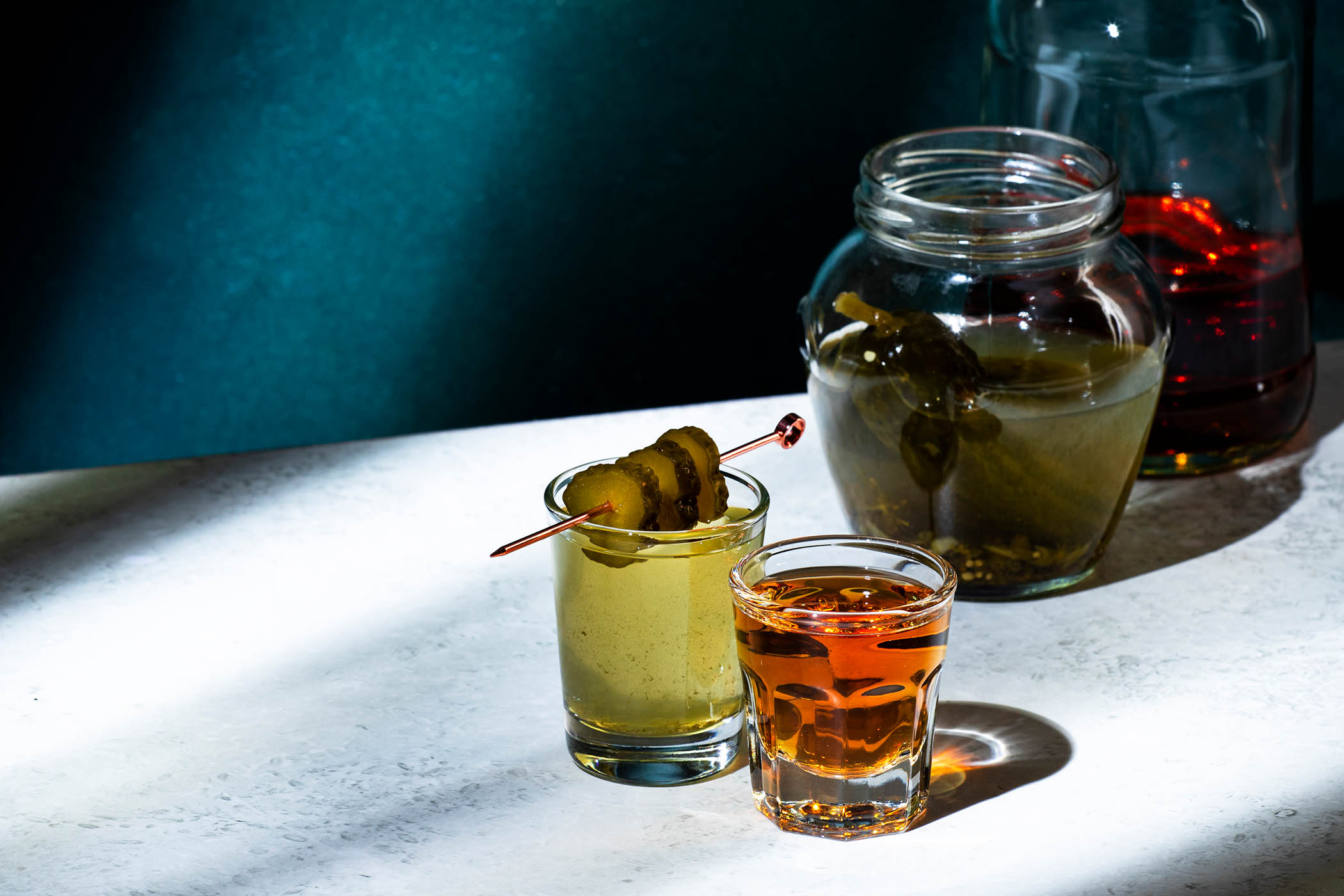
But for the everyday consumer there are benefits, too, notably the lower price point. An excellent martini will cost around £20 in central London. (A Vesper martini at Dukes Bar costs £27.50 at the time of writing.) A mini martini, given it is mini, is naturally cheaper. There’s the original One Sip martini at Tayēr + Elementary, which costs £4. There are the three styles of mini martini at Noisy Oyster, costing £9. And the mini martini at Rita’s in Soho (£9), where you can get a plump, green jalapeño popper gilda balanced across your glass on a silver pick. And it’s not just martinis but tiny daiquiris, minuscule margaritas, even microscopic espresso martinis.
Honey, they shrunk the cocktails.
Rita’s owner, Missy Flynn, told me recently that a mini cocktail was a very good way to open up the palate before enjoying a meal, though I was curious about the economics. When booze is something a restaurant turns a profit from, why reduce the offer? Earlier this year, Rita’s revealed they make just £1.01 from one of their jalapeño popper gildas. But perhaps the restaurant is hoping we’ll drink more than one of them.
“It’s the perfect martini to move on to wine from,” Flynn told me. When will we learn?
Newsletters
Choose the newsletters you want to receive
View more
For information about how The Observer protects your data, read our Privacy Policy
Photograph by Getty Images