
The first sip was the worst. And the second sip – that was the worst too. The third sip I didn’t enjoy at all. The fourth sip makes me wonder why I ever thought it was a good idea to learn to love coffee.
It is, at least, better than I expected: the flavour of foul, muddy ditchwater, like the stuff that St Jerome of Stridon, an early Christian hermit and ascetic, drank on one of his forays in the Syrian desert. Jerome was the 4th century’s version of Marvin, the paranoid android created by Douglas Adams, and both saint and robot were cocktails of sour, gloom and grumble, with an overtone of bitter.
I am no saint. Sugar and cream are my culinary touchstones. But I am standing here in a roastery because I have serious Fomo: everyone else seems to love coffee, and bitter flavours of all kinds are on the rise. Chocolate is getting darker. Kale refuses to go away. Walnuts are up, as are endive, radicchio, dandelion and other bitter greens. At the bar, everyone is ordering a negroni, while its evil cousin, the boulevardier, emerges once more from the bottle skip of mixology history. You can order a Cynar (vegetal-bittersweet, made from artichokes), a Fernet-Branca (herbal-menthol-bitter) or any other variety of amaro – literally “bitter” in Italian – without so much as a “you what?” from the bartender, although I haven’t tried this yet at a Wetherspoon’s.
‘It isn’t enjoyable. But is it something that I could possibly learn to… tolerate?’
‘It isn’t enjoyable. But is it something that I could possibly learn to… tolerate?’
Food as a pleasure pastime is at a peak, travel broadens the palate, people in the UK are more attracted to the idea of seemingly sophisticated, grown-up flavours. The association of bitterness with health is another factor, according to Regina Maiseviciute, a global food analyst at Mintel. Chinese consumers are clamouring for products that include bitter gourd – a sort of Gruffalo’s cucumber – while Japanese aojiru (a traditional bitter drink made from barley leaves) is resurgent. And Maiseviciute has a warning: brace yourselves for the sight of more influencers pushing the “earthy” taste of vegetables such as pennywort and moringa.
But are people deluding themselves that bitter must be good for them? And if it is good for us, then how can a sugarloaf like me overcome my distaste? Drinking coffee seems to reduce the risk of heart disease, strokes, diabetes, kidney disease and cognitive decline. I just need to swallow it.
Nine glasses of brown liquid are placed in front of me at Campbell & Syme’s HQ in Hertfordshire. Ben Kovar, the roastery’s co-founder, attempts to convert me to the cult of the bean with a ritual that is apparently known as a “cupping”.
This is the coffee world’s scientific approach to tasting, and Kovar has selected nine varieties. He grinds a handful of each, then measures out coffee and hot water in precise amounts, and leaves the glasses to stand for exactly 20 minutes before tasting. At four minutes, we “break the crust”, skimming off the froth and inhaling the aroma. It’s delicious. Coffee may taste foul, but a fresh brew has an intoxicating, velvety scent. By the time I reach the fifth cup, though, there’s something different. I don’t want to be rude, I tell Kovar, but I’m getting farmyard. Actually, the inside of a cowshed.
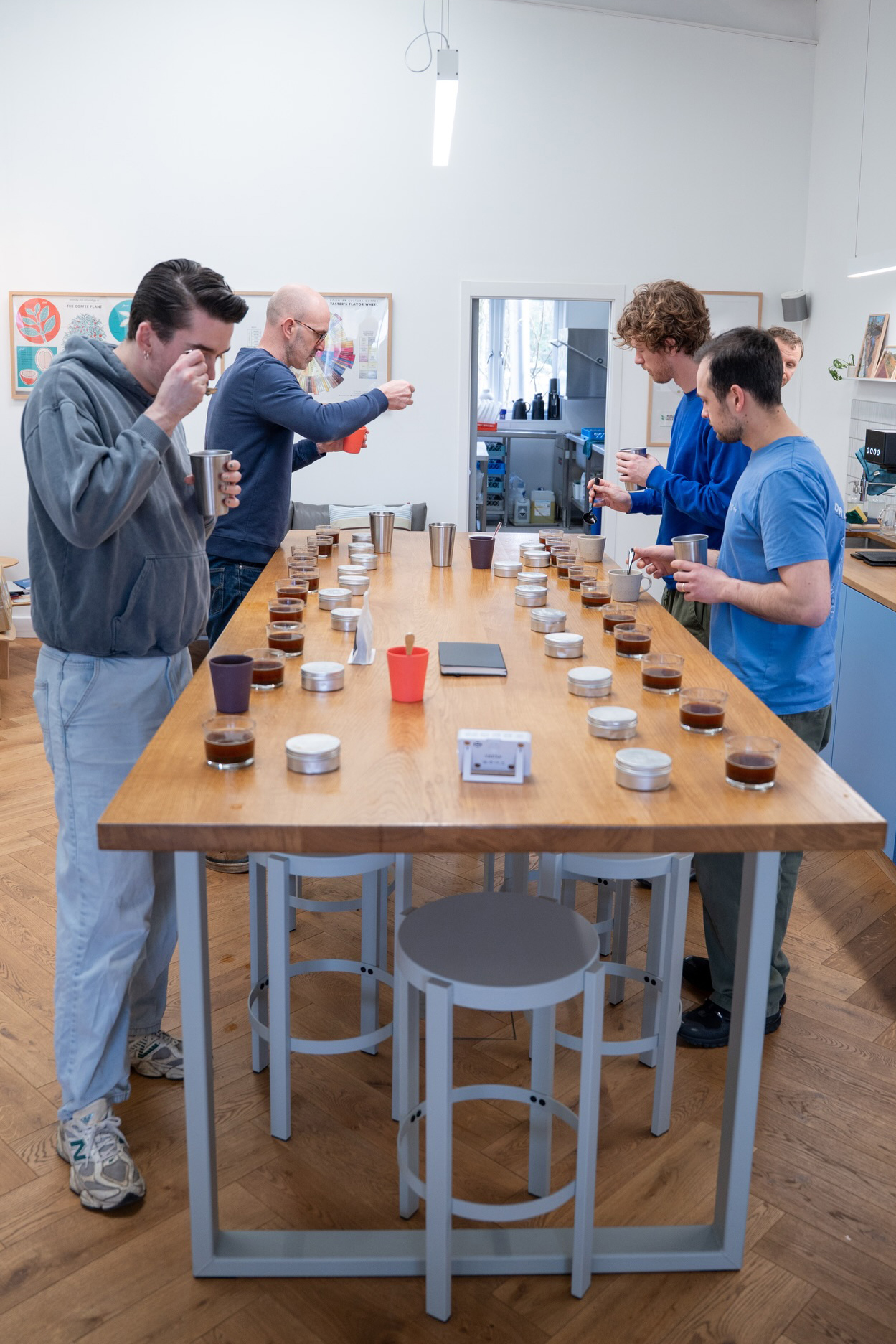
‘Pucker up and slurp’: A cupping session underway at Campbell & Syme
Kovar prefers the phrase “fermented undertones”. “This has been processed by the natural method,” he says. There are three ways beans are prepared: the natural method, where coffee cherries (the fruit) are laid out and dried in the sun; the washed method, where all the pulp is removed before the beans are dried; and honey, where the pulp is removed, but the beans are left unwashed. Washed gives a clear, coffee-only flavour; natural has other notes.
After the beans arrive in the UK, Campbell & Syme roasts them according to a complex formula, balancing roasting time and temperature to achieve the right mix of flavour, acidity and bitterness. This process exposes the delicacy of the Maillard reaction, where the amino acids in a foodstuff react with its sugars – a chemical process responsible for the aromas and taste of freshly baked bread, toasted marshmallows, seared steak and roast potatoes. Coffee beans need enough roasting to reduce their sharpness and develop their sweetness and release the spicier aromatics. Go beyond the roasting sweet spot and, like anything, coffee will burn and bitterness increases rapidly. It’s a fascinating lesson, but Kovar could serve me a Panama Geisha – the world’s most desirable coffee and about £500 a cup – and my tastebuds would still squeal.
Sensory scientists have done some thinking and come up with five categories of taste: alongside bitter are sweet, salty, sour and savoury (or umami). The jury is out on whether to add fatty, alkaline and watery, but spicy hotness is not a taste (just pain). People often confuse bitter with sour, but they are distinct. Consider the difference between a lemon, which is sour, and a grapefruit, which is sour and bitter.
Newsletters
Choose the newsletters you want to receive
View more
For information about how The Observer protects your data, read our Privacy Policy
Our bodies are programmed to respond to these tastes using different genes, or taste detectors. The most, by far, are bitter-detectors: 39 genes compared with only three for sweet and savoury, according to the Hugo Gene Nomenclature Committee. Tasting bitterness, and possibly sourness, is an evolutionary defence mechanism against poisons, a cue to spit something out. If something does slip through, we even have receptors in our guts so they can take action.
The snappily named TAS2R38 gene is linked to a higher sensitivity to bitter tastes – about 25% of the population has this high sensitivity, while a similar proportion at the other end of the spectrum find bitterness less extreme. But wherever you sit, our tastes are more malleable than we might imagine. Eat more sugar – easily done when it is often hidden in off-the-shelf foods, such as ready meals, soup and sauces – and things become less sweet. Drink more coffee and… well, here I am at Campbell & Syme’s roastery.
Kovar grew up loving the smell drifting from his parents’ cafetière. “On a Sunday morning, before I used to play football, we’d have breakfast as a family, and they’d brew a cafetière,” he says. “It was pre-ground coffee from Tesco, but it felt like an extreme luxury.” He developed his taste with instant coffee, softened with milk and sugar, but I get no easy landing – he hands me a tiny ladle for me to drink it, black. “Pucker your mouth a bit and slurp it,” he smiles. “You activate all your tastebuds.”
TAS2R38 and the fellow bitter receptors race to Defcon One. But by the time I reach that naturally processed coffee from Santa Maria in Nicaragua, something strange happens. Beneath the bitterness is something else, something that gives fruit rather than barnyard. The drink is weaker than an espresso, so less intense, Kovar explains, and has some sweetness. It isn’t enjoyable. But is it something that I could possibly learn to… tolerate?
The line of nine coffees, it turns out, started with (what I’m told are) traditional roasts, but I’ve reached the more experimental section. Kovar uses words like “juicy”, “fruity” and “vibrant”. Coffee has changed, and it has become less bitter – what was called third-wave coffee (first was Nescafé, second was Starbucks) and is now known as speciality.
“Bitterness is the enemy,” says Christopher Hendon, a professor of chemistry at the University of Oregon, whose area of interest means he’s better known as Dr Coffee. “I don’t think people truly enjoy bitterness. I think they tolerate it and they enjoy other things.”
Coffee aficionados such as Hendon, who applies his knowledge of chemistry to making coffee taste good, are looking for the flavours beneath the bitterness. “We can always go back to roasting darker,” he says. “It’s just that agriculture got good enough now where coffee tastes like this. And if you’re a roastery and you’re going to spend money on these high-end coffees, you’re going to roast them light.”
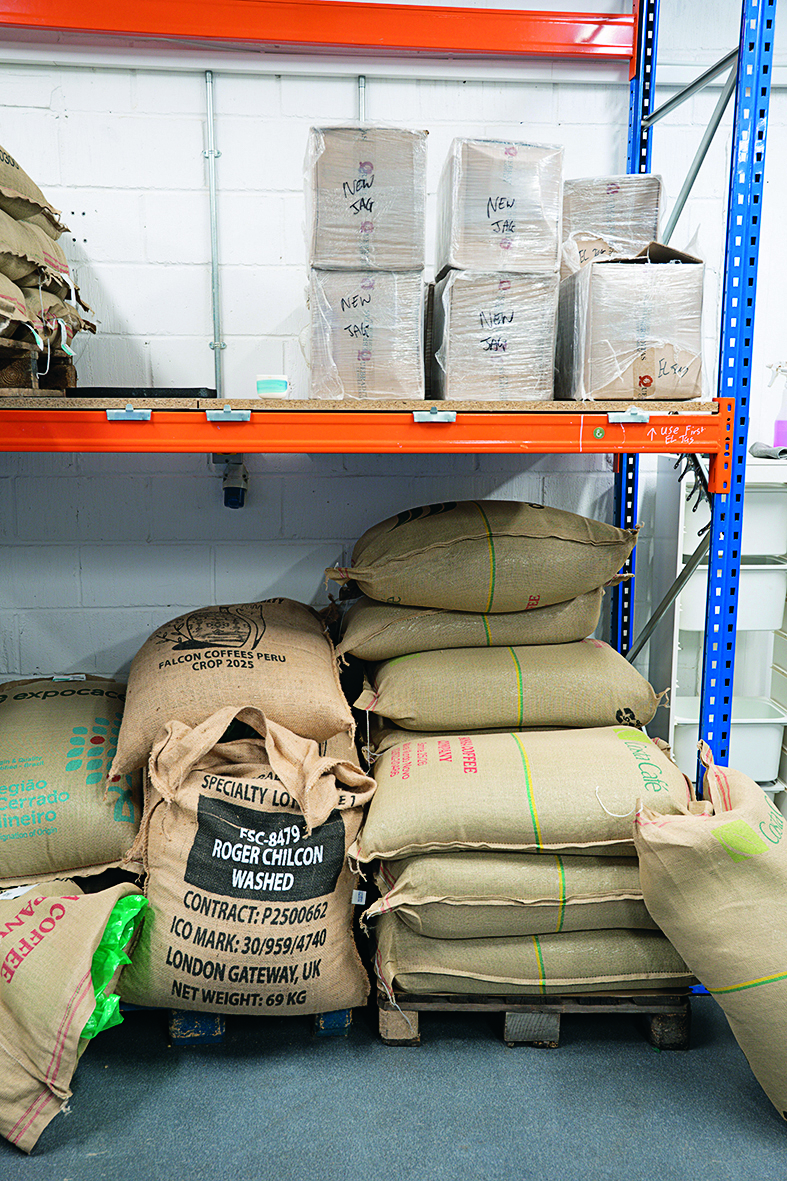
Daily grind: single-origin beans awaiting their future as someone’s perfect cup
Coffee isn’t the only food shedding its bitterness. Humans have spent the past 10,000 years selectively breeding plants to make them bigger, sweeter and better: corn cobs from 5,000 years ago found in Mexico by archaeologists were 2cm long; breeders have worked hard to make strawberries and blueberries sweeter; brussels sprouts are more popular than ever because new varieties are milder. Professor Steve Penfield and his team at the John Innes Centre in Norfolk are researching ways to make mustard greens palatable. “You have to reduce the mustardiness, because the compounds are toxic to ruminants at high level,” he says.
Yet still, sprouts, kale and coffee are not bitter-free, but there are plenty of tricks for dealing with it. Negronis are a perfect example: gin, Campari and vermouth are all bitter, so adding them together should create a bitter bomb, but the flavours of citrus, herbs and sweetness offer a psychological distraction. It’s an effect psychologists call “mixture suppression”.
Chris Leach, chef and co-founder of Manteca, a contemporary Italian restaurant in Shoreditch, London, often uses this effect. “One of the few cuisines that really embraces bitterness is Italian cuisine,” he says. Leach and his cooks have learned to enjoy working with bitterness as a flavour, particularly from things like radicchio, puntarelle and cime di rapa. “We’ll use acidity or sweetness in the dressings, and saltiness, to counter-balance the bitterness.”
One of his menu stalwarts is a bitter leaf salad with gorgonzola and pear: “You get some sweet raw fruit, the creaminess of the gorgonzola and then these bitter leaves.” Add a sherry vinegar dressing and you have what Leach describes as “the harmony of the ingredients”. “It’s not a difficult sell,” he says. Can he sell me on coffee? “Perseverance.”
Dr Coffee suggests heading to Leather Lane in the City of London, where Old Bailey jurors mingle with Hatton Garden wideboys hunting the street food market for the best bites. Behind the stalls are two pioneers of speciality coffee, Colonna & Small’s, and Prufrock.
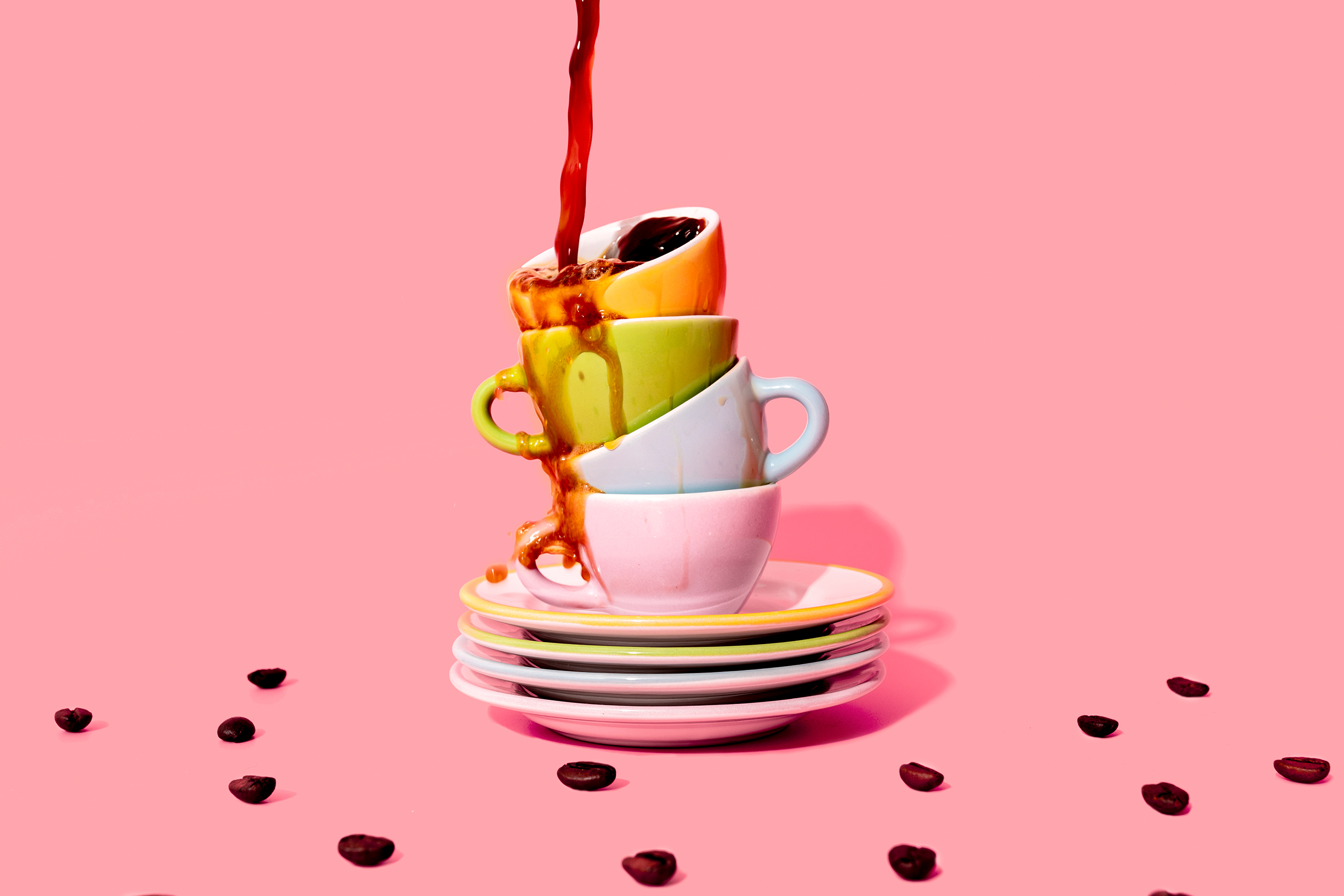
Three months later, I’m sitting in Prufrock, drinking a black coffee from a Gigogne tumbler, while wearing a turtleneck jumper and sitting next to someone holding, but not reading, a Penguin Classic edition of a James Baldwin novel. Thanks to some Campbell & Syme cafetière brews, a few flat whites while on holiday in Melbourne and one appalling misstep with a Pret a Manger latte, I’ve gone from coffee hater to coffee snob.
The coffee is a honey-processed Cyesha from Rwanda. The bitterness is barely there, merely an overtone to a trio of what the whiteboard claims is dried apricot, lemonade and orange. I can’t distinguish any of those – it tastes more like a warm blend of freshly mown grass on a crisp spring day when the sunshine drifts between the clouds. Or is it freshly picked wildflowers?
Maybe it will reveal itself, with another sip.
Images: Campbell and Syme; Getty