

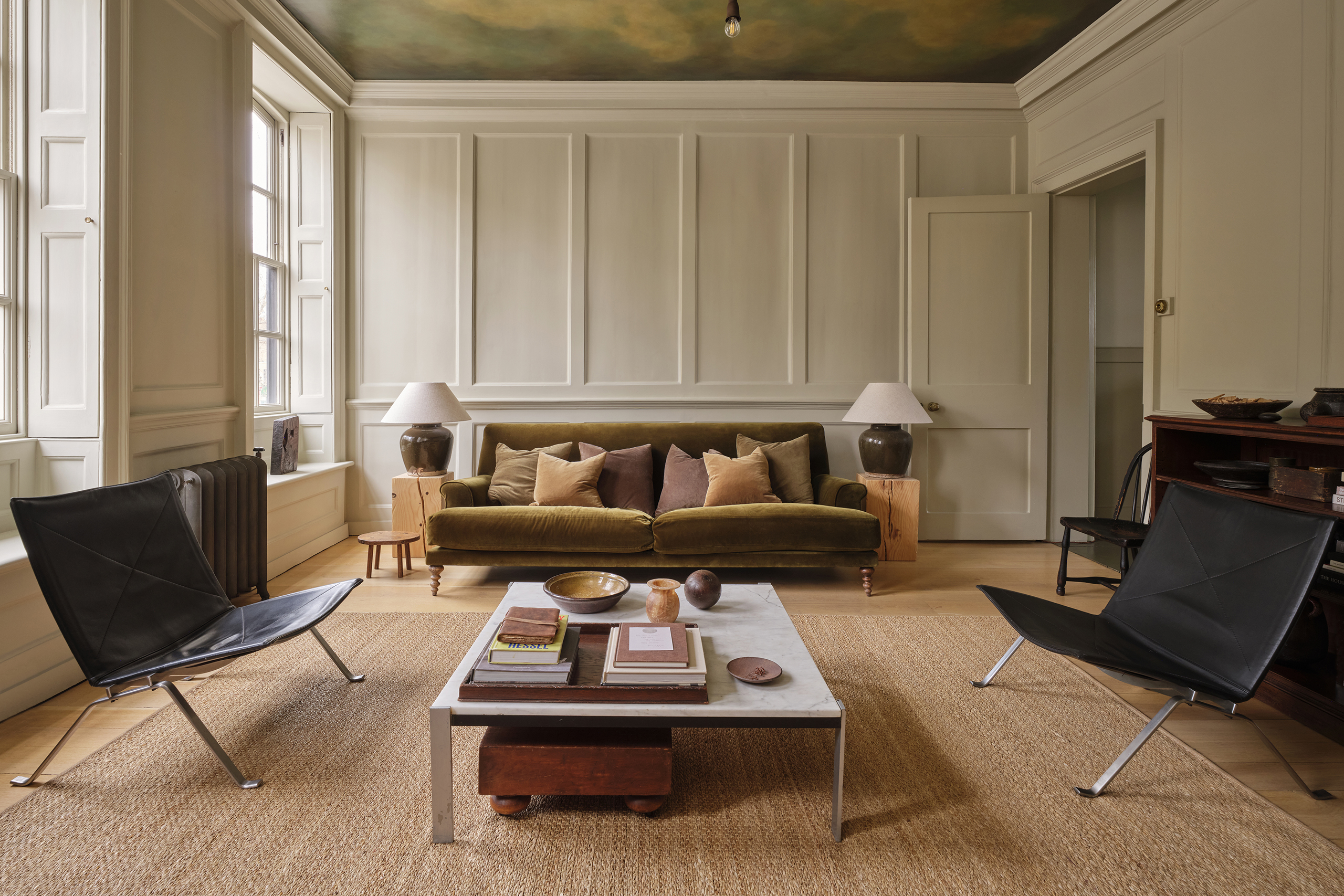
The fashion designer Jacek Gleba works in a white-walled former office building on the Thames embankment. Through his windows, guests are offered a great view of the MI6 building as well as the river, which, when I visited the studio halfway through February, was pewter grey and carrying cargo and Uber boats. Gleba was applying the finishing touches to his second collection for London Fashion Week, and talking enthusiastically about a silhouette popularised by Oscar Wilde: a tight trouser, worn with a wink, that the press of the time caricatured mercilessly. “I wanted to take that energy and make it something else,” Gleba – who is slight and sprightly as an elf – told me. “But with the same personality.”
Also present were Lulu Kennedy, the founder and director of Fashion East, the non-profit talent incubator that has shaped the course of British fashion for 25 years, and Raphaelle Moore, who has run the programme with Kennedy for the past decade. The pair were checking in on Gleba in the feverish pre-Fashion Week period during which stress often reaches cosmic levels. Kennedy, stance wide and hands in pockets, was not entirely calm herself. “I’m having crazy anxiety dreams,” she said. “I’ve been biting a cuticle – it’s the Fashion Week thumb.”
Kennedy founded Fashion East in 2000. Each year the programme awards three emerging fashion designers with bursaries, mentoring and a slot on the London Fashion Week schedule – opportunities that are otherwise almost impossible to come by for fledgling creatives. Over the years, Kennedy and Moore have supported a list of designers so extensive it reads less like a programme alumni and more like a precis of British fashion itself: participants include Grace Wales Bonner, Simone Rocha, Martine Rose, Craig Green, Roksanda Ilinčić, Gareth Pugh, Marques’Almeida, Maximilian Davis, Nensi Dojaka, Supriya Lele and Mowalola. Kim Jones, who has filled top jobs at Louis Vuitton, Dior Homme and Fendi across a 20-year career, enrolled in the programme in 2005. The Northern Irish designer Jonathan Anderson, who last year became creative director at Christian Dior – and whose celebrity has reached such a level that he has moved beyond the fashion industry and into the public consciousness – enrolled in 2009. “It’s consistently been a place where the best and brightest in the industry get their start,” Chioma Nnadi, head of editorial content at British Vogue, told me. “I consider it the original incubator.”
In his studio, Gleba seemed almost alarmingly fine. The collection was complete, the pre-show hair and makeup tests were underway. So the pair decided to check in on the two other designers they are supporting this year. First, they visited the Truman Brewery, a converted factory space on Brick Lane, to see the designer Louis Mayhew. Then on to Kilburn, northwest London, to visit the Bahamas-born designer Traiceline Pratt, where rain that had held off all day was now driving hard. Morning, afternoon and night, the pair had played critic, sounding board, and fan club. It was only once Pratt’s studio had been visited that they themselves could get a couple of hours’ sleep. Then final preparations would begin.
‘I consider it the original incubator’
‘I consider it the original incubator’
Chioma Nnadi
In order to understand why Fashion East matters, it helps to revisit the London of the mid-1990s. The city had produced a remarkable fashion generation: Vivienne Westwood was at the height of her powers; John Galliano was turning the runway into fever-dream theatre; Hussein Chalayan was burying dresses in the ground and digging them up months later, and Alexander McQueen was making work of such ferocious originality that the industry had barely caught up with one collection before the next arrived. The city was filled with a particular, unruly kind of imagination. In 1996, both Galliano and McQueen took jobs at major Paris fashion houses: Galliano at Dior, McQueen at Givenchy. But that energy was not sustainable. McQueen’s success created huge excitement, but also a burdensome expectation: every promising designer was labelled “the next McQueen” by a press that had unfairly mistaken a singular talent for a repeatable phenomenon. By 2000, London had become “a complete desert in terms of new talent,” the writer Charlie Porter told me.
Kennedy, whose childhood was spent between Ibiza, Devon, Bristol and Sicily, had grown up intending to work in music or art, but it was into this particular fashion desert that she eventually stepped. In 1996 she was working at a gallery on Brick Lane when she was hired by the family firm responsible for the redevelopment of the Truman Brewery, which in the 1990s was largely vacant. She was employed by accident; on her first day, her boss admitted he thought he had hired someone else. Still, she was given the task of renting out studios and later event spaces across the vast site. What she found herself wanting to do with that access was more instinctive than strategic – “helping my mates out,” as Kennedy puts it – giving her artist, designer and musician friends somewhere to work. It turned into a collective, which then transformed into something more formal – complete with a panel of experts she put together to advise her on the ins and outs of the fashion industry. “Beginner’s luck,” she says. Fashion East was born.
Kennedy had recently returned from Naples, where she’d spent time throwing raves. “This way of being” – bringing creative people together and offering them support – “comes from Lulu’s experience of putting on parties,” Porter told me. “What mattered was what was happening in that room, with those DJs, and that crowd, in that moment.” Kennedy is “the embodiment of rave culture as a generative, creative force”.

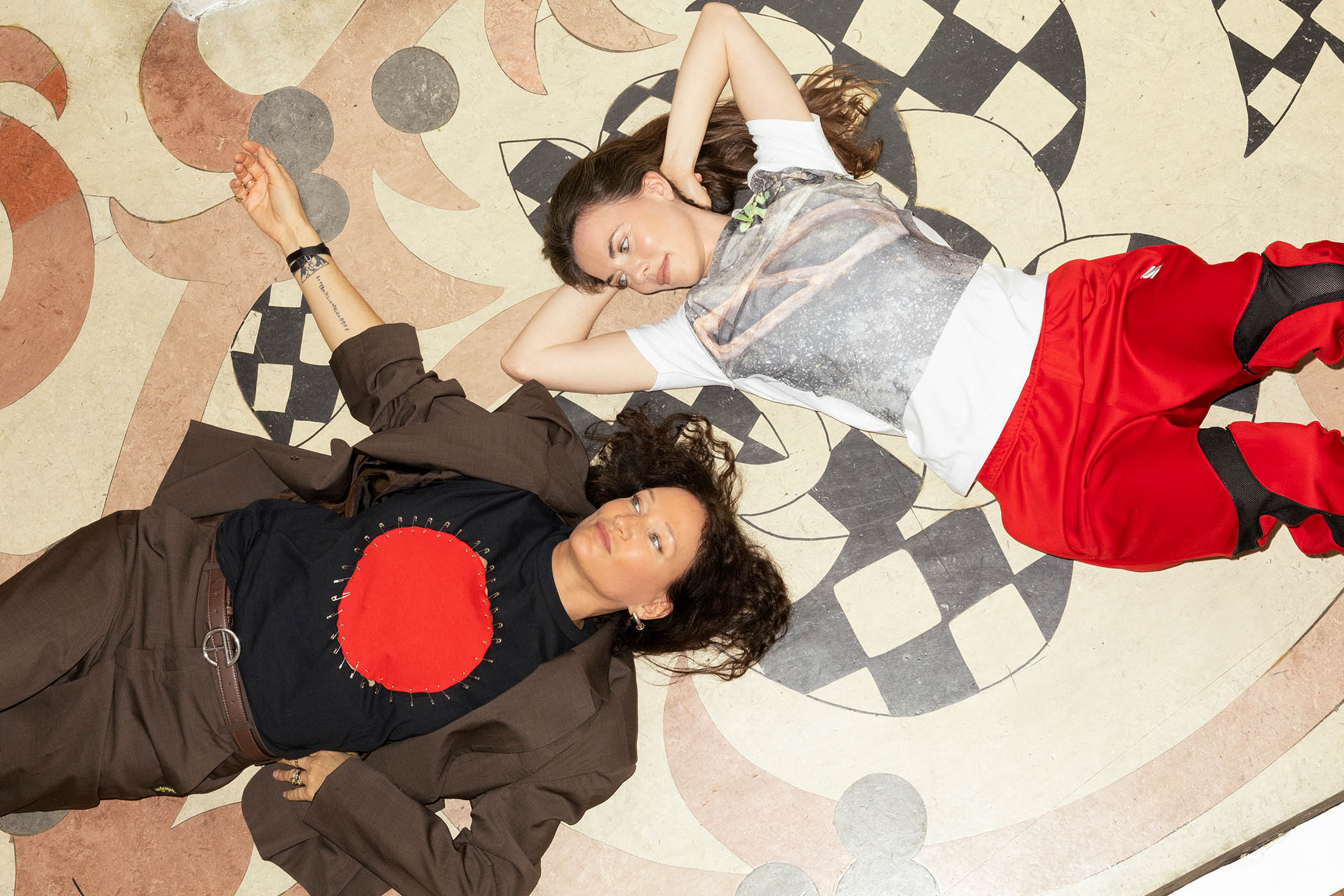
‘Play, experiment, try things out’: Raphaelle Moore, left, and Lulu Kennedy
She brought to Fashion East a “reset to zero” ethos. From the beginning, designers were invited to enter the programme on their own terms, with their own goals and without the demand to follow in other people’s footsteps. The programme’s alumni list is testament to Kennedy’s uncanny knack for picking future stars, who she often sees at degree shows. Kennedy came across Kim Jones in 2002 while he was a student at Central Saint Martins, the London fashion college, later bonded with him outside the pub The Joiners Arms. “He was just so comfortable,” she said. “Totally got the assignment. A friend for life.” She set up a menswear arm specifically for him, because at the time NEWGEN – the only other significant platform for emerging designers at London Fashion Week – required designers to show womenswear.
Jonathan Anderson was spotted early too, though Kennedy is quick to share the credit. “A couple of people on the panel put him forward for selection,” she told me. “I could see that he had all the personality traits and ambition and self-belief to propel him to where he is now.” He went on to spend 11 years transforming LOEWE into one of the most culturally significant labels in the luxury landscape before he moved to Dior, all the while maintaining his own label JW Anderson.
Newsletters
Choose the newsletters you want to receive
View more
For information about how The Observer protects your data, read our Privacy Policy
There are similar stories around the selection of Grace Wales Bonner, whose degree show was one of those rare occasions where, as Kennedy characterised it, you understand immediately that something important was happening. (Wales Bonner, who grew up in south London, is now creative director at Hermès menswear.) And Kennedy saw Simone Rocha’s first show – “knockout” – and decided she simply wanted to wear it all.
“I remember the first day I went to see Lulu in the Truman Brewery,” Rocha told me recently. “I brought pieces from my graduate collection with me. I was excited, naive, ambitious, humbled to be asked to be a part of it… It was a space that accepted you for your own individuality.” The designer Craig Green, whose spare, architectural work has made him one of the most influential figures in contemporary menswear, told me: “Fashion East gave me the freedom to make something without fully knowing what it would become.”
In 2022 the designer Maximilian Davis moved directly from Fashion East to the creative directorship at Ferragamo – it was the first time a young designer from the programme had immediately bagged a top industry job; even the most talented fashion designers often spend their first few years assisting at other brands. “It felt like a real change,” Moore said, of Davis. “That that could happen… It gives so many young designers so much hope.”
That hope matters more than ever, because the fashion landscape is currently an unsparing one. “People really underestimate how difficult it is to launch a business as a young designer,” Nnadi told me. “The cost of putting on a show alone can be financially crippling.” A slot on the London Fashion Week schedule – the kind of visibility Fashion East provides for free – can cost up to £40,000 to stage independently. That is before you’ve spent a penny on producing the clothes. Government support for fashion remains negligible, despite the industry contributing billions to the British economy annually. The collapse of retailers like SSENSE and Matches Fashion has closed one of the key routes to market for progressive independent work, leaving young designers with fewer buyers, narrower commercial options and higher overheads than at any point in recent memory.
Against this backdrop, Fashion East functions as something closer to a lifeline than an opportunity. “It’s extremely expensive and unsupportive out there right now,” Traiceline Pratt told me. “There are so many amazing young people with ideas who just fall by the wayside, because they don’t have a Lulu.”
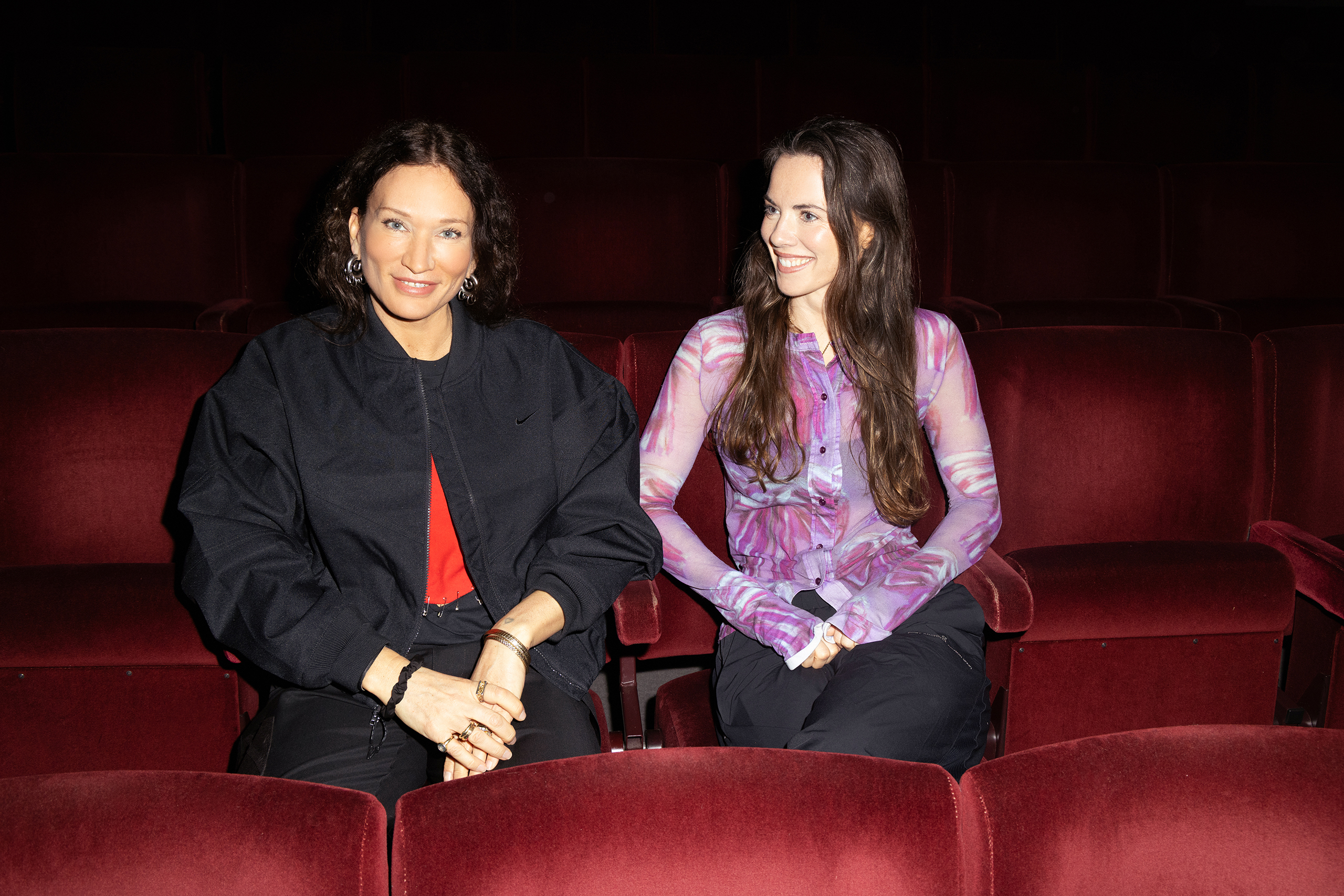
‘You can’t make somebody; you just work with what they bring’: Kennedy, left, with Moore
Kennedy and Moore, however, insist the achievements belong to the designers themselves. “You can’t make somebody,” Kennedy said. “You just work with what they bring.” Fashion East opens a door, but just because the door is open, it doesn’t mean everyone will walk through it.
I asked what the pair look for in a young designer.
“It’s when they have their own thing going on,” Kennedy said. “When they’re not looking over their shoulder” at what others are doing.
“Sometimes the whole application is like an art project and we have to meet them,” Moore added.
This approach means they don’t just produce designers but also fine artists, creative directors and other people whose cross-disciplinary careers bridge industries and imaginative worlds.
The pair assess applications separately before comparing notes, and they almost always arrive at the same names and conclusions. Then they will decide if those chosen few are ready. “Sometimes someone applies…” Kennedy said, trailing off. “Putting them in too soon will burn them out.”
Kennedy and Moore complement each other naturally and they are extravagantly complimentary about each other. Kennedy came to fashion sideways and has never quite adopted the industry’s preening conventions; she will move through a room with warmth, but she is not afraid to be critical when necessary. Moore is sunny and formidable, always keeping things ticking. Before she joined Fashion East, she was a store manager at American Apparel, which means she has brought to the partnership a commercial understanding Kennedy is the first to concede she lacks.
These qualities play out during studio visits, where the pair moved nimbly between offering advice, praise and honest counsel. When they visited Gleba, they noted happily that he’d kept a floral pattern they liked. At one point, Lulu asked if he needed a showroom, because she’d just been offered free use of a space. Gleba was born in Barcelona. The collection he was working on when we visited was more seductive and self-aware than his previous clothes, and referenced an exhibition of the work of French fashion designer Paul Poiret that Gleba saw in Paris. Kennedy recalled Gleba’s Fashion East application as “stunning – apart from the content, just the way it was put together”.
When you get into the programme, the achievement can sometimes weigh heavy. “If you look at the people before me,” Louis Mayhew told me. “I’m at the very bottom of that list right now.” He described it as “daunting” but “inspiring”.
Mayhew is a full-time painter-decorator who balances his day job with running his label, a sure enough indication that at grassroots level fashion does not always pay. (Mayhew’s sister was his first fit model – “Her in the shed, fuming” – and he works closely with the stylist Lara McGrath.) To complete his collections, he beachcombs and mudlarks, and sews Thames oysters and found buckles on to his pieces by hand; his latest collection includes tricorn hats, hagstone necklaces and bags covered in silver foil. “I try to be as interesting and as weird as possible,” Mayhew told me. “And then I have to drag it back into reality.”
In these situations, Kennedy and Moore will tell designers not to worry too much about reality, and instead encourage them to keep pushing, because that is when excellent work will be made. Their approach to mentoring involves the slow and supportive refinement of a designer’s core voice, rather than an effort to change or interfere with it. When the pair worked with the designer Jawara Alleyne, Moore told me she and Kennedy spent several seasons gently encouraging him towards dresses. By his fourth and final Fashion East collection in 2022, they had made it in – and now he is worn by figures including Dua Lipa and Rihanna, the latter subsequently declaring him her favourite designer. For Mayhew this season, the conversation centred on scale: how might the collection grow, literally and commercially, without compromising its idiosyncrasy – its strangeness. Could Mayhew make a handful of more accessible looks to complement the main collection? “The best thing about Fashion East is that you can experiment,” Moore told me. “We’re not trying to make you a super commercial brand. Play, experiment, try things out. There is that safety net.”

Fashionable perspective: Kennedy and Moore. ‘Every season, the pair continue to make space for something that doesn’t yet exist’
Fashion East’s safety net extends to the unglamorous particulars. Kennedy tells designers not to bother tidying up before her studio visits, even if the studio is a bedroom, which is not uncommon. “Honestly, don’t waste valuable sewing time,” she will say. She always checks if people have eaten and slept. When she and Moore visited Traiceline Pratt in Kilburn, they discovered the designer had managed only two hours the previous night. “You’re in the zone,” Kennedy said. “My condolences.”
Then there is the music. Kennedy cycles through every song chosen for a show with particular pleasure. At Pratt’s studio, conversation turned to the Tracy Chapman song Mountains of Things, which Pratt first heard aged 10 and had sent to Kennedy earlier in the week for consideration. Kennedy listened deeply and deliberated on whether it would land if it were used during a fashion show. A small discussion ensued. Eventually, Kennedy told Pratt to trust his gut.
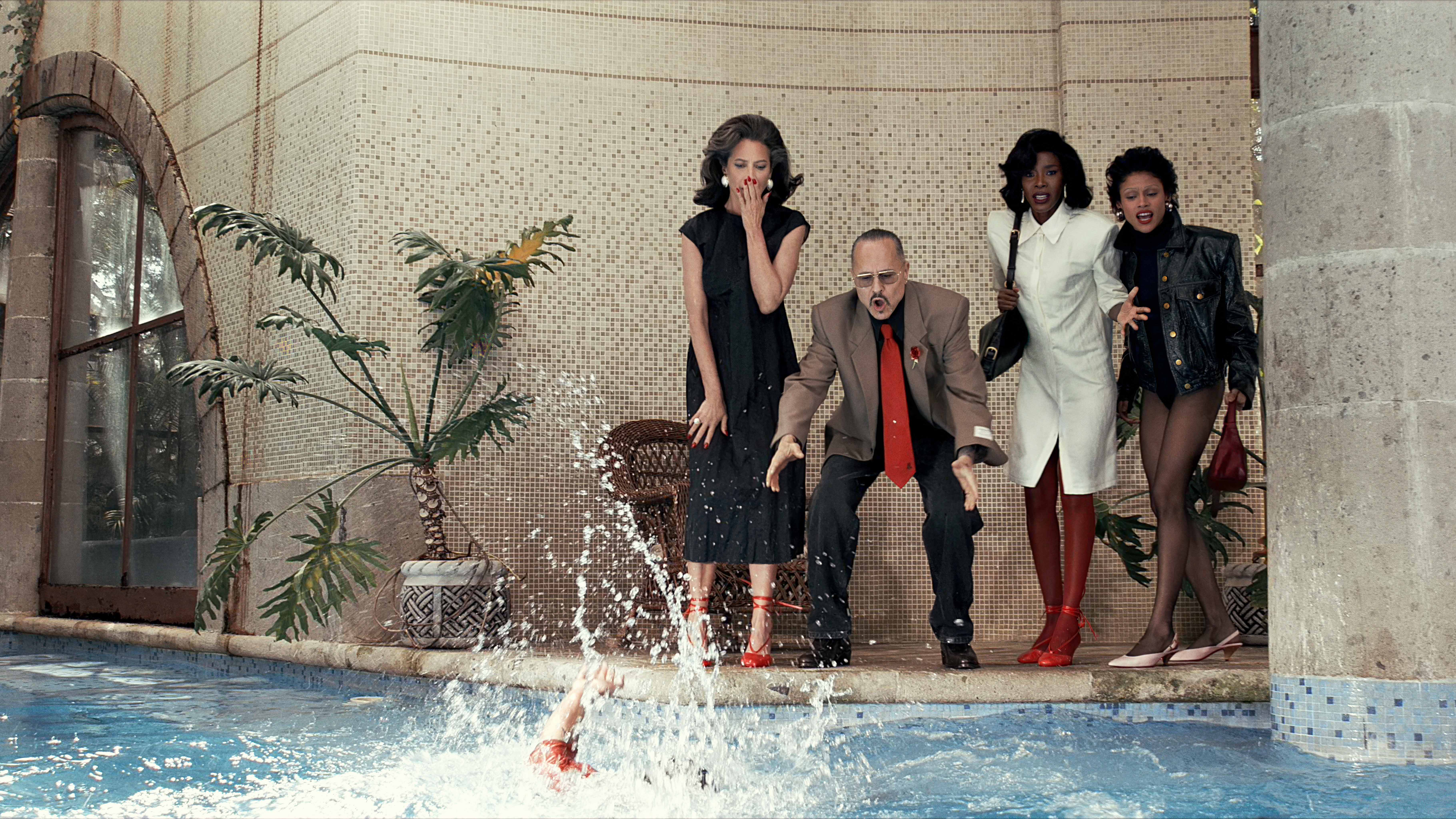
Pratt’s collection, Something to Wear, is structured as editions rather than seasonally. His latest show continues from a November presentation in which he mapped 12 hours of a day through clothing: something to sleep in, something to work in. Part two moves into “wants”. “Something to steal,” he told me. “Something to return, because you didn’t have enough money to keep it, so you bought it for the night. Something to cry in.” Pratt’s clothes have an extraordinary polish: leather durags, shearling polo shirts, an understated but deeply sexy dress with an open back. He is working with the stylist Matthew Henson, who is best known for his work with A$AP Rocky, which tells you something about the level of attention Pratt is gathering.
Of Fashion East’s influence, the critic and editor Olivia Singer, who also wrote Pratt’s show notes, told me recently, “I can’t imagine what the landscape of our industry would look like without them. They have fostered a community that is warm and human.” She went on, “It is authentic to the core of British fashion, which is rooted in subculture and creativity, rather than trying to feign an illusory polish.”
In December, Kennedy and Moore received the Special Recognition Award at the Fashion Awards, which are held annually in London; it was recognition of their impact on a global stage. Every season, the pair continue to make space for something that doesn’t yet exist. In the meantime, their network hums along around them. Designers who passed through the programme attend one another’s shows, collaborate on projects, and cheer on each other’s wins - while the newest cohort form the friendships that will sustain the next generation of the same. Stefan Cooke, the Fashion East alum recently texted Moore to invite her to karaoke. “Once you’re in the fam,” she said, “you’re always in the fam.”
Hair and makeup: Juliana Sergot using Nars and Bumble & Bumble