

I watched the fourth season of Industry, HBO’s stellar banking drama, in a frenzied two-day period the last weekend before Christmas, so as to have completed it by the time of my interview with Mickey Down and Konrad Kay, the show’s creators. Mostly I watched it beside my mother, apologising each time a particularly explicit scene played out on screen – a threesome, a dildo, neither particularly unusual here – though she seemed unbothered. “I was an actor,” she reminded me. “I get it’s not real.”
And yet season four is Industry’s most real yet, by which I mean its characters are at their most vital and nuanced, In 2020, when the show’s first series aired, viewers met a bunch of brash, ultra-competitive graduates who alternately lied, grafted or floated their way on to the trading floor at Pierpoint & Co, a fictional City bank. They fucked each other, then fucked each other over, on repeat.
Now only two of those trainees remain: Yasmin Kara-Hanani, an Anglo-Lebanese publishing heiress, and Harper Stern, a Black American college dropout who sees with absolute clarity all the things Yasmin has been given for free but for which she must fight tooth and nail. (Yasmin is played by the British actor Marisa Abela; Harper is played by the American actor Myha’la; theirs is one of the most captivating double-acts on television.)
By season four, Yasmin and Harper have entered their 30s, and their actions have more profound consequences, both personally and professionally, beyond the trading floor and out in the world.
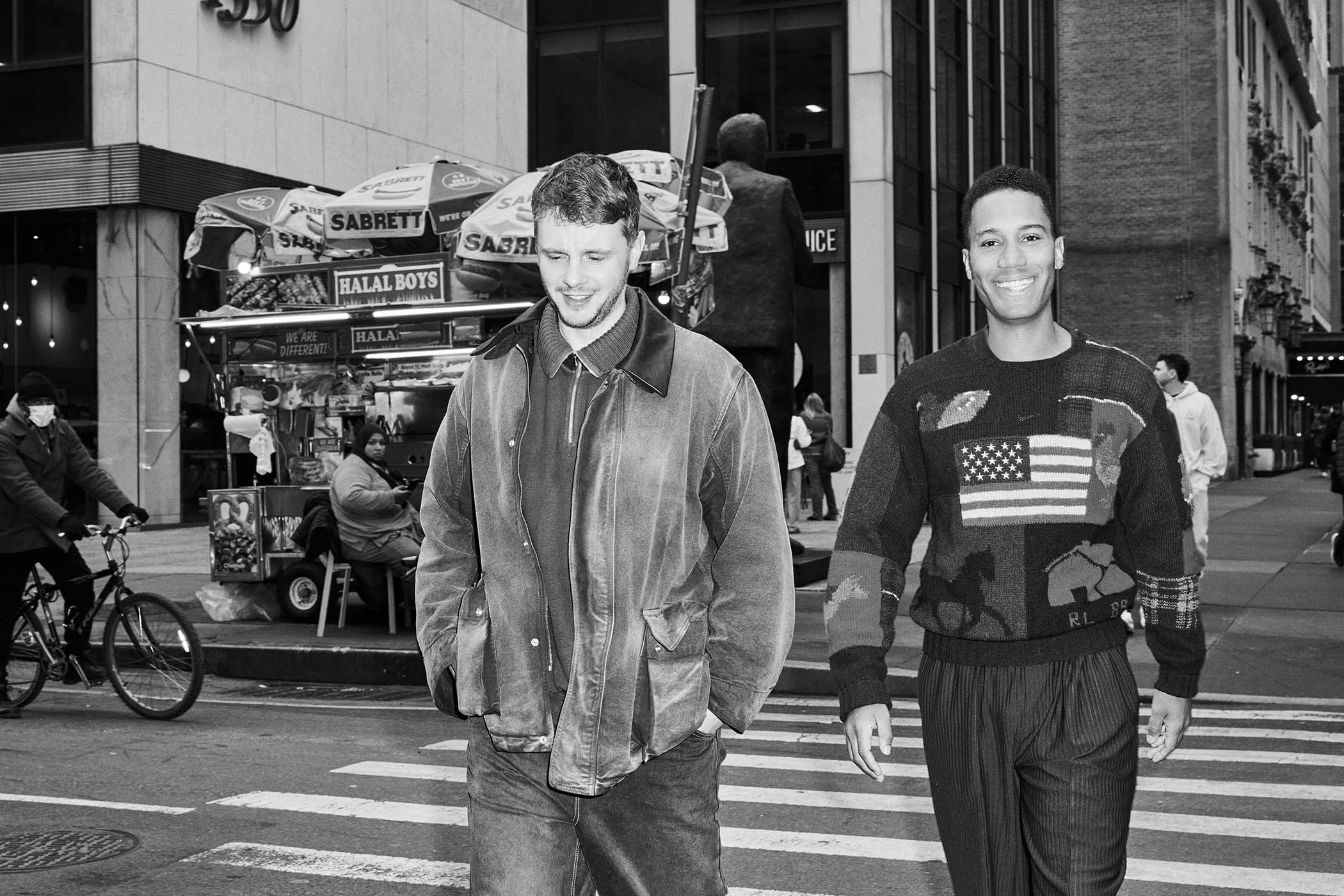
Like their characters, Down and Kay’s lives have altered significantly since they began writing Industry in their mid-20s. They are now in their mid-30s. Down is married with children, Kay lives with his girlfriend. In 2024, they signed a deal with HBO worth many millions of dollars, securing Industry’s future, and theirs, until 2027. Much has been made of the pair’s early and brief careers in the financial world that their show depicts – they worked in separate London banks, a recent professional history that convinced the British producer Jane Tranter to employ the pair as writers. But “plainly, the autobiographical element of the show ended in season one,” they told me, when I brought it up. They have known each other since studying together at Oxford university. On set they are considered such a symbiotic creative duo that they are often referred to collectively as “MK”.
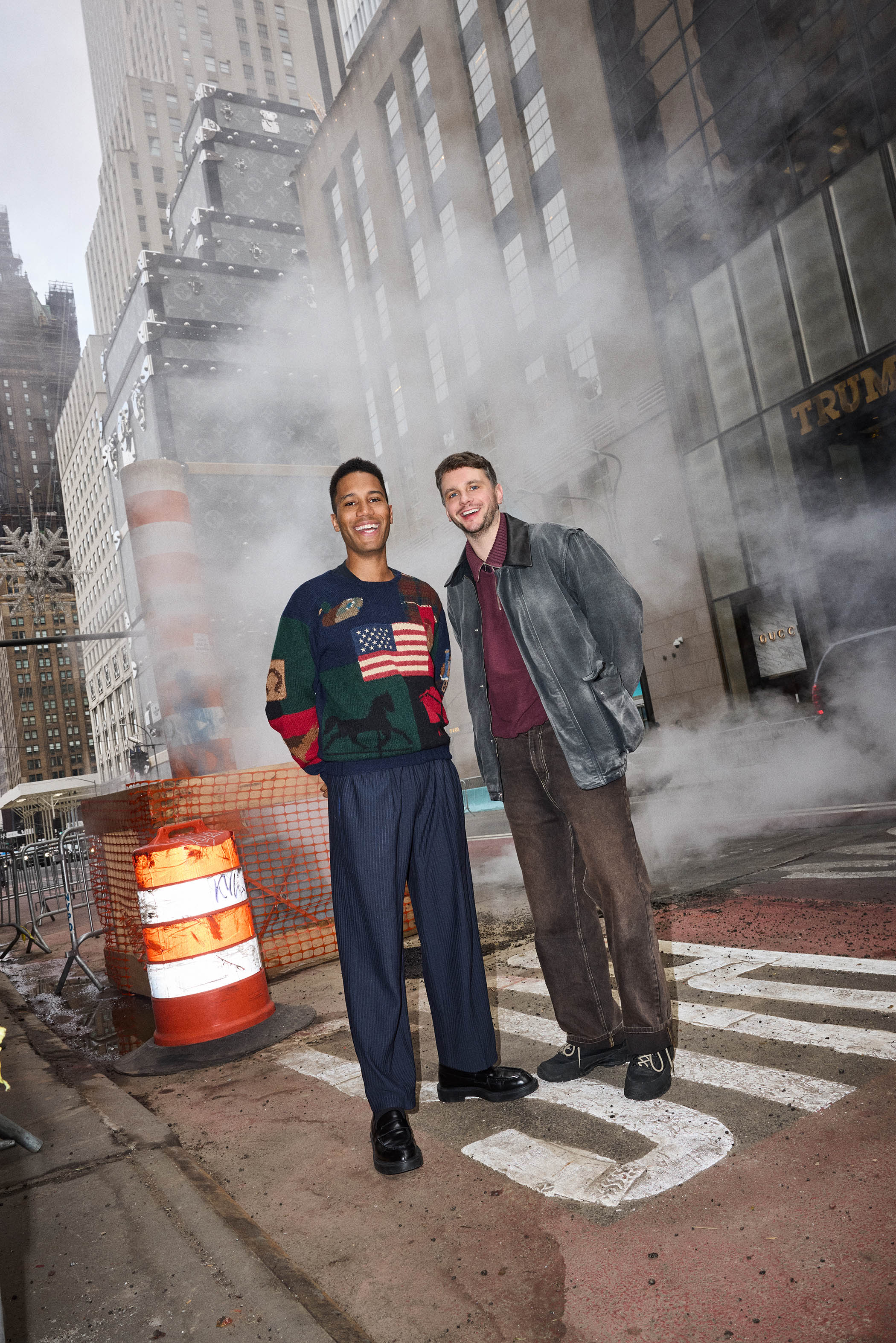
‘If we want to Trojan-horse a financial thriller into a season of Industry , we do it, because it’s probably what we’d be doing if weren’t writing the show’: Mickey Down and Konrad Kay
I met Kay and Down at Sam’s Café in Primrose Hill, close to where they both live. Kay arrived first; he ordered coffee, looking a little grey. It was Christmas party season. Two days prior he’d had what he described as a “big one”: an annual tradition in which he, his father and a few friends watch Withnail and I over champagne, before going to lunch.
“We go to the Ritz wearing suits,” Kay said. “Then a place called the Fat Badger in Notting Hill. Do you know it?”
I wasn’t sure I did.
“It’s a very scene-y pub where you have to know the doorman to get in.”
I told him I’d spent most of my weekend watching the fourth season of his show, and when Down arrived Kay filled him in. “She crushed all eight episodes in two days,” he said.
I mentioned that actually it was my favourite season yet.
“Recency bias,” Down smiled self-deprecatingly.
“But it’s good you really liked it,” Kay said. “It’s bullish – to use a finance term.”
Throughout our hour together, both men quizzed me on my reactions to particular scenes and character arcs, and seemed not just open to criticism and feedback but actively seeking it. They have read all, and metabolised some, of the criticism the show has received over the past five years, and they are highly self-critical: season one was “under-plotted,” they said (I disagree); season two was an “overcorrection”, burdened by unnecessary sub-plots.
Collaboration seems to be the part of the creative process they most relish. Since working on the show, Kay has become more aware of how the best directors make great work by surrounding themselves with the best people – DPs, costume-makers, actors – and they welcome discussion and debate on set. Myha’la offered extensive notes this season, they told me, helping them to “excavate” aspects of her interiority they wouldn’t have otherwise reached.
Attempting to differentiate the men’s roles on the show, I asked which characters they each felt more creative ownership of.
“I don’t think we really separate it like that,” Kay said.
“I can write the Ghanaian stuff,” Down laughed. (His mother is Ghanaian; in season four, an episode is set in Accra.)
I came away feeling their visions were remarkably aligned.
For each new season, Kay and Down arrive at the writers’ room to work out “how much load” the story can take. Because they’re a small show, on a relative scale, HBO let them “get on with it”, trusting them to decide where the show should go next, which means change is standard. This season, Pierpoint & Co no longer has a London office, and characters are split between two workplaces: a fund looking to expose and profit from corporate malfeasance, and a shady “Neo-bank”, headed by an even shadier CFO, which has just opened offices in Canary Wharf. “If we want to Trojan horse a financial thriller into a season of Industry,” Down said, “we do it, because it’s probably what we’d be doing if weren’t writing Industry.”
Several films inspired Industry’s new season. There is Aaron Sorkin’s The Social Network, whose clean and self-satisfied style has never appealed much to me, but whose influence on the dialogue in Industry is obvious. “I like stuff with lots of jargon,” Down said, “because it makes me feel intelligent, and I like watching characters who are intelligent and competent.” Sometimes, Industry’s jargon-rich dialogue can become parodically impenetrable. An example from episode one of the new season: “We’re short. Chunky from mid-cap. Hundred bars. About 3.2% of float” – phrases that are almost poetic in their obscurity, like the Shipping Forecast. At other times, the pair’s effort to make the characters’ speech elevated, lyrical, to have them reach for grand statements, is a delight. In the first episode of the new season, there are lines like: “The problem with heaven on earth is that no one wants it.”
I don’t come to TV to hear how people talk in real life I want it to be written well. I want it to have a literary sensibility
I don’t come to TV to hear how people talk in real life I want it to be written well. I want it to have a literary sensibility
“I don’t come to TV to hear how people talk in real life,” Kay said. “I want it to be written well. I want it to have a literary sensibility.”
For the corporate espionage plot that develops over season four, two of their main references were Michael Mann’s The Insider (1999), based on the true story of a tobacco-industry whistle-blower, Jeffrey Wigand, played with great storminess by a greying and out-of-shape Russell Crowe; and Tony Gilroy’s Michael Clayton (2007), the story of a fixer at a legal firm discovering the truth about a malevolent agricultural conglomerate. What works best about both films is also what makes this season of Industry superior to the former three: they illustrate, with damning lucidity, what it does to individuals to get caught up in the kinds of corporations that benefit off you suppressing all of which makes you human and work to rot your soul.
Michael Clayton and The Insider end with at least a dose of salvation, a sense that the house might not always win. In Industry, Kay and Down tease us with the possibility that their protagonists might learn from their errors, might choose people over profit – but more often than not, they immediately pull the rug right out from under us. Usually, when there seems to be no literal or spiritual road left for them to run, Industry characters end up dead.
“Why do you keep denying us any redemption?” I asked at the end of our interview, before the three of us went on to our next Christmas parties, which presumably could never be as dramatic as the office Christmas parties in Industry, where people ejaculate on to mirrors and smash their heads into glass walls and desperately try to do whatever they can to fill the void – except for working out what’s truly at the root of it.
Down smiled and said, “Because we haven’t finished yet.”
The fourth season of Industry is now on the BBC and available to stream on iPlayer
Newsletters
Choose the newsletters you want to receive
View more
For information about how The Observer protects your data, read our Privacy Policy