
My third uncle is a fortune-teller. He mapped the future for all the babies born into our family. I would, he foretold, go to postgraduate school and take care of my mother later in her life. Though modest predictions, they hardly seemed possible. I was a school dropout with a boyfriend in a punk band, and the second prediction seemed even more unlikely. My relationship with my single mother had gone from us as two halves of a whole, wearing matching bathing suits and sleeping in bunk beds, to me being so mad at her as a teenager that I once desecrated a painting she had made. By the time I moved from Los Angeles to New York, in my 30s, I hardly said goodbye. All I wanted was to get away.
A decade later, I would click on a link during a layover in Dallas Fort Worth airport after receiving the worst call of my life and watch a news report of an unprovoked attack in the street. Chilling new details. Yells at the victim and then punches her. Found her conscious but unresponsive.The woman remains in hospital. Bail set at $1,030,000. I was on my way home to my mother, the woman on the news.
My mother had been on her way to get ice-cream on a Saturday afternoon when a homeless man approached her in the street. A witness heard the man yelling before he punched a female, who fell backwards and looked like “she got the wind knocked out of her”. The witness’s boyfriend called the police while the witness ran across the street towards my mother and recorded a video of the assailant walking away carrying two rubbish bags. Police were dispatched to a nearby park to locate the offender, who upon his arrest complained of bugs in his shoes.
By the time I arrived in Los Angeles, my mother was just coming out of a coma. A nurse read me her file while I stood bedside at the hospital and tapped notes into my phone: small volume bifrontal subdural haemorrhage; isolated force ventricle haemorrhage; subarachnoid haemorrhage left fissure; right occipital bone fracture; sphenoid sinus fracture. The skull fractures were the result of two points of impact: where she had been struck and where she had struck the ground. Her lip was swollen with stitches.
I was relieved to see that, despite the tubes coming out of her arms, she mostly resembled the mother I had last seen eight months before. Her hair was jet black, with next to no white strands. A few days later, the hospital wanted to release her to a rehabilitation facility. In the strange comfort of the hospital room, neither of us had any idea of how bad things would get.
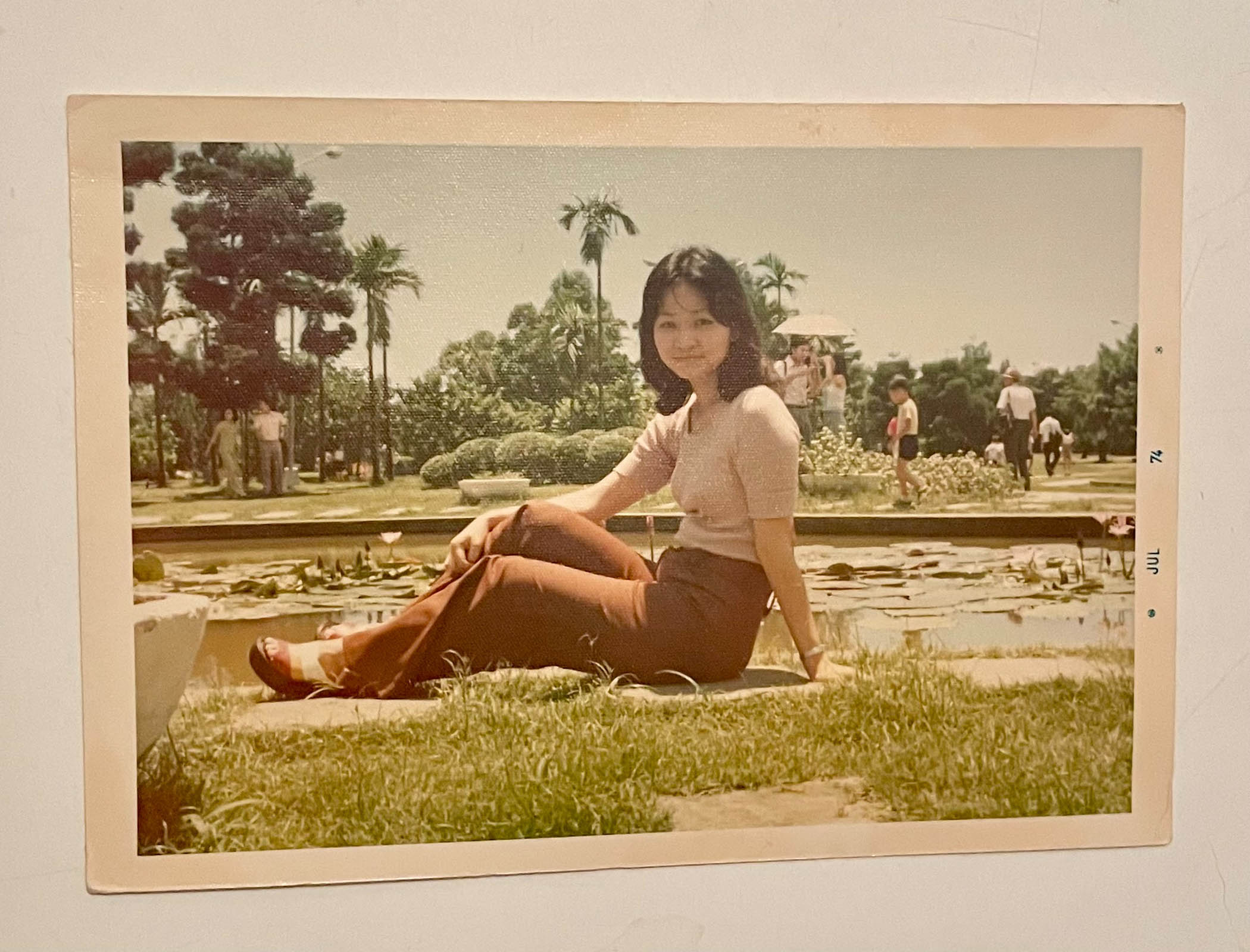
‘My mother immigrated from Taiwan in her mid-30s. She was my entire life’
My mother immigrated from Taiwan in her mid-30s, believing that the US was a forward-thinking, prosperous place where she would be able to avoid the hardships of her upbringing during wartime.
She was twice married, twice divorced. Her first husband was unfaithful. Her second husband, my father, once followed her down the street with a rolled-up newsletter, smacking her until a bystander called the police. She left both men.
She kept the house that her eldest brother, who immigrated to the US before her, bought for her in a suburb of Los Angeles, and raised me there. She was my entire life. We did everything together: schemed against each other in two-player games on hot summer nights, read books nestled together on the brown velour sofa, went out for late-night oyster omelettes and fresh watermelon juice that reminded my mother of the food she’d grown up eating in Taiwan. To lull me to sleep, she scratched my back while singing, “Que sera, sera…” She spent the little money she had working as a caretaker and in factories on opportunities for me: piano lessons, ballet lessons. I missed my father but my affection wasn’t reciprocated. I saw him a few times a year at first, then once, then almost never. My mother worked hard to fill his void. I was so attached to her, I can still recall my vivid childhood spite when an evening dance took her away from me and I had to spend the night at my uncle’s medicinal-smelling house.
In America, she was an immigrant whose plans for housewifery were suddenly foreclosed. Escaping from Taiwan in the wake of two wars, leaving that country for one where she couldn’t speak the language, forsaking two marriages, her life was an accumulation of loss. It was enough to make anyone believe there was no place she belonged.
She expressed herself through how she treated me. She once left me at the shopping centre by myself because I was taking too long looking at rubbers in the Hello Kitty store. I had to call a taxi to take me home. When I arrived, she called the police on me because I had, by way of summoning a cab, forced her to pay for it. The police officer explained to her that an adult cannot leave a child by herself and drive home. My mother did not agree.
She constantly derided the way I looked and dressed, a performative lashing in the presence of pitying gazes. I was a quiet, shy child obsessed with reading at all times. She cast me out and made me her adversary.
I was obedient at first, but obedient I did not stay. I made prank calls. I stole lip gloss. By the time I went to school, I had shaved half my head and was ditching more classes than I was attending. I went from losing my virginity to an adopted Mormon boy to dropping acid at a beach rave. At school, my teacher gave us his own money to buy snacks from the vending machine – so long as I stayed until lunch.
During these years, my mother and I switched places as tormentor and victim. Our fights took on another dimension. As I grew, so did my anger, a bequeathal from her to me. I could fight back now, so I did. And the molten gulf widened between us, until I found I could no longer stand to be around the person I had loved most.
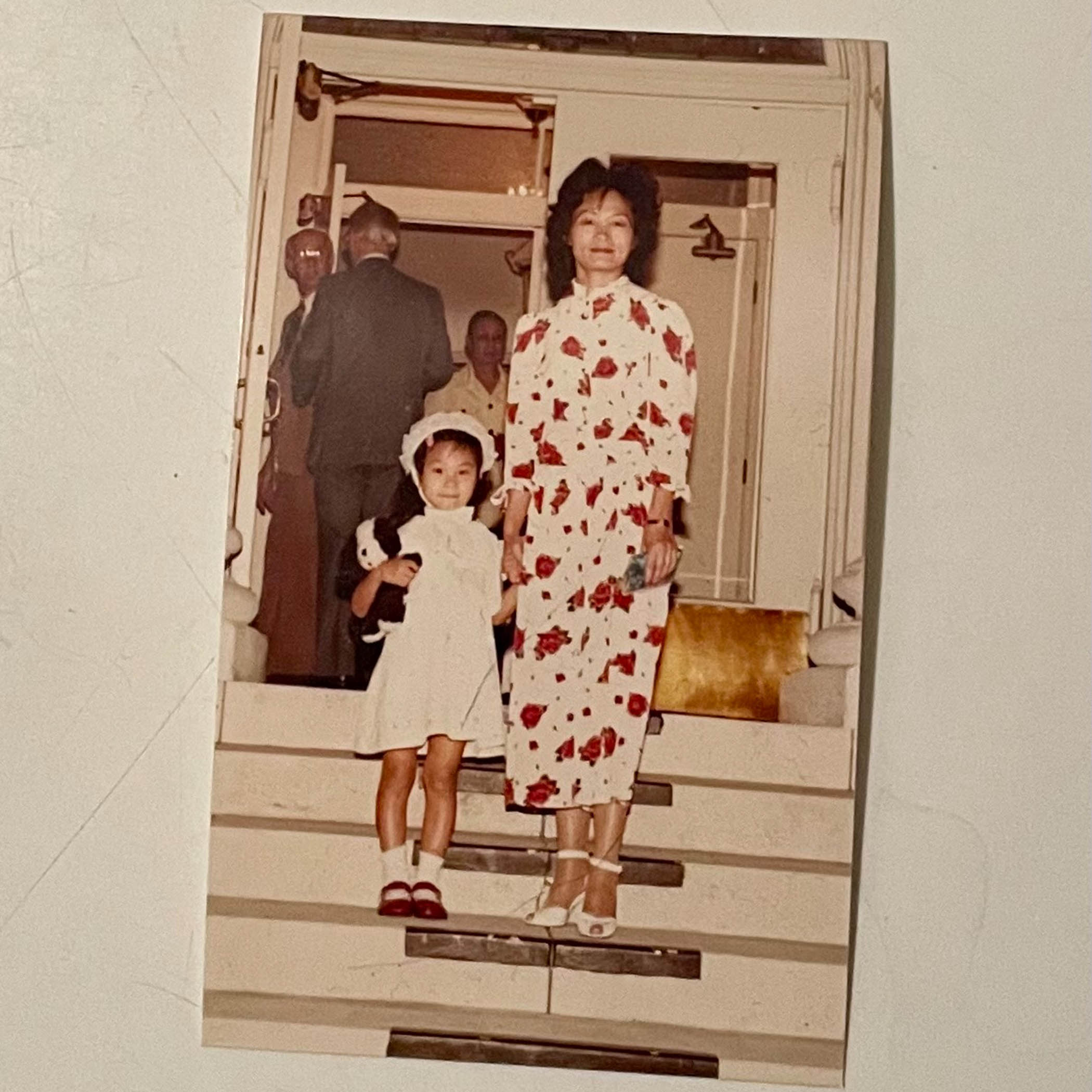
A portrait of the writer as a girl, with her mother
We settled into a decades-long pattern: my taciturnity turning on a heel to rebuke her for the damage I was sure she was responsible for; her condemnation of my refusal to leave the place of the past. In other words, an impasse.
I eventually got a degree at an art school. Improbably, one long-awaited future had arrived. But my uncle was still a false prophet. I would never want to take care of my mother in old age. I’d have better things to do. My free will would surely override my destiny – I was, ultimately, someone born in America.
When I went to see my mother after she had been struck, I had no return ticket to New York. I wore the same clothes to the hospital every day, and later to the rehabilitation facility where my mother went to begin the work of healing. It seemed wrong to me that she was to leave hospital when her injuries were still so fresh. But my opinion meant nothing in the face of professionals.
Weeks passed. Brain damage prevented my mother’s body from coordinating the complicated functions that facilitate the evacuation of urine and excrement. The process of catheter insertion made her scream in pain, shouting a phrase in Chinese that translates as: “Oh my mother!” She was diminished, eating and speaking less every day. By the time Christmas arrived, pulling a new red sweater I’d bought for her on to her torso was like dressing a rag doll. She couldn’t keep her eyes open. She weighed 36kg. I begged her to eat just one spoonful, one more…
All the while, the medical professionals around us were telling me that my mother had suffered great bodily trauma and that this was the new normal we’d have to accept. She was getting worse, though; couldn’t anyone see? I was losing her.
Regret and shame expanded in me like a powerful fumigant, killing off any traces of resentment that remained from our past. I had spent so much time pushing her away, and now, every day, I drove the half hour to where she lay motionless, her body shutting down, wishing for more of what I had squandered so carelessly.
By the end of December, I’d sounded the alarm. The tests I’d demanded came back, and suddenly they agreed: something was very wrong. A brain scan showed that my mother had hydrocephalus – fluid swelling in her brain. The neurosurgeon looked at it, shook his head and said, “It’s ugly.”
She was getting worse, though; couldn’t anyone see? I was losing her
She was getting worse, though; couldn’t anyone see? I was losing her
I spent New Year’s Eve at a friend’s party, lumpen at the dining table all night. My body felt like it had sunk to the bottom of a black ocean, the party around me muted and distorted in slow, liquid motion. I had been in crisis mode for 35 days as my mother’s moribund circumstances waxed and waned. I found I had unlimited vitality when I was on site managing her care. Afterwards I floated, disoriented.
I was learning so many new things. How memory can obfuscate certain experiences of pain, what extremes a single body can take, and how quickly the lifelong grievances that formed the ground I had stood upon could give way. Beneath that ground, I discovered, lay the foundation that had been there all along.
It only took a brutal act of violence for me to come back to her.
The man who had been arrested for attacking my mother was declared not competent, and was transferred to a psychiatric facility. The criminal case was taken off the books.
I had spent my youth longing for another life. I had felt so lost, for so long. I was defined by her. I needed to find a way into the future that was of my own making.
I spent the decade after leaving Los Angeles maintaining the distance between us. I started to publish more stories and essays while living in New York. All the writing was about her. What I’d established as the deficiency in my life became the energy source of my work. Still, visiting Los Angeles once a year, the old patterns prevailed. The historical irritant was always there. I continued writing. It was still, always, about her.
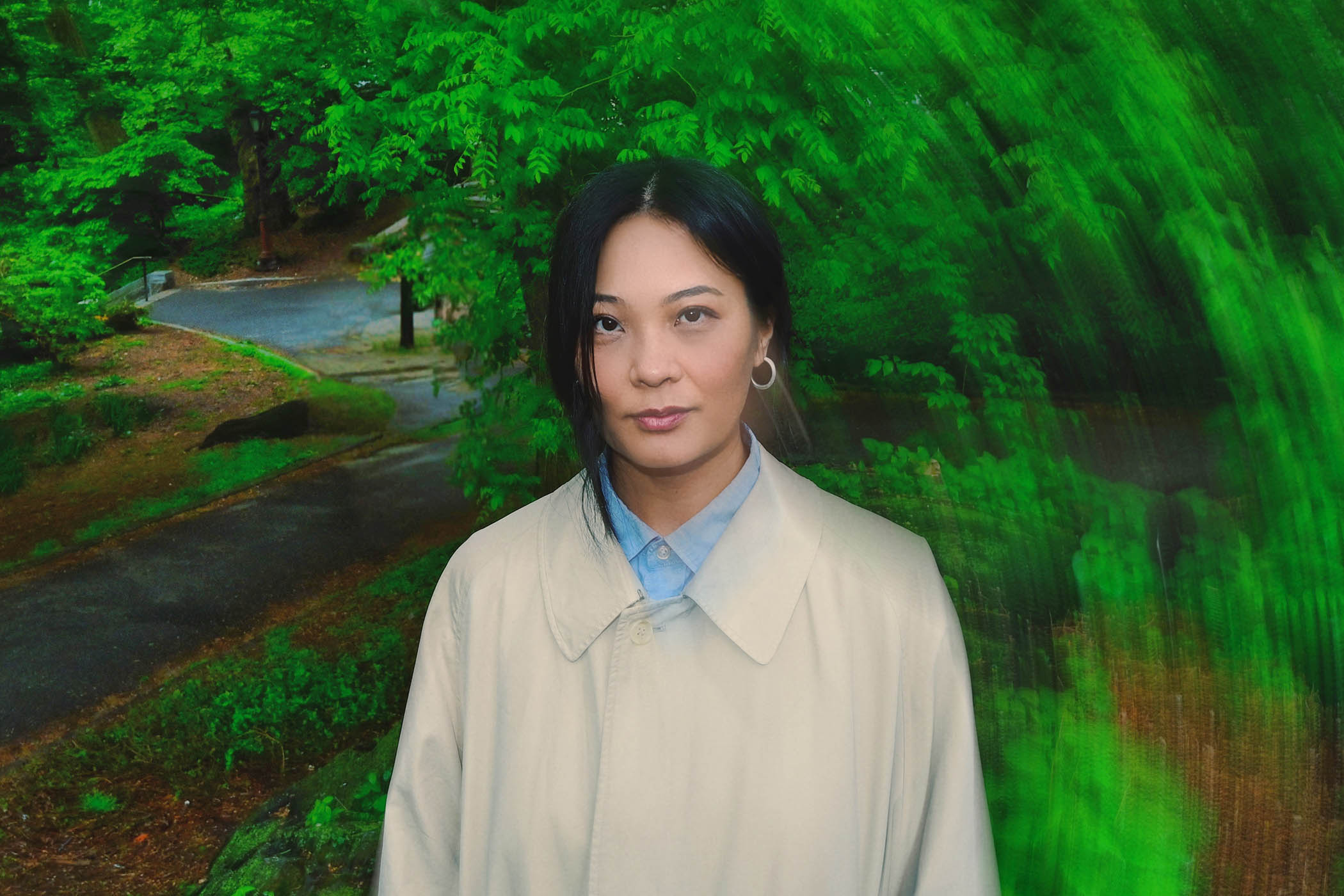
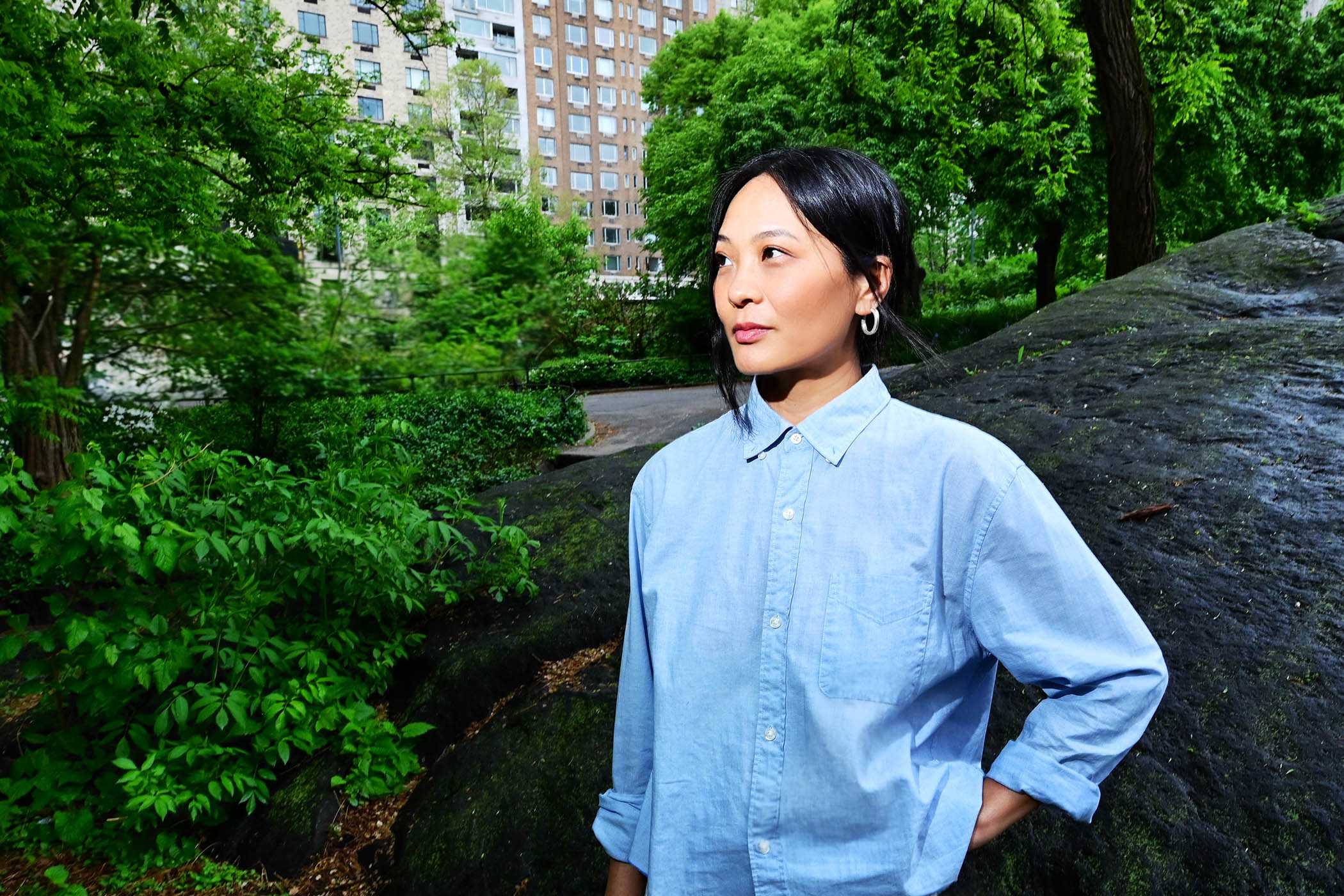
The writer today, in New York City
Salt tablets gradually brought my mother back to a non-critical state. Brain surgery was scheduled to insert a shunt that would drain the fluid out of her brain and into her stomach through a tube. She was speaking a little more now, but not much. She hardly ate.
There was talk of upcoming high winds on the news, but I didn’t pay much attention, so overwhelmed by my mother’s affairs that the rest of the world was fuzz. As my mother improved – she became slightly more alert – so did my disposition. My wellbeing was tied to hers, the umbilical cord between us transmitting her afflictions to me.
The morning before her surgery, scattered branches littered the streets from the intermittent high winds overnight. I went to the hospital, trying to spoon-feed her the vexed purée, playing her the songs of her youth with the aim of rousing her memory.
Outdoors, I contemplated smoke starting to drift outside as a wildfire began to burn in Altadena, just a few miles north of the hospital. It was the first day of what would be known as the Eaton Fire. The city was burning from both ends.
I stuffed pyjamas into a backpack to spend the night at the hospital. As I drove back to Pasadena, a truck with a horse trailer sped past me on the narrow street heading south away from the fire. I was driving towards it.
Ash rained softly on my face as I walked up the dark street after midnight. Police, paramedics, stretchers and people wrapped in blankets surrounded the entrance to the hospital when I returned. It was the closest one to the Eaton Fire.
At the front desk, I recited the unique code words assigned to crime victims to gain access to my mother: apple pie. The code felt cruel. My mother had been brutally assaulted in the country she’d immigrated to in search of the American dream.
The neurosurgeon drew on my mother’s forehead with a marker, a crude map with an X
The neurosurgeon drew on my mother’s forehead with a marker, a crude map with an X
If the hospital lost power, the surgery would be delayed. There was talk of the fire jumping a motorway only a mile away. The hospital would be evacuated if the winds facilitated a further southward trajectory. The air in my mother’s hospital room was already thick with the smell of smoke. I reclined the chair next to where my mother lay and pulled it close to her so that it felt like we were sleeping in the same bed, as we had when I was a child.
By sunrise, my throat was sore from smoke inhalation and the hospital was overrun with the newly admitted. There were burn victims, firefighters with smoke inhalation injuries, people who had fallen.
At 8.15am, a nurse announced that the surgery would proceed. My fear of my mother’s surgery being delayed was immediately replaced by fear of the risks involved.
The neurosurgeon drew on my mother’s forehead with a marker, a crude map with an X.
I left the hospital after the surgery began, emerging into a world frenetic with a different disaster. The air swirled with ash. The intervening time inside the hospital was a component nesting doll of discrete unrealities – one unreality inside of another. Wildfires destroying the city I’d grown up in. My mother, near dying.
I awoke to news. My mother was out of surgery. The house I’d been staying in – a house owned by friends – had burned to the ground. Nothing had survived.
My mother has been living for the past year in the long-term care facility where she was discharged after the surgery. Her first months there hovered on a precipice. She was quarantined for weeks with Covid. She didn’t understand that her legs didn’t work – she would slide to the edge of the bed and fall off, a dead weight, hitting her head. A week out from surgery she had acquired another brain bleed.
The work of healing requires more work than a person should have to exert after experiencing such recent trauma and pain. Physical therapy, nevertheless, had to start right away. I called her anywhere from three to six times a day from New York, where I had returned in mid-January. She didn’t want to do exercises or leave her bed to socialise in the activity room. She felt she didn’t belong there.
She claimed she was not a woman any more but a man. A friend texted me: ‘Mombinary’
She claimed she was not a woman any more but a man. A friend texted me: ‘Mombinary’
She had suffered delusions in the hospital after the surgery. A nurse called at 3.30am when my mother was shouting, angered that she had been forced to get gender reassignment surgery. She was not a woman any more but a fake man, she claimed. Later, her gender still in flux, she said that she was no longer a man or a woman. A friend texted me: “Mombinary”.
Another night, she accused a nurse of covering her hospital bed with slices of frozen fish and surrounding her with aquariums full of swimming fish. She said that she touched the cold flanks of flesh and felt their powdery frost. I would test her memory. “I’m going to the pool now to swim. Where am I going?” She couldn’t remember. I wanted her to tell me about her childhood, what she remembered from Taiwan. “Why do I care about that?” she snapped. Her attitude was a beard for the shame of failure.
I flew back to see her in late January. The two anguished weeks I’d been away made me understand that the time I spent by her side was not only the easiest, but also the realest. I was connected to the world. Meaning and purpose eluded me in New York. I was adrift without her.
When she was unable to move or speak and it was uncertain whether she would survive, I would whisper into her ear, “I love you so much. You’re my greatest love. I have never loved anyone as much as I love you.” I vowed, as people do in these situations, that I would do anything, if only she would stay alive. Now I had to make good on it.\
When my mother didn’t want to go to physical therapy, I urged her to get up and move her body. “Go,” I would say, “for me.” The food was mostly unappetising, so I called the facility: “Please, give her something else.” I begged her to go to bingo. She preferred to stay in bed, alone, a tray table swung over her reclined body. To progress each day was to undergo rigorous training. Mobility, cognition, memory, eyesight, hearing, appetite, strength, balance, the will to go on. A person cannot heal by herself. She needs doctors, nurses, assistants, physical and occupational therapists, a daughter who is beginning to understand that her place in life has always been with her mother.
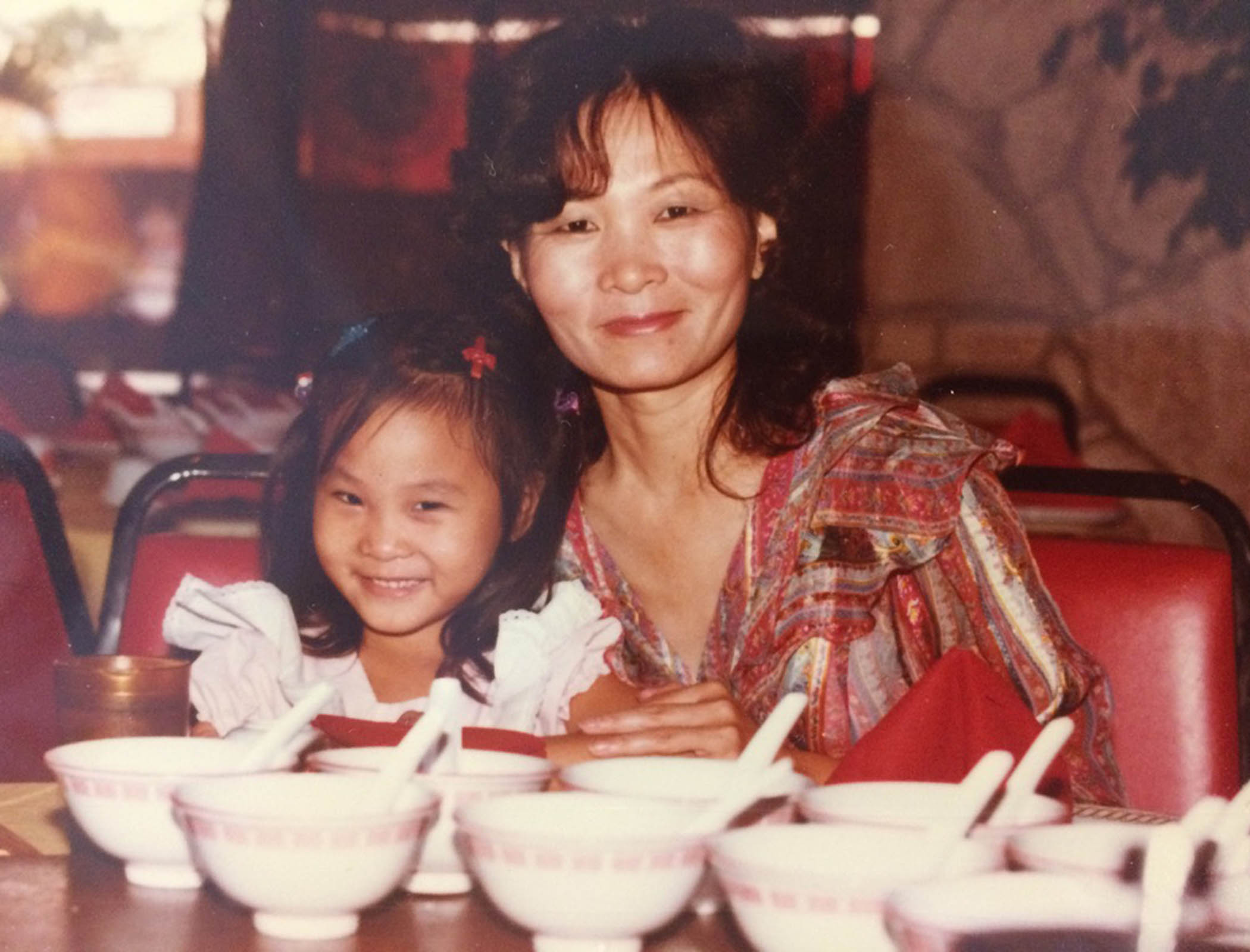
'The molten gulf widened between us, until I found I could no longer stand to be around the person I had loved most'
On her birthday, the activities staff bought her a mango cake from a Chinese bakery, presented her with a dozen roses and decorated her door with signs. I called my mother on video and she answered, a bright orange chicken on her lap. Another day, a staff member sent me a photo from her phone of a chinchilla from the mobile petting zoo sitting on my mother’s head.
I took her out every day when I was in Los Angeles to give her some reprieve from the facility with its diaper odours and shouting patients. It was hard to figure out a destination, especially when the weather was scorching. Parks and public space were a no-go. She was afraid of being attacked again. I, too, was afraid of being attacked. We went to a department store and I smeared her face with tester lotions. I brought her to the library, where she once used to take me as a young reader. I am grateful for these spaces where my mother can be free again, where she is not a patient any longer but just a person like any other.
I drove her to the nearby Huntington Library. She volunteered for 10 years in the rose garden up until the attack. It is amid the thousand roses that she bursts to life. The roses keep time. They are in full bloom, they wither, are shorn and budding again. The sun singed our skin in the 32C heat. She assured me that she was fine – and so I was, too.
Slowly, over the months, her appetite began to return. My mother went from paralysis to wheelchair to walker and scoffed at each bygone day that she left a less ambulatory self behind. She now does physical therapy twice a day, pushing herself to the limits of her body’s capabilities. To say that it pains me to bear witness to this would be like saying that I understand why all this has happened to us.
We get second chances in life, sometimes. For now, there is still the daily work of healing and repair.
The man has been transferred from the psychiatric facility back into jail, and the criminal case will again be heard in court. He too has, presumably, healed enough to be competent to stand trial.
Maybe my uncle’s powers of predicting the future are real. Maybe people become who they are told they will be. Or maybe I went to university and now take care of my mother because it’s what I choose to do. It is conceivable that all three possibilities are true.
I think I know, now, that what I wanted all this time was not to be apart from her but to be by her side. I just didn’t know how after being cast out. The future is the past. ... I have returned to where I was in the beginning. It’s where I’ve always belonged.
Newsletters
Choose the newsletters you want to receive
View more
For information about how The Observer protects your data, read our Privacy Policy