
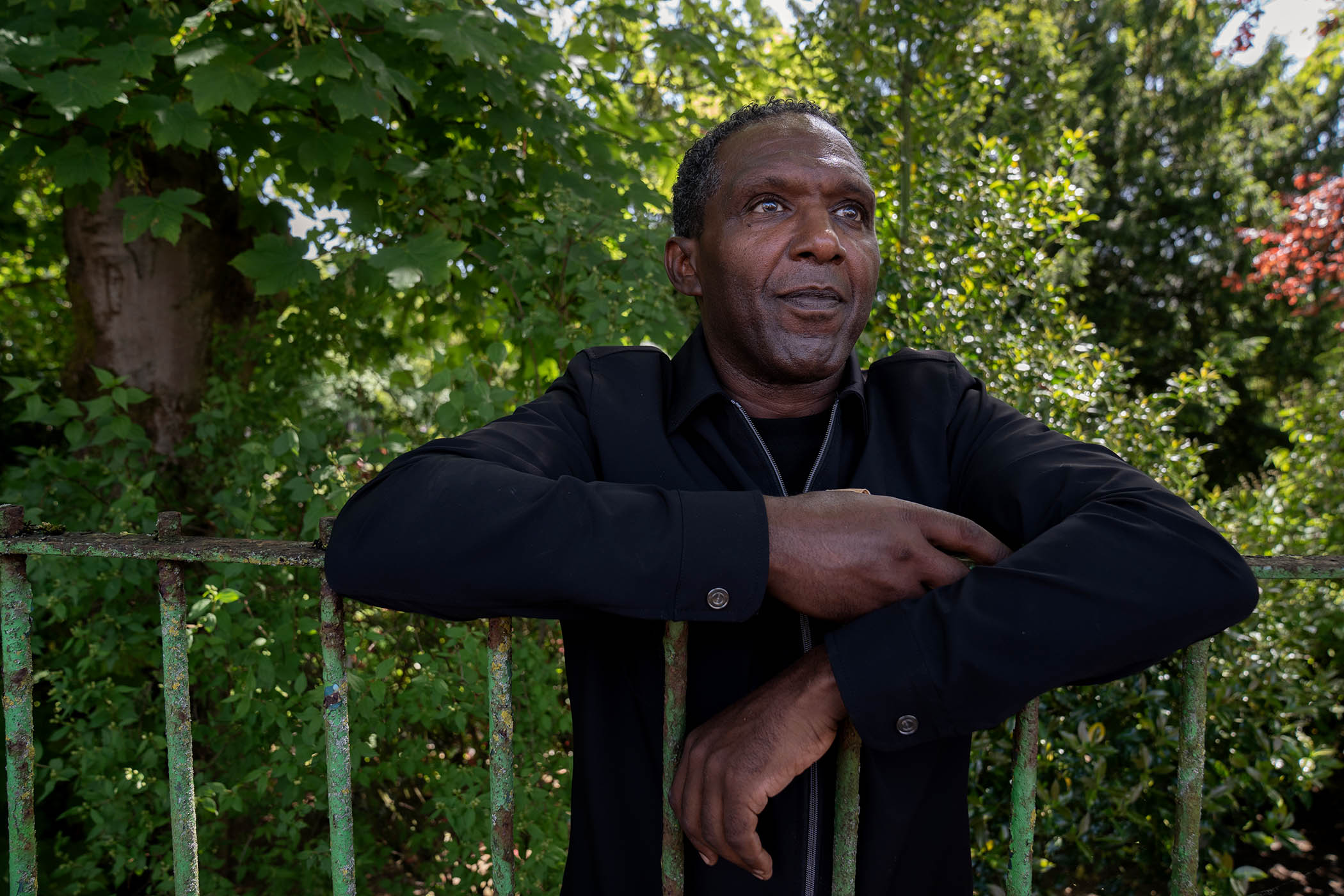
If you want to understand what it really means to love the work you do, I hope you get to meet Russell T Davies. He’s describing to me what it was like to film a pivotal scene in his new Channel 4 drama Tip Toe, in which a group of Manchester lads are watching a football match together in a crowded sitting room and streaming themselves online as they do. I’d asked him what was most challenging about writing this new show, which is gripping, brutal, sincere. He draws attention not only to creative struggles, but to practical ones – and to collective work.
“It’s a nightmare writing dialogue for 17 people in one room,” he laughs. “That’s a good writing exercise; when I’m mentoring, I should say: ‘Write a scene for 17 people.’ You’ve got to keep them all on the mark.” And then he reflects, remembers them all. “And weren’t they well cast, those boys? I was so proud of them. They’re all from little local Manchester theatres. We saw them doing their own work in places like 53two and Hope Mill theatre, where, if you’ve written a play, great, you can put it on for five days. The world’s changing now. People used to say: ‘Please can I get work?’ Now they say: ‘I’m putting on my own work.’” He beams, smiling, it seems, with his whole 6ft 6in frame, as sunny as the light that pours through the plate-glass window of a London production office in King’s Cross.
His joy is all the more striking because Tip Toe is, without doubt, a very dark piece of work. Alan Cumming is Leo and David Morrissey is Clive, two middle-aged neighbours in a Manchester street. Leo is gay and runs a lively bar in Canal Street that’s become a refuge for waifs and strays – young people rejected because of their sexuality or how they present themselves – having inherited the place from a former partner who left him to marry a woman. Clive is an electrician, unhappily married with two grown, or almost grown, sons. Saul is 25 and George is 16; the latter is gay, though he’s told no one. Leo is outgoing, not to say a busybody: he sees trouble in Clive’s family and he wants to help. But Clive, a brutal and brutalised Brexiter who has swallowed all kinds of conspiracy theories online, is a poor target for Leo’s generosity. No good deed goes unpunished. The show begins with a shocking death – it’s important not to say any more than that – and then five episodes demonstrate what led to it over the course of 10 days. It’s Davies’s signature to create characters the viewer takes to heart; but here the love is overwhelmed by social forces – and social media – pulling people far from their better selves.
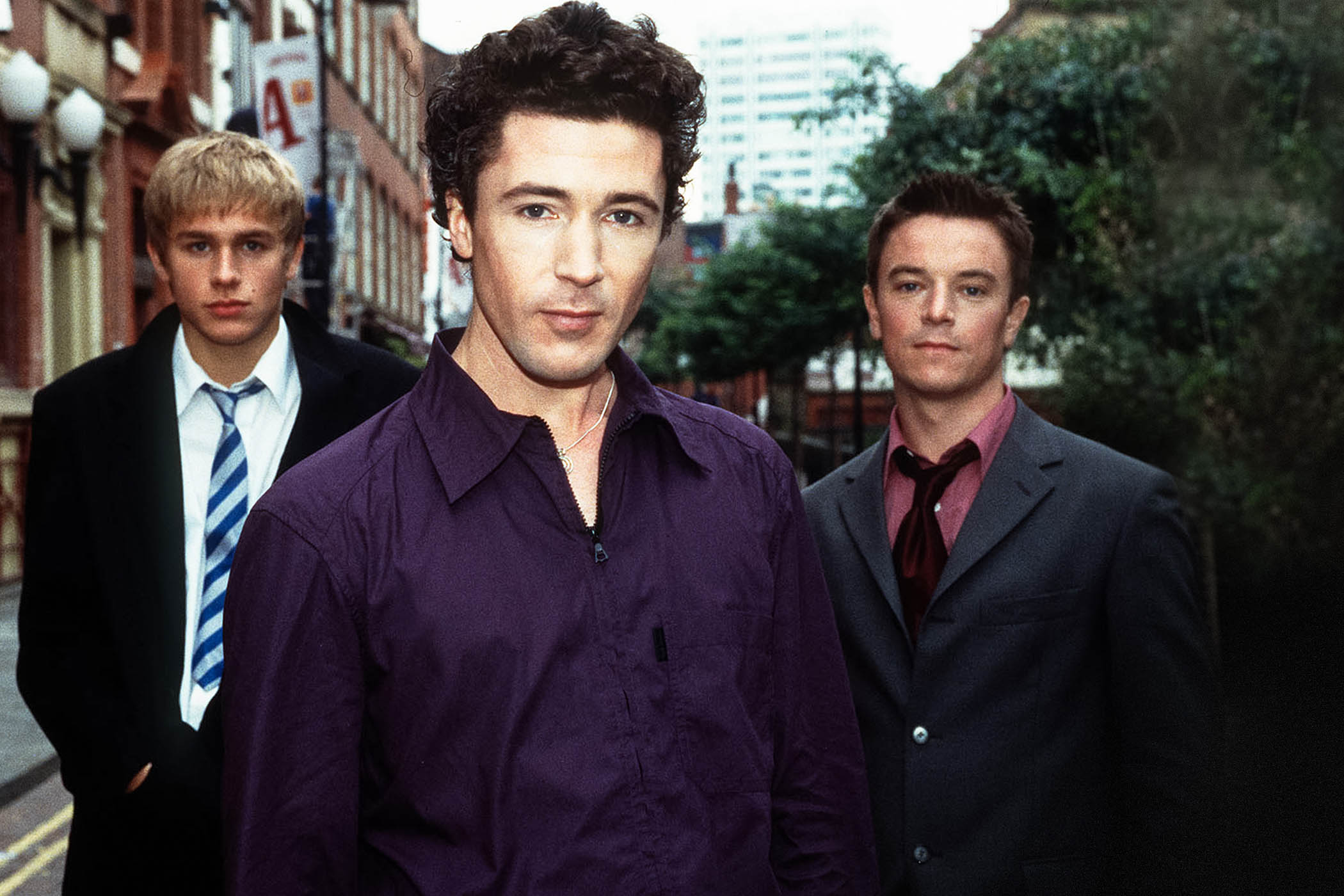
Charlie Hunnam, Aidan Gillen and Craig Kelly in Queer as Folk. Channel 4
It is 27 years since Davies’s seminal drama Queer as Folk first aired. “That’s a generation, isn’t it?” he asks. Davies, for all his great success, is a modest man, but he’ll admit he knows people who moved to Manchester, who made their lives there and felt able to live freely, because of that show. Sixteen years after Queer as Folk came Cucumber, Banana and Tofu, three interlinked shows, the first two of which were original dramas series exploring 21st-century gay life, while the third was an online documentary series that examined all facets of contemporary sex culture. (If you wonder how the titles are linked, consider how hard, or soft, each of those substances is, and I’m sure the answer will, er, come to you.) In 2019, Years and Years evoked the transformation of an ordinary Manchester family over the course of 15 years of turmoil in a fictionalised dystopian Britain; in 2021, It’s a Sin chronicled the Aids crisis.
But his sense that the world is rushing backwards is what drove him to write Tip Toe. “It was building up and building up, what I was feeling. The show wasn’t commissioned or anything. I had spent a lot of time in Wales with Doctor Who” – having brilliantly revived the classic series in 2005, Davies returned as showrunner in time for its 60th anniversary in 2023 – “and I just came home to Manchester and started writing.”
Some figures: as of 2023, hate crimes on the basis of sexual orientation increased by 19% in England and Wales over the previous four years. There were 18,702 recorded incidents in 2024-25, compared with 15,668 in 2020-21.
Newsletters
Choose the newsletters you want to receive
View more
For information about how The Observer protects your data, read our Privacy Policy
One of the regulars at Leo’s bar, Melba, played by a haunting Paul Rhys, puts it succinctly in the first episode. “If you’d asked me in 1996, what do you think 2026 would be like?, I’d have said: ‘Glory days. We’ll have equality, love and kisses; we’ll be holding hands skipping down the street.’ But they tricked us, didn’t they? They just waited. They let us all come out, so now we’re standing in the open, ready to shoot us down. I used to walk into a room and go: ‘Ta-da!’ Now I tip toe. Just in case.”
Davies says to me: “We only thought this was about equality, and visibility and representation. The argument of Tip Toe is, now that we’ve got these things, what if they still don’t like us? And, you know, I never thought that way until the past few years. I thought we were heading towards a goal. I always thought there was progress. But I never considered that something might be ending.” He shakes his head. “If you go back through the clippings, I swear I’ve been a tolling bell for a long time. I’m on some Channel 4 documentary, with Alan Cumming, in fact, and there’s a clip of Alan saying how great things are, how everything’s been solved. And then they cut to me going: ‘Our rights are paper thin.’ I’ve always thought that, because I’ve seen the world before we had them.”
If this all sounds pretty grim, I’d better be careful, because it’s so clear that Davies is an optimist, despite all. He and his sisters grew up in Swansea, the children of two classics teachers – in case you were wondering where his fascination with myth, with the trajectory of civilisations, comes from. It was something he was raised around. “Our house was full of Greek myths and Roman myths. I remember a great big soft-backed book with a thick spine that I loved, so I’ve lived with that my whole life, with the downfall of civilisations. And, you know, I’ve written that five, six, seven times on BBC One.” I find myself thinking of Torchwood: Miracle Day, or the end of the third series of Doctor Who, with John Simm as the Master and humanity on the brink of extinction. “I keep writing it because I think it happens,” Davies says.
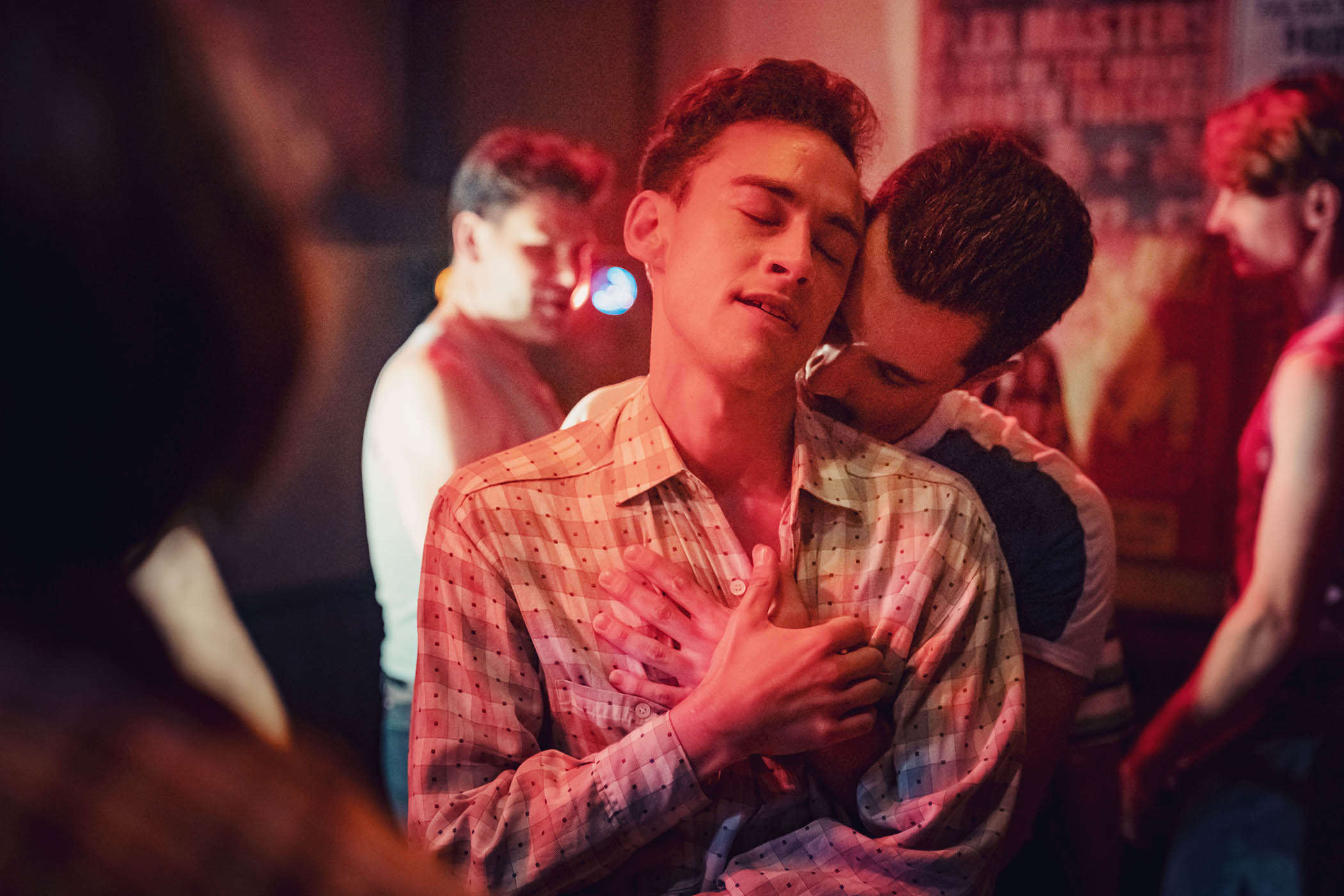
Olly Alexander starred in It’s a Sin, set during the 1980s Aids crisis
But history tells us that civilisations fall and then rise again; meanwhile, artists such as Davies just keep on making art. And artists, famously, worry whether they’re any good, even acclaimed ones such as Davies. It turns out that I’m the first critic to have seen Tip Toe; Davies’s relief, when I express my admiration, is palpable – indeed, adorable. Aside from trying to get 17 people talking all at once, he knew he had a fine line to walk. “To not make Leo too much of a hero and to write Clive properly – that was a job,” he says. Cumming’s performance is beautifully nuanced: he’s bloody annoying, for all you love him. But, to me, it’s Morrissey who stands out, because Clive could simply be a monster. Yet the actor’s subtlety makes the awfulness of his behaviour, pretty much from beginning to end, heartbreaking rather than purely appalling.
A luminous Jackson Connor plays teenager George in what is clearly a breakout role; it’s worth remembering that Charlie Hunnam’s first significant part was in Queer as Folk. “I remember the audition; it was just magic,” Davies says. “I’ve got an ex-boyfriend who always rolls his eyes and says: ‘Oh, another coming-out drama? Do you have to do coming out all the time? Our stories are much more than just coming out.’ But, you know, it’s still the same. I would have expected that the younger generation would have got over coming out, that it wasn’t a big deal any more – but it is. It still is.”
Davies knows that he was lucky; coming from a “lovely family”, as he says, and because his parents were teachers, in his telling, they’d seen everything, meaning when he came out, it was unproblematic. His home was “not just literate, but emotionally literate”. He takes a little pause. Reflects. This, I think, is one of the things that makes him such a brilliant observer: I can see the change in his thinking happening in front of me. “You know, I’m making it sound easy, with the passage of years. But this was the Aids era and, especially my mum, I could see her thinking: ‘You’re going to die.’ Although she never said. We never had a single HIV or Aids conversation; I think it was just too terrifying.”
Another pause. “And, you know, I never tell this story, but I was beaten up in Swansea city centre. I was 17. I was with my friend Simon, who’s straight, but we were sitting in a pub, and we were talking about a gay club in Swansea called Jingles. What a name! And I suspect the word ‘Jingles’ carries across a pub.” They went outside and were set upon by a group of bus drivers, Davies says, on their break, still in their uniforms. “This was 1979 or something. Of course, you wouldn’t go to the police. My glasses got knocked off my face; they ripped my shirt.” They didn’t bother to hide their names or their badge numbers, these bus drivers who set upon two teenage boys in Swansea. “So then you get home with a torn shirt, my teeth cracked at the back, and what’s your mum thinking? I didn’t say it was a gay bashing. I just said: ‘Oh, they were drunk.’”
That’s the violence Davies thought would fade away, as he grew from a boy into a man, as he became a famous and beloved showrunner: the man who reincarnated the Time Lord for a new generation. But now it’s back, and it doesn’t look like it’s going away any time soon. He’s under no illusions as to whether a show such as Tip Toe will make a difference. He fears he’s preaching to the converted. There’s a point in the series where Clive, bitterly, says to Leo that, every time you turn on the telly, there’s men in lipstick or men kissing; his disgust is palpable. Davies isn’t counting on changing the minds of people such as Clive.
“I fear it’s an echo chamber,” he says to me plainly. “It will reinforce what people think. Do you think it’ll change people’s minds?” he asks me.
I admit I don’t have an answer; that I have to agree with his assessment, for the most part.
But the positivity in him bleeds through: “The thing is,” he says after a moment, “you can never know what’s going to change someone’s mind. So you just have to put things out there. You’ll never know what will resonate, and you never know how it will touch someone.”
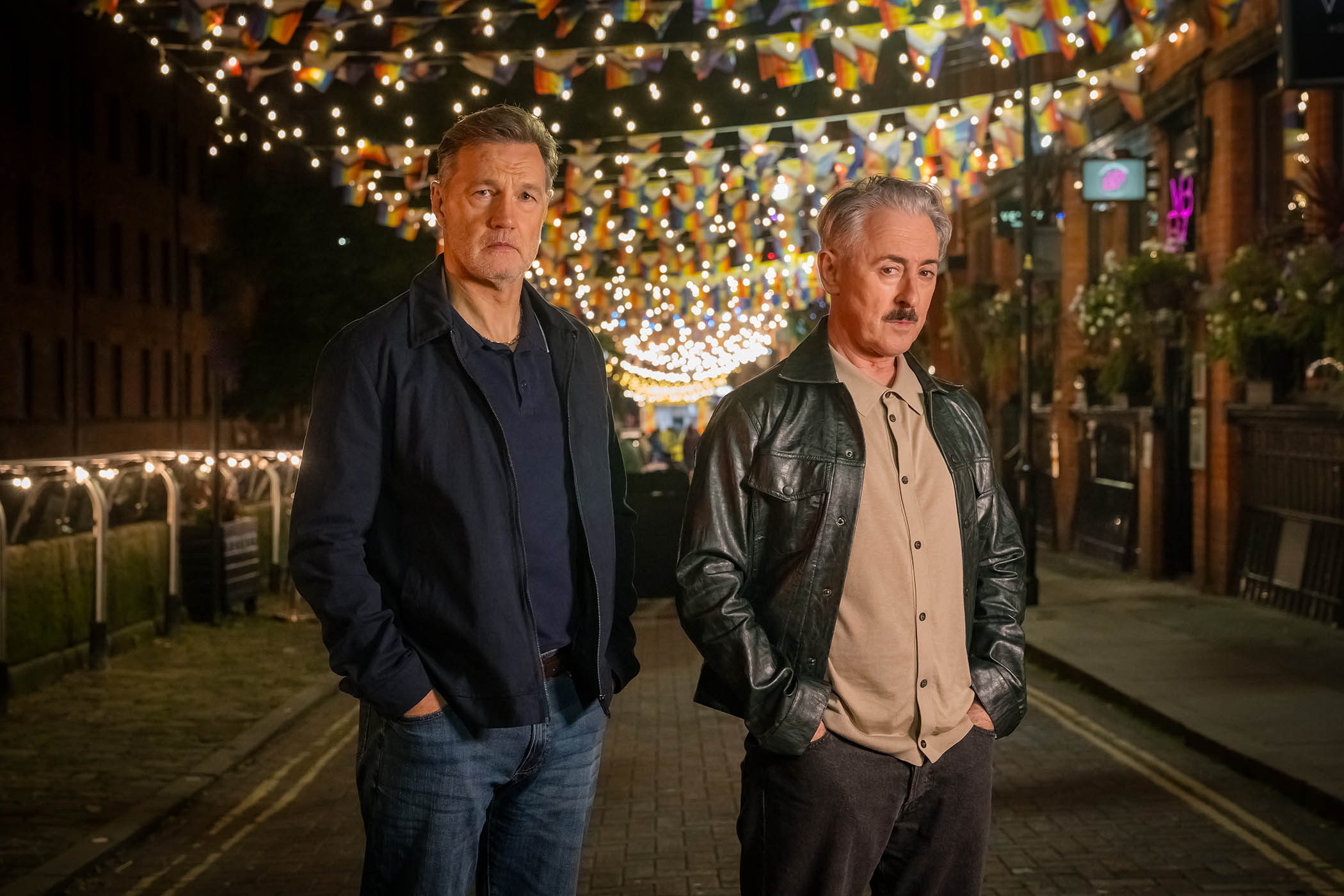
Tip Toe stars David Morrissey, left, and Alan Cumming as neighbours in Manchester
He recollects a book he read as a child: The Crystal Mouse by Babs H Deal. “The book is soaked into my skin and bones; we were on holiday in Spain, and it was the only book we had.” The book, first published in the early 1970s, is about a widow who starts to believe there’s an intruder in her home because a crystal mouse has been broken. Davies brings up the book purely as an example as something that’s stuck with him, haunted him. But then he suddenly realises that a significant element of Tip Toe involves Leo suspecting that someone’s been coming into his house, because wine’s been drunk, things have been moved. In an instant, he sees the connection to this old beloved book – it hadn’t occurred to him until this moment – and pretty much smacks his own forehead. “Bollocks!” he exclaims. “I should have put a broken ornament in the show!”
He lays a lot of the blame for the echo chambers we’re all stuck in squarely in one place. He squints at his phone, sitting balefully on the table between us. He fully supports a social media ban for the under-16s; there’s a striking scene in Tip Toe where the camera pulls back across the Manchester skyline and you see a damaging photo pinging from phone to phone, relentless, ineradicable. “That’s the tip-toe world we’re all in now,” Davies says. “One wrong photo. One wrong word.”
Davies knows he’s led a charmed life but he’s also known great suffering. His husband and partner of 20 years, Andrew Smith, died in 2018 of a brain tumour; Davies stopped work for two and a half years to care for him. He’s able to be funny, even in describing the hardest times, such as when his husband fell down the stairs and cut himself badly. Davies called an ambulance, but when it arrived, the first responders saw, in the open door, a giant of a man – that’s Davies – his hands covered in blood, and a prone, groaning figure behind him. “They wouldn’t come into the house!” He laughs. “Until one of them suddenly said: ‘Hey, are you the Doctor Who man?’ And then it was all right.”
But there’s a lesson in hardship, Davies says. “It just teaches you that everyone is going through something. Who’s caring for their mum, or someone else? We’re all doing it – and that’s how the world survives.”
There’s a new man in his life now, Oliver Cole; they’ve been happily together for eight months, he tells me, and the day after he and I meet, the pair are setting off to Venice; Davies has never been. He’s excited. His happiness is contagious.
I find myself thinking that Davies is our storyteller of darkness and light. His shows explore the choices we make. We can see his characters thinking and feeling; we can understand the lives they live. “Something big’s going to happen,” Leo says at the end of Tip Toe. But as for what it is – well, that’s up to us.
Tip Toe will be broadcast on Channel 4 later this month
Portrait by Suki Dhanda for The Observer. Additional photographs by Ben Blackall/Channel 4
• This article has been amended since publication. An earlier version incorrectly named in a caption the actors in the US/Canadian version of the series, not those from the original UK drama