Illustrations by Sarah Tanat-Jones
Our families will probably bring us the most joy in life – and probably the most sorrow. Poets tend to home in on high emotion for their subject matter, so it shouldn’t come as a surprise that they have been writing about the elation and the heartbreak we associate with our loved ones since the very beginning. They are there in the Epic of Gilgamesh and the Odyssey, and in the most recent work of our contemporary poets. Poetic styles might have changed but the practice of parents writing poems about their children and children writing poems about their parents has remained constant for thousands of years. The theme seems inexhaustible; relationships of this kind are eternally familiar yet endlessly unfathomable.
From the beginning of my writing life, I composed poems about my parents, probably taking my cue from Tony Harrison’s astonishingly honest and relatable pieces about his mother and father, and from Robert Lowell’s family and domestic poems. As truculent and argumentative as I could be at times, I never wanted to judge my parents in my work, as Philip Larkin seems to in his famously sweary poem This Be the Verse. When my dad died, it took a long while for me to accept that I would never talk to him again, and when at last poems of bereavement and loss started to emerge, they were attempts at a conversation, no matter how one-sided. My mum has been harder to write about; in comparison to my dad, everyone is quieter and subtler, and more difficult to characterise. But she’s there in the poems as a gracious and caring presence, I hope – a working mother with all the dignity and difficulties that come with the job.
When I had a daughter, I imagined that my poetic perspective would shift towards her, and that psychologically I would pivot from the role of son to the role of father. But, except indirectly, she’s largely absent from my work. To some degree, I’ve always been conscious of respecting her privacy and not trying to fix her identity in metaphors and half-rhymes. It’s what all poets who write about their nearest and dearest must ask themselves: do I have the right? What will the consequences be? Besides which, my daughter was forced to study my work in school, and I assumed that she’d have had enough poems to deal with in her life without being one. Parents are a puzzle but children are a complete mystery – half kin, half strangers – and perhaps any attempt to capture her in words has always been beyond me.
Family Lines, the new collection of poems on parents and parenthood that I have edited with Rachel Bower, ends with the Thomas Hardy poem Heredity. Hardy’s poem reads as a cold-eyed observation that is also a testament to the involuntary bond between ancestors and dependants, spoken not by a person but by the physical features passed down from one generation to the next. It makes an intriguing counterpart to Maura Dooley’s Freight, a hopeful and doting poem addressed to a baby in the womb “whose history’s already charted / in a rope of cells”. Compelled, captivated, mesmerised and bemused (and occasionally repulsed), poets have always written about the ties that bind, and they always will.
Family Lines: Poems About Parents and Parenthood, edited by Simon Armitage and Rachel Bower, is published by Faber (£14.99). Order a copy from The Observer Shop for £13.49. Delivery charges may apply
Black Woman
Georgia Douglas Johnson
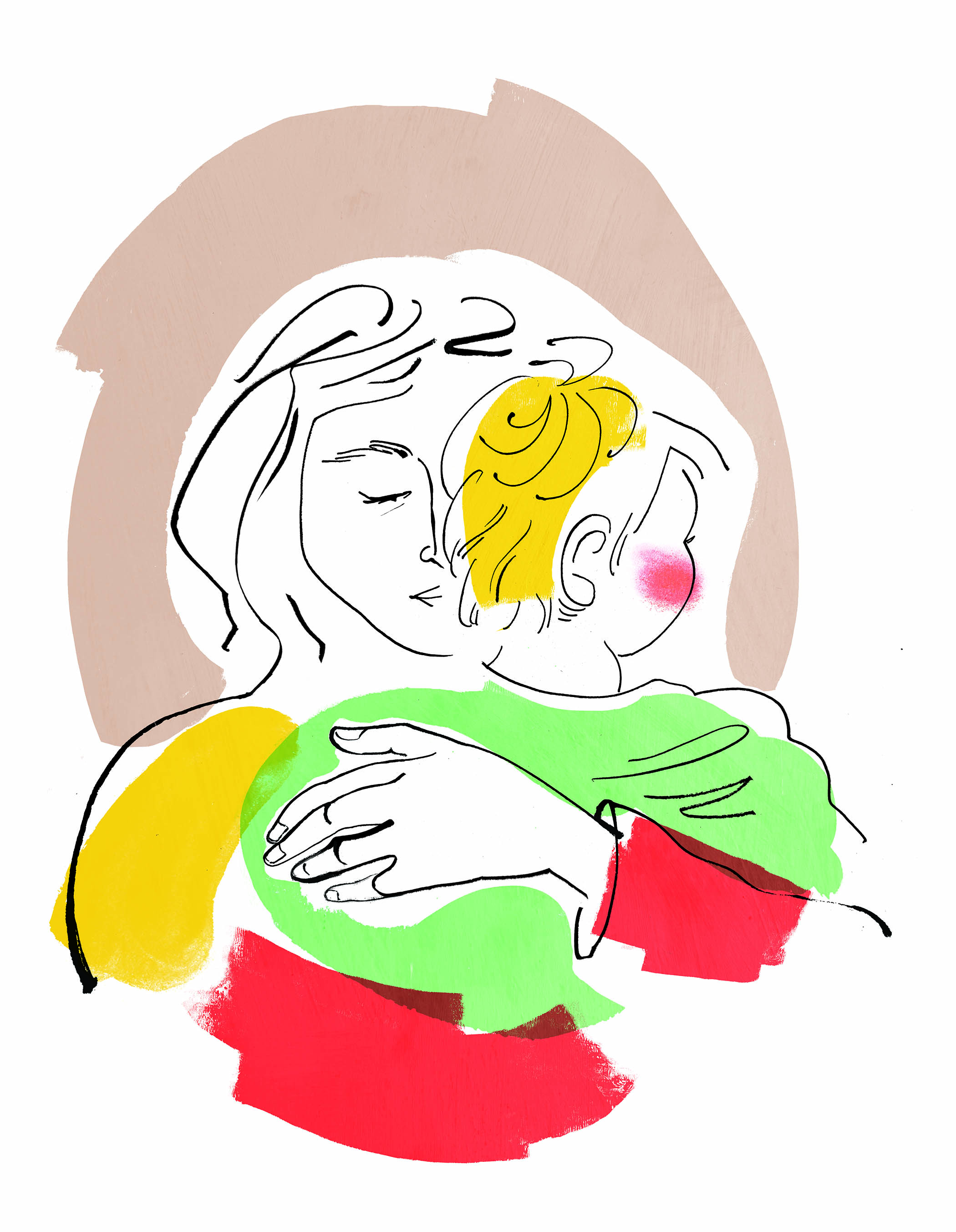
Don’t knock at my door, little child,
I cannot let you in,
You know not what a world this is
Of cruelty and sin.
Wait in the still eternity
Until I come to you,
The world is cruel, cruel, child,
I cannot let you in!
Don’t knock at my heart, little one,
I cannot bear the pain
Of turning deaf-ear to your call
Time and time again!
You do not know the monster men
Inhabiting the earth,
Be still, be still, my precious child,
I must not give you birth!

February
Kathleen Jamie
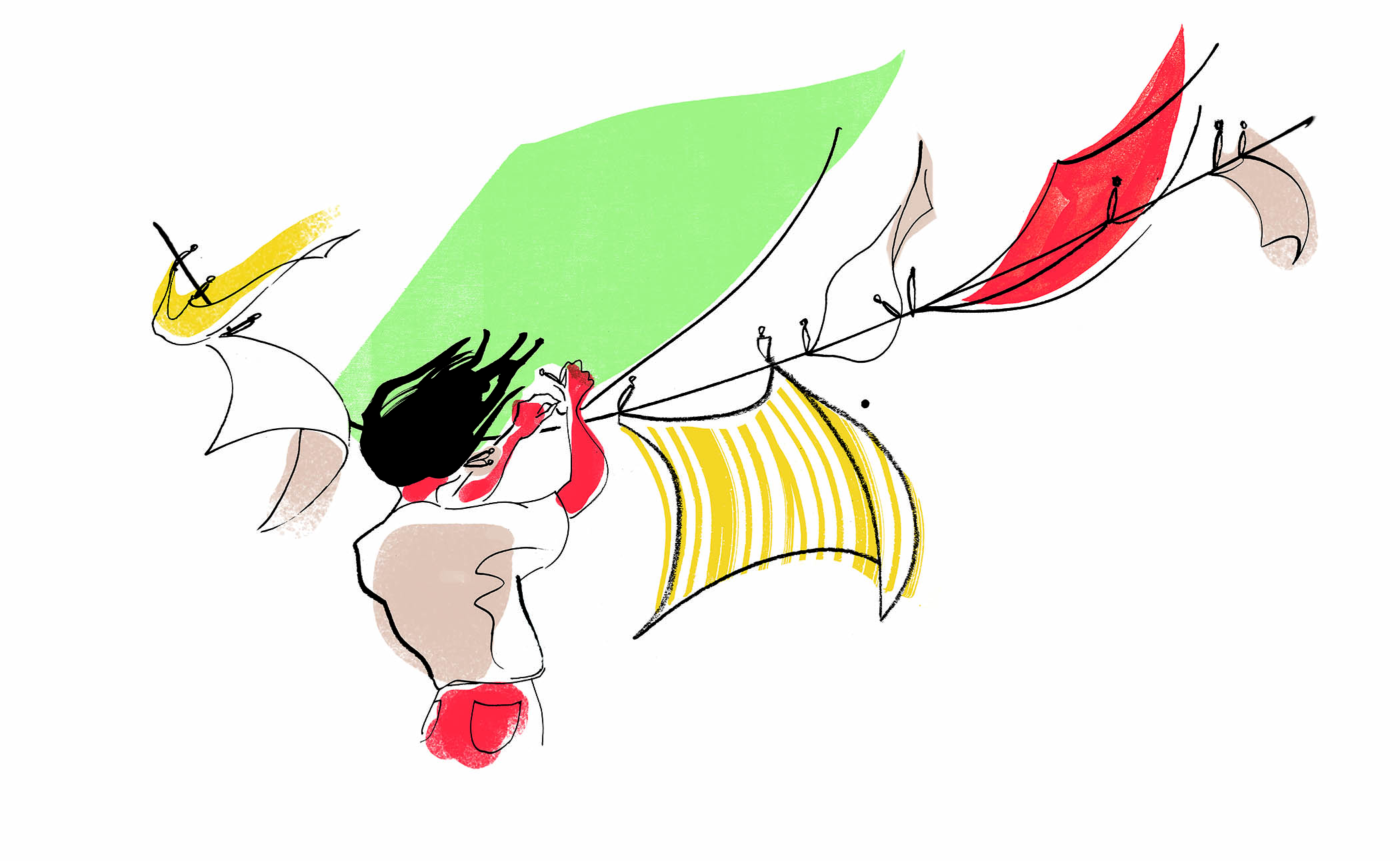
To the heap of nappies
carried from the automatic
in a red plastic basket
to the hanging out, my mouth
crowded with pegs;
to the notched prop
hoisting the wash,
a rare flight of swans,
hills still courying snow;
to spring’s hint sailing
the westerly, snowdrops
sheltered by rowans –
to the day of St Bride, the first
sweet-wild weeks of your life
I willingly surrender.
From Book of Birth Poems (Picador, 1999), reproduced by permission of Jenny Brown Associates
Matthew you’re leaving again so soon
Matthew Siegel
please take these pens I have all these pens
for you all with caps on them and pen holders
I have all these pen holders large and plastic
I know they won’t fit in your bag I’ll mail them
take this umbrella this sweater these socks
they’re ankle length like you like them
and soup take this soup I froze four batches
in Tupperware four batches of broth and chicken
and carrots and celery frozen in the freezer
they will keep you healthy my son
my liver take my liver to help clean your blood
I’ll fly to you I’ll come to you tomorrow
you used to cling to my ankle and I would
drag you across the floor please
pack me in your suitcase take me with you
From Blood Work by Matthew Siegel © 2015 by the Board of Regents of the University of Wisconsin System, reproduced by permission of the University of Wisconsin Press
Maybe I’ll Be Another Kind of Mother
Ada Limón
Snow today, a layer outlining the maple like a halo.
or rather, a fungus. So many sharp edges·in the month.
I’m thinking I’ll never sit down at the table
at the restaurant, you know that one, by the window?
Women gathered in paisley scarves with rusty iced tea,
talking about their kids, their little time-suckers,
how their mouths want so much, a gesture of exhaustion,
a roll of the eyes, But I wouldn’t have it any other way,
their bags full of crayons and nut-free snacks, the light
coming in the window, a small tear of joy melting like ice.
No, I’ll be elsewhere, having spent all day writing words
and then at the movies, where my man bought me a drink,
because our bodies are our own, and what will it be?
A blockbuster? A man somewhere saving the world, alone,
with only the thought of his family to get him through.
The film will be forgettable, a thin star in a blurred sea of stars,
I’ll come home and rub my whole face against my dog’s
belly; she’ll be warm and want to sleep some more.
I’ll stare at the tree and the ice will have melted, so
it’s only the original tree again, green branches giving way
to other green branches, everything coming back to life.
From The Carrying, Corsair (2019), reproduced by permission of Little, Brown Book Group Limited through PLSClear
My Mother’s Sea Chanty
Lorna Goodison
I dream that I am washing
my mother’s body in the night sea
and that she sings slow
and that she still breathes.
I see my sweet mother
a plump mermaid in my dreams
and I wash her white hair
with ambergris and foaming seaweed.
I watch my mother under water
gather the loose pearls she finds,
scrub them free from nacre
and string them on a lost fishing line.
I hear my dark mother
speaking sea-speak with pilot fish,
showing them how to direct barks
that bear away our grief.
I pray my mother breaks free
from the fish pots and marine chores
of her residence beneath the sea,
and that she rides a wild white horse.
From Collected Poems (2017), reproduced by permission of Carcanet Press Limited
Mother, Washing Dishes
Susan Meyers
She rarely made us do it—
we’d clear the table instead—so my sister and I teased
that some day we’d train our children right
and not end up like her, after every meal stuck
with red knuckles, a bleached rag to wipe and wring.
The one chore she spared us: gummy plates
in water greasy and swirling with sloughed peas,
globs of egg and gravy.
Or did she guard her place
at the window? Not wanting to give up the gloss
of the magnolia, the school traffic humming.
Sunset, finches at the feeder. First sightings
of the mail truck at the curb, just after noon,
delivering a note, a card, the least bit of news.
From Keep and Give Away: Poems (2006), reproduced by permission of University of South Carolina Press
Mother, Summer, I
Philip Larkin
My mother, who hates thunderstorms,
Holds up each summer day and shakes
It out suspiciously, lest swarms
Of grape-dark clouds are lurking there;
But when the August weather breaks
And rains begin, and brittle frost
Sharpens the bird-abandoned air,
Her worried summer look is lost.
And I her son, though summer-born
And summer-loving, none the less
Am easier when the leaves are gone;
Too often summer days appear
Emblems of perfect happiness
I can’t confront: I must await
A time less bold, less rich, less clear:
An autumn more appropriate.
From The Complete Poems (2012), reproduced by permission of Faber and Faber Ltd
Freight
Maura Dooley
I am the ship in which you sail,
little dancing bones,
your passage between the dream
and the waking dream,
your sieve, your pea-green boat.
I’ll pay whatever toll your ferry needs.
And you, whose history’s already charted
in a rope of cells, be tender to
those other unnamed vessels
who will surprise you one day,
tug-tugging, irresistible,
and float you out beyond your depth,
where you’ll look down, puzzled, amazed.
From Sound Barrier: Poems 1982–2002 (2002), reproduced by permission of Bloodaxe Books
For a Five-Year-Old
Fleur Adcock
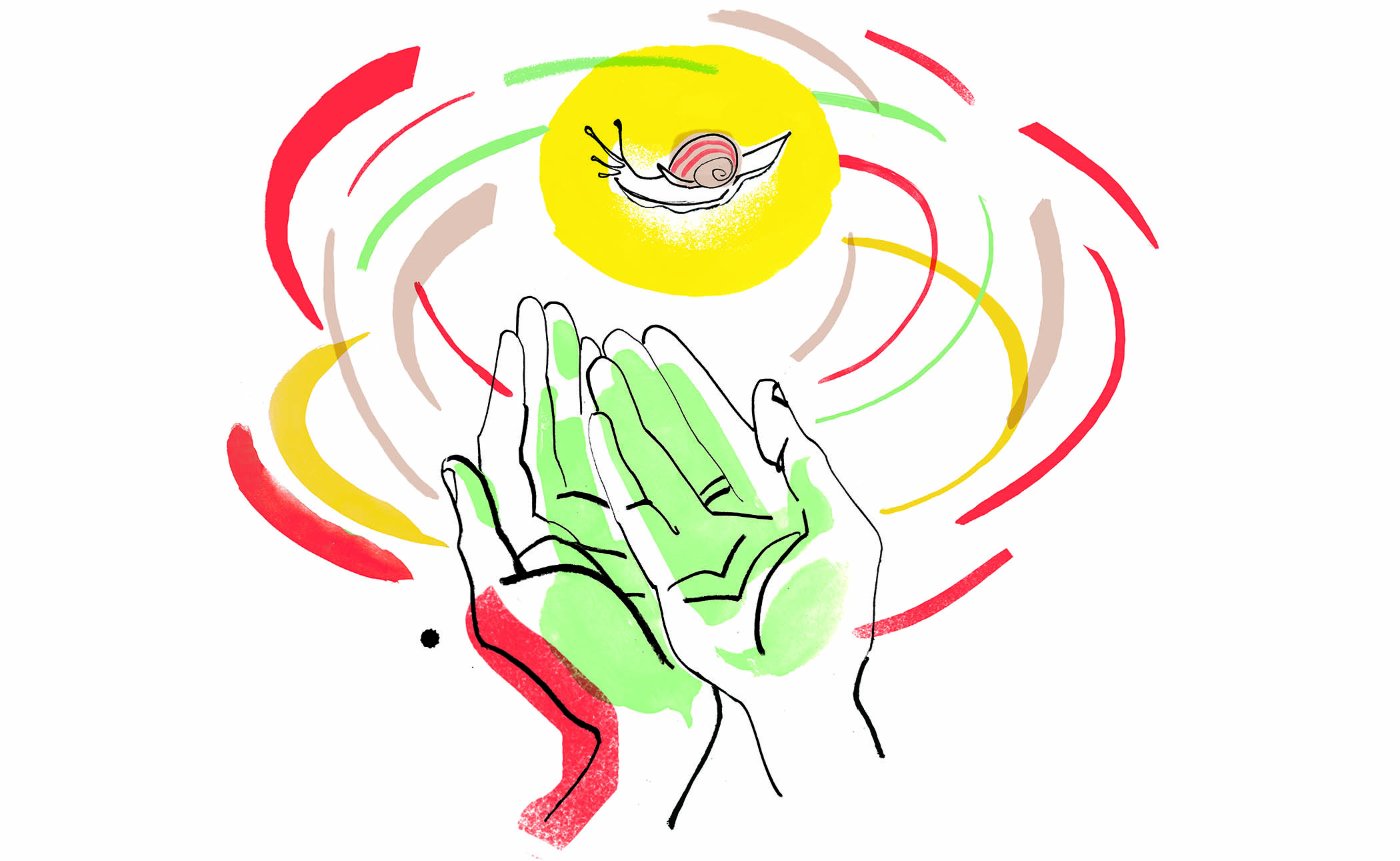
A snail is climbing up the window-sill
into your room, after a night of rain.
You call me in to see, and I explain
that it would be unkind to leave it there:
it might crawl to the floor; we must take care
that no one squashes it. You understand,
and carry it outside, with careful hand,
to eat a daffodil.
I see, then, that a kind of faith prevails:
your gentleness is moulded still by words
from me, who have trapped mice and shot wild birds,
from me, who drowned your kittens, who betrayed
your closest relatives, and who purveyed
the harshest kind of truth to many another.
But that is how things are: I am your mother,
and we are kind to snails.
From Collected Poems (2024), reproduced by permission of Bloodaxe Books
Poem for a Daughter
Anne Stevenson
‘I think I’m going to have it,’
I said, joking between pains.
The midwife rolled competent
sleeves over corpulent milky arms.
‘Dear, you never have it,
we deliver it.’
A judgement years proved true.
Certainly I’ve never had you
as you still have me, Caroline.
Why does a mother need a daughter?
Heart’s needle, hostage to fortune,
freedom’s end. Yet nothing’s more perfect
than that bleating, razor-shaped cry
that delivers a mother to her baby.
The bloodcord snaps that held
their sphere together. The child,
tiny and alone, creates the mother.
A woman’s life is her own
until it is taken away
by a first particular cry.
Then she is not alone
but parts of the premises
of everything there is:
a time, a tribe, a war.
When we belong to the world
we become what we are.
From Collected Poems (2023), reproduced by permission of Bloodaxe Books
Morning Song
Sylvia Plath
Love set you going like a fat gold watch.
The midwife slapped your footsoles, and your bald cry
Took its place among the elements.
Our voices echo, magnifying your arrival. New statue.
In a drafty museum, your nakedness
Shadows our safety. We stand round blankly as walls.
I’m no more your mother
Than the cloud that distils a mirror to reflect its own slow
Effacement at the wind’s hand.
All night your moth-breath
Flickers among the flat pink roses. I wake to listen:
A far sea moves in my ear.
One cry, and I stumble from bed, cow-heavy and floral
In my Victorian nightgown.
Your mouth opens clean as a cat’s. The window square
Whitens and swallows its dull stars. And now you try
Your handful of notes;
The clear vowels rise like balloons.
From Ariel, in Collected Poems by Sylvia Plath (2015), reproduced by permission of Faber and Faber Ltd
Mother, any distance
Simon Armitage
Mother, any distance greater than a single span
requires a second pair of hands.
You come to help me measure windows, pelmets, doors,
the acres of the walls, the prairies of the floors.
You at the zero-end, me with the spool of tape, recording
length, reporting metres, centimetres back to base, then leaving
up the stairs, the line still feeding out, unreeling
years between us. Anchor. Kite.
I space-walk through the empty bedrooms, climb
the ladder to the loft, to breaking point, where something
has to give;
two floors below your fingertips still pinch
the last one-hundredth of an inch ... I reach
towards a hatch that opens on an endless sky
to fall or fly.
From Paper Aeroplane (2014), reproduced by permission of Faber and Faber Ltd