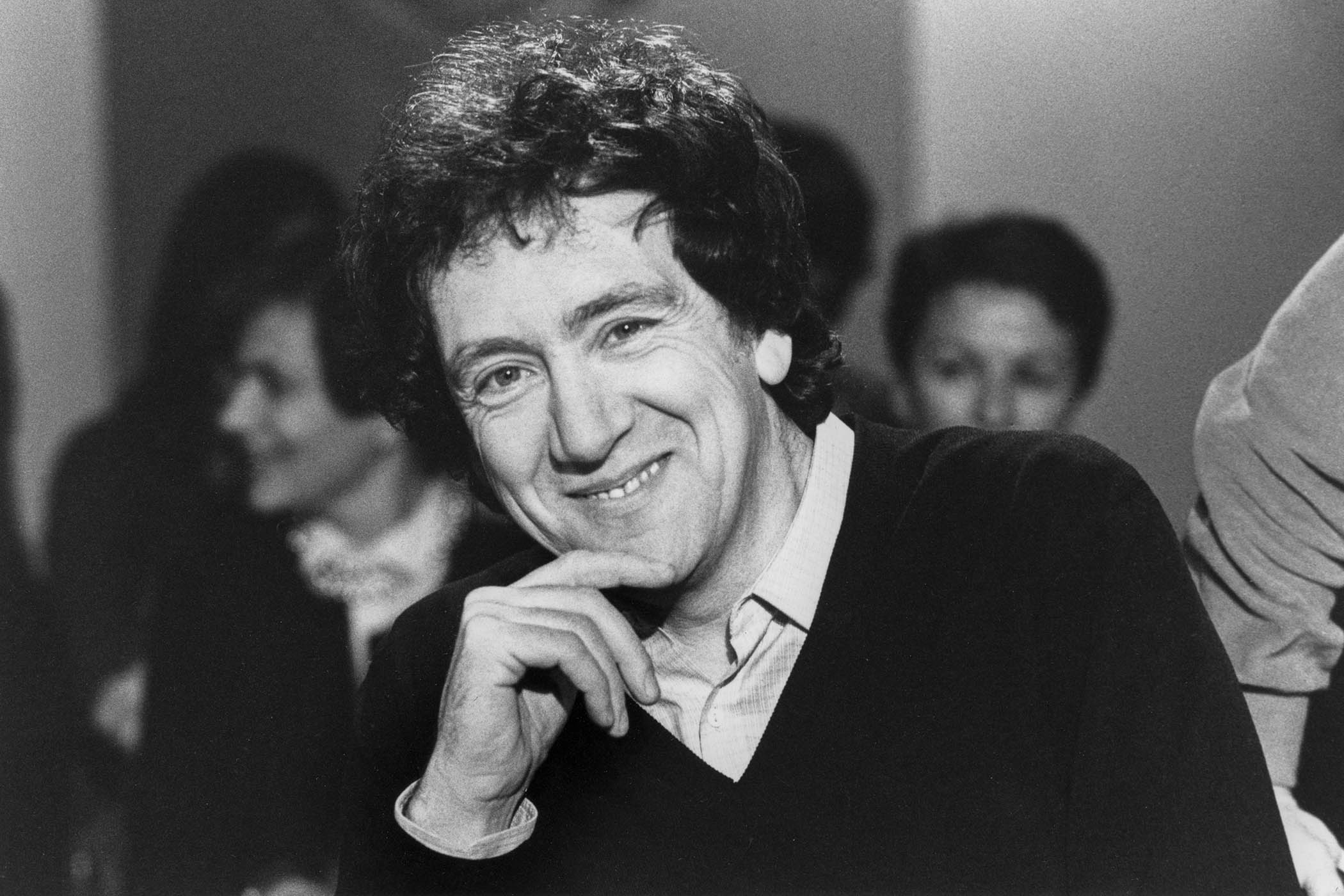



Blossom will by now be hanging over the low gable of the home of the late poet and philosopher Kenneth White in Brittany. But nothing else about this house, named Gwenved, is certain any more. White’s long-held plan for it to become a residence for artists and writers after his death is in dispute – and the Scottish government is weighing in.
White’s fans across France and in his native Scotland are battling to see his wishes followed through. Their opponents are the officials of the French municipality of Trébeurden, who have put the property up for sale following an apparent clerical error and decreed that White’s extensive library must now be cleared out.
Admirers of his work have complained to the local authority and last week Angus Robertson, the Scottish cabinet’s secretary for culture, said he would be emphasising the importance of White’s “incredibly important contribution to cultural life in Scotland” to the French authorities and asking for answers.
Writing to a Scottish campaigner, Prof Michael Russell, Robertson said: “I will ask my officials to enquire with their counterparts at the regional level to better understand why these decisions have been taken, and what is planned for the library.”
Although popular in Scotland, White was venerated in France as the man who, almost 50 years ago, founded the literary movement known as “geopoetics”. This group of writers, still going strong, aims to break down barriers between poetry, science and ecology.
“It would be tragic if Kenneth’s wishes were ignored, and the library was removed and his house was sold”
“It would be tragic if Kenneth’s wishes were ignored, and the library was removed and his house was sold”
White and his wife and translator, Marie-Claude, lived in the house for more than 40 years and most of his published collections were written there. He donated Gwenved to the municipality in his will, together with €100,000, on condition it be transformed into the “Kenneth White residence for artists and writers” and become “a place of inspiration, a place of life and thought”. White wanted it to be managed by members of the International Institute of Geopoetics, a group he founded.
Trébeurden council first accepted White’s bequest in February 2024, but due to a bureaucratic confusion about the extent of his gift, the house had to be bequeathed once again to the municipality by White’s legal heir. It was at this point that the key paragraphs about the poet’s demands for the future of the house and its library were omitted in error.
At a meeting in January the mayor of Trébeurden, Bénédicte Boiron, said the most likely fate of the house would be immediate sale on the open market: “A complete inventory will be carried out. Books can’t stay in the house,” she ruled.
In response, Norman Bissell, director of the Scottish Centre of Geopoetics, told The Observer: “It would be tragic if Kenneth’s wishes were ignored, and the library was removed and his house was sold. We have members in 18 countries, and fully support the growing campaign to preserve the house under the auspices of the International Institute of Geopoetics.”
Before White died in the house aged 87 in the summer of 2023, he wrote his own epitaph, saying he felt “catastrophically happy” at the end of his life. That contentment would surely have been disturbed if he knew that an alleged error made by a town hall notary would prevent the realisation of his dream.
Photograph by Louis Monier /Gamma-Rapho via Getty Images
More from The Observer
Newsletters
Choose the newsletters you want to receive
View more
For information about how The Observer protects your data, read our Privacy Policy