Zekija Avdibegović had to make a choice. To do so seemed the only way to stay sane in the nightmare that had engulfed her family and her nation. In 1992, Bosnia was at war, and her husband and teenage son disappeared from a prison camp in a converted school building in Ilijaš, a small town on the north-western fringes of Sarajevo, where they, along with hundreds of other Bosniaks (Bosnian Muslims) had been detained by Bosnian Serb forces.
At the beginning she made all kinds of desperate bargains with herself. “I even thought that, if I could get my husband back, we could start a new family,” she explained, when we met in her windowless office at the local missing persons association she runs in downtown Ilijaš. But that was then. Now, she says, she can barely recall the face of her husband, while her son is constantly in her thoughts. “There is [not] any morning or night that I go to bed or wake up without thinking about him. Without thinking about the missing.”
Avdibegović is unsentimental, however. She knows from long experience that, without discipline and unity, nothing happens. “We [organised] immediately. Without organising, you [can’t] speak to the institutions … we were very vocal, very active, even from those earliest days.”
On 9 June every year, the town of Ilijaš comes together to remember the dozens who remain lost. There are speeches and music. Banners are raised and memories shared. Such scenes are common in towns across Bosnia. But in Ilijaš, as elsewhere, the passing years have made any hopes of resolution increasingly distant. Avdibegović is in her late 60s; the dream that her men may one day walk back into her life is long extinguished.
Bosnia’s stability still can’t be taken for granted. The war that followed the breakup of Yugoslavia in the 1990s lasted three and a half years. Between April 1992 and the end of 1995, more than 100,000 people were killed and about 2 million displaced in a country with a population of approximately 4.5 million. Amid the war’s horrors, one has remained pre-eminent. In July 1995, more than 8,000 Bosniak men and boys were massacred by Bosnian Serb forces in and around Srebrenica, a small town on the eastern fringes of Bosnia that had been declared a UN “safe area”. It remains the only legally recognised genocide in Europe since the end of the second world war.
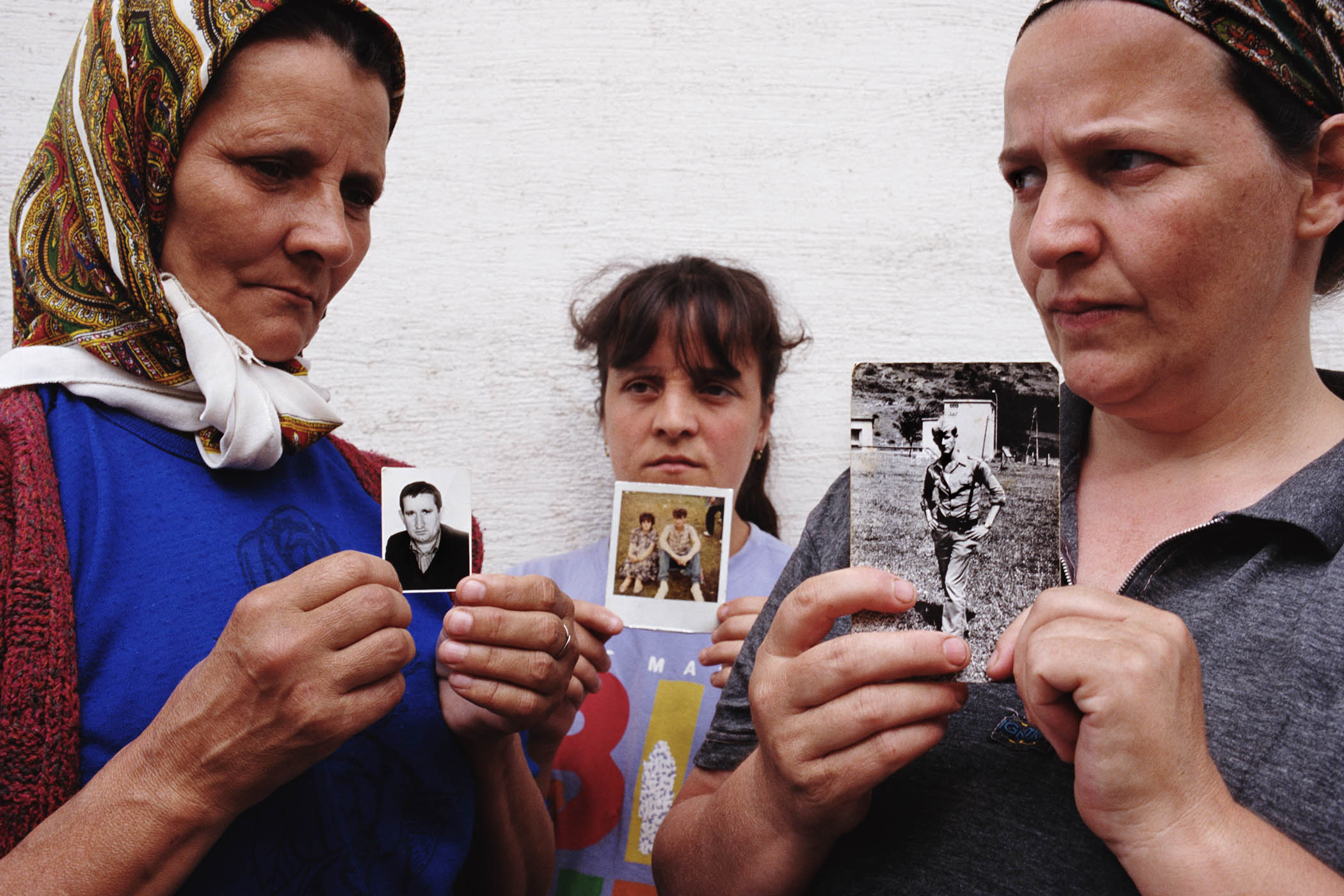
Women holding pictures of their husbands after the Srebrenica massacre in 1996
Peace was hard-won and has given birth to its own struggles. The US-brokered Dayton agreement that ended the war split the nation into two district entities: the Bosnian Serb-dominated Republika Srpska, split across the north and east of the country, and the Federation of Bosnia and Herzegovina, jointly run by Croats and the majority Bosniaks. The two bodies nominally share Sarajevo as a capital and are bound together by a central administration.
If the practical questions are complex, others have proved insoluble. How to live together after so much bloodshed and loss? And what to do about the missing: the 35,000 people, such as Avdibegović’s husband and son, who had disappeared? Over the intervening three decades, thousands of mass graves have been discovered, with the remains of many of the disappeared brought back to their loved ones. Today, about 7,000 people remain unaccounted for, with 2,000 lying unidentified in morgues across Bosnia.
In 2004, the central government of Bosnia and Herzegovina introduced a national missing persons law. It represented a world first; something no other country had ever managed in scale or ambition. The Missing Persons Institute of Bosnia and Herzegovina, a permanent independent body with the task of searching for the missing, was established, with significant legal rights granted to the families of the disappeared.
At first, identification relied on often unreliable physical evidence; scraps of clothing or other distinctive markers. The introduction of DNA testing – the analysis of bones taken from mass graves and crosschecked against blood samples from surviving relatives – proved revolutionary. Today, the institute has its headquarters in a nondescript office building in Sarajevo city centre.
Saliha Đuderija, one of its directors, agreed to meet me for an interview. “We are at a very challenging part of the process [where we] are dealing with a wall of silence from politicians and those who committed these war crimes,” she said.
Newsletters
Choose the newsletters you want to receive
View more
For information about how The Observer protects your data, read our Privacy Policy
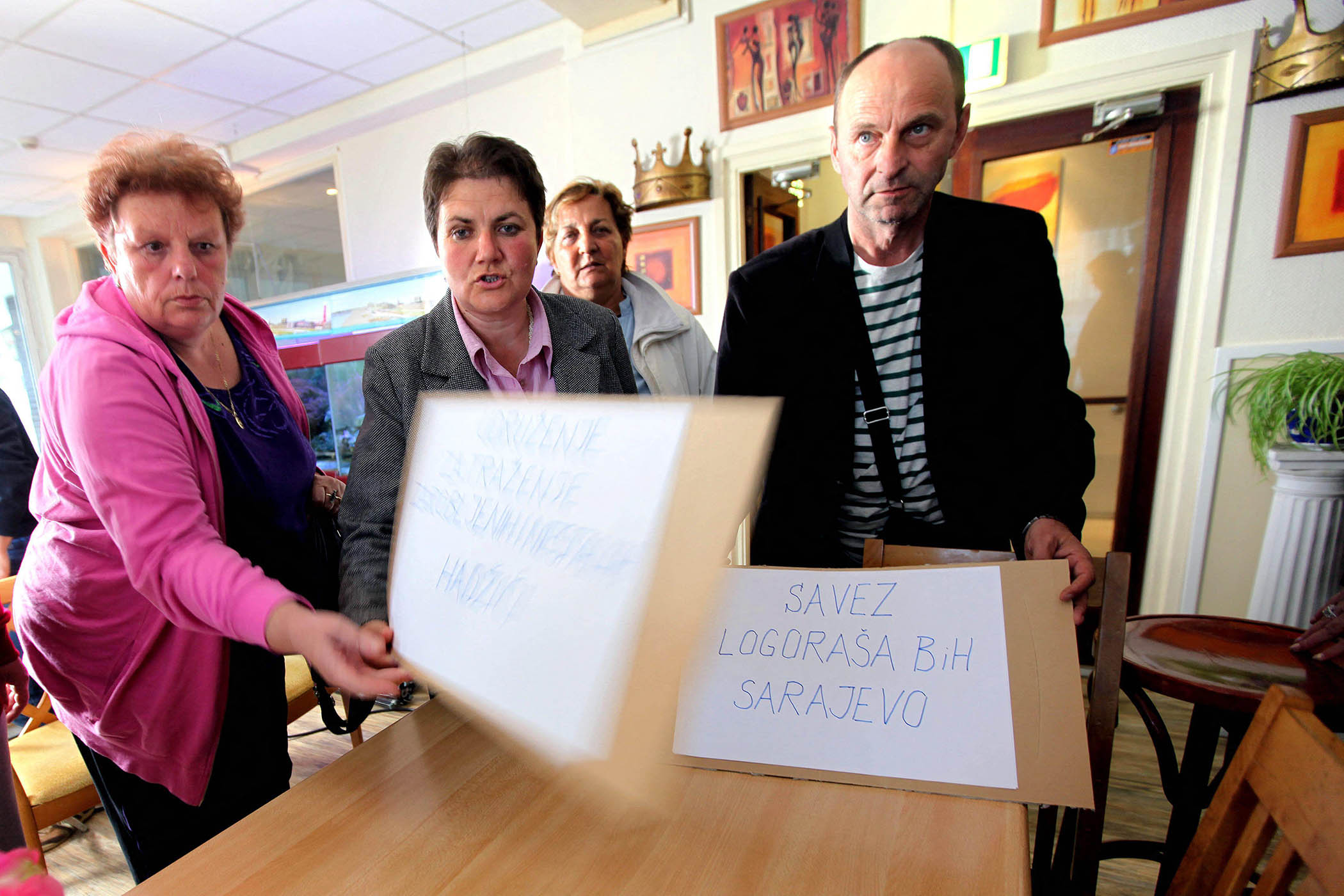
Zekija Avdibegović, left, at The Hague in 2012
Despite these challenges, Đuderija, a former human rights lawyer in her mid-60s, had much to say about the institute’s achievements. Not least, the centralised database, available online for those still searching for their missing family. She also showed me the hard copies that they have for each person. “For every person, we have a dossier.”
Đuderija ushered me into a strip-lit windowless room at the end of a gloomy corridor. Filing cabinets occupied every available inch of space. Inside each were densely packed rows of multicoloured paper files, each one corresponding to a disappearance. “It is about giving dignity back to the victims”, said Đuderija. “[And] not providing an alibi to those who say there were no victims, or that the numbers are exaggerated”.
Tensions were running high during my week in Bosnia. In Republika Srpska, a snap election had been called after the enforced departure of its longstanding president, Milorad Dodik. Once considered a moderate voice in the territory by western observers, he has spent much of the last 20 years ramping up the hardline nationalist rhetoric. He has denied the Srebrenica genocide and excoriated the Missing Persons Institute for alleged anti-Serb bias. “[Genocide] did not happen [in Srebrenica]. We all know that here in Republika Srpska,” he has claimed.
I attended several campaign rallies in Banja Luka, de facto capital of Republika Srpska. There was much admiration for “Mother Russia” and condemnation for the decadent “gay west”. The central Bosnian government attracted equal opprobrium. Grievance was the predominant mood. Talk of the missing, or any idea of nationwide collaboration to bring them into focus, was not on the agenda.
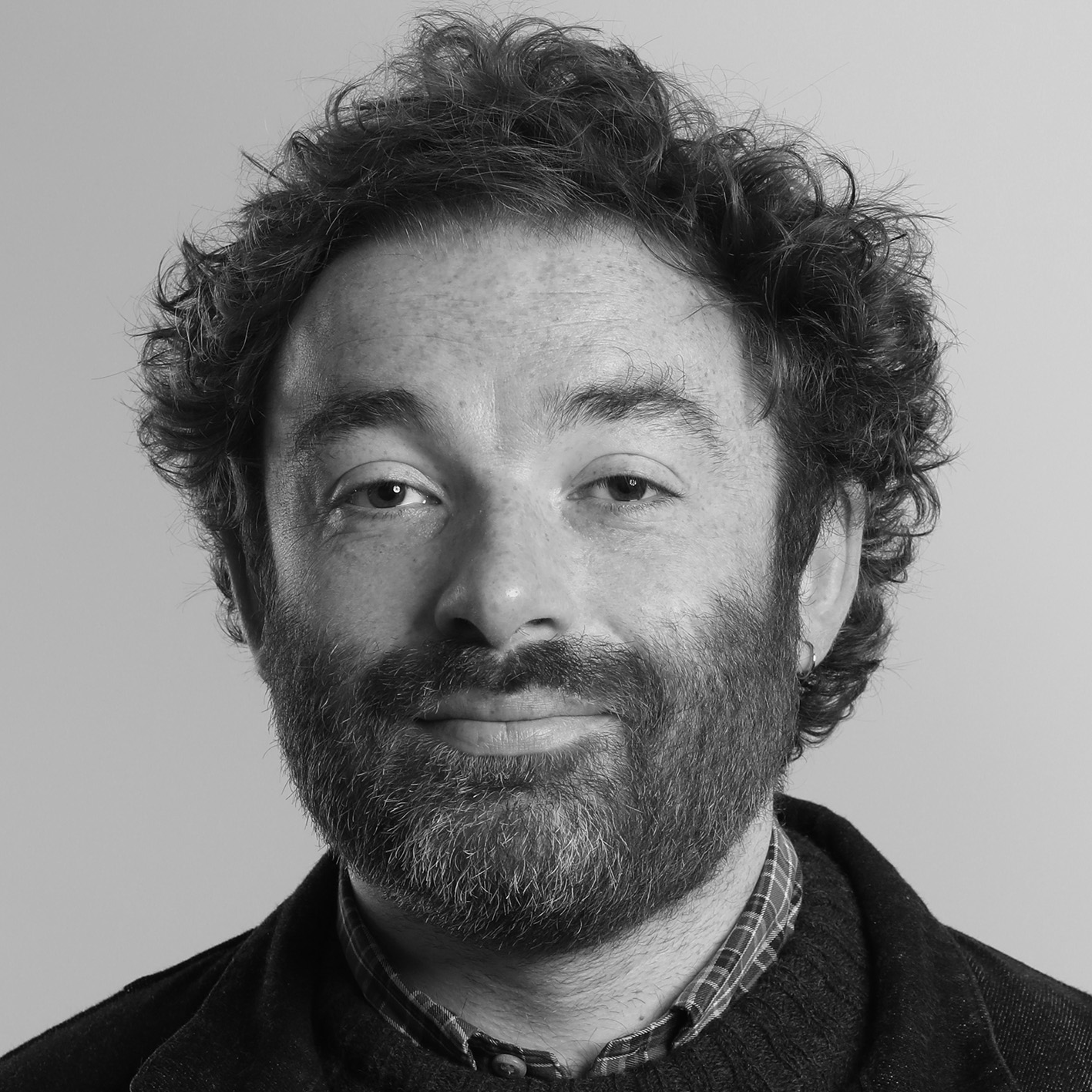
Back in Sarajevo, I met with Sasa Kulukcija, a press officer at the Hague-based International Commission on Missing Persons (ICMP). In 2001, its DNA laboratory began working in the Bosnian capital. Today, the ICMP operates in war and post-conflict zones around the world, from Ukraine to Syria; its achievements in the western Balkans are often referred to as the “gold standard” for DNA identification work.
Like everyone I met in Bosnia, for Kulukcija, an infectiously earnest figure in his early 30s, the war and its legacy were not abstractions. Justice for the missing and their families was more than a job to him, he conceded. “The war never stopped for them. They are living without knowing the truth, without getting any justice. It’s a burden on society. [And] unfortunately, it is being politicised”.
It is about giving dignity back to the victims, and not providing an alibi to those who say there were no victims
It is about giving dignity back to the victims, and not providing an alibi to those who say there were no victims
After learning about Bosnia’s pioneering approach to DNA identification, which uses dedicated software to compare genetic profiles of families and the missing, I wanted to see it in action. To do so, I visited a specially designed morgue, overseen by the ICMP, about 80 miles (120km) north of Sarajevo in the city of Tuzla. There I met Dr Dragana Vučetić.
She was in her early 20s when the call arrived. It was 2004 and Vučetić had just finished her degree in forensic anthropology at Belgrade University. “I maybe wanted [to go] to Egypt but you don’t know what can happen. Reality is not always like this. One conversation changed my life. I heard about this job so I applied.”
Bosnia and Herzegovina had just introduced the national law on missing persons and a team of scientists was being put together to try to identify the bodies in the hundreds of mass graves spread across the country, including thousands of unidentified victims of the Srebrenica genocide. There could be few more daunting jobs for a rookie, though Vučetić managed to suppress her rising trepidation.
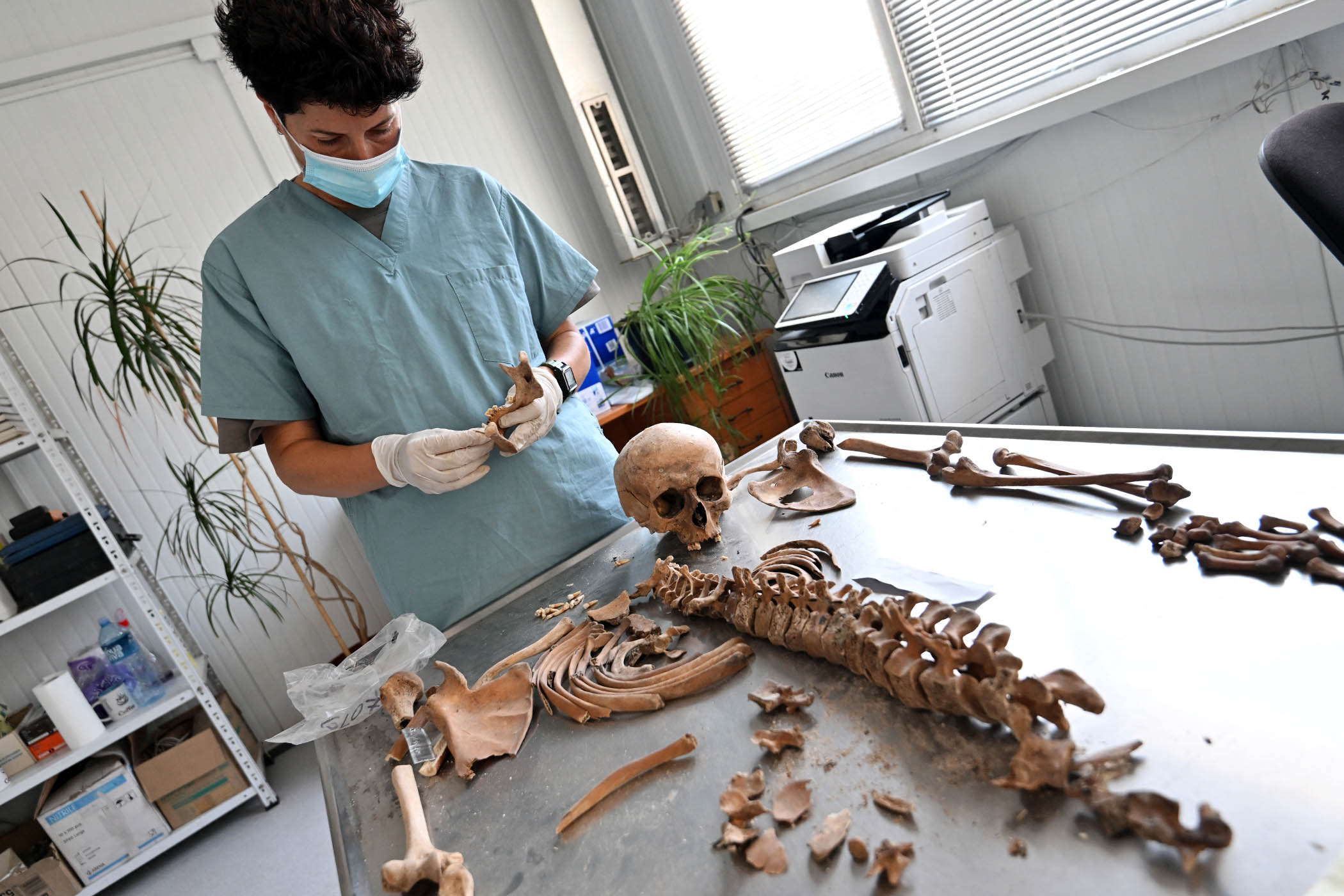
Over the course of the morning I spent with Vučetić, it was impossible to ignore the skeletal remains spread across the table next to us, including a spinal column and two femurs. “Back when we started, our people were out in the field every day … We needed people with knowledge and experience. We needed to develop protocols [on] how to properly examine cases”. Each body told its own story. “Do the bones show signs of violence? Do we have [pieces of a] bullet from the entrance wound? You have to consider everything.”
As she works, Vučetić’s speech and movements are methodical, her black hair cut to practical shortness. It is difficult to imagine her as a diffident, nerve-racked young woman. But there are still times when the realities of her job can be hard to process. “With a difficult case, I can be thinking about it for 24 hours a day. For an ordinary case, it’s not an issue. That’s when I run. It helps me think. I wouldn’t say it’s the fresh air in Tuzla because the air is always dirty. But that’s when the good ideas come.”
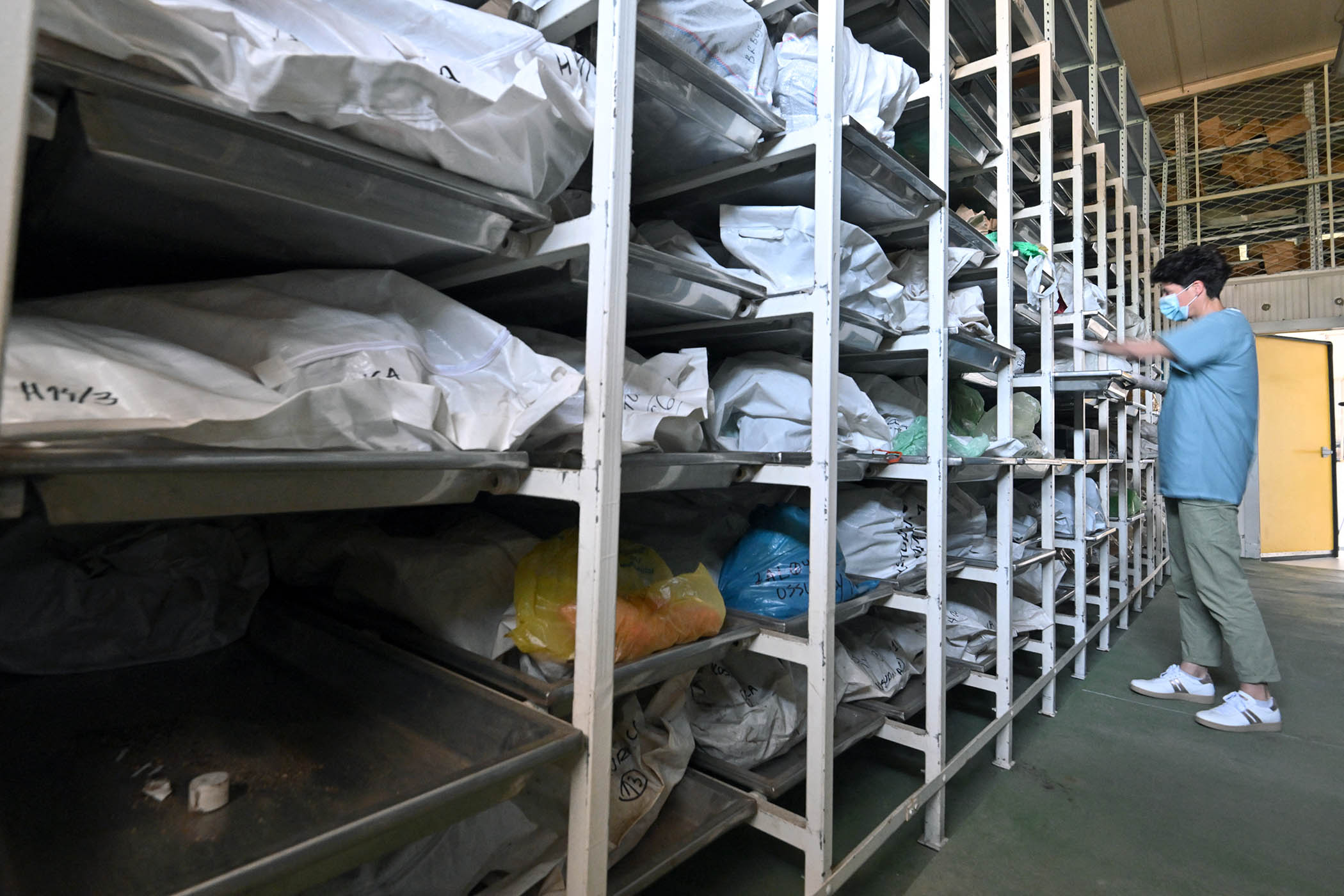
Dr Dragana Vučetić at the International Commission on Missing Persons laboratory in Tuzla, Bosnia and Herzegovina
Vučetić is a Serb. Over the years, many have asked how this has informed her work. Has she ever felt guilt, or encountered hostility for her origins? Her response has not changed. There is no such thing as a Serb or Bosniak anthropologist, she says. There are only professionals, searching for the missing.
Today, Vučetić spends much of her working life alone. As the number of missing people has fallen, so have the number of her colleagues. Things were getting harder, she concurred. Reliable samples were no longer a given, with so much time elapsed. Sometimes, she added, families no longer wanted anything to do with the process at all, having decided to move on as best they could over the past 30 years. Fieldwork was also increasingly hit or miss.
“We were looking for a body last month [with] a witness. He didn’t kill the person. He had left to find help for an injured man, who died a few days later. He described the hole in the ground [where the man had been. But] there was no hole when we arrived. It was a very nice sunny day, with 10 of us trying to find depressions in the earth.”
If Vučetić projected an air of scientific dispassion, the performance was not entirely convincing. She had devoted her entire working life to the missing. Such a decision, I wondered aloud, surely spoke for itself: it seemed a deeply humane calling. “That is for you to say,” she said. “I realise that this is very important. That there is [so much] responsibility to the families.” Her commitment could not easily be abdicated, with so much work still to be done. But commitment is no guarantee of resolution.
Meanwhile, back in Ilijaš, Avdibegović fretted over an uncertain future. Her health was not good and there were no assurances that the next generation would be willing to devote everything to the search. “There is no pain like a mother’s pain. Children recall their parents but it is a different feeling. I am realistic that I will have to continue this work [until] I can’t.”
Every June, she would continue to hang the banners and put up the placards in memory of the men who would never return. For as long as Avdibegović was alive, forgetting was a defeat that could not be countenanced.
Photographs by Elvis Barukcic/AFP via Getty Images, Tom Stoddart archive, Alamy, AFP/Getty Images