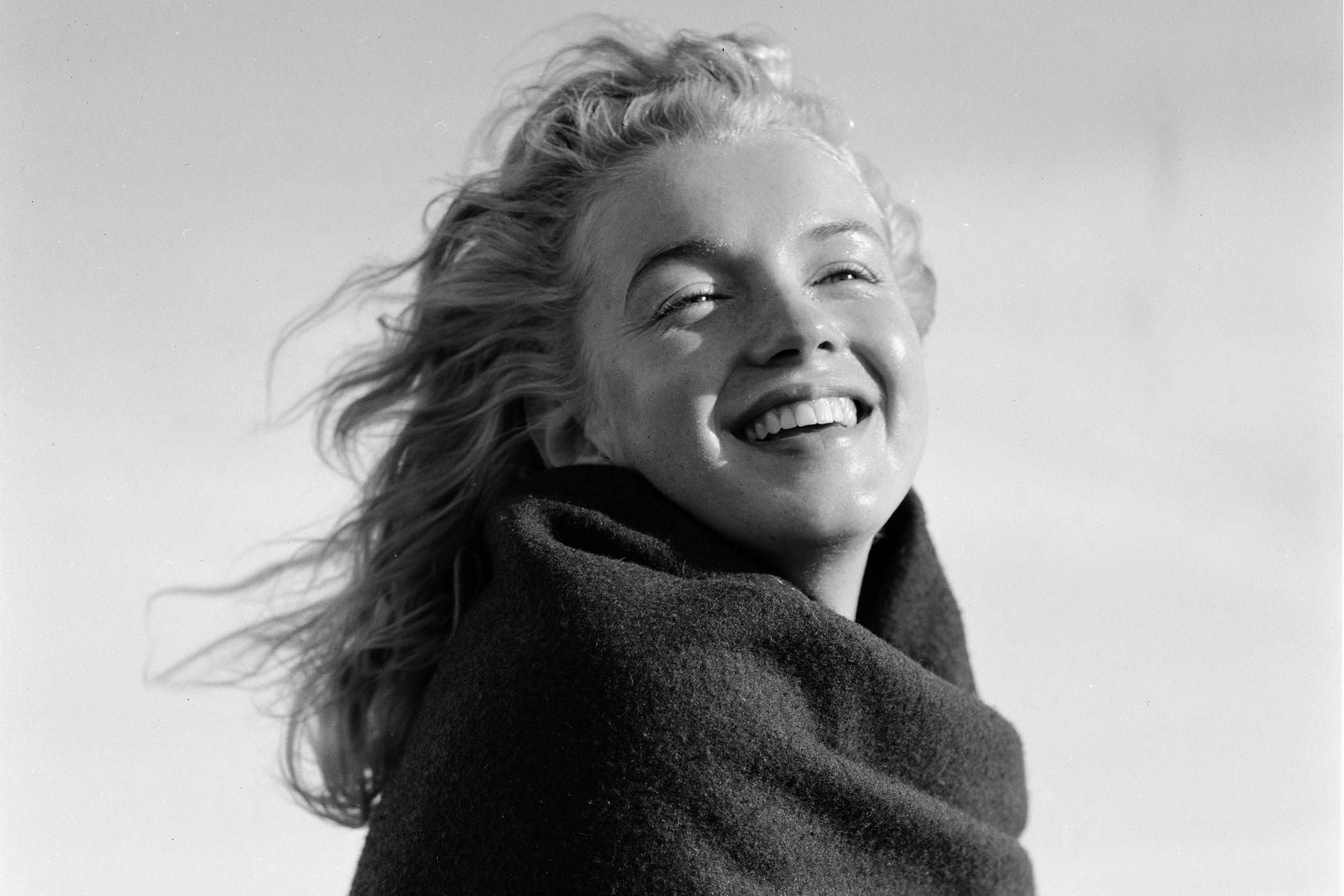
For most of us, Marilyn Monroe appears first in the glare of a flashbulb. Before she is a person, a performance, a life, she is already an image: platinum hair, parted lips, beauty mark, half-closed eyes, symbolising a story about 20th-century femininity. But what story is she telling?
Monroe was photographed more than almost any woman of her era – and seen less clearly because of it. Hers is a life we know through pictures and yet cannot fully document. From the beginning, her image was shaped, managed and relentlessly reproduced. She actively participated in that construction, but never fully controlled it. Her biography has been told and retold by hundreds of voices – biographers, journalists, novelists, film-makers – and the facts shift from telling to telling, only in part because of the sheer number of versions. The record is contradictory, and trauma rarely keeps receipts. Alongside the pressure of fame, she endured insomnia, anxiety, endometriosis, miscarriages. Her addiction to pills – beginning in the early years of her stardom – was soon distorting her behaviour. And her celebrity distorted everything else. Even her birth name is confused. The most famous, Norma Jean Baker, ironically and symptomatically, is the least accurate. Her birth certificate in Los Angeles on 1 June 1926 names her Norma Jeane Mortenson, but she was baptised Norma Jeane Baker and was commonly referred to by that name in early life. The spelling of her first name – Jeane or Jean – is also inconsistent.
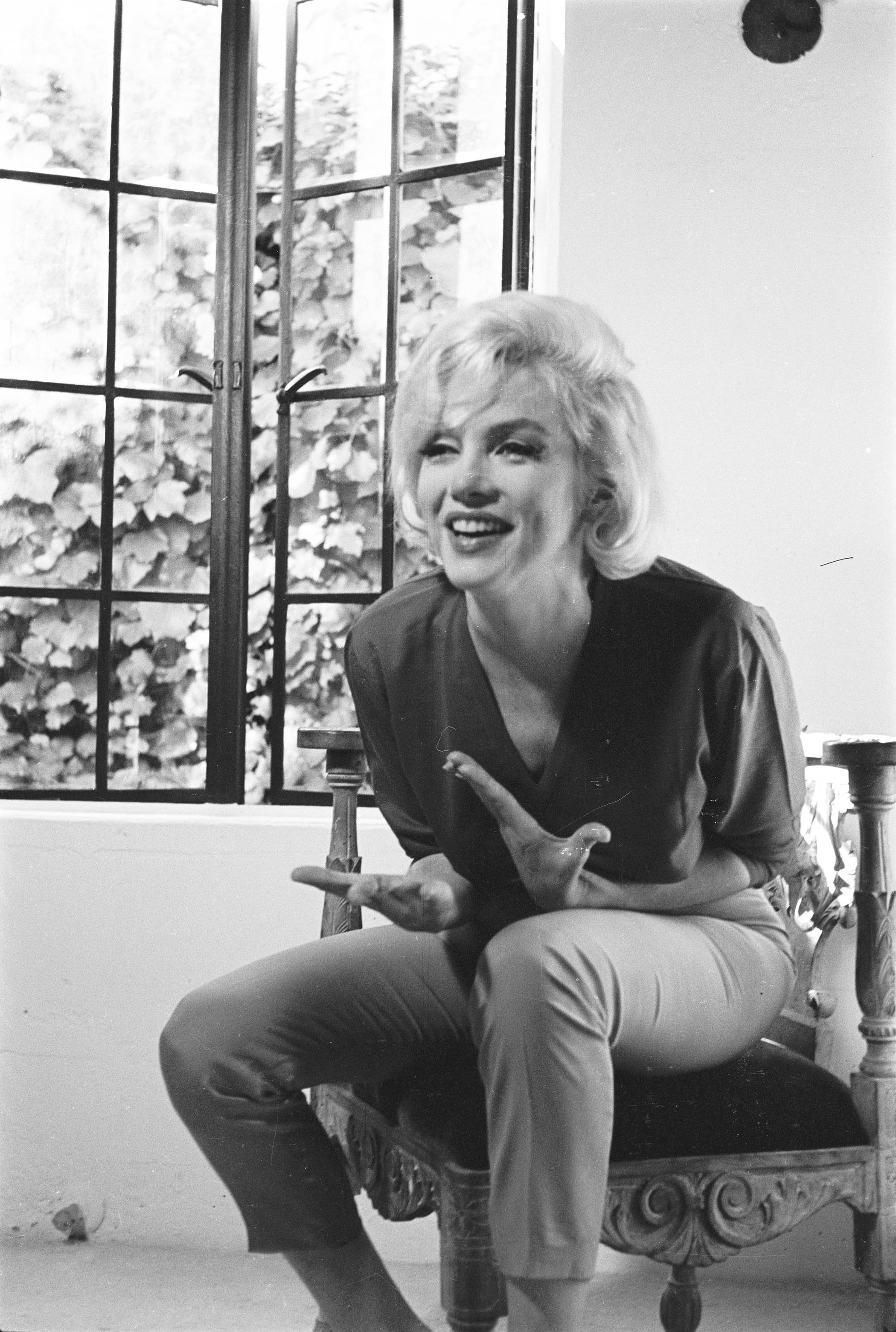
Marilyn Monroe photographed in 1962, just months before she died
Until very recently, her paternity was equally uncertain. Although Edward Mortenson is named on her birth certificate, he was estranged from her mother, Gladys. (He also spelled his name Mortensen, further confusing the issue.) Her mother’s first husband was John Baker, and she returned to that name after her split from Mortensen, but Monroe never knew him. In 2022, DNA tests confirmed that her biological father was Charles Stanley Gifford, a film cutter at RKO who had worked with her mother. Monroe never met him either. That fact changed nothing about Monroe’s life, nor the myths that followed it.
Gladys suffered from serious mental illness and was institutionalised when Norma Jeane was a small child. From then on, she was raised by a patchwork of foster parents, friends of the family and institutional care. The exact number of foster homes is disputed – some sources say three or four, others as many as 12. She spent time in an orphanage. The details vary depending on which version of the story is told, but no one questions the precarity of her childhood.
One of the most troubling aspects of her childhood is the question of sexual abuse. Monroe told friends and interviewers that she had been molested as a child and young woman more than once. But her stories varied, and many biographers treated them with scepticism, even outright derision, questioning her credibility or declaring that she embellished the trauma for attention. That reflex to discredit her has its own history: for years, male writers dismissed her accounts, while only later biographers, mostly women, argued that Monroe’s truths should be respected.
She married for the first time just after her 16th birthday. Her guardian was moving out of state, so she arranged a marriage with the boy next door, James Dougherty. The marriage offered shelter and marked the beginning of Monroe’s determination to find her way out of anonymity. She had grown up in the shadow of the Hollywood sign and had always been determined to be a star.
Newsletters
Choose the newsletters you want to receive
View more
For information about how The Observer protects your data, read our Privacy Policy
During the second world war, she started modelling and learned how to make the camera see her, mastering angles, micro-expressions and the choreography of light. At 20, she signed her first studio contract. With it came a new name, a new script. Hollywood routinely rewrote the names and lives of its stars, softening hardship, fabricating romance. But in Monroe’s case, her renaming is treated as a kind of original sin, into which her doom was written. The idea that changing her name marked a tragic schism defines virtually every version of the story, from Elton John’s 1973 pop elegy Candle In the Wind, with its refrain of “Goodbye, Norma Jeane”, to the 2022 Netflix film Blonde. In fact, Monroe had plenty of agency in the process. Her mother’s maiden name was Monroe, and none of the swirling patronyms from her childhood seem to have meant much to her daughter – why should they? So, when she agreed with a producer that Marilyn would be a better stage name than Norma Jeane, she chose her mother’s surname to match it. Marilyn Monroe was the name she legally adopted, the name she preferred. No one called her Norma Jeane as an adult – only biographers, after her death, insisting on an identity she had relinquished. Today, we call that practice “deadnaming”: the refusal to recognise the name someone chooses for themselves.
By the early 1950s, Marilyn was a rising star; by the middle of the decade, she had become the most photographed woman in the world. Her performances in Gentlemen Prefer Blondes (1953), The Seven Year Itch (1955) and Some Like It Hot (1959) helped define a new kind of screen sexuality: knowing, comic, vulnerable. But her attempts to be taken seriously as an actress were met largely with ridicule. She was reduced to an accident of biology, as if her body alone had guaranteed her fame. She knew better: “These girls who try to be me … they haven’t got it,” she said in her final interview. “You can make a lot of gags about it, like they haven’t got the foreground or else they haven’t the background. But I mean the middle, where you live.” What made the difference was not anatomy, but interiority.
Related articles:
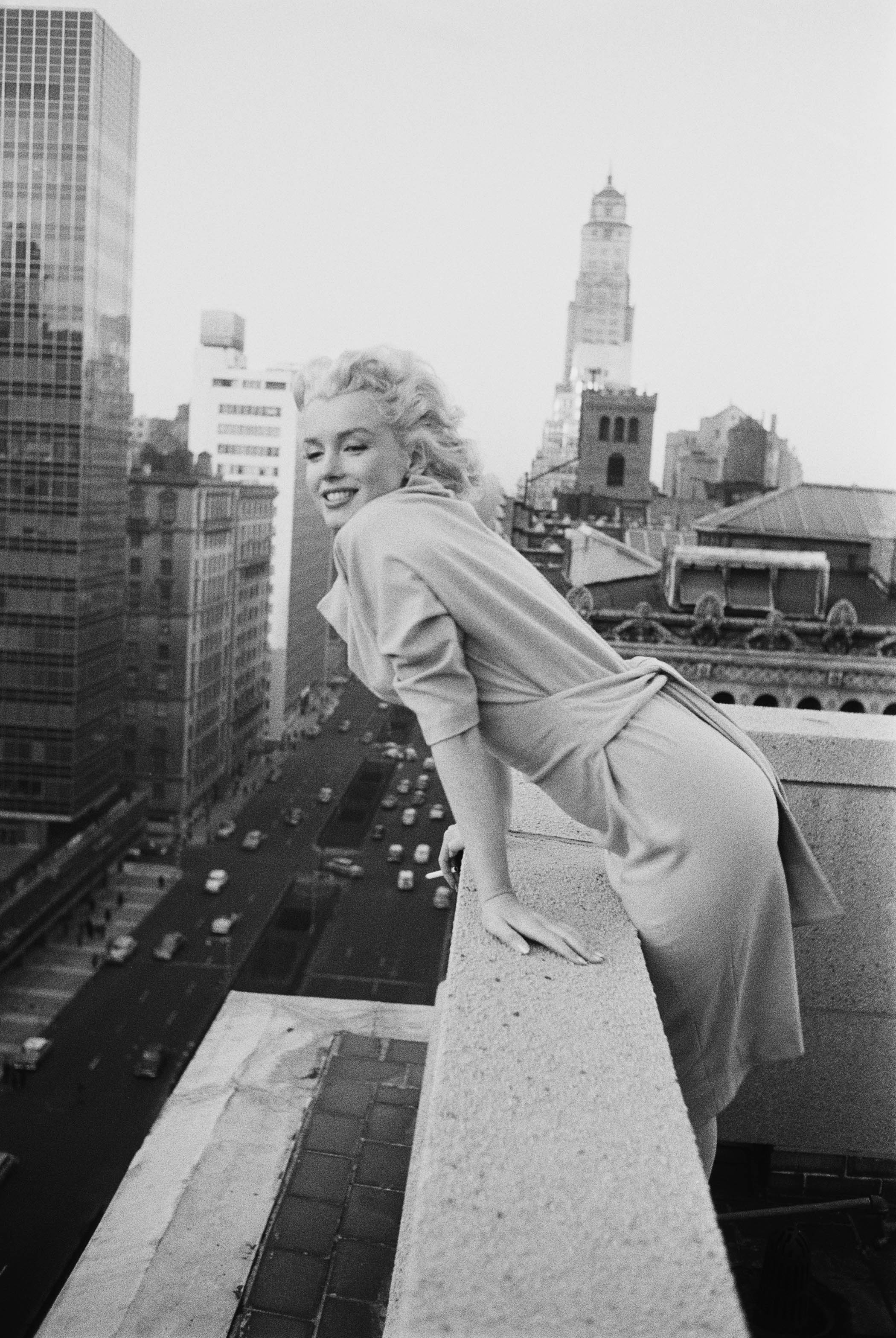
Monroe in New York in 1955
And still, she tried. She attended the prestigious Actors Studio, studied at night, prepared obsessively and formed her own production company. She fought the studios for better roles and better pay. She had relationships with some of the most powerful and admired men of her era, all of which have been dissected relentlessly: with Joe DiMaggio, Arthur Miller, the Kennedy brothers. These, too, can be seen as part of her constant effort to reinvent herself, aligning with men who embodied the legitimacy she was denied: public admiration, artistic credibility, institutional power.
She was punished for being a sex symbol and punished for wanting to be more than one. Her body became a battleground, and public property: her alleged abortions, her certain miscarriages, her surgeries, her fertility, her sexuality, even her corpse. Her death in August 1962 at the age of 36 from a barbiturate overdose is where all the stories converge. The coroner’s verdict was “probable suicide”, but that was unsatisfying, and conspiracy theories emerged almost immediately. She had been silenced because of an affair with one or both of the Kennedys; the mafia, or the FBI, or the CIA, or the Soviets were involved. Later theories said maybe it was aliens.
The madness in the story was never really hers, in other words. It was ours: a culture addicted to sex, secrecy and power, that took pleasure in humiliating her, then built a myth to cover its tracks. To treat her only as a symbol – of tragedy, of sex, of fame – is to lose her all over again. She was neither a fantasy nor a construction. She was a woman: beautiful, flawed, driven, funny, frightened, smart. She made choices, some wise, some disastrous. She struggled to define herself within institutions built to undermine her. And she kept trying. To look at her now is to confront the machinery of fame, the economics of beauty, the cultural logic that turns women into symbols and then reviles them for refusing to stay still. She lived her life in the flashbulb’s glare. Not one truth, but countless exposures.
This essay also appears in the book Marilyn Monroe: A Portrait, which accompanies an exhibition of the same name at the National Portrait Gallery from 4 June to 6 September
Photographs by André de Dienes / MUUS Collection, Allan Grant/The Estate of Marilyn Monroe LLC, Ed Feingersh/Michael Ochs Archives/Getty Images