

John is a contented, unthreateningly blokey fellow in his mid-50s. He has many interests. Woodwork, football, sleight-of-hand magic tricks. None, however, quite compares with speed. Or rather, educating Britain’s recalcitrant drivers about its often fatal consequences. Did I know, he asked me early on during our two hours together, “How many pages they needed for the 1931 Highway Code?” I did not. Just 18, John explained with considerable relish. The dour grey booklet he produced was, I agreed, a dweeby thing in comparison to its swollen, almost 200-page descendant that is in circulation today. That told you something, John mused. It told you how much things had changed, and not always for the better. These rules had been proliferated for a reason: to keep us safe from our own worst impulses.
John continued: why did I think people were so inclined to speed? Frustration, I ventured. Lateness? Common selfishness? All were correct, John said. It was about hubris and human weakness. Things we could all be prone to, even the most diligent among us. “Like any machine, our brains can get overloaded,” he said after the first of several explanatory videos, showing various experiments designed to show the fallibility of adult reaction times and the glorious mysteries of British traffic signage. The difference between a few miles per hour was never trivial. Driving, like life, was about choices.
In a previous existence, John had been a police officer, though he didn’t want me to say where; the sort of intimate one-to-one session we were embarking on was not officially encouraged. John has been running speed-awareness courses for many years now. They were ordinarily a collective experience, with groups of around 20, in person and online. If it was a side hustle, it was one he retained a “real passion” for. How many lives, I was encouraged to consider, did this kind of work save every year?
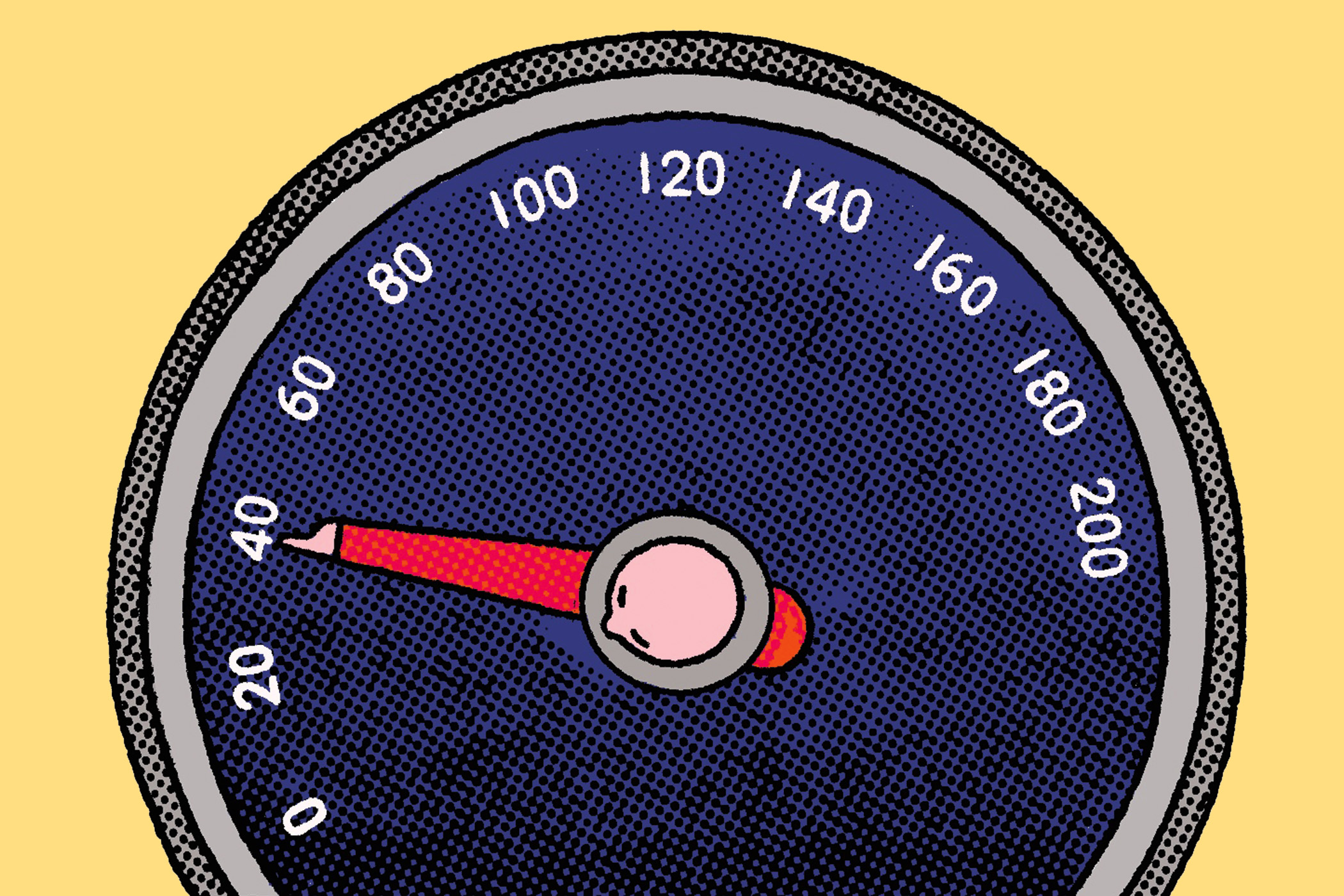
Speed-awareness courses are that rarest of things: a British growth industry. In 2014, a shade over 1.3 million people signed up to NDOR (National Driver Offender Training Schemes). By 2025, that number had just about doubled. Speed-awareness courses accounted for around 1.84m of them. Britain, it seems, is an increasingly impatient, heavy-footed nation. Every day, thousands of drivers are pinged by speed cameras across the country, from the depths of Cornwall to the outer reaches of the Scottish Highlands. The vast majority have committed minor infractions, “35 in a 30; 25 in a 20,” sighed John. Anything more extreme, he continued, was beyond their remit.
For first-time offenders, two options will usually be offered. Accept the three points and move on, or pay around £100 and undertake a course, operated by one of several private companies who dominate an increasingly lucrative market. How many people, roughly, do you think would prefer the course to a dirty licence, John asked.
Many practitioners, like John, are ex-police, hired for their avuncular good humour rather than jobsworth officiousness. If the stated goal is behavioural change, the methods are reasonably gentle. There is no point in hectoring people, John said. Very often, people already have their backs up. Delusional belief in the quality of one’s driving is widespread. You wouldn’t believe how many lacked the most basic knowledge, John added. He said this with the deep resignation of a man who has been told the motorway speed limit is 150mph.
When it came to the course, too much detail was the enemy of progress. “What can we do,” John asked more than once, “to reduce the human cost?” Slogans were one answer, of often brutal immediacy. The more paint, the more pain. The more signage, the more carnage. Philosophy was another. So much road rage was about the false sense of comfort built into sitting in your own metal and glass cocoon. It was imperative, John mused as the slides drifted past, to imagine other road users as sentient creatures. “It’s harder to be angry at a human being because we understand the human condition.” Such humanism, he conceded, was not always easy to summon at rush hour on the M25.
My own brief driving history is not entirely spotless. Last autumn, I passed my driving test at the second attempt, aged 33. These are the facts: I received three minors after a morning pootling around a not-particularly-lovely part of Kent. A place I had, until that point, never been before and have little desire to return to again. My test had been booked last-minute, after a slot fortuitously became available during an hour or so browsing the cruel and unusual punishment that is the gov.uk portal. The DVSA gods do not bestow such gifts very often, I knew from bitter experience. The most up-to-date stats suggest the average wait time for a test is 22 weeks. In 2016, it hovered around eight. On being granted my slot, I phoned a local instructor, who agreed to take me after a terse burst of negotiation.
There are no real memories of the test itself. Suburban high streets and mini-roundabouts streak together in one gruesome mental collage. There was insufficient screenwash to perform a basic manoeuvre, a disaster I greeted with miraculous ill-grace. You’ve got to understand, I whined. This isn’t my usual car. On returning to the test centre, I vividly recall the beatific swell of resignation. You’ve flubbed that, old boy, I thought to myself. Congratulations, the examiner monotoned. You’ve passed. Thank you, I beamed, clasping his shoulder with spontaneous bonhomie. Please don’t touch me, came the horrified response.
Like most things, driving is often wrapped in the best intentions. I vowed to be the most courteous, rule-bound driver who had ever lived. Three months later, I found myself at a set of rapidly changing lights in central London. On chancing through a dodgy amber, the summons arrived a week later. The course I attended was a study in genuine diversity. Middle-aged delivery drivers from the northwest; an unbelievably stressed-looking corporate high-flyer from London; a mullet-sporting teenager clasping what seemed to be the world’s largest can of energy drink. All of us bound together in our frailty and momentary disregard for the Highway Code. I wondered if this made John think less of me. Oh no, he replied. All it meant was that you were human.
Newsletters
Choose the newsletters you want to receive
View more
For information about how The Observer protects your data, read our Privacy Policy