Photographs Kim Lightbody, food styling Emma Cantlay, prop styling Pene Parker
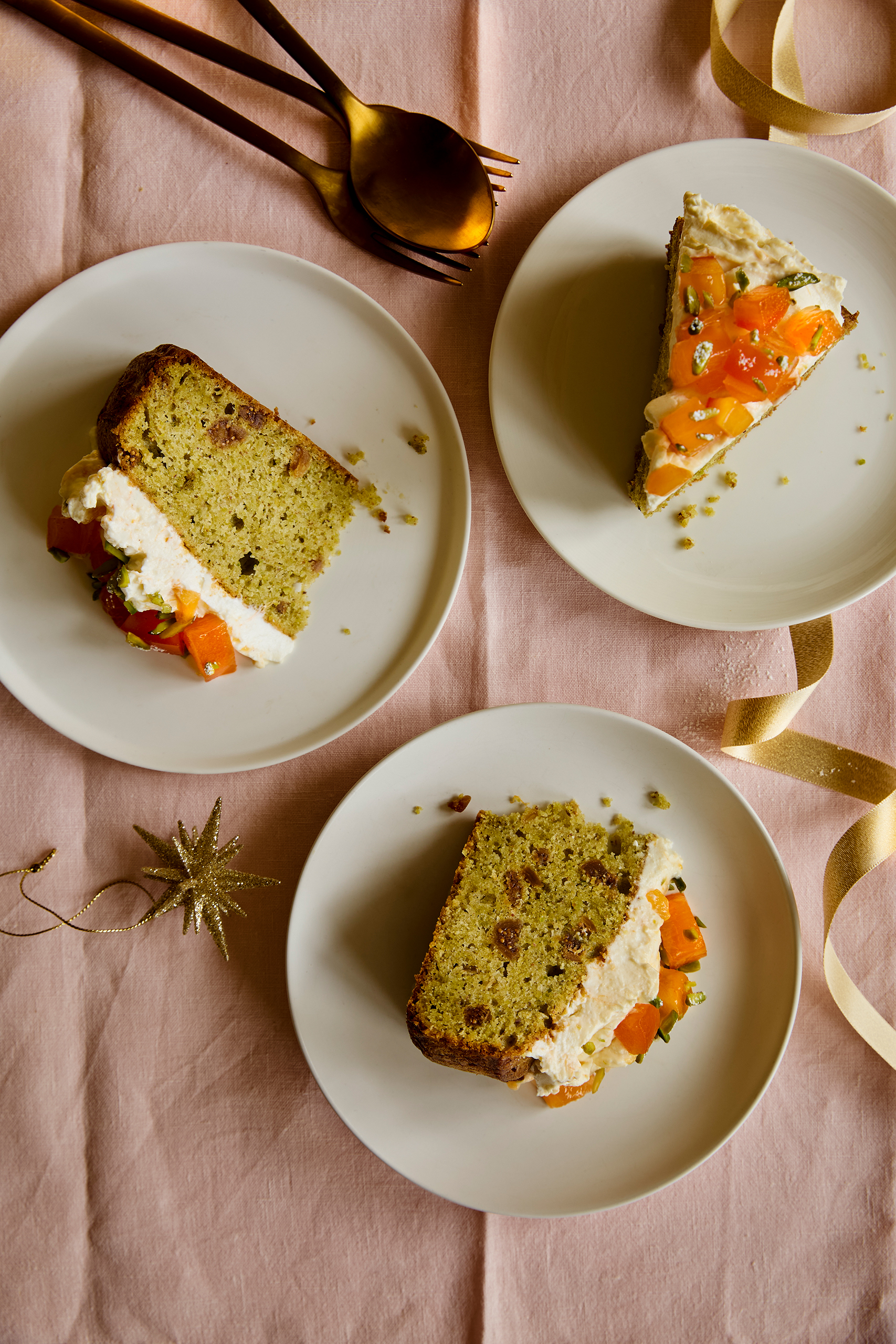
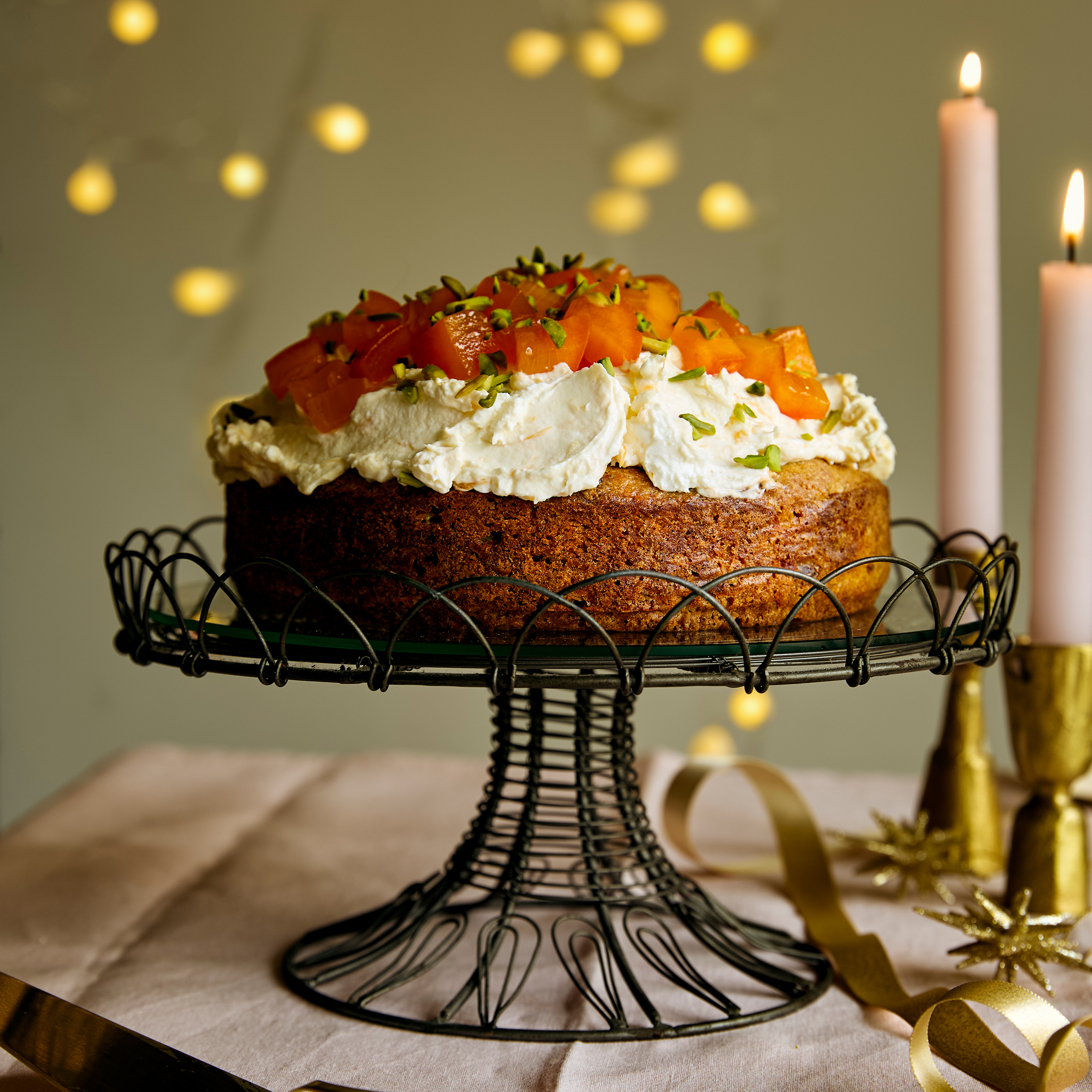
FIG AND PISTACHIO CAKE WITH PERSIMMON, ORANGE, MASCARPONE AND OLIVE OIL
Jeremy Lee
Persimmons are a lovely winter fruit that provide much cheer at the festive table, bringing sunshine from Sicily on those shortened days.
A cold snap will soften the flesh of some varieties to a gloop, tempering astringency and requiring nothing more than eating with a spoon. Other varieties are firmer in texture and can be sliced or coarsely chopped and added to salads – or, in this instance, dressed in orange juice and spooned on to a cake iced with sweetened mascarpone and finished with hazelnuts.
Serves 6-8
butter 120g, softened
caster sugar 90g
eggs 3
plain flour 175g, sifted
Newsletters
Choose the newsletters you want to receive
View more
For information about how The Observer protects your data, read our Privacy Policy
pistachios 150g, finely ground, plus 30g, chopped coarsely
baking powder 1 tsp
sea salt ¼ tsp
dried figs 75g, tips removed and flesh chopped small
lemon finely pared zest of 1
buttermilk 100ml
extra virgin olive oil 30g
persimmons 1 soft and ripe, 2 firm
mascarpone 300g
orange finely pared zest of 1
olive oil 2 dessertspoons
icing sugar 1 tsp, plus another for scattering
Preheat the oven to 155C fan/gas mark 3½.
Beat the softened butter with the caster sugar until pale and creamed. Crack the eggs into a jug and beat well, then, mixing all the while, add to the butter and sugar mixture in small amounts. Sift the flour and mix with the ground pistachios, baking powder and sea salt, and add to the bowl. Add the chopped figs, lemon zest, buttermilk and extra virgin olive oil, mixing deftly and lightly.
Decant into a lined 23cm cake tin with a removable base, and spread evenly. Place in the middle of the oven and bake for 45 minutes until golden and a skewer inserted comes out clean. Sit the cake on a wire rack to cool in the tin.
Halve the soft, ripe persimmon, spoon the pulp into a bowl and mash with a fork. Place the mascarpone in a second bowl with the icing sugar and orange zest and stir with a fork, then add the olive oil and finally the persimmon, mixing roughly.
Remove the cooled cake from the tin, heap the mixture on top and spread coarsely just to the edge. Chop the firm persimmons into small, uneven pieces and lay all over the cake, then strew with the chopped pistachios and a final flurry of icing sugar.
Jeremy Lee is chef-patron at Quo Vadis, London W1
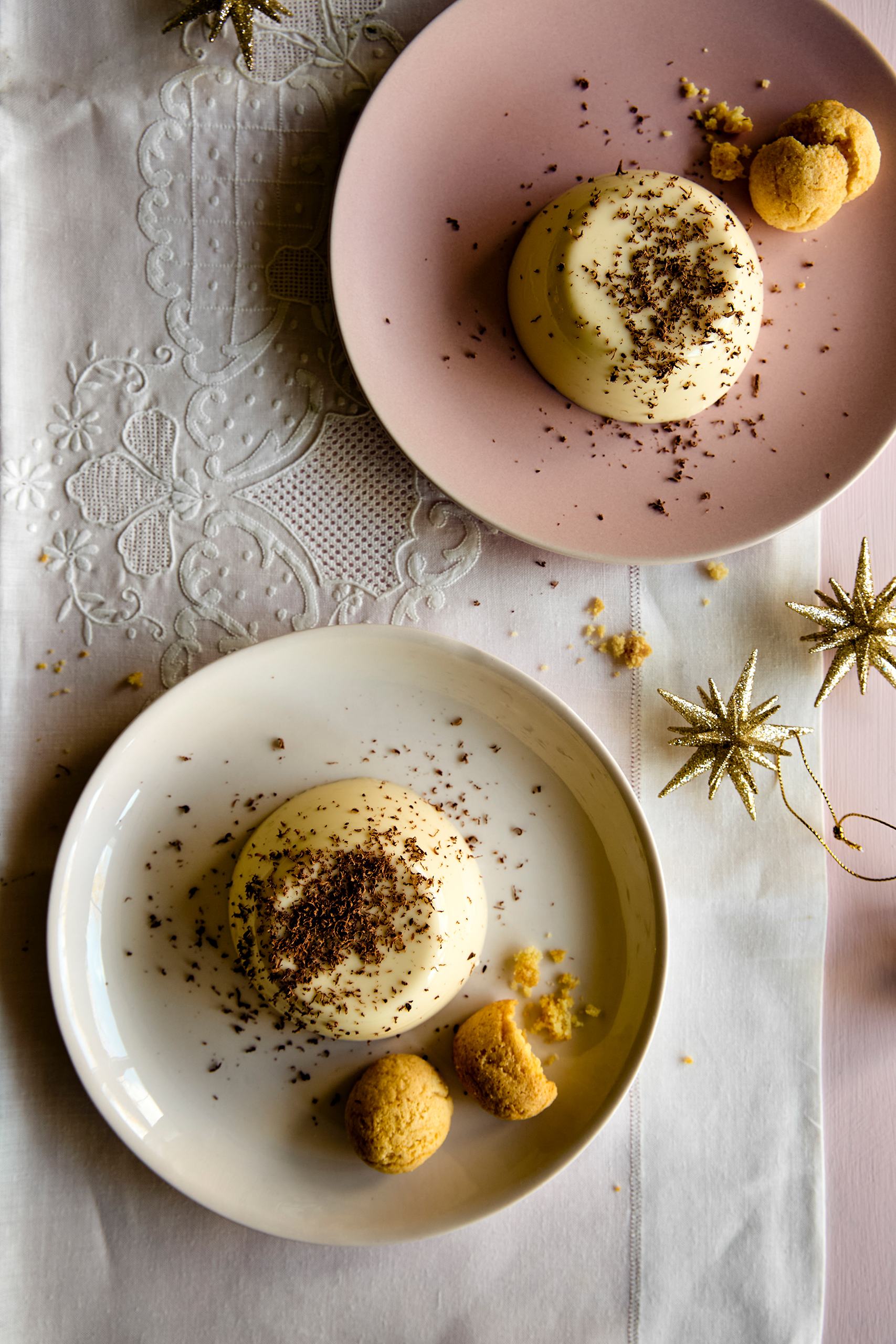
WHITE COFFEE PANNA COTTA
Ravneet Gill
When you’ve had your fill of mince pies and pudding, this panna cotta is a great way to end a Christmas meal – smooth, mellow and with just the right amount of festive pick-me-up.
This captures the pure, aromatic essence of coffee without any bitterness. By infusing the dairy with whole roasted beans without heat, you get a clean, delicate coffee flavour that shines through the silky texture of the dessert.
Serves 5
double cream 180ml
whole milk 500ml
good-quality roasted coffee beans 150g, whole
gelatine leaves 5 (Dr Oetker or supermarket equivalent)
caster sugar 75g
dark chocolate to serve
amaretti biscuits to serve
Combine the double cream, milk and coffee beans in a lidded container. Stir well, cover and refrigerate overnight to allow the flavour to develop.
The next day, strain the mixture through a fine sieve to remove the coffee beans. Measure the infused liquid – you should have about 550-570ml.
Soak the gelatine leaves in ice-cold water for 5-10 minutes until soft.
Pour half of the infused cream mixture into a saucepan with the sugar. Warm gently over a low heat, stirring until the sugar dissolves and the liquid is steaming but not boiling.
Remove from the heat, squeeze out the excess water from the gelatine and stir it into the warm cream until completely dissolved.
Add the remaining cold coffee-infused cream and milk. Stir to combine fully.
Pour into glasses or moulds and refrigerate for at least 4 hours, or overnight, until softly set. Turn out on to plates. Top with finely grated dark chocolate and serve alongside amaretti biscuits or any other biscuit of your choice.
Ravneet Gill is a pastry chef and co-owner of Gina, London E4
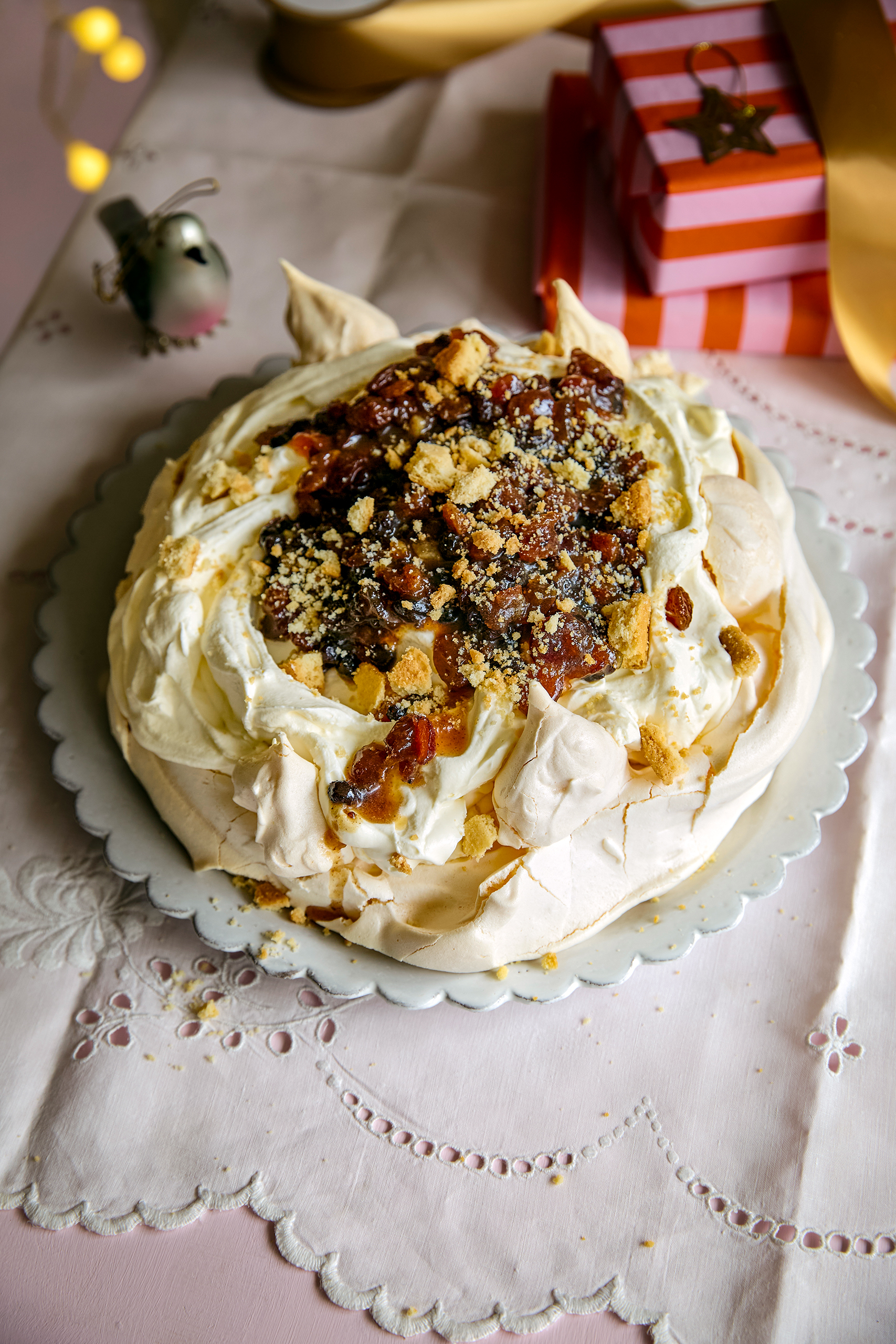
MINCE PIE PAVLOVA WITH SHERRY CREAM AND SHORTBREAD CRUMBLE
Anna Hedworth
We love pavlovas at all times of year in my restaurant but this Christmas version has always been one of the most popular; the mincemeat, sherry and orange are full of festive deliciousness.
Pavlovas are an impressive dessert to knock up at home as well, with very little effort. The meringue can be made a day or two in advance and then just needs topping whenyou’re ready to eat.
Serves 6
egg whites 3 (90g)
caster sugar 180g
icing sugar 1 tbsp
fino sherry 50ml
mincemeat 250g
orange zest and juice of 1
double cream 300ml
shortbread biscuits 6, crumbled
Heat the oven to 100C fan/gas mark ½.
Whisk the egg whites in a large bowl into stiff peaks, then slowly add the sugar, spoon by spoon, until it is fully incorporated and the meringue is stiff.
Line a baking sheet with paper, sticking it to the tray with little dabs of meringue. Spread the meringue into a large disc, then dollop extra around the edge in peaks as if you are making a crown.
Bake the meringue for 1 hour, then turn off the oven, leaving the meringue inside to cool for about 1 hour.
Gently warm the mincemeat and orange juice in a pan to combine, then add the zest. Leave to cool.
Whip the cream to soft peaks and then add the icing sugar and sherry, whisking again – it shouldn’t be too sweet as the meringue is very sweet.
Spoon the cream over the centre of the meringue and between the peaks. Top with the mincemeat, then crumble over the shortbread. Go for drama, as tall as you dare.
Anna Hedworth is chef-owner of Cook House, Newcastle upon Tyne
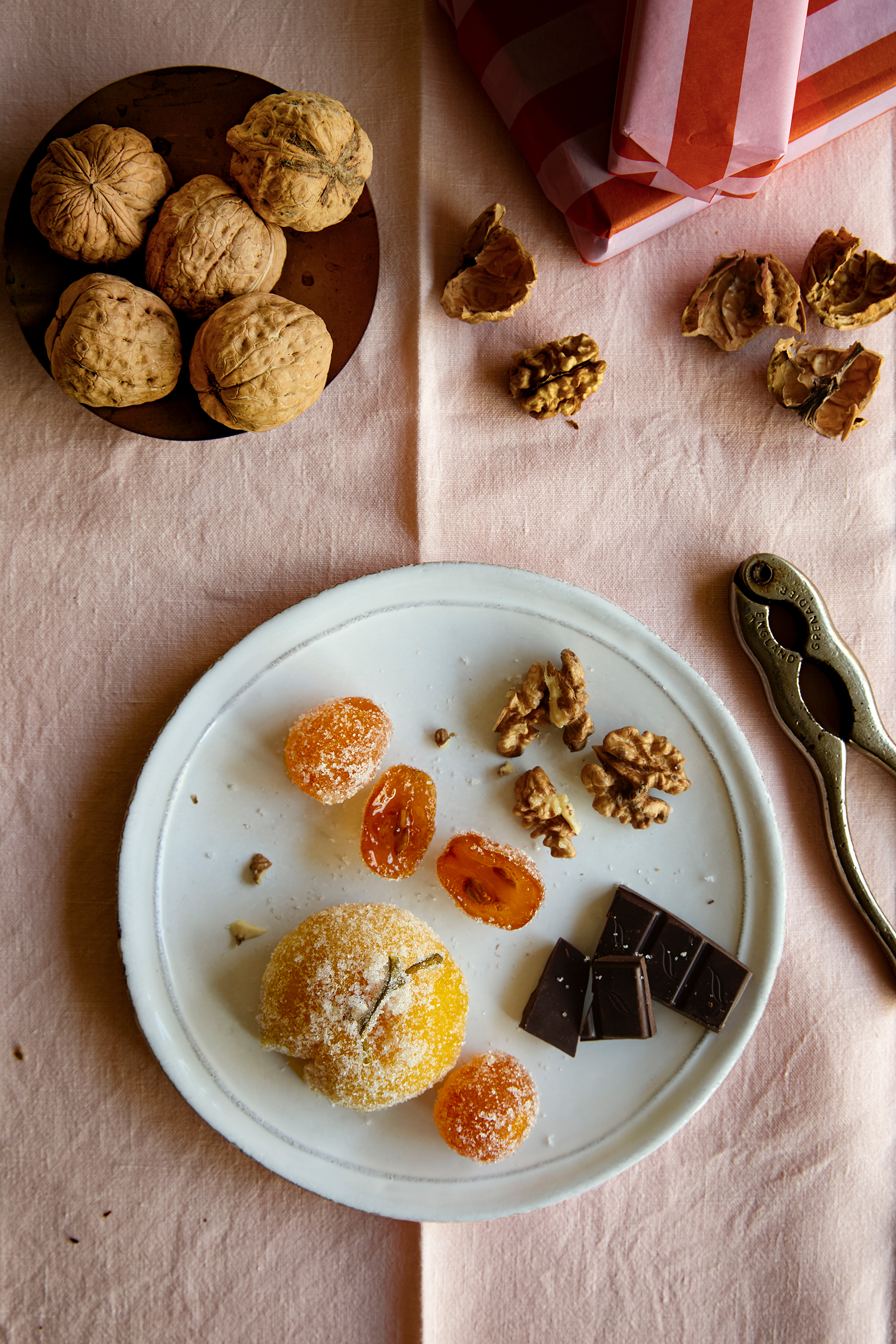
CANDIED CHRISTMAS CLEMENTINES
Joe Trivelli
Making these is simple but lengthy, taking 6 or 7 days. On completion you’ll have jewel-like fruits ready to elevate any number of Christmas bakes and puddings. We, however, enjoy them most by themselves, maybe with a little fresh ricotta, Christmas nuts and plenty of dark chocolate.
Use only the healthy, clean, unbruised fruit. If I find kumquats at the shops when I’m making these I’ll add them too, because they fit well around the clementines. But they are not the star of the show, just an optional extra.
Avoid boiling the fruits for longer. It won’t speed up the process and may make the syrup overly thick. It’s important to keep them submerged; I make a generous amount of syrup, wasting maybe a bit of sugar, but giving me peace of mind. I save a little syrup for Christmas cocktails.
Makes at least 10
clementines 10
kumquats a handful, optional
caster sugar 1.3kg, plus extra for dusting
Wash and prick all the fruit all over with the point of a sharp knife. Place them in a large pot of cold water, bring them to a boil and simmer for 10 minutes. Then carefully remove the fruits from the water with a slotted spoon, refill the pot with fresh clean water and repeat the process; bringing them to the boil and simmering once more. Remove from the water.
Then, into the pot place 1 litre of water and 325g of sugar. Stir to help dissolve before adding the fruits and bringing, more slowly this time, to a boil over a medium heat. Allow the fruits to simmer for 15 minutes, before turning off the heat, covering the pot and letting them sit in the sugar solution overnight.
The following morning, add another 325g of sugar. Turn the heat back on, bring to the boil, simmer for 10 minutes, turn the heat off, cover the pot and forget about them for the rest of the day.
Do the same the next day, adding another 325g sugar, and on the subsequent day (day 4). The fruits (first the kumquats, if using) will become increasingly soft and saturated with sweetness. On the fifth day repeat the process again, but without the inclusion of more sugar. If you think your clementines need more saturation, repeat for a sixth time if you like.
At the end of the process I remove the clementines from the syrup and let them sit for a day to dry on a wire rack in a dry, well-ventilated place.
I refrigerate them in an airtight container until I need them, often dusting with sugar just before serving for extra sparkle.
Joe Trivelli is co-head chef at River Cafe, London W6
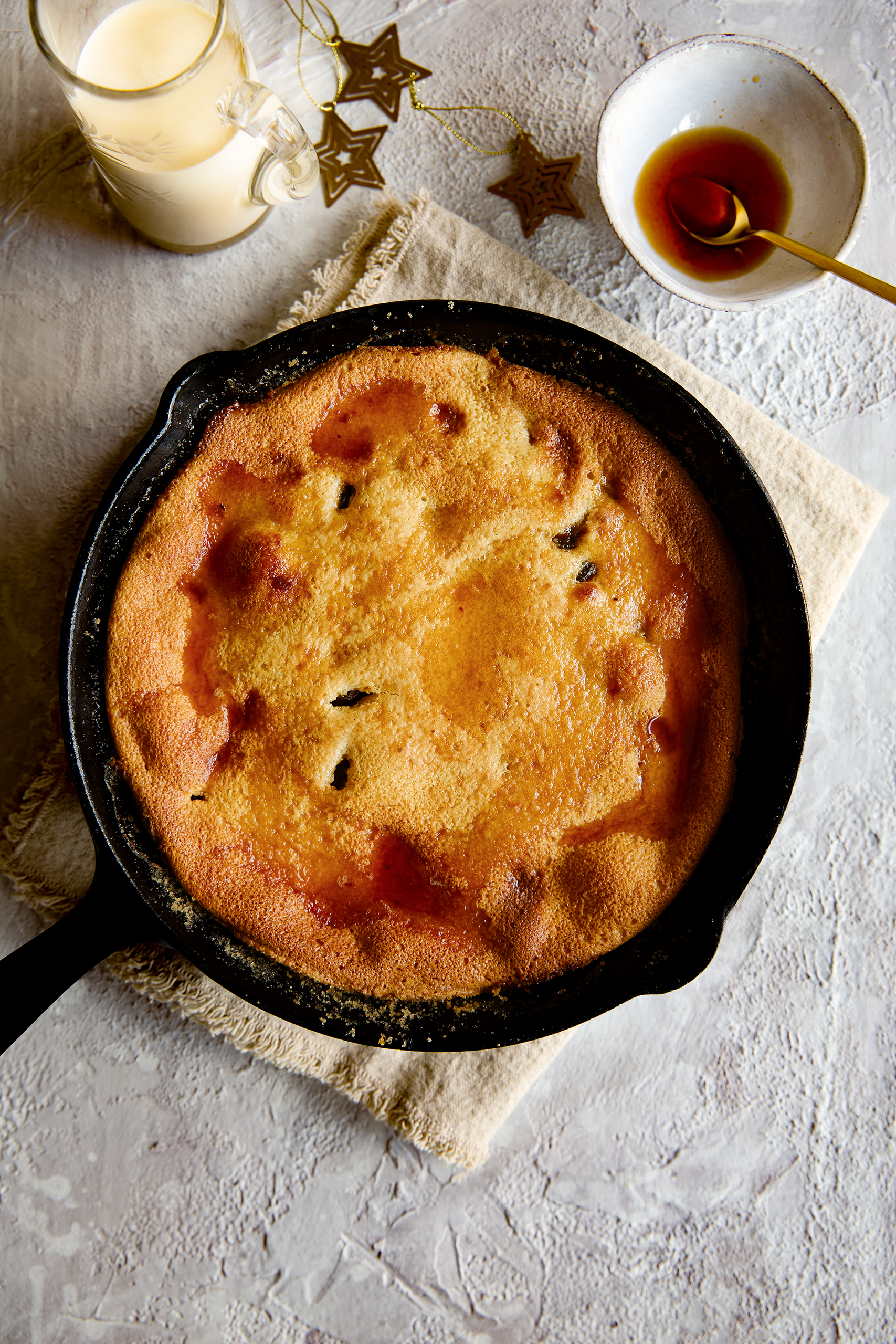
BRANDY PRUNE AND HAZELNUT CLAFOUTIS
Rosie Healey
Clafoutis is overlooked as a winter dessert. However, I believe it’s a perfect pudding to serve over Christmas and it can be very festive. It’s simple and the batter can be made days in advance, but the result is indulgent and impressive. You will always find a variation on our menu at Gloriosa. This one is made with brandy-soaked prunes and hazelnuts, and served hot from the oven with lots of pouring cream.
Serves 4-6
Agen pitted prunes 150g
brandy 150g
sugar 10g
blanched hazelnuts 60g
plain flour 2½ tbsp
light brown soft sugar 110g
eggs 2
egg yolks 3
double cream 275g, plus more to serve
vanilla pod seeds of 1
allspice berry 1
butter for greasing
brown sugar for dusting
icing sugar for dusting
Roughly chop the prunes and soak overnight in the brandy and sugar.
In a food processor, finely grind the hazelnuts until they resemble ground almonds. Add the rest of the ingredients up to and including the vanilla, grate in the allspice and blitz to make a smooth custard. You can chill and set aside until needed.
Preheat the oven to 150C/gas mark 3. Lightly grease an ovenproof dish with butter and dust with brown sugar (a 26cm frying pan makes the perfect thickness).
Evenly place the chopped prunes in the dish (retaining the brandy syrup) and gently pour over the custard. Put the clafoutis in the oven and bake for 25 minutes until golden brown and set.
Leave to cool for 5 minutes, then drizzle the clafoutis with the brandy syrup, dust with icing sugar and serve with lots of double cream.
Rosie Healey is chef-owner of Gloriosa, Glasgow