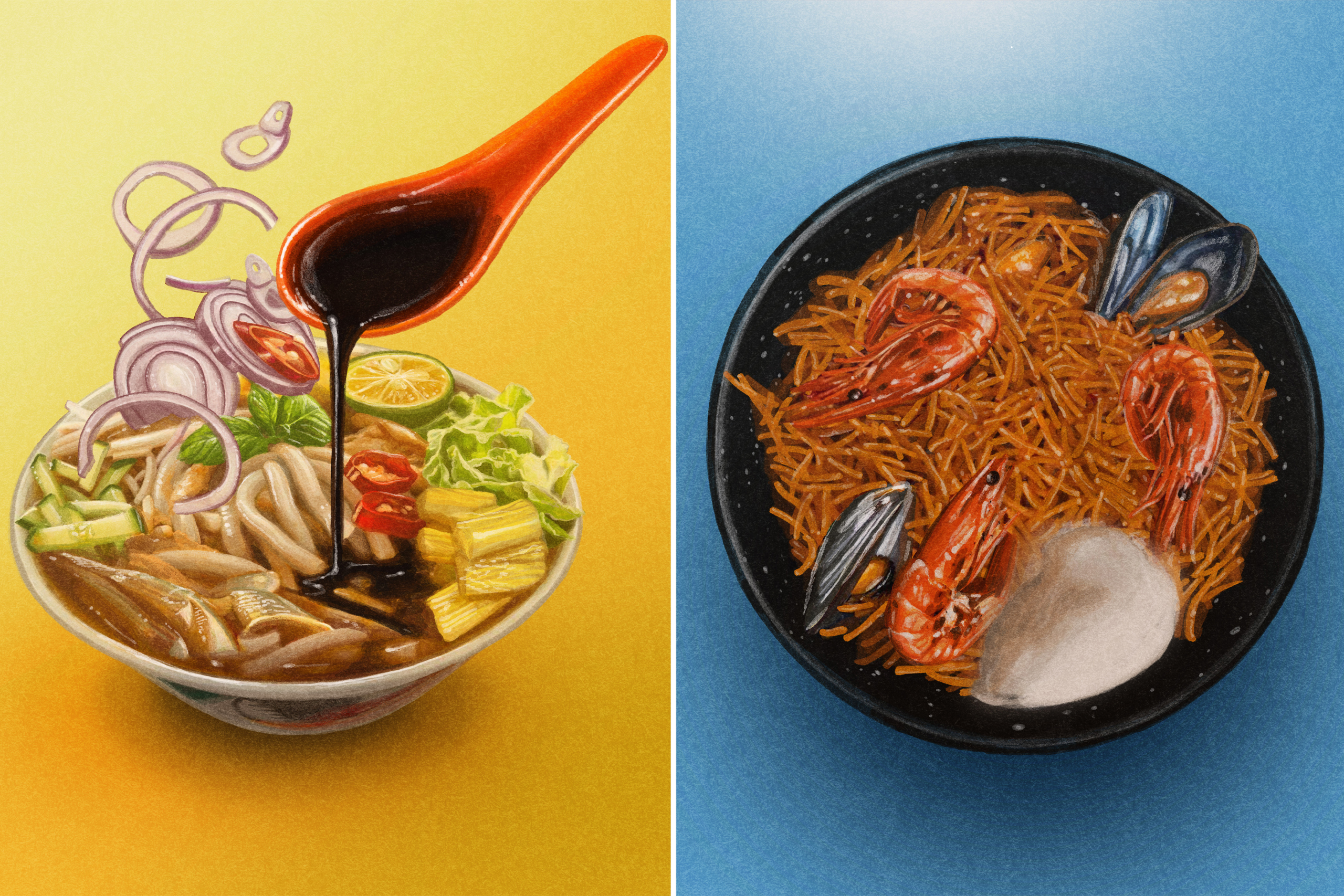





Asam laksa (Malaysia)
Less well-known than its coconutty cousin, this superior dish (pictured above) from Penang is chewy noodles in a thrilling, heady (read, honking), fishy tamarind base, topped with pineapple, chilli and herbs – sweet, sour and spicy.
Ash-e-reshteh (Middle East)
Fine noodles are used to make this nourishing, herby, legume-packed soup. Reshteh is the Persian word for thread. Nigel Slater has a recipe inspired by ash-e-reshteh.
Dan dan (China)
Named after the carrying poles traditionally used by vendors, these street food wheat noodles from Chengdu, spiced with Sichuan pepper, come with a numbing, tingling kick. Want to make it? Here's Fuchsia Dunlop's recipe.
Wat tan hor (Malaysia)
A popular dish sold by hawkers across the country and elsewhere. Wide, flat rice noodles are first stir-fried with prawns, pork and cabbage, and then tossed in a satiny egg gravy.
Käsespätzle (Germany)
A potentially controversial inclusion, depending on whether you think wriggly German spätzle are noodles or dumplings. The egg-dough is pressed into boiling water , then layered with cheese and topped with buttery caramelised onions and baked until gooey.
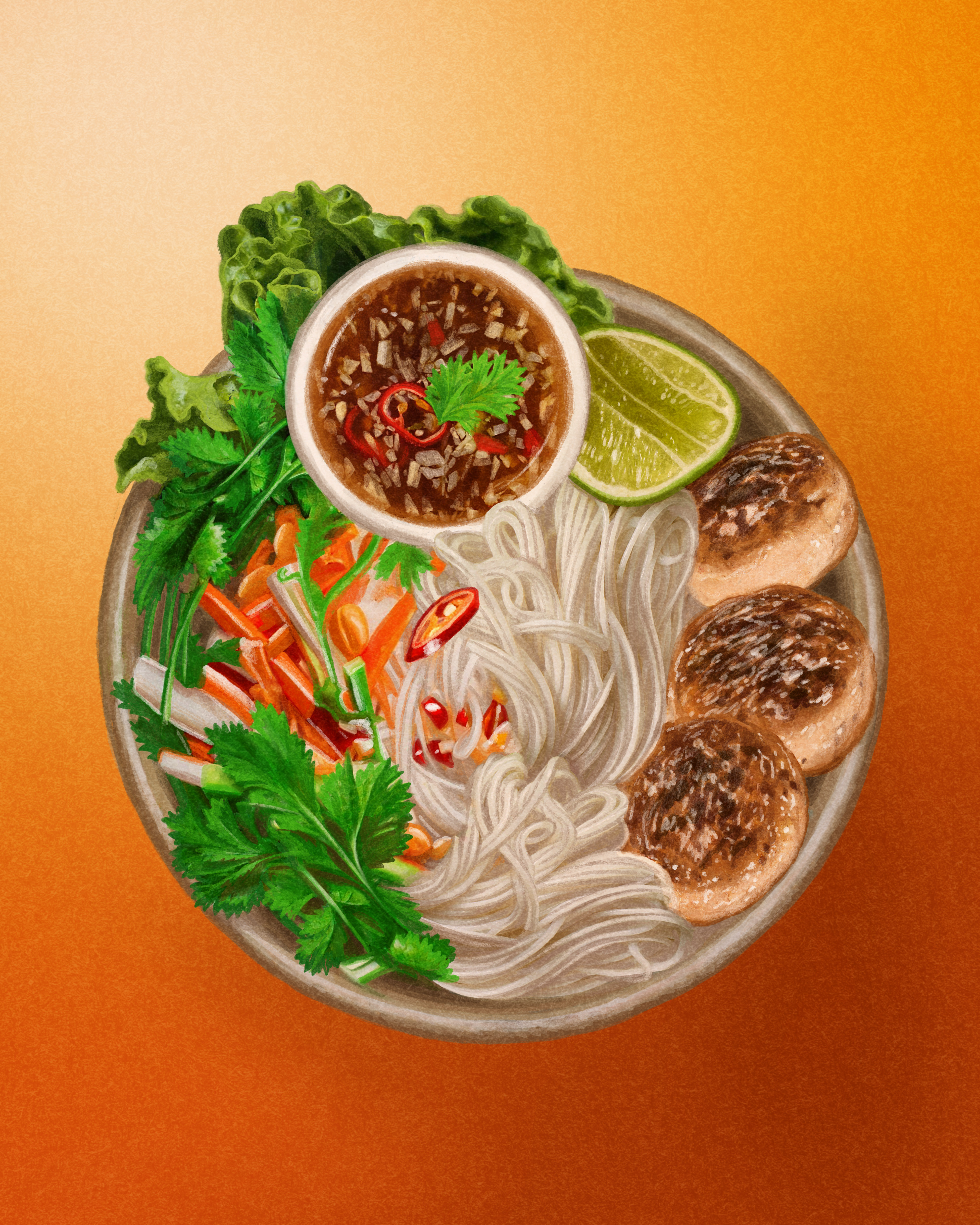
Bun cha (Vietnam)
Think rice vermicelli, grilled pork and meatballs, broth, dipping sauce and plenty of herbs. This noodle salad (pictured above) from Hanoi gained international recognition when Anthony Bourdain sat down for a meal of it with Barack Obama in 2016.
Mul naengmyeon (Korea)
Perfect for humid days. Korean food writer Su Scott describes this refreshing soup as “a soft nest of springy buckwheat noodles drenched in ice-cold broth”. It’s often topped with beef slices, radish, extra ice and hard-boiled egg, and sometimes served with scissors, to cut the long, bouncy noodles.
Fideuà (Spain)
The dialect pronunciation of fideuada, meaning a large amount of noodles. This generous Valencian seafood dish (pictured at top) is made with thin noodles cooked like paella, in a large pan with paprika-infused, brick-red stock. As with paella, the goal is a socarrat – a crisp, scorched base.
Sopa seca de fideo (Mexico)
Across the Atlantic, a “dry” noodle soup from central Mexico. Food writer Mely Martínez fries super-thin noodles (fideos) in oil until golden, then cooks them to softness in a chipotle in adobo-enriched chicken broth.
‘This stir-fried dish of noodles and vegetables has been a UK takeout staple for decades, but has morphed with time and with global palates’
‘This stir-fried dish of noodles and vegetables has been a UK takeout staple for decades, but has morphed with time and with global palates’
Chow mein (Worldwide)
This stir-fried dish of noodles and vegetables has been a UK takeout staple for decades, but has morphed with time and with global palates. It’s found from the US to Australia, with plenty of chilli and ginger in Kolkata, and pepper sauce across the Caribbean.
Kyay oh (Myanmar)
Named for the copper pot it is cooked in, this Burmese porky fish ball and quail egg noodle dish comes in “dry” or soup variations. MiMi Aye’s recipe in Noodle! is great for parties.
Łazanki (Poland)
Tangy sauerkraut, garlicky kielbasa and bosky mushrooms are tossed with little square noodles in the Polish version of a dish eaten across eastern Europe.
Tallarines verdes (Peru)
Peru has many national noodle dishes, thanks in part to Chifa (Chinese-Peruvian fusion) cuisine. These green noodles, made with spaghetti and spinach, resemble pesto, unsurprisingly since Ligurians emigrated to Peru in large numbers between 1840 and 1880.
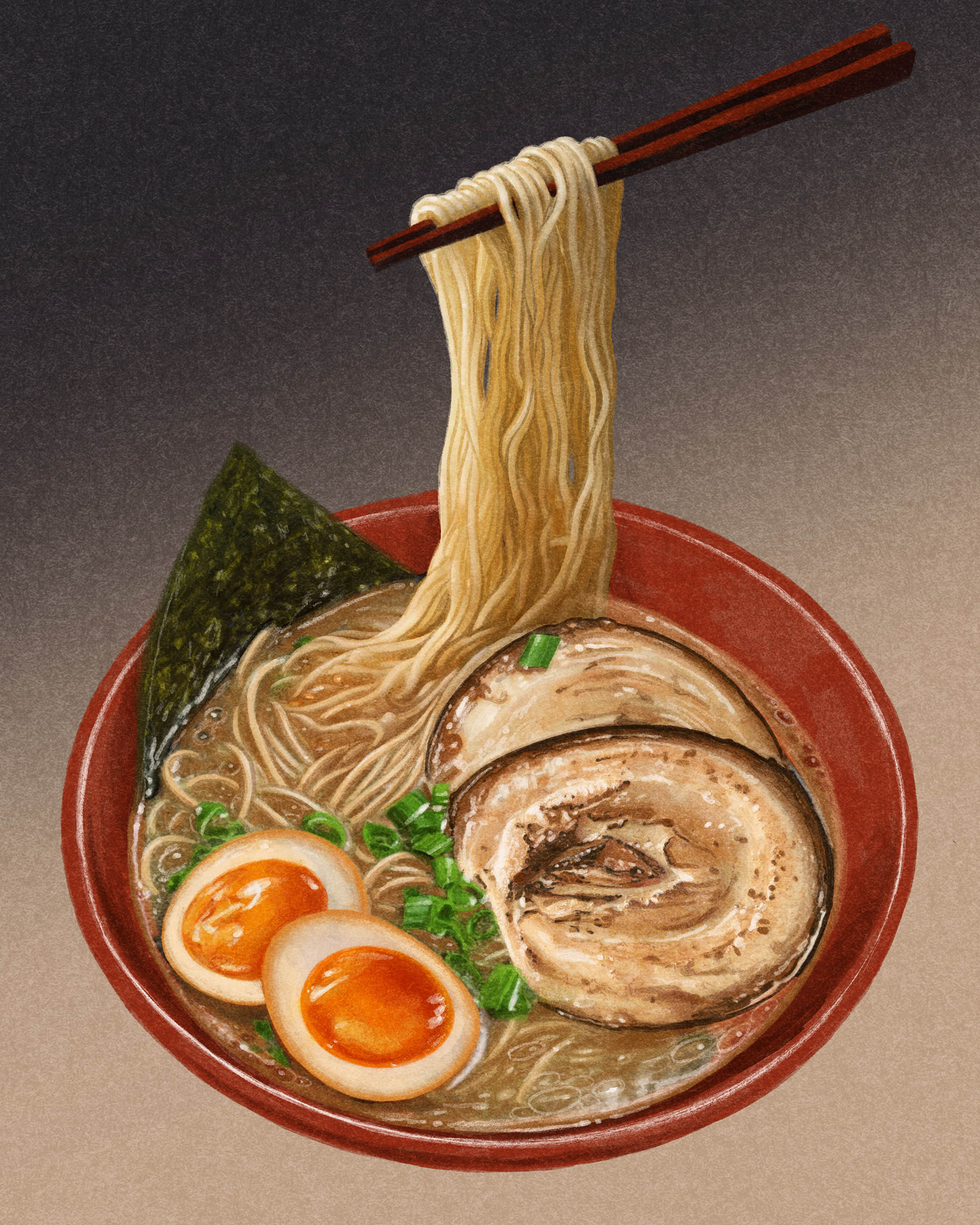
Tonkotsu (Japan)
The ramen dish (pictured above) that conquered London in the 2010s. The ideal: a broth made milky from the velvety mingling of gelatine from split pork femurs, meaty essence and fat, paired with ramen so fresh that the noodles codependently cling to each other.
Ya-ka-mein (USA)
Paper cups of noodles, beef and hard-boiled eggs in a soy-enriched broth that New Orleanians call Old Sober. Look for Miss Linda’s (aka “The Ya-Ka-Mein Lady”). They’re the best.
Saimin (USA)
This dish of chewy ramen in dashi plus fixings – which may include Spam – is a result of Hawaii’s multicultural plantation workers. For years it was one of the most popular item s on McDonald’s menus on the islands.
Boat noodle soup (Thailand)
Named after the floating vendors who sell it on Bangkok’s canals, this popular street food is an intense herbal soup with rice noodles, thickened and made dark with pork or beef blood, topped with garlic and fried pork rind.

Falooda
Iran, Burma, Pakistan and India all serve versions of this fragranced dessert (pictured above) in which vermicelli noodles, nuts, seeds, jelly cubes and thick fruit syrups are suspended in ice-cream or spiced milk.
Cacio e pepe (Italy)
One of the four classic Roman pastas, this is all about copious toasted and cracked black pepper and a cheese sauce made by emulsifying pecorino romano with the pasta’s cooking water.
Ants climbing a tree (China)
An excellent name for these excellent Sichuan noodles: thin mung-bean “glass” noodles (branches) with fragments of crisp pork mince (ants), flavoured with fermented bean paste (doubanjiang), soy, ginger, garlic and green onions.
Pad Thai (Thailand)
The dish that made the world fall in love with Thai food – a gateway noodle. Created as a national dish in the 1930s, with government support given to encourage people to cook and sell it. Find a recipe for it here.
Mie goreng (Indonesia)
Indonesia's favourite go-to dish, at any time of the day. It's made with thin wheat noodles, stir-fried with kecap manis (sweet soy sauce) and various toppings. We also love it made with rice vermicelli, whenn it comes known as bihun goreng. Try Lara Lee's recipe, here.
Newsletters
Choose the newsletters you want to receive
View more
For information about how The Observer protects your data, read our Privacy Policy