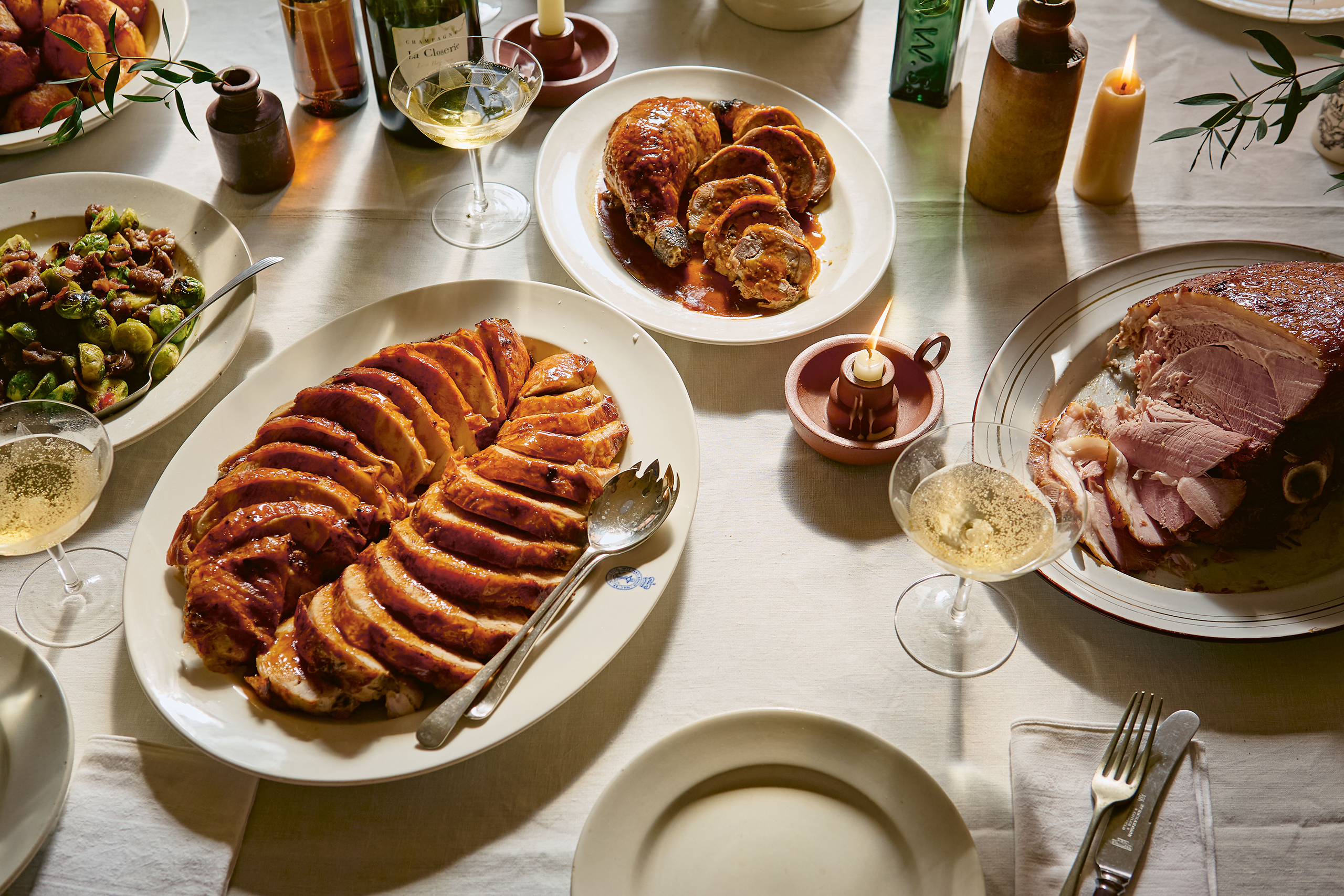


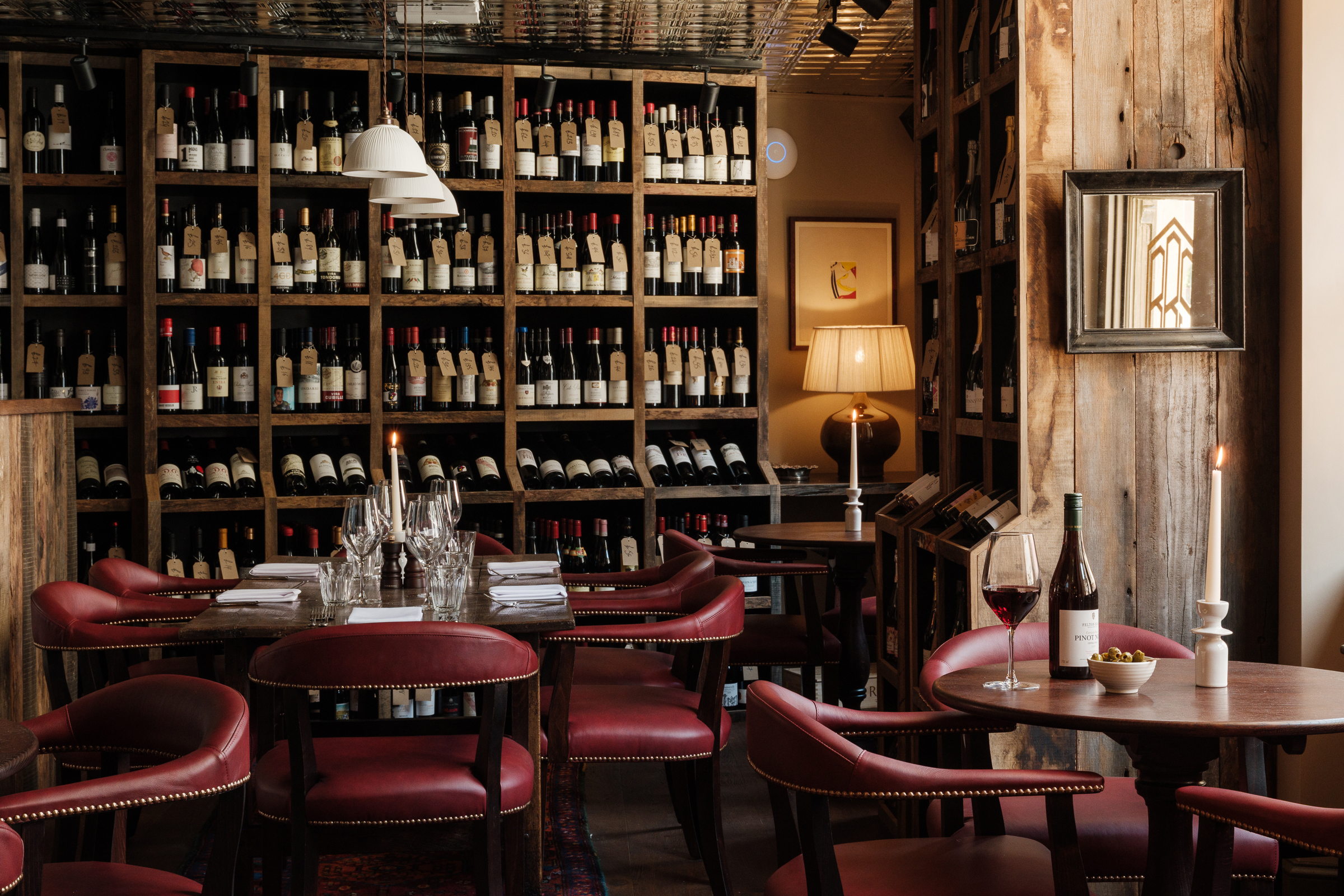
At around six o’clock on December 24, after the last lunch guests have trickled home to wrap presents, the Sportsman in Seasalter turns into Stephen Harris’s Christmas workshop. “When the kitchen has been cleaned down, I have it all to myself, which I love,” the chef writes in the Christmas chapter of his recent, excellent book, The Sportsman at Home. “I began cooking in this kitchen on my own and I still get great pleasure from having it to myself again.”
Alone in the pub, he gets to work prepping the ham and turkey gravy, and baking a batch of mince pies. Harris and his family always spend Christmas at the Sportsman. The menu is traditional but every year there are some tweaks, which he starts thinking about in September. This year, for instance, the mince pies will have a layer of frangipane and the ham might just be cooked in Coca-Cola. One Harris tradition that stays constant is the sandwich station: a self-service table piled high with sourdough bread, soft butter, the ham, mustard and other condiments for people to help themselves to throughout Christmas day. You get the feeling that for Harris the sandwich station is the star attraction. “I love ham sandwiches with so much mustard it would hurt your scalp,” he says. “If your scalp doesn’t tingle you haven’t got enough.”
As for the turkey, he has a cheffy confession: “I sous-vide my turkey.” It’s the one day of the year he uses the technique, he says, but this year he tested and wrote a failsafe roast recipe for home cooks. And his number one Christmas tip? “Make the gravy the day or even three days before. I know it’s obvious, but have as many things pre-prepared as possible, because for a lot of people, actually putting the turkey in the oven is quite a job.”
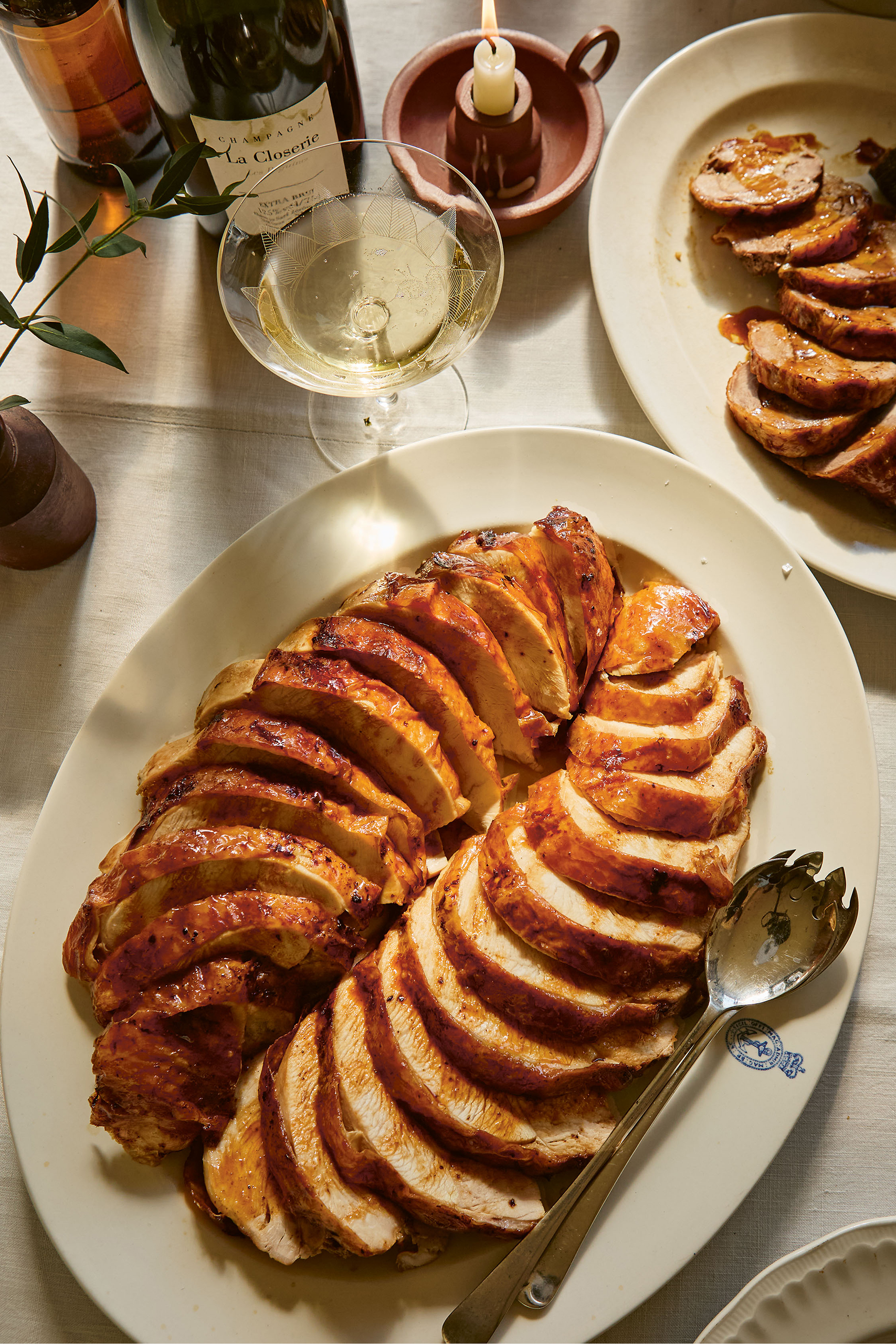
ROAST TURKEY
Buy the size of turkey that your butcher recommends for the number of people that you are cooking for. I usually get a 5.4-6.4kg bird for eight people. Ask them to break the turkey down into the crown (this is the breasts on the bone, with the wishbone removed), two boned legs and the wing tips and ribcage for stock.
Serves 8–10
turkey 1, jointed (you can ask your butcher to do this)
stuffing 1 quantity (see recipe below)
unsalted butter softened, as needed
Newsletters
Choose the newsletters you want to receive
View more
For information about how The Observer protects your data, read our Privacy Policy
salt and freshly ground black pepper
Preheat the oven to 180C fan/gas mark 6. Place the turkey bones and trimmings in a roasting tin and roast in the oven for 30 minutes, or until browned. (Set aside to make a gravy.)
Next, stuff the legs. Place the boned legs on a cutting board skin-side down and season with salt. Place the stuffing in the centre of the meat, but don’t put too much in. Roll the leg meat up and secure it with toothpicks.
Now, using a needle and thread, sew the meat into a ballotine, so that it is formed into a joint that is covered with skin. Remove the cocktail sticks.
Preheat the oven to 180C fan/gas mark 6 again.
Smear the turkey crown all over with softened butter and season well. Place the crown and the stuffed legs in a roasting tin and place in the oven.
Use a temperature probe to check the breasts at the thickest part of the meat, but don’t push it in all the way to the bone. It should gradually rise in temperature. Once it reaches 45C, reduce the oven temperature to 160C fan/gas mark 4. The legs should cook first, and are done when the internal temperature reaches 60C; the residual heat means the meat will continue cooking once out of the oven, and the temperature will reach above 65C. Remove from the oven and loosely cover with foil, then set aside somewhere warm.
Once the crown reaches 55C, remove it and place it under foil with the legs. Rest for 40 minutes to continue cooking, then carve and serve.
STUFFING
As we countdown to Christmas, my mind starts to consider the choices I have to make about the biggest meal of the year. It is always a delicate balance between keeping with tradition and trying a few improvements on the previous year. I should say that in my role as a chef, I start thinking about Christmas as far back as September, because I also have to consider what to serve in the restaurant during December.
Recently, I decided that I would like to serve our meat dishes with a series of stuffings. When I was young, I approached stuffing with caution, as it seemed to be such an indistinct name. Stuffing – with what exactly? It is a bit like calling something "coating" but not giving any details. I changed my mind when I actually tried it, aged around 12 years old, and immediately understood the appeal that the herby, gently spicy breadcrumb mixture brought to the meal.
But when I said to my chefs in September that I would like to serve a stuffing with the meat dishes during the winter, I assumed that they would know exactly what I meant. I wanted that combination of breadcrumbs seasoned with herbs and a gentle rubble of nuts, all wrapped up in a savoury minced (ground) pork framework, with a tang of fruit. I forget that because I have pondered this idea, I have a very clear idea of what I am after, while they are just trying to guess what it is I want. To solve this problem, I decided that I would come up with a formula for the perfect stuffing. It would give you a percentage of each ingredient and would be interchangeable. This means that you could use a different festive fruit, such as apple, dried apricots, dates or whatever you think would go best with your meat. Then you could choose the nuts and herbs depending on what would go well with the fruit. Walnuts, for example, go very well with apple – think Waldorf salad – and the herb could be the leaves from celery.
This would all go very well with pork but, most importantly, the formula would allow you to create your own stuffing. Onion is a constant as far as I am concerned, because it gives the whole thing a savoury base and stops the fruit from making it too “medieval”. The results of my attempts are that the minced pork should be about 50% and the breadcrumbs, nuts and fruit should make up about 15% each. The last 5% is made up of cooked onion with herbs and salt. The salt should be around 1%.
Another interesting aspect of stuffing is where to cook it. This seems like a silly question, as surely the clue is in the name. Stuffing should be cooked inside the bird, shouldn’t it? However, there is a problem with this, as the way that ovens work means that the heat of the oven cooks the outside of the bird and this layer of heat warms up the next layer and so on. This means that the cavity heats up last, so for the pork in the stuffing to be cooked completely, the outer layer will be overcooked and dry.
I am afraid those fancy roast birds stuffed with progressively smaller birds, such as a turkey stuffed with a duck, stuffed with a chicken, etc. would be a disaster unless you set the oven very low and cook them for a long time so that the meat throughout the birds doesn’t reach higher than 65C. The one thing my stuffing would miss is the juices of the bird soaking into the stuffing, but this can be achieved by stuffing the neck end. If you choose to cook it in a tray, then a spoonful of gravy drizzled over after cooking will help produce a similar effect.
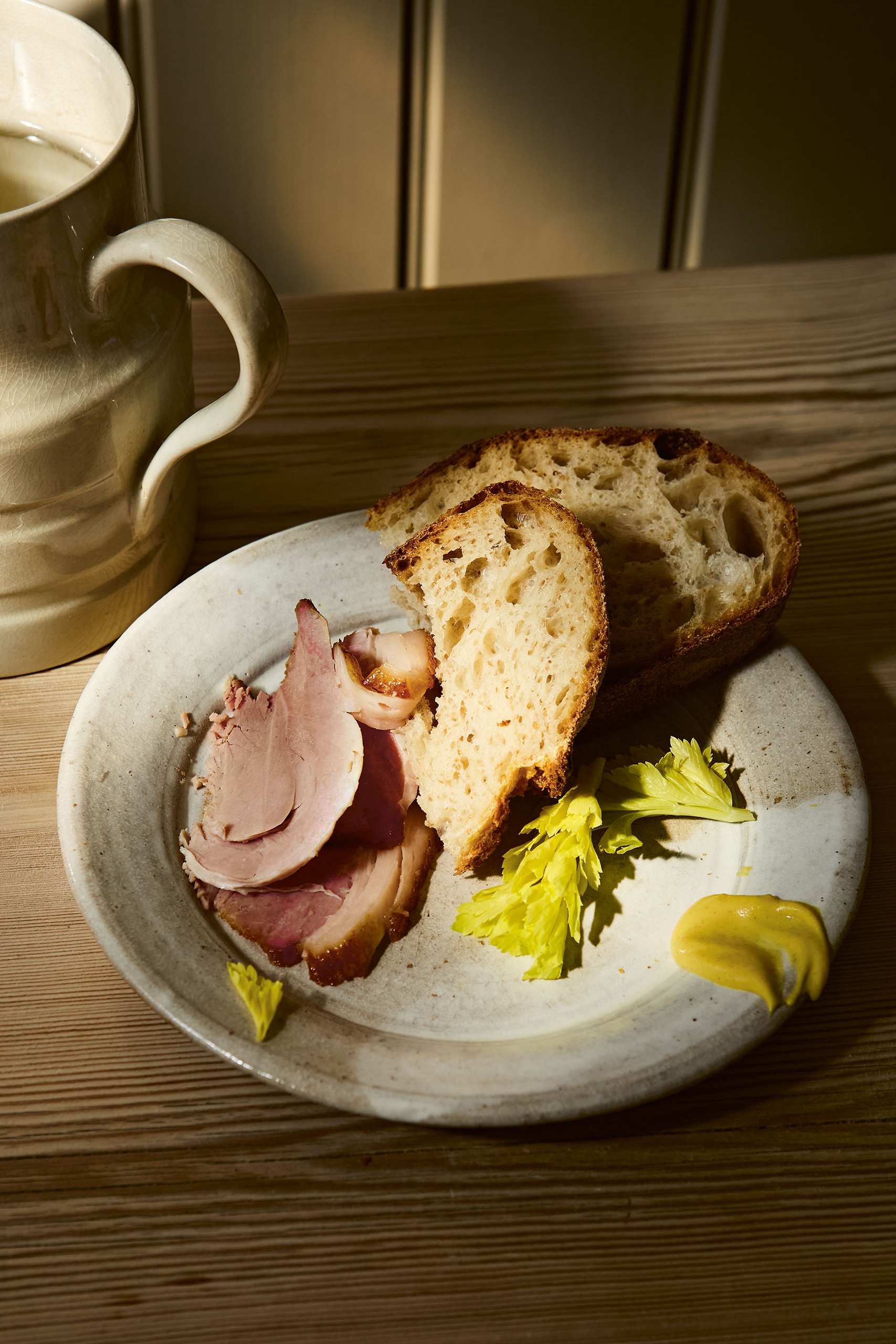
CHRISTMAS HAM GLAZED WITH MUSTARD AND BROWN SUGAR
For years, I was mildly confused by the terms used when talking about ham – gammon, green, hock, dry cured and brined – and I allowed myself to stay that way until I decided to make my own one year, and now, I’m going to pass my learnings on to you.
When we talk about ham, we are dealing with the back leg of the pig, which can be divided into three parts: the hock (below the knee joint); the thigh, and the upper leg. In the past there have been discussions about the merits of bone-in or bone-out but I think, unless your kitchen is the size of a small country and your cooking and chilling capacity is similar, it’s best to go for bone out.
The three types of cut are then salted so they become gammon, and then smoked. If unsmoked, it is also known as green gammon. But back to salting. There are two ways that the ham can be salted, either by a brine – which is a solution of salt – or by dry curing, where the salt is rubbed into the meat dry. I asked my butcher about his preference, and he said his were lightly dry cured so the meat wasn’t too salty, so before cooking, I’d recommend you also speak to your butcher. Before everyone had refrigerators, gammon could be very heavily salted as this preserves the meat for longer, so it can be the case that using older methods means you’ll need to take this into account for your own joint.
The next choice to be considered is the method of cooking, namely in water or in the oven. Whether you boil or roast your gammon, it needs to be cooked to 65C in the middle, and my preference is to cook it in water first, because I like to serve a couple of slices with parsley sauce after this first stage, then leave the rest of the ham for glazing in the oven.
I always make my ham a day or two before Christmas, and I remove the skin once boiled in water, but not the fat. The skin is the thin layer on top of the fat, and should peel off easily before the ham has cooled completely. At this point, once I’ve hived off my slices for the parsley sauce treatment, I score the fat and glaze it with a mixture of brown sugar, mustard, soy sauce and apple juice and roast in the oven.
Once cooked, I tend to leave it on the counter for cold cuts, sandwiches and general snacking between Christmas and New Year. The ham sandwich with scalp-tingling amounts of mustard that I eat in the evening on Christmas Day is without doubt one of my food highlights of the year.
Serves 10–12
unsmoked boned gammon 1 x 3.2kg joint
dijon mustard 2 tbsp
dark brown soft sugar 2 tbsp
light soy sauce 4 tbsp
apple juice 4 tbsp
chilli flakes a pinch
Put the ham into a large saucepan and cover it with water. Bring to the boil, and when it is nearly boiling, pour off the water. This will remove some of the saltiness and any impurities from the outside of the ham.
Cover the ham with fresh water, then bring to a simmer again and cook for 3 hours. The water temperature should be around 75C and, when cooked, the internal temperature of the ham should reach 60C when measured on a probe thermometer.
Remove the pan from the heat and leave the ham in the cooking water to cool for a few hours. This will stop the ham from drying out.
When the ham is cool enough to handle, remove it from the pan and place on a cutting board. Use a small knife to remove the layer of skin on the top of the ham, being careful to leave the fat (this will likely entail removing the string that is tying the boned joint together). I use my fingers to get between the skin and the fat and then it peels off easily. It is now ready to be glazed, but can also be eaten now.
Preheat the oven to 180C fan/gas mark 6. Combine the mustard, sugar, soy sauce, apple juice and chilli flakes in a small saucepan and boil until they form a sauce.
Score the fat on the top of the ham and brush it generously with the glaze. Place the ham in a roasting tin and bake in the oven for 20–30 minutes until sticky and browned, basting once.
Remove the ham from the oven and serve. It will keep, covered, in the refrigerator for several days.
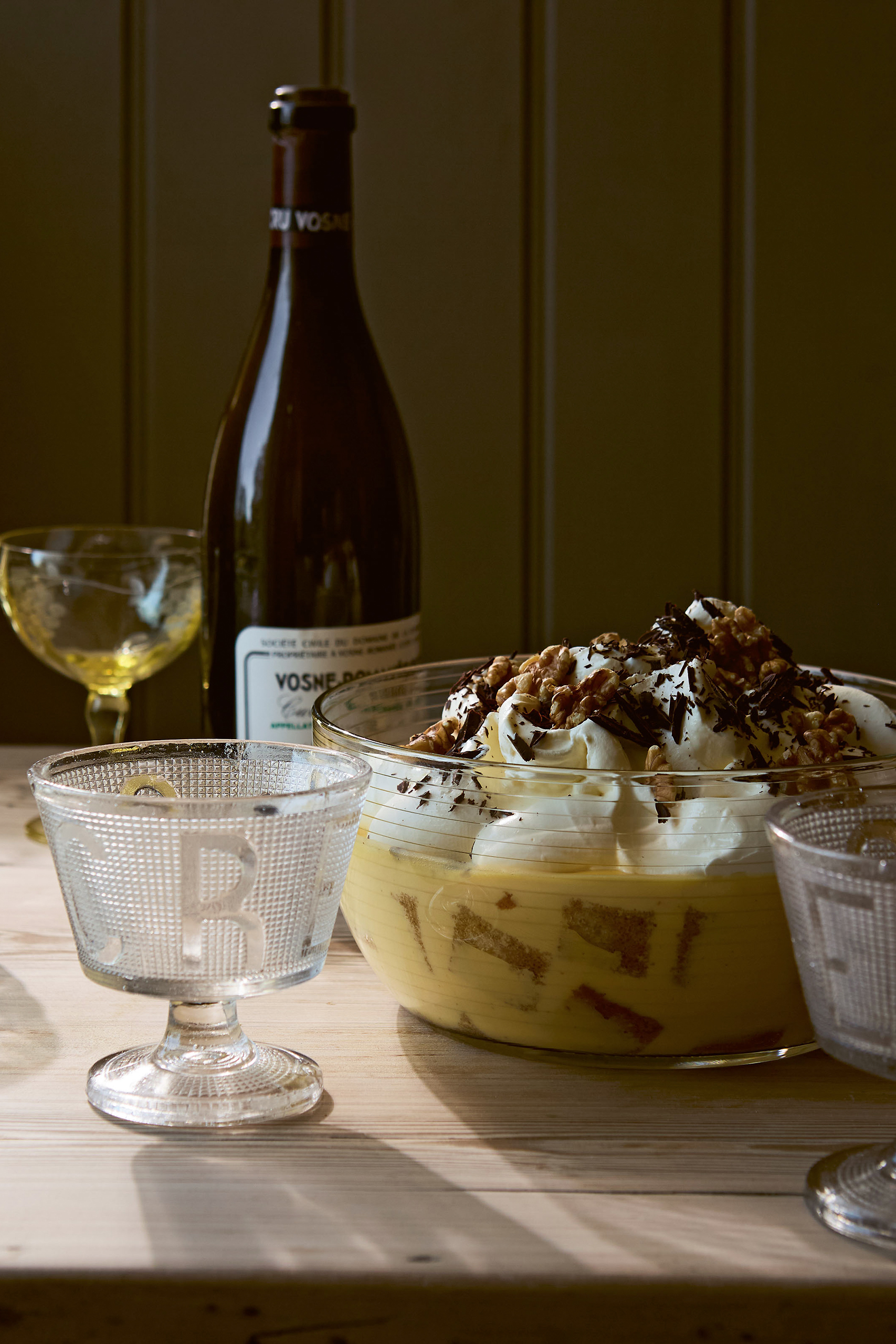
WHISKY AND COFFEE TRIFLE
I really prefer the whisky/coffee axis of flavour over the usual sherry/fruit one of a typical trifle. When asked for a definition of trifle, my brother Phil said he thinks it’s in the squelchy noise that’s made when you serve it rather than any particular ingredients.
Serves 6
shop-bought madeira cake 1 (standard-sized)
coffee 1 tbsp instant coffee dissolved in 4 tbsp hot water (or 4 strong shots of espresso if you have the facilities)
whisky 4 tbsp
egg yolks 6, large
caster sugar 60g
double cream 825ml
freshly grated nutmeg to taste
dark chocolate with 70% cocoa solids 50g
chopped walnuts 50g
Break the madeira cake into pieces and place it in the bottom of a trifle bowl. Drizzle over 3 tbsp each of the coffee and whisky and leave to absorb.
Meanwhile, make the custard. Combine the eggs and sugar in a heatproof bowl set over a pan of simmering water and whisk to combine.
Heat 425ml of the cream in a saucepan until just below boiling point.
When the eggs and sugar are well combined, pour over the hot cream and whisk together, then return the mixture to the saucepan and heat gently to around 80C, stirring often to avoid the egg proteins clumping together. Add some nutmeg to taste, then cool the custard quickly in a bowl set over ice. Add the remaining whisky and coffee. Leave to cool completely in the refrigerator until ready to use.
Once cooled, pour the custard over the soaked cake and then chill in the refrigerator for 1 hour.
Whisk the remaining cream until it holds soft peaks and spread it over the top of the chilled trifle.
Melt the chocolate in the microwave and pour onto a plate to set hard. Using a teaspoon, make curls of chocolate and use these to decorate the trifle along with the crumbled walnuts.
Note: This recipe makes a thick custard, which is ideal for trifle. If you prefer the custard to set firm, then add 1 tbsp cornflour to 2 tbsp milk and mix to a paste, then add this to the custard when it is returned to the saucepan.
Recipes taken from Christmas chapter of The Sportsman at Home by Stephen Harris (Quadrille, £30). Order a copy at observershop.co.uk for £27