
Subscribe to the Observer and join our Culture Club to enjoy 30% off an annual RHS membership. Find out more and claim this offer here.
Like many of my fellow millennials, I first began thinking about gardens in the spring of 2020, at just the moment I realised I was acutely lacking one. At that time, I lived in a first-floor flat on a busy main road in south London. In theory, I had access to a patch of grass at the front of the house, but the area was awash with litter and frequently played host to pugilistic urban foxes. In the 10 years I’d lived there, I’d seldom given it much thought but during the first, sofa-bound months of the Covid pandemic, I found myself repeatedly imagining – and then dismissing as too onerous – plans to make the space more usable.
Like Uncle Monty in Withnail and I, I’ve always felt: “Flowers are essentially tarts. Prostitutes for the bees.” I had never entirely seen the point of gardens; the wide, wild open spaces of a national park were more to my taste. Then, last year, my partner and I moved into a house with a small garden and I found myself wondering what we could do with the space. Recently, just surviving the onslaught of daily life has come to feel interminable – like climbing a ladder made of snakes – but people I know swear by the soothing properties of their pot plants and allotments. The internet is awash with advice for the newly green-fingered, but I quickly found myself overwhelmed. When the Chelsea flower show came around, I decided that an in-person approach might serve me better.
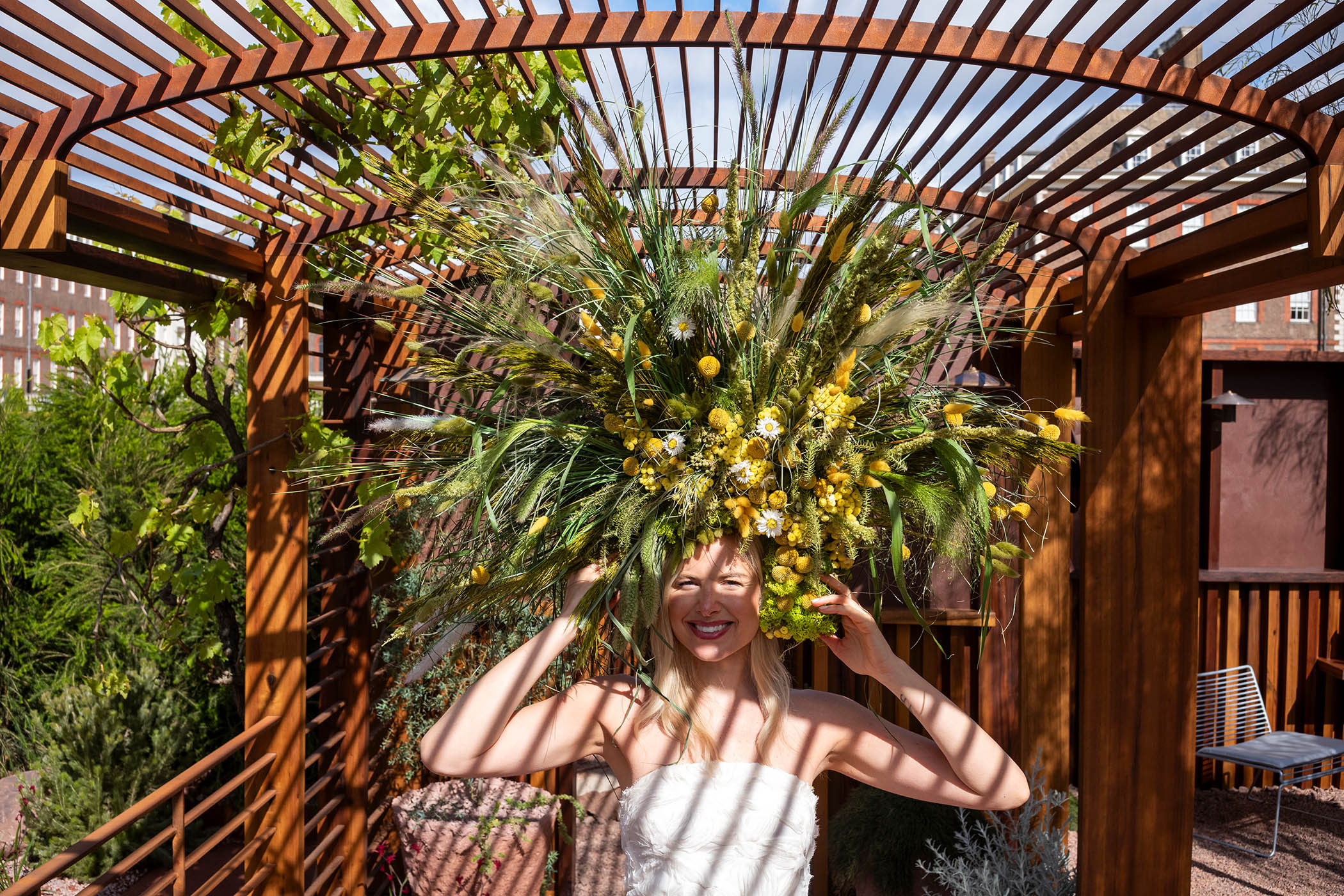
The flower show, which is run by the Royal Horticultural Society (RHS), has been an annual occurrence in London since 1862, when the RHS held the Great Spring show in Kensington. The event moved to the site of the Royal Hospital Chelsea in 1913 and, with the exception of hiatuses during both world wars and the pandemic (it was held virtually in 2020 and was postponed from May until September in 2021), it has been in operation there ever since. In the UK, 55% of the population regularly gardens, according to a report last year by the Horticultural Trade Association, which also revealed that, as a hobby, it is more popular than going to the cinema or participating in sport. The Chelsea flower show reflects this: in 2026, it welcomed more than 150,000 visitors over five days and almost 400 exhibitors from around the world filled a site that covers 8 hectares (20 acres). The show takes 25 days to build and is dismantled in 11.
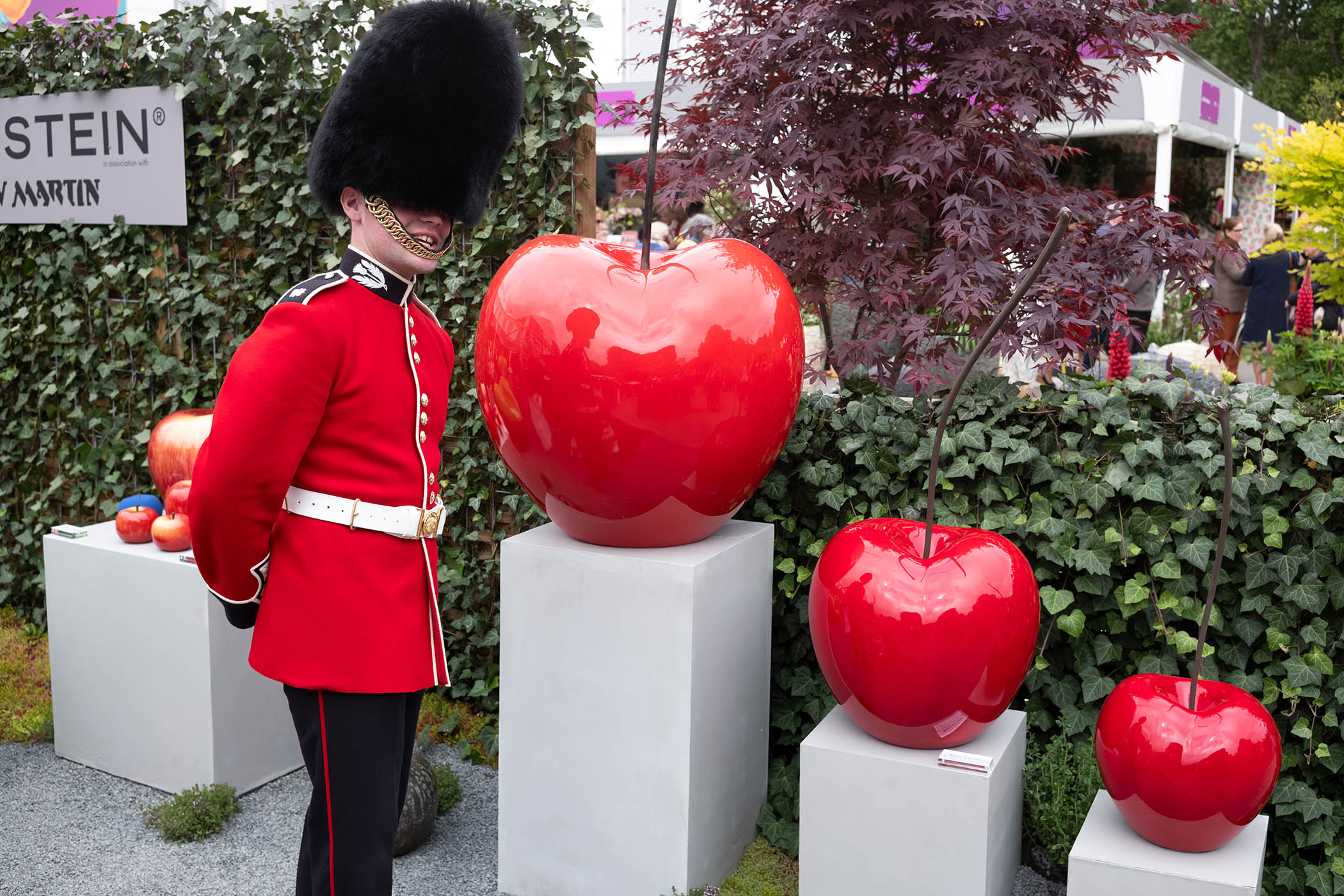
This year, there were 30 “show gardens”, areas of varying size and layout that demonstrate a designer’s skill and vision. There were roses and cacti, orchids and ferns, ornate Japanese gardens, overflowing balcony gardens and one called “Aphrodite’s Hothouse”, which was sponsored by a sex-toy company. High-end, four-figure ovate barbecues were displayed alongside sumptuous outdoor furniture, and a dealer in garden statuary was selling, among other animal offerings, a pair of teutonic-looking limestone eagles for £12,500 (original moss and lichen included). At the Highgrove shop, slate signs bearing “Cluckingham Palace” were on sale for £19.95; a stand selling panama hats was doing brisk business, while the sales booth of a company offering cultural cruises seemed to be experiencing a hantavirus dip.
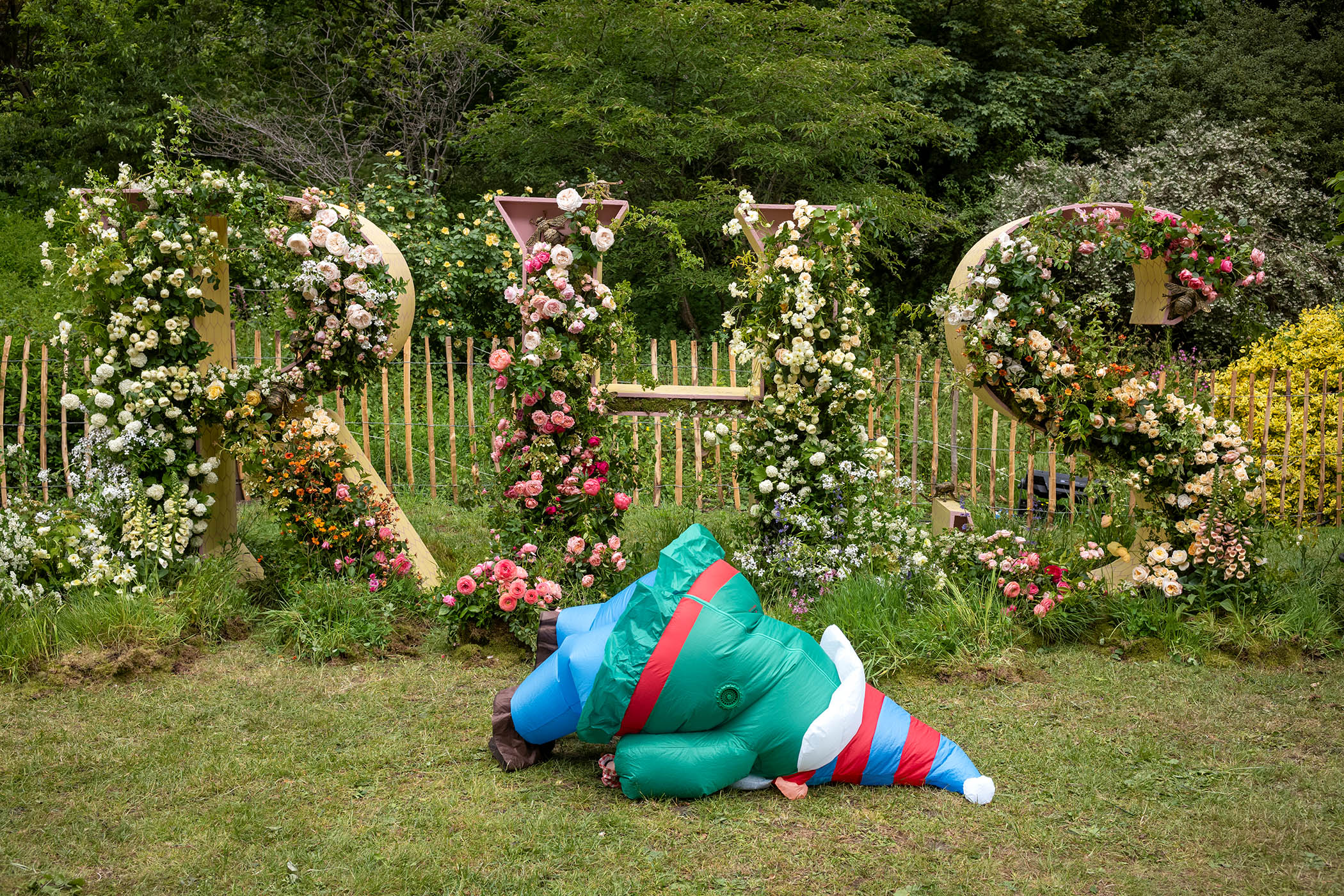
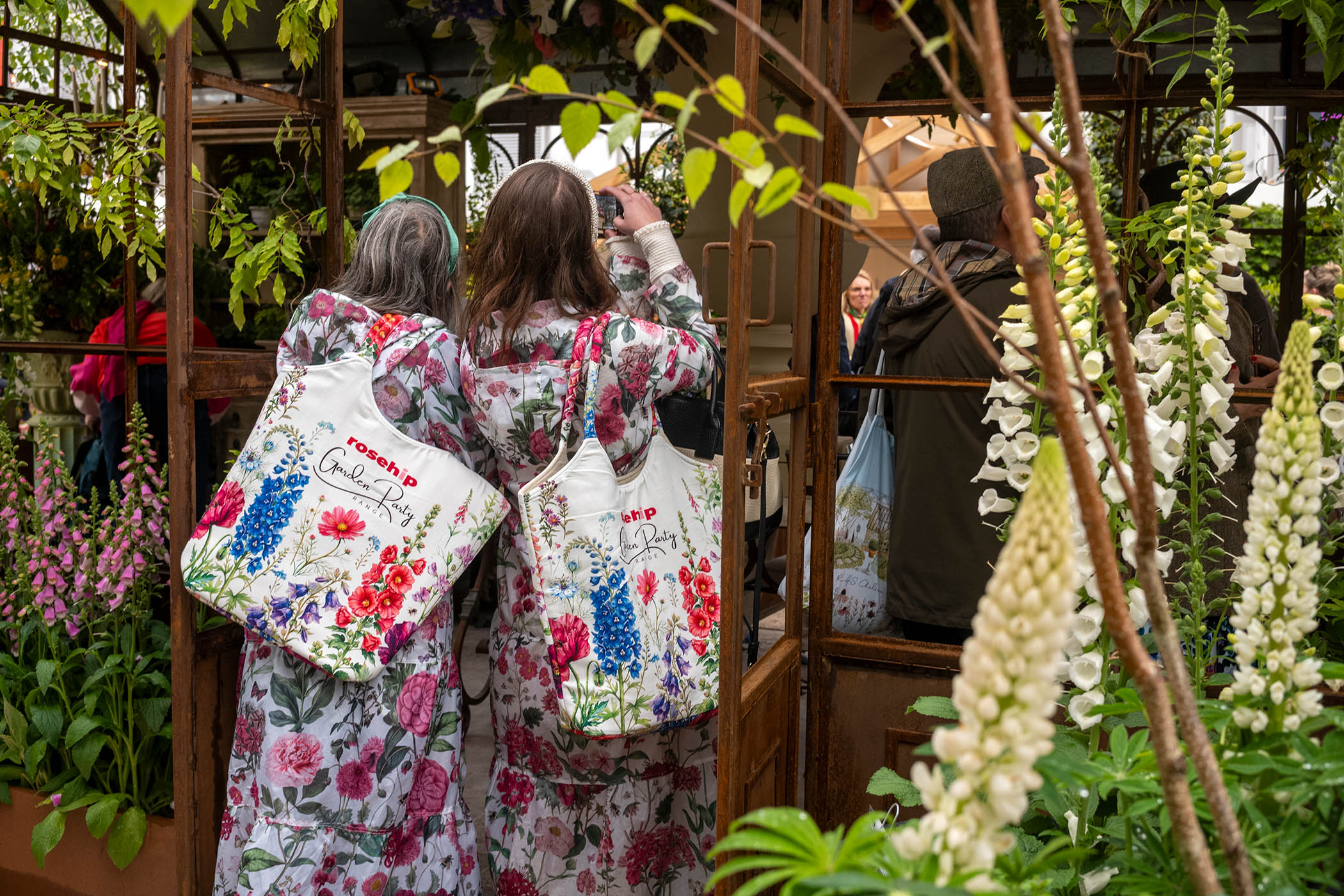
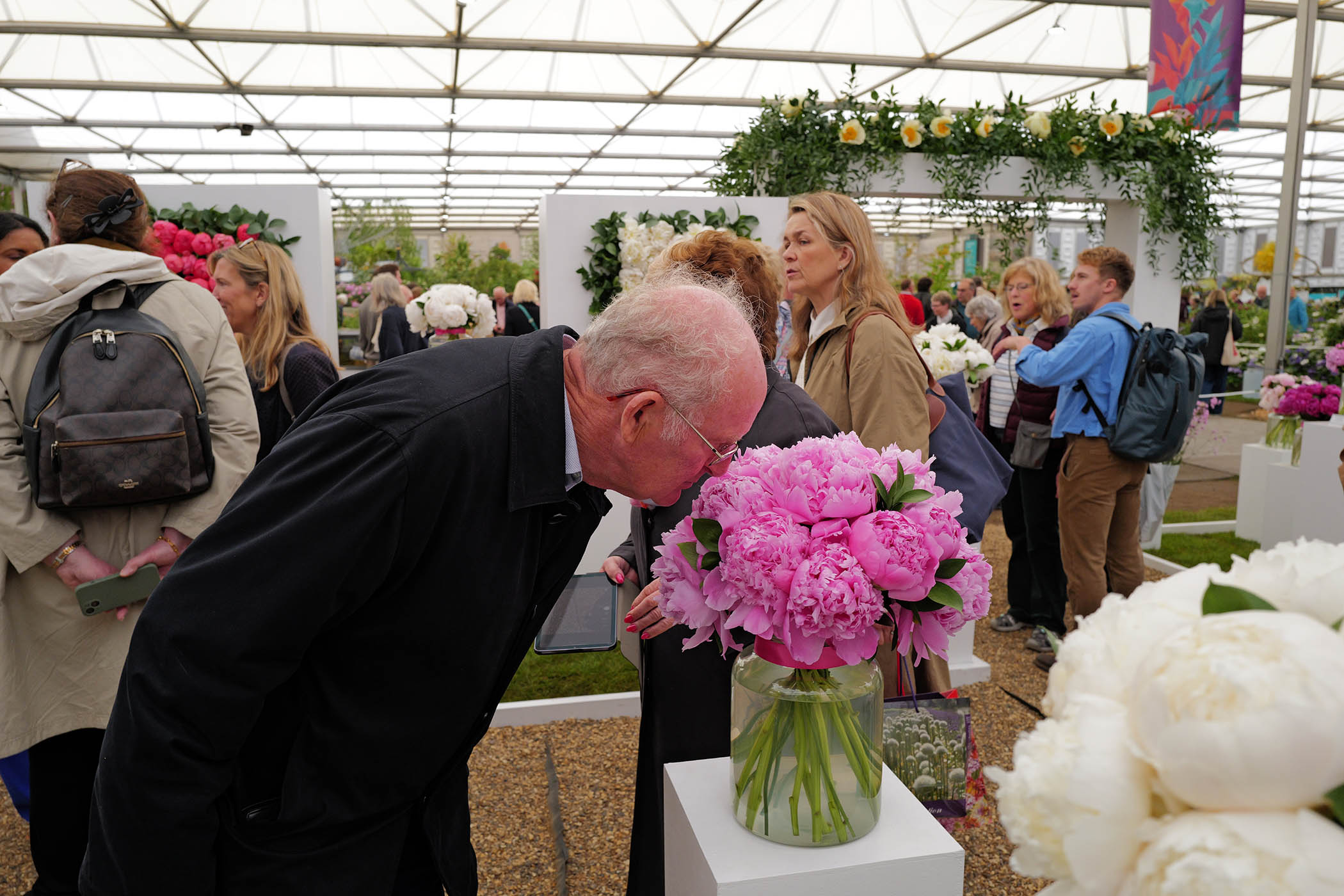
On the morning of press day, the show was almost oppressively peaceful. The spacious main avenue, sandwiched between the larger show gardens and the Grand Pavilion, was studded with journalists and TV crews. Men wore linen suits and women floral dresses, while Chelsea pensioners in their heavy crimson overcoats moved among them like ambulatory post boxes. Their main function seemed to be as selfie fodder: one sprightly old boy gave me a wink as I walked past him posing with two young women in low-cut summer gowns. The aisles and avenues were peppered with celebrities: each time I looked up from my notebook, I felt like I was being confronted with a Bake Off runner-up or a minor royal. Sometimes, they were hard to tell apart.
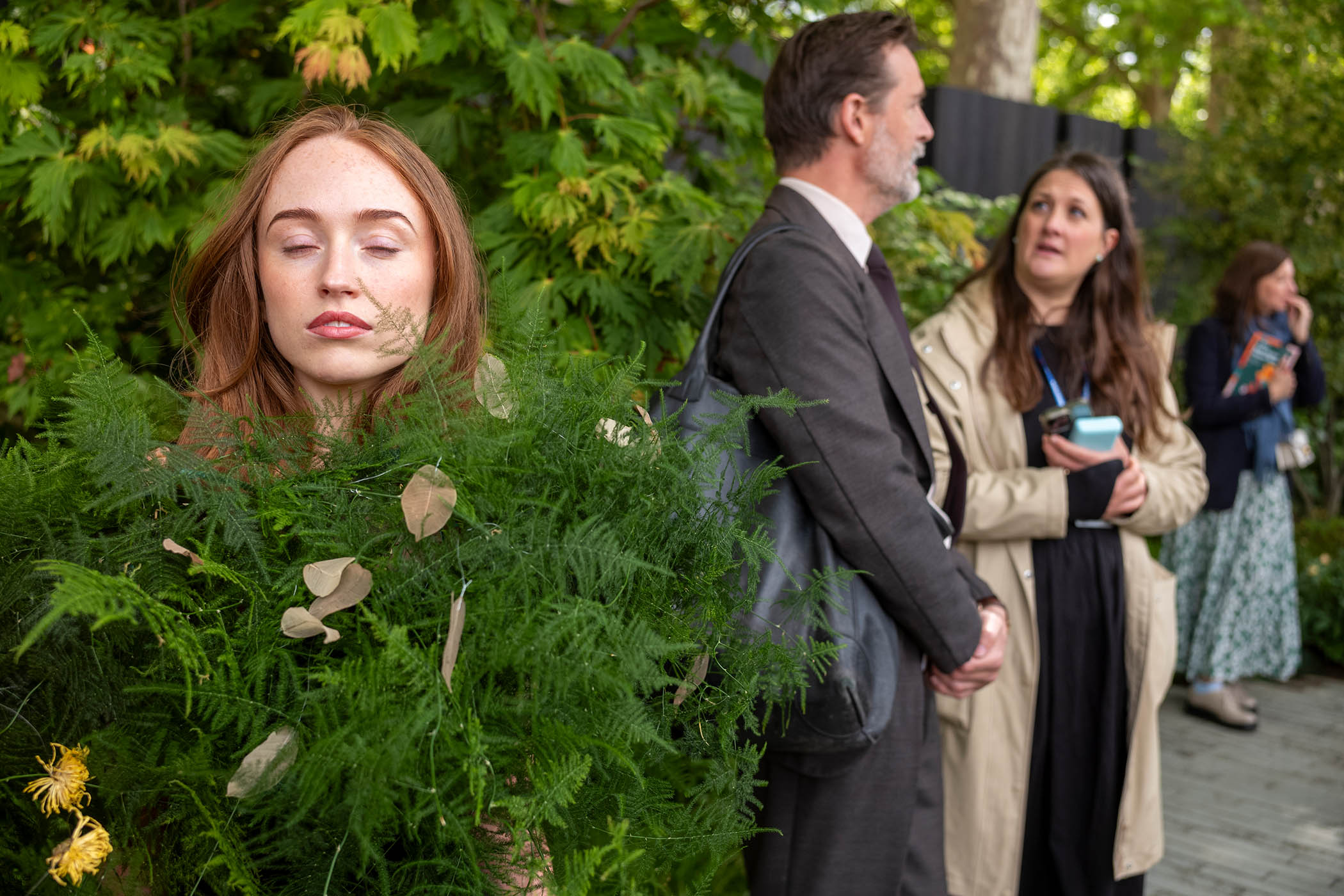
The showground’s centre is the Grand Pavilion, a marquee large enough to contain 500 London buses. Inside were 83 exhibits, ranging from hotel-lobbyish arrangements of bonsai trees to an erumpent display called “Life After Fire”, a South African stand showcasing protea flowers emerging from trees destroyed by wildfires last December. The atmosphere in the tent was one of calm excitement, not unlike the mood on the last day of school term. Something was about to happen, but nobody seemed to know what it was.
At a circular stand festooned with all manner of flowers and small trees, I approached Charles Williams, a man in his late 60s dressed in a pinstripe suit. His face was pink and lived-in; his laugh was loud and staccato, like a seabird coming in to land. Identifying myself as a journalist and fumbling to make my recorder work, I asked how long he had been exhibiting at Chelsea. “Forty-four years,” he replied, flushed with pride and handing me his card. As the owner of the Caerhays Estate and Burncoose Nurseries in Cornwall, Williams has been involved in many gold-winning Chelsea gardens. I told him I was new to horticulture and asked him why he thought people came to the Chelsea flower show.
“Oh, for God’s sake,” he responded, his demeanour suddenly hostile. “What a bizarre question, with a very obvious answer.”
I pleaded. From behind his thick metal-framed glasses, he rolled his eyes theatrically. “Well,” he said, “it’s the biggest flower show in the world.” What did he think attendees get from coming to the show, I asked. He sighed and spoke, very slowly, so that I would understand: “An opportunity to see more and varied different plants than they’ve ever seen before in their lives.” I admitted defeat and walked away. Nevertheless, I felt sure that people came to Chelsea for more than the flora. Surely gardens were about something other than just plants and soil.
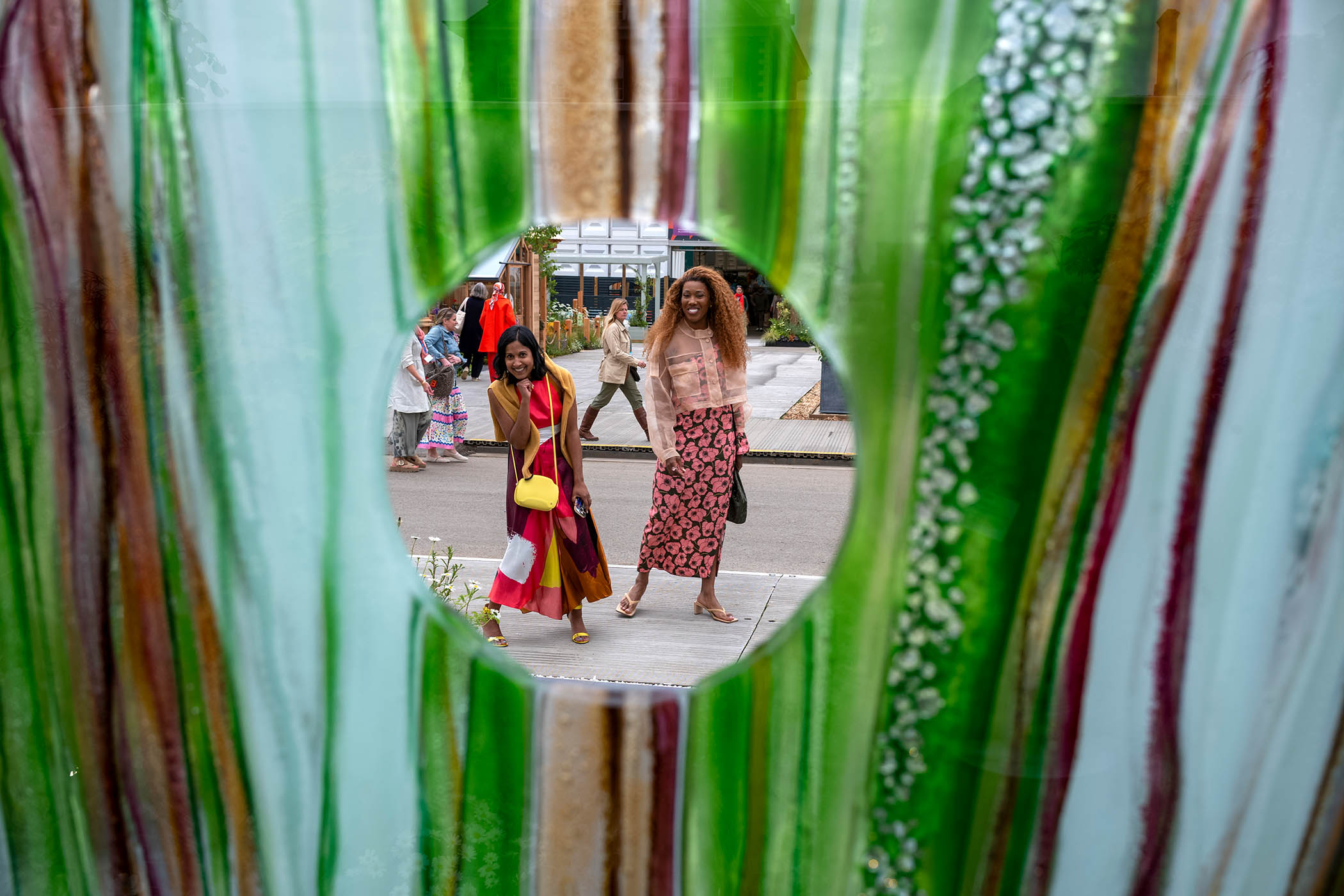
I wandered aimlessly around the Grand Pavilion. I saw Nigel Slater deep in conversation with a grower of sweet peas while, nearby, two people wearing inflatable toadstool costumes handed out lion’s mane energy drinks. At a stand boasting an “Orchids of China genius bar”, I tried to find out more from one woman while her colleague filmed us.
Outside, lunchtime was approaching. People drank Pimm’s, that brackish nectar of the British summer, and a woman queuing for a £27 lobster roll told me: “I love spending money. It’s my whole personality!” You don’t have to be rich to attend the show, but with tickets up to £147 for a full day, it certainly helps.
People come from all over the world. I spoke to Kalita Blessing, a wealth adviser, who had flown over from Dallas, Texas; and an Australian woman whose father, after receiving a terminal cancer diagnosis last August, had insisted on making the trip from back home, “if it was the last thing he did”.
About 3pm, helicopters crisscrossed the sky above us. Police in tactical gear appeared with explosives sniffer dogs, and for half an hour or so the place felt like a paramilitary version of Crufts. On one stand, hosted by a Lincolnshire-based grower of aquatic plants, officers lifted up the leaves of lily pads, presumably to check for regicidal devices. And then, at 3.30pm, a prim voice came over the public address system, instructing all press and non-RHS members to leave: the king – fresh from his coronation as everyone’s favourite Donald Trump-teaser – was about to arrive.
Well known as a keen gardener, the king is the patron of the RHS. This year, his King’s Foundation charity was the sponsor of an exhibit called “The Curious Garden”, designed by Gardeners’ World stalwart Frances Tophill and monarchs-in-waiting David Beckham and Alan Titchmarsh. Charles was coming to inspect their handiwork.
Day two dawned with a pigeon-grey sky. The overnight rain had given the plants an expectant pertness. Water drops glistened on moss and hung from the tips of acer leaves like something from a Microsoft screensaver. Visitors, however, were undeterred by the weather. The Tuesday of the show is still not technically open to the general public, only RHS members, and the air was thick with the rustle of Gore-Tex jackets and the puddle-plashing of sensible shoes. They were harmoniously home counties, overwhelmingly white: “The whole world is here,” said one cagoule-clad sexagenarian man to his wife as they waited patiently in the champagne queue.
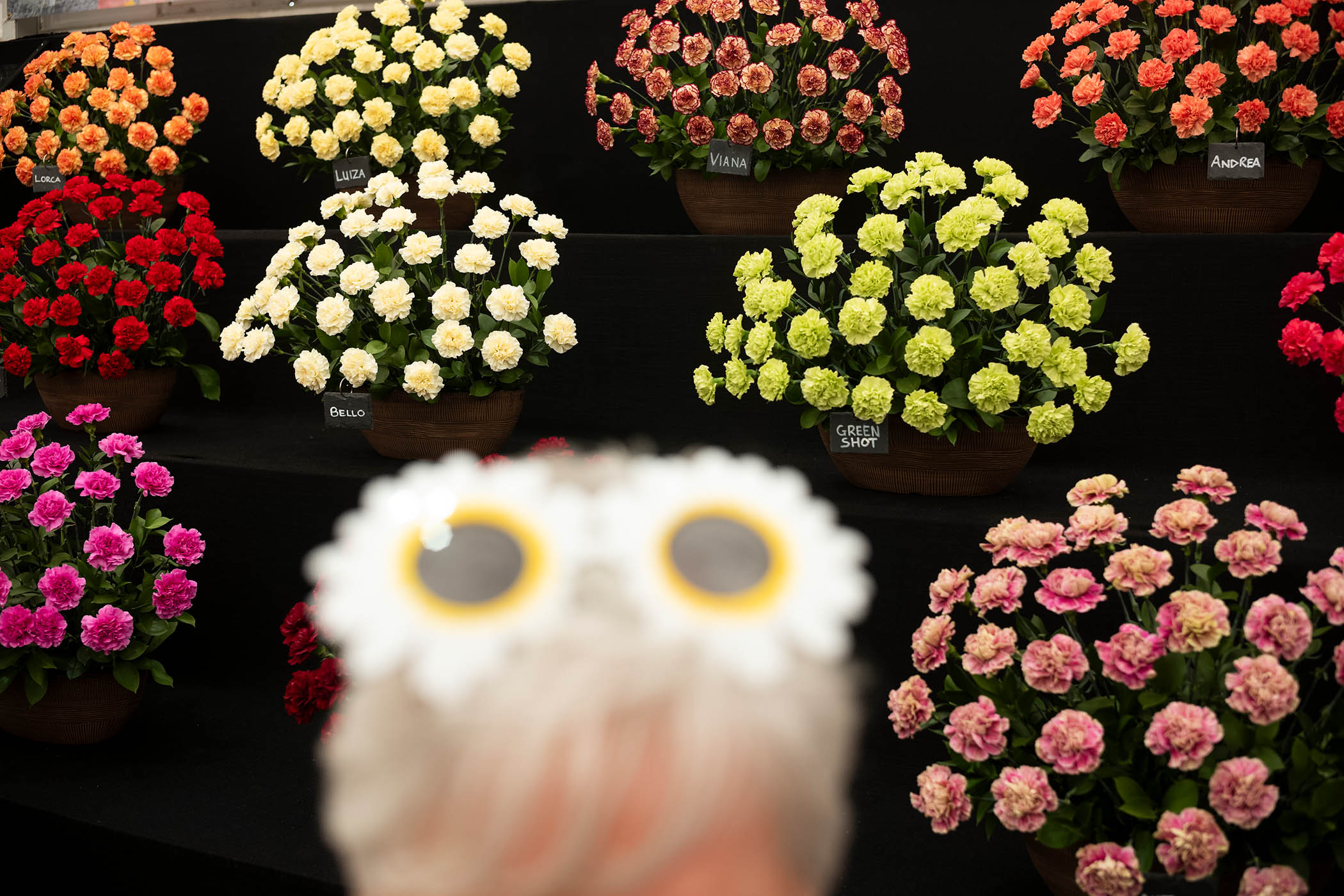
So deep were the crowds – cameras were held aloft, necks craned – that the show gardens were now almost impossible to see, so I ducked inside the Grand Pavilion. On a stand dedicated to tulips, I saw a variety called “Rasta Parrot” and another called “Hotpants”. Nearby, a tiered table displayed all manner of succulents and cacti. Many of them bore labels with the date of their seeding; they were squat, and some of them no more than a few inches tall, despite being more than a decade old. I found myself oddly impressed by their worldly reluctance.
I pushed my way through a thicket of plant fans at an exhibit called “She Grows Veg”. Surrounded by mounded beds of kale and rainbow chard, a banqueting table overflowed with gourds and artichokes and carrots – like a dinner party painted by Arcimboldo. She Grows Veg is a Suffolk-based heirloom seed company started three years ago by Kate Cotterill and Lucy Hutchings. When I spoke to Cotterill, a cheerful advert for getting your five a day, she told me that in these politically fraught times, “there’s nothing better for the wellbeing of a community than growing and eating together”. All the vegetables from the She Grows Veg Chelsea stand are donated to London food banks and all the plants to social housing estates. “We need to nourish ourselves,” Cotterill said.
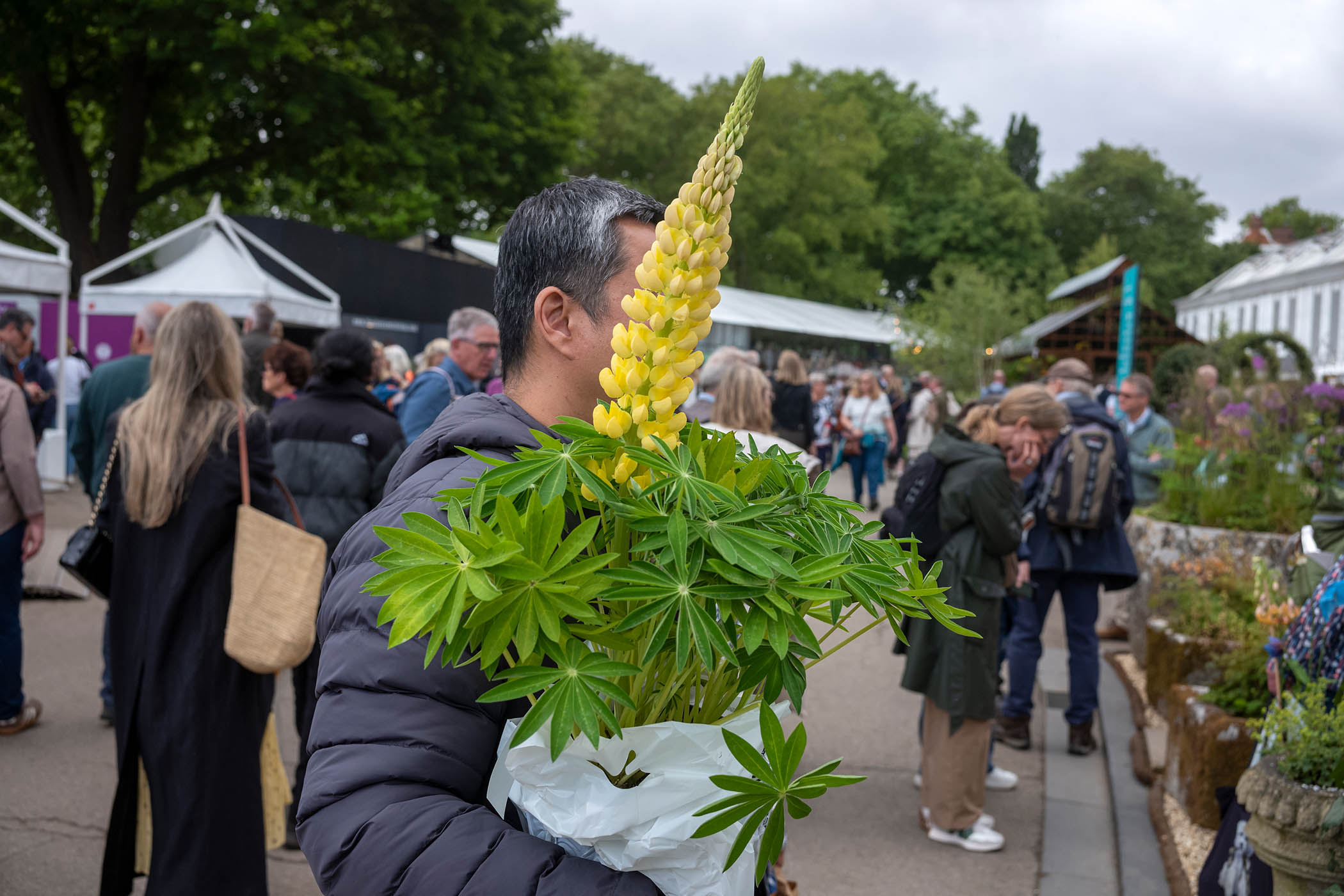
By 11am, the popping of champagne corks was joined by the opening of Tupperware and the smell of homemade quiche and coronation chicken sandwiches. The sun came out as the wind swelled; the day had become an exercise in the endurance of hay fever. My eyes were stinging with pollen and the hubbub of the show was punctuated with coughs and sneezes – a whole lexicon of spluttering. We were all surviving nature at the same time as we were enjoying its containment and curation.
The exhibit I kept returning to was the first one I’d encountered: Kazuyuki Ishihara’s “Tokonoma Garden”. A miniature rolling landscape of cumulus-like moss, raked gravel and drooping ferns border a stream that flows out from underneath a tokonoma, a traditional Japanese reception room – a place for families and friends to gather. To stand on the narrow stone pathway, with the water rippling beneath you, was to be transported into a reverie reminiscent of Studio Ghibli animations at their most tranquil and magical.
When I returned to the garden for the last time, I saw Ishihara himself standing back from the crowds seemingly admiring his handiwork. The designer, who has the energy of a human fidget spinner, is a diminutive man, and was sporting a pork pie hat and a leather bow tie. When I spoke to him, via a translator, he told me, gesturing at his creation: “I always believed that gardens are the place for people to communicate and understand each other.”
I left the grounds of the Royal Hospital Chelsea and slipped back into the stream of traffic running along the Thames. As with so much of 21st-century life, it had seemed to me pointless to do any more than was absolutely necessary with my garden. But, despite my horticultural scepticism, the past two days had buoyed me. As I made my way home, I reflected on my quest to understand the flower show’s appeal. After all I had seen and everyone I had spoken to, I had begun to see that gardens and gardening can be a holiday on the calendar of life – a quiet rebuke to the fierce pace of contemporary existence. Many of the people I had talked to at the show had told me that, for them, horticulture was something of a panacea for the relentless onslaught of isolating tech, polarised politics and a sense of permacrisis that has come to infect every corner of our lives. Their enthusiasm had been infectious and I found myself already succumbing to the wisdom of the green-fingered crowd.
As I cycled home, I passed a communal garden not far from where I live and saw an elderly couple on their allotment. The man was sitting in a folding chair, listening to the radio while his wife tended their plot. On a side street, just off an arterial London road, this peaceful scene felt a world away from the vibrant clamour of the flower show and yet intrinsically connected to it.
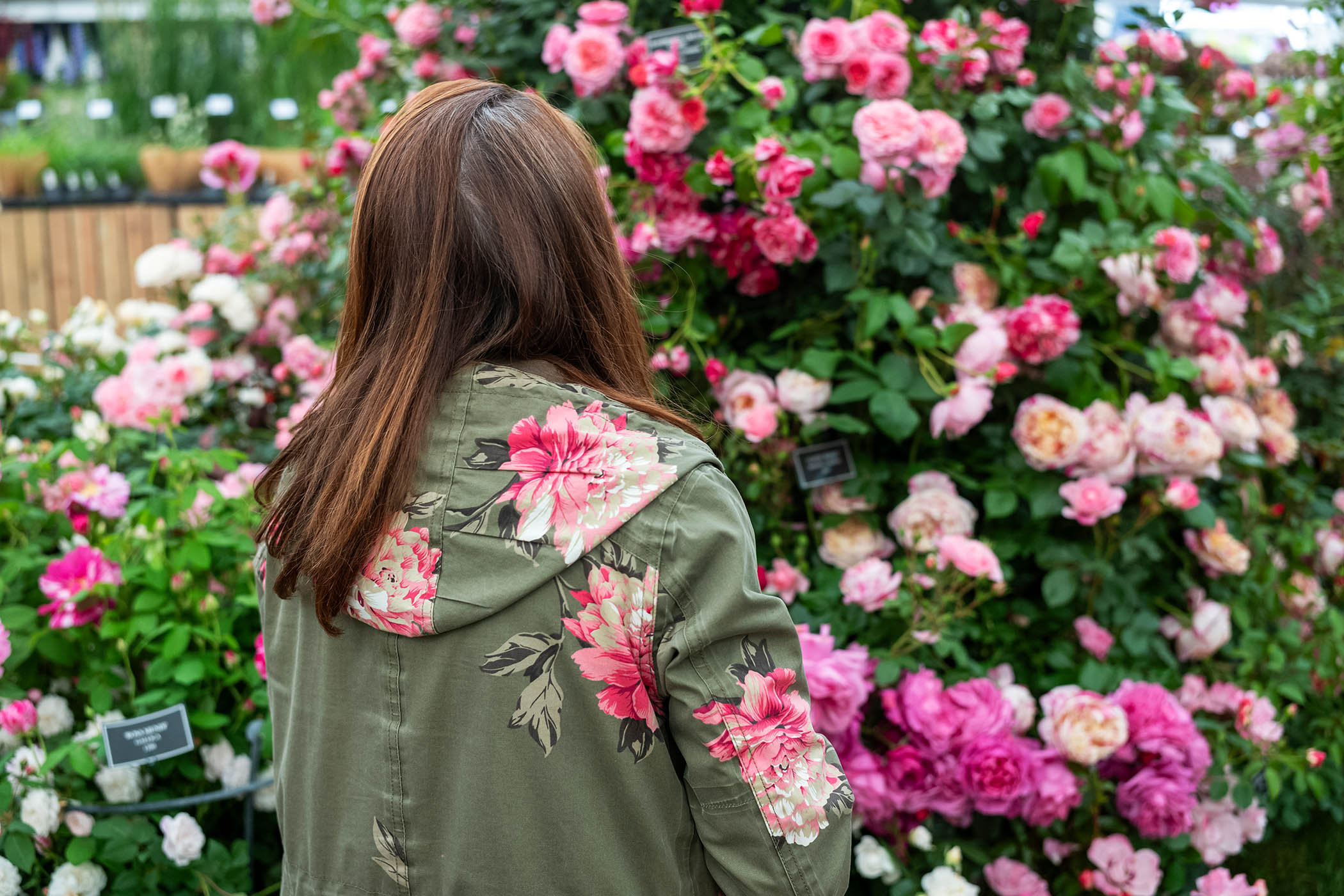
I remembered a conversation I had had earlier that day at the flower show with two friends, Alison Findlay and Louise McGregor. These amiable women shared a Suffolk allotment where they “co-parent chickens”, grow strawberries and raspberries, and even have a small, six-tree orchard. Findlay told me she worked for the RHS, but it was McGregor’s first time at Chelsea and her wide-eyed excitement was palpable. “I feel quite inspired,” she told me, looking over her shoulder at the mountain of roses on the David Austin stand. Quite unexpectedly, so was I.
“We must cultivate our garden,” Voltaire wrote at the end of his novel Candide. I had first read that line as a bemused teenager, unsure what to make of its imperative. But it is often overlooked that Candide’s alternative title was L’Optimisme. Optimistic was not quite yet how I was feeling, but I had begun to wonder if gardens may be a way to get there.
Photographs by Matt Stuart for The Observer