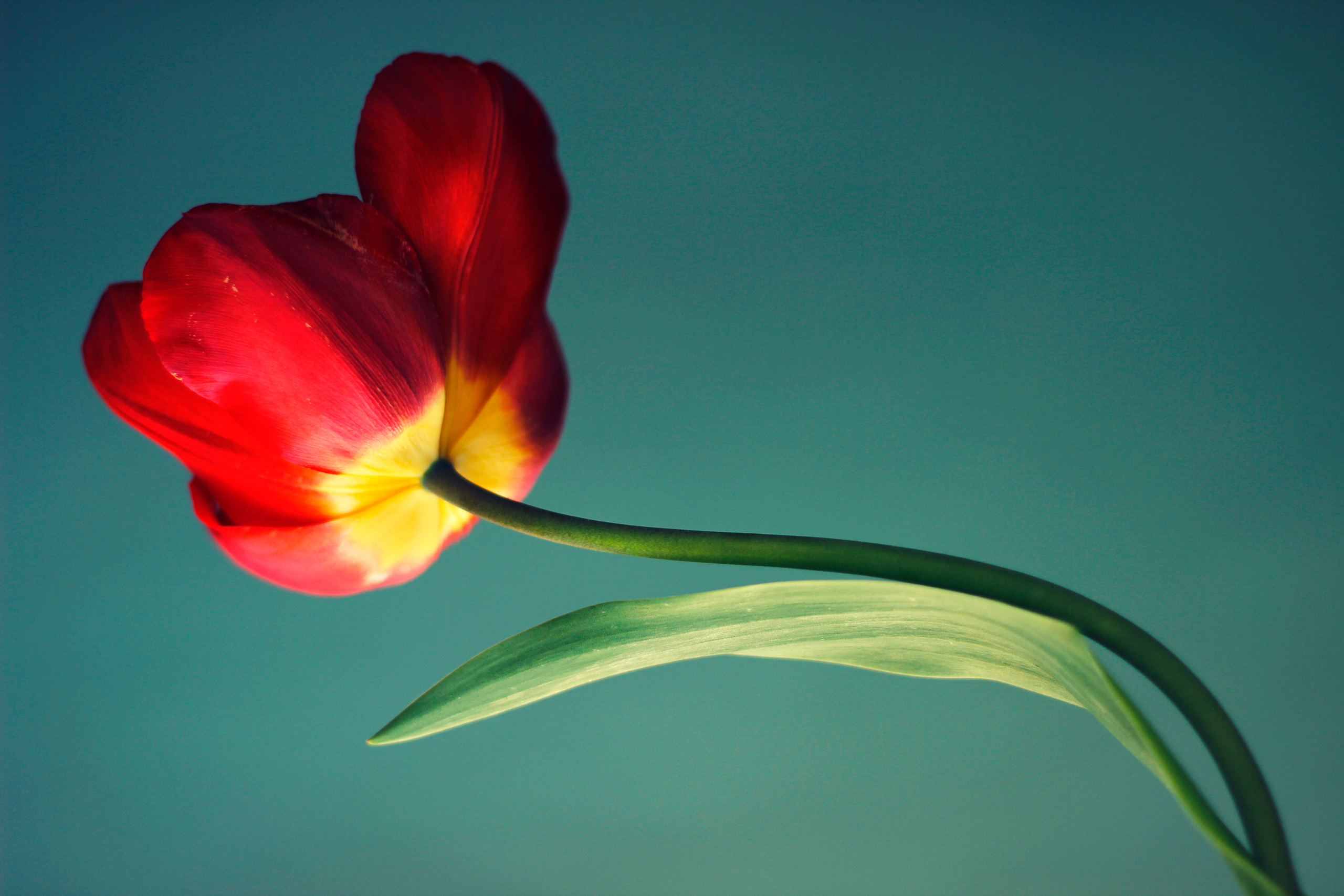


It’s been eight days now. I think I’m starting to recover. Have you ever seen flowers so spectacular that all you want to do is look? Last week, I was sent a bouquet of tulips and, despite the deadlines whistling past, the so-called needs of my loved ones, I have found it difficult to do anything other than gaze at them. Occasionally I remembered to drink water. Friends sent up drones to peer in at my windows; various semi-urgent emails blossomed, fruited, then expired. The cats held up signs saying “DINNERTIME”. The moon waxed, then waned. Did I care? I barely noticed. I was busy, trying to understand why tulips have such transfixing power. These are my conclusions.
1. They are simple. Even people who don’t garden, or care about nature, or have any eyes, can appreciate them. Tulips are entry-level, the basic eight-stud Lego brick of flowers,adaptable to any situation: bobbing proudly around the local Rotary Club-sponsored Welcome to Polyp-On-Sea roundabout or decorating Westminster Abbey for the coronation, equally prized by Dutch merchants and Sir Elton John. A perfect red rose, or white peony, isn’t straightforward, either to choose or to grow but, f or £1, you can buy a bulb, shove it in a pot and, next spring, you will have grown the platonic ideal of flowers, symmetrical, primary-coloured, straight.
2. They are various. Unlike daffodils or petunias, tulips come in a frankly ridiculous range of styles (frilly and smooth, multi-petalled, pointy, cup or star shaped, splayed) and colours: all the reds, from crimson to burgundy, all the yellows, from primrose to egg-yolk; Tipp-ex to burrata; conjunctivitis to nipple, easy peeler to ripe bruise. Would Sir prefer a white or yellow base, a simple central black eye? Purple mixed with gold? Green upon white? It’s bedlam, what with all the breaks and sports and flushes, the centuries of careful breeding, the raging show-bench perfectionism at which the British excel. For me, all those Flugelhorn Antimacassar Breeder groups aren’t the point. All I need is to gaze, slightly mouth-breathing; when the parrot-tulips went first, I saved a petal from each colourway, Coconut Ice Cataclysm and Peach Melba Lunacy, to keep the love alive.
3. They are aspirational. Like buying face-cream or an expensive jacket, y ou’re investing in a theoretical you, a dream version of the future. To a lifelong fan of British class system indicators – less because of my cerebral novelist’s gaze than an early, seminal, encounter with Jilly Cooper’s Class – the names of tulip collections offer limitless delight. Any prosperous fool can splash out on a 48-pack of bulbs; the interesting part is, why? Is it to impress next door, with their well-bleached patio and resin hedgehog-sipping-from-a-lotus light-up three-tier water-feature? In that case, plant the absolute chaos of budget colour sold by a leading horticultural retailer as their “Nurseryman’s Choice”. The Nurseryperson in question is clearly a fan of Haribo Tangfastics: your random tulip selection, air-ambulance red, squid mauve and highlighter yellow, will be visible from distant solar systems. Is your taste more broad brush-strokes mid-price glamour, closer to an overpackaged Valentine’s Day delivery than petrol station bargain-bin? If so, there are relentlessly curated assortments for you, with names like “Private Box”, “Mink Indulgence”: an airport lingerie shop’s worth of celluloid pink, gusset mauve, peekaboo apricot and formerly white.
But the gold standard, the money shot, is found in those paper catalogues you could read openly at a speech-day picnic. AI has decimated the lives of copy- writers, but it’s good to know the darkest geniuses are still in work, weaving their siren spell for Sarah Raven. Every detail, from the hypnotic repetition of “jewel-like” and the first person plural (Do we scatter tulip-petals on our salads? We most certainly do), to the old aspiration-triggers (tapestry, oast-houses, Venice Sissinghurst, Tuscany) suggests you, too, can achieve a world of weddings on parental lawns, multi-family seaside villas and Toast separates, even if the reality is Marks’s Picky Bits and Boden on the 10.23 to Brighton. So gorgeous are the colours, so plausible the velvet-and-verdigris backdrop, that they render us helpless. Take my credit card; I’ll have 30 of the “I’m Going to Glyndebourne” collection. No, sod that, Roger’s just had a golden handshake. Send me 80 “Resplendent and Reliable”’, pronto.
4. They die. Cut flowers, after a few days, wizen. No one wants to see an aged freesia. Tiger-lilies, past their best, look like sunken cheeks. Then you’re carrying the fetid vase to the bathroom, covering the floor in pollen, the whole place reeking of piss and plaque. B, but tulips die magnificently. Every stage, from turgid verticality to the bendy Sarah Bernhardt faint, is more beautiful than the last. Like the opposite of forced rhubarb, you can almost hear the creaks as they slowly weaken, cave, flop. Evanescence, ephemerality, entropy: all the e-words simply enhance perfection
Day nine: the longest tulips, the Darwin hybrids in apricot, Ribena and rose, are still going. I’m fully desiccated and completely alone, but happy. Better still, if I sue Burnt Fen Flowers, the originators of this mess, for loss of income, I can buy more tulips. Win-win.
Photograph: Getty
Newsletters
Choose the newsletters you want to receive
View more
For information about how The Observer protects your data, read our Privacy Policy