

Photographs by Neil Mersh
We thought they were the domain of oligarchs,” says Abigail Hopkins, “either neo-classical mansions or weird and wonderful shapes with helipads.” She is talking about a kind of house allowed by a special provision in the English planning system. Now known as paragraph 84 of the National Planning Policy Framework, formerly by other official titles, also as Gummer’s law after the minister who introduced it in the 1990s, it stipulates that individual homes can be built in isolated locations in the countryside only if they are of “exceptional quality of design".
Although Hopkins and her husband, Amir Sanei, can afford the ample and beautiful house they now have, they are not in the helipad class. But they found, in their long journey to achieving it, that the magic paragraph was the best way to win planning permission. The couple, who run an architectural practice together, put their talents into designing a house that the planners agreed would indeed be “exceptional”. The result, named Housestead, now stands on a south-facing slope that descends to the river Alde in Suffolk, an elegantly playful assemblage of four strikingly different structures, inspired by barns, wartime defences, greenhouses, lighthouses and airbase watchtowers – all features of the local landscape – arranged in a cross-shaped plan. It is an indoors/outdoors place, where you can both take refuge from the elements and go out and embrace them.
Both have architecture in the blood: Sanei’s grandfather Ostad was a distinguished architect in Iran (“he worked under four shahs”), as was his father Hooshang; Hopkins’ parents Michael and Patty fused high-tech construction and traditional materials in their designs of Glyndebourne opera house, Portcullis House and the Mound Stand at Lords’ cricket ground.

Housestead is a multi-generational holiday home, a place where the couple’s adult children and possible future grandchildren can come together, an idea that reflects ways of living with which they both grew up. Sanei was raised in an apartment building in Tehran, with “my granny, and my uncle on top”, he says. The family had a summer house in the higher, cooler part of the city, on a plot where his uncle also lived, and a holiday home by the Caspian Sea with uncle and aunts as neighbours. All were designed by Hooshang.
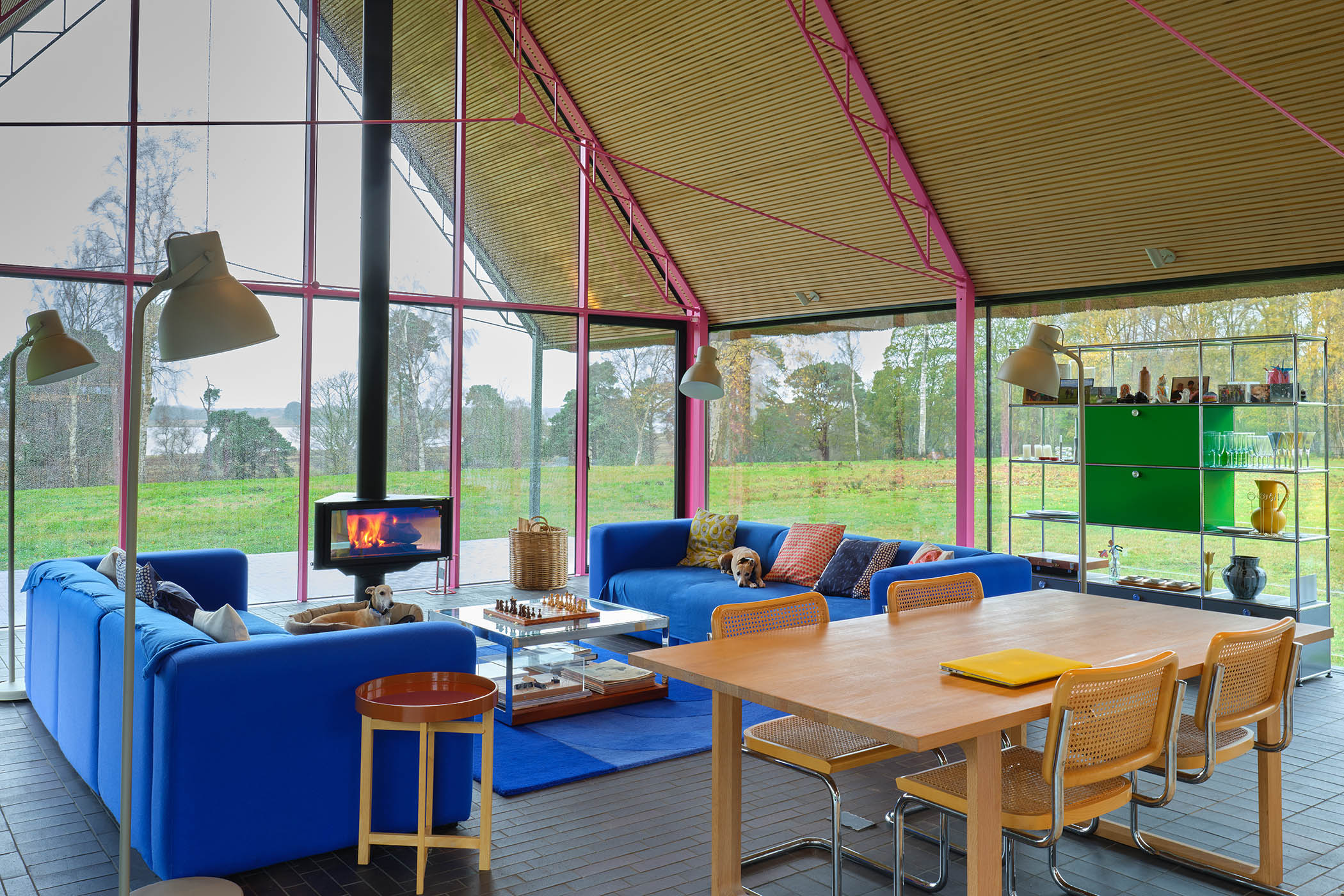
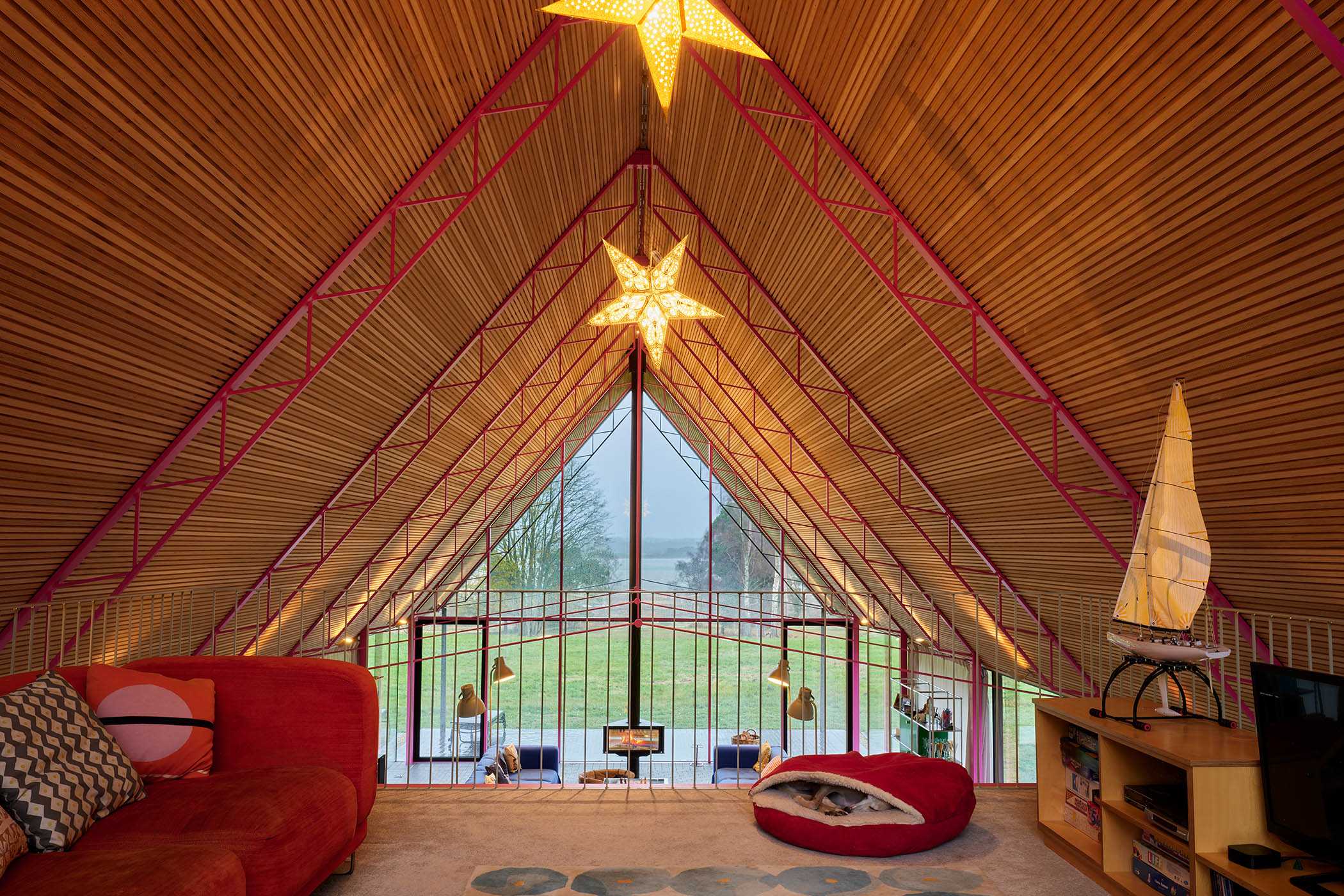
The new house is conceived as a traditional farmstead, except its different elements look outwards to the views rather than inwards to a courtyard. Its centrepiece is the living room and kitchen, with all-glass walls and a slender fuchsia-painted steel frame beneath a thatched roof. The effect of the thick cover hovering over barely there walls is to create a simultaneous sense of shelter and openness. There’s a platform for watching television above the kitchen, which among other things means you don’t see the backs of screens (which Hopkins abhors) through the glass walls.
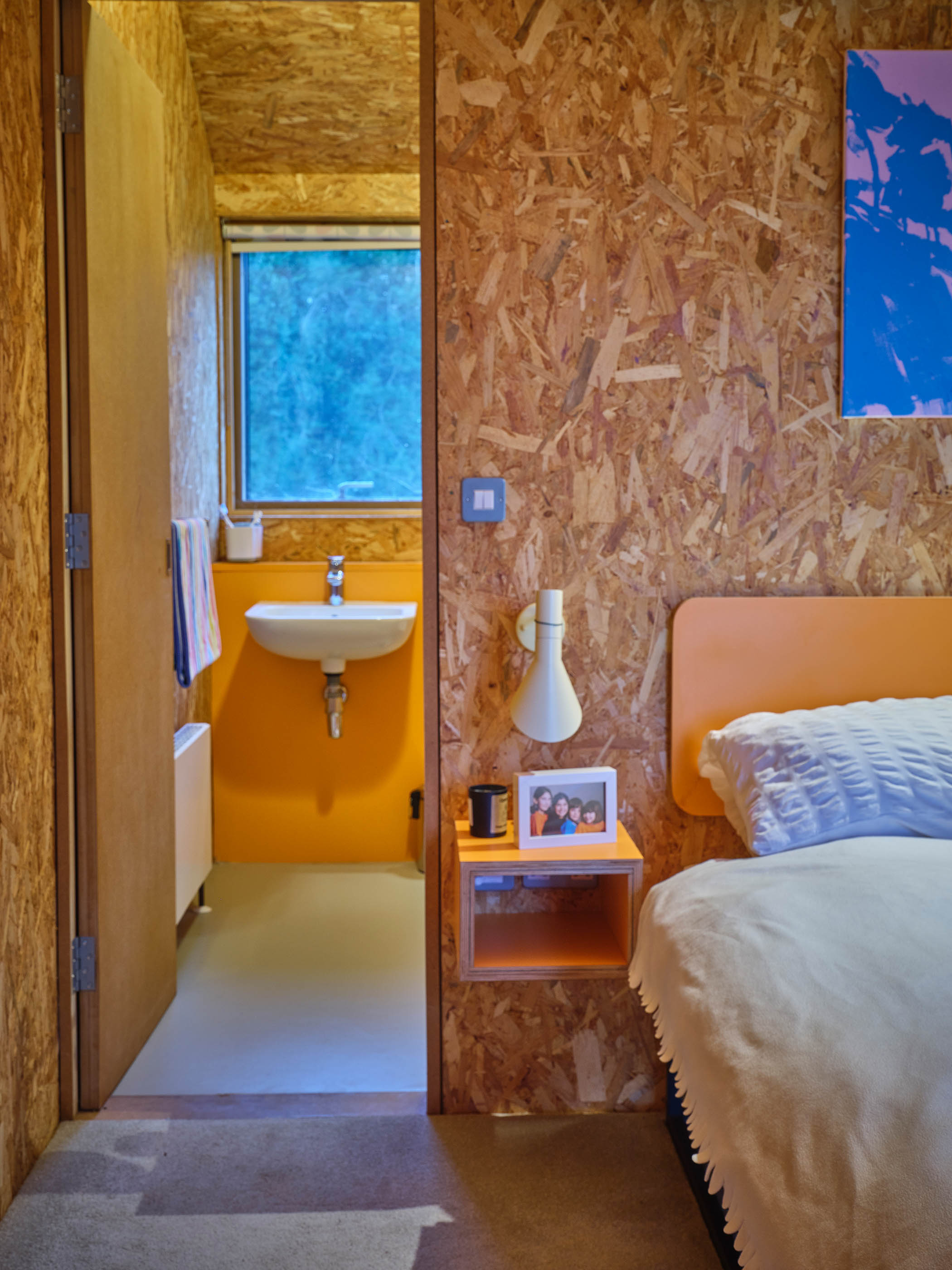
To one side is a wing of six bedrooms for their children, fronted with a glassy corridor and roofed with solar panels. To the other is a brick oblong, inspired by pillboxes, that contains the master bedroom, above which a glass-walled study is raised on skinny metal legs and reached by an external spiral staircase. Behind, covered in agricultural corrugated metal, is a structure containing a garage, utilities, and a first-floor rumpus room.
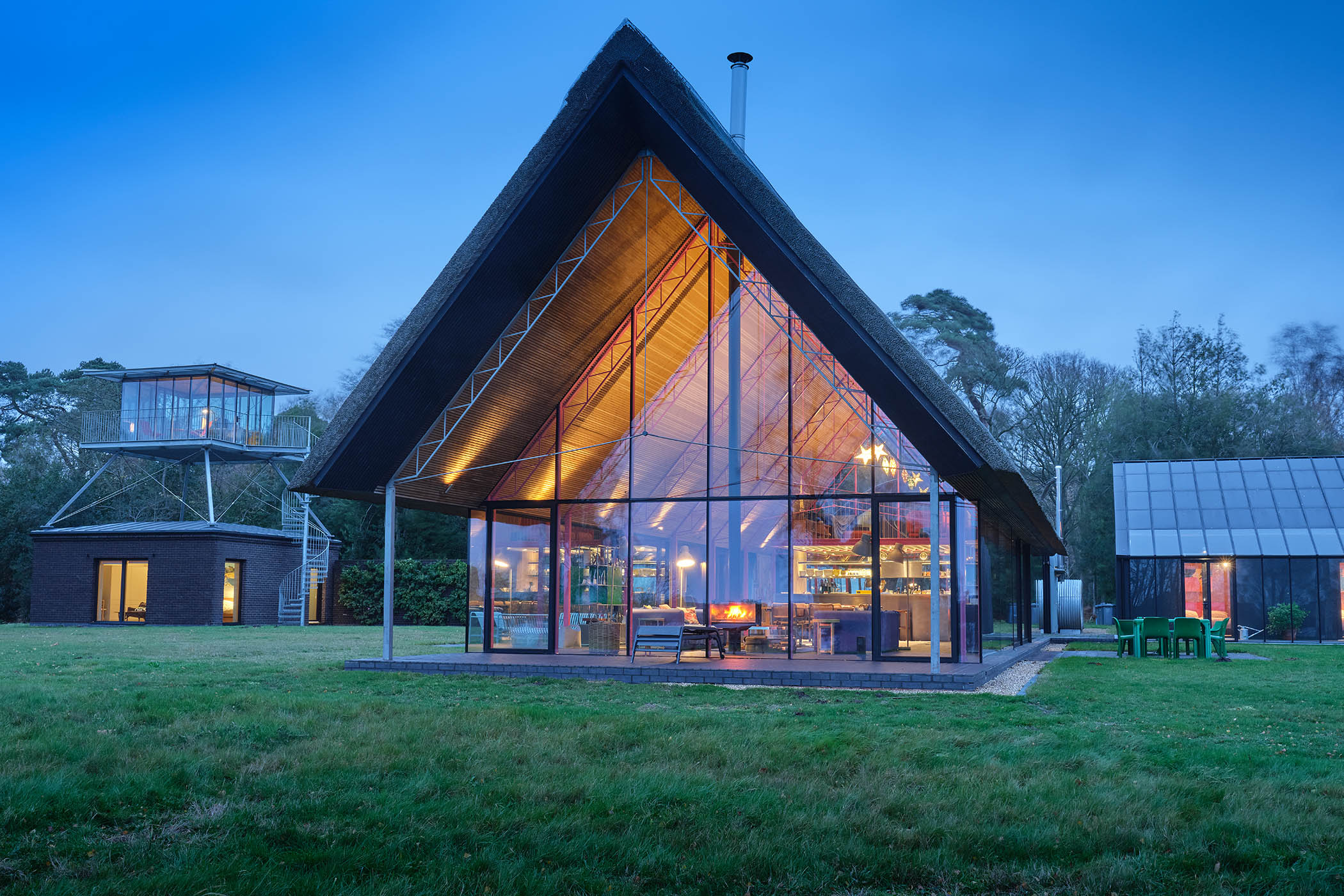
The blocks being separate mean you can’t get from one to another without going outdoors. “A lot of the family thought we were mad to have buildings not connected,” says Hopkins. But she and Sanei say they love “that short, sharp exposure, whether it’s raining, snowing, or cold… having that extra encouragement to go and look at stars and the moon.”
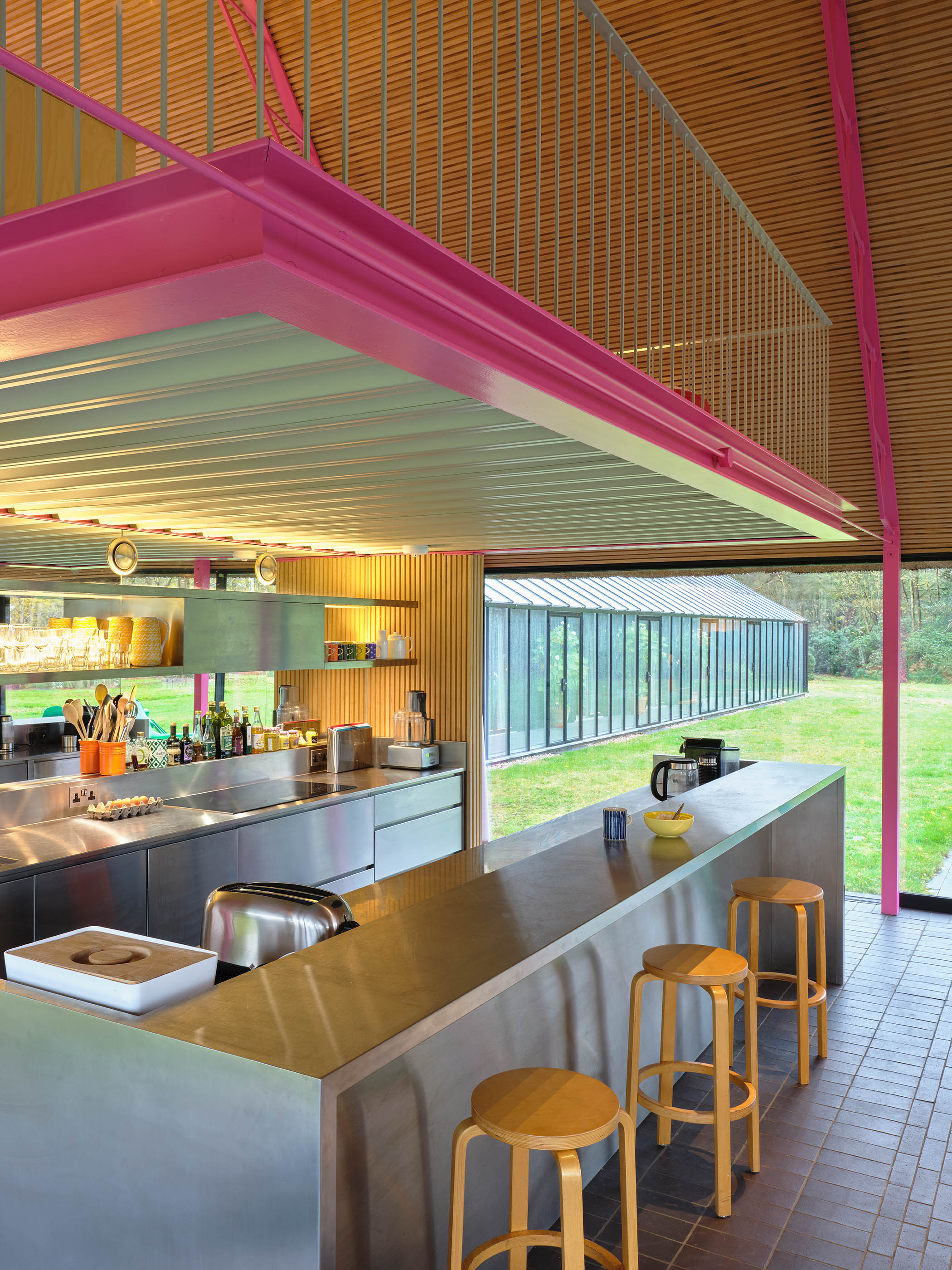
Housestead is a work of precision rusticity, an orderly coming-together of rough, smooth, natural and industrial. It is furnished with modern classics – USM shelving, Herman Miller chairs, Mags sofas by Hay – and with semi-abstract landscape paintings commissioned from the architect and artist Birkin Haward, a friend of the family. This is not the typical dishevelled farmhouse of piled-up wellington boots and dog-chewed rugs. Instead the couple’s two whippets wander gracefully on the neat blue quarry-tiled floors, the timber-lined ceiling overhead, beyond them the long horizontals of the coastal landscape. It’s the countryside, but not as you may know it.
Newsletters
Choose the newsletters you want to receive
View more
For information about how The Observer protects your data, read our Privacy Policy