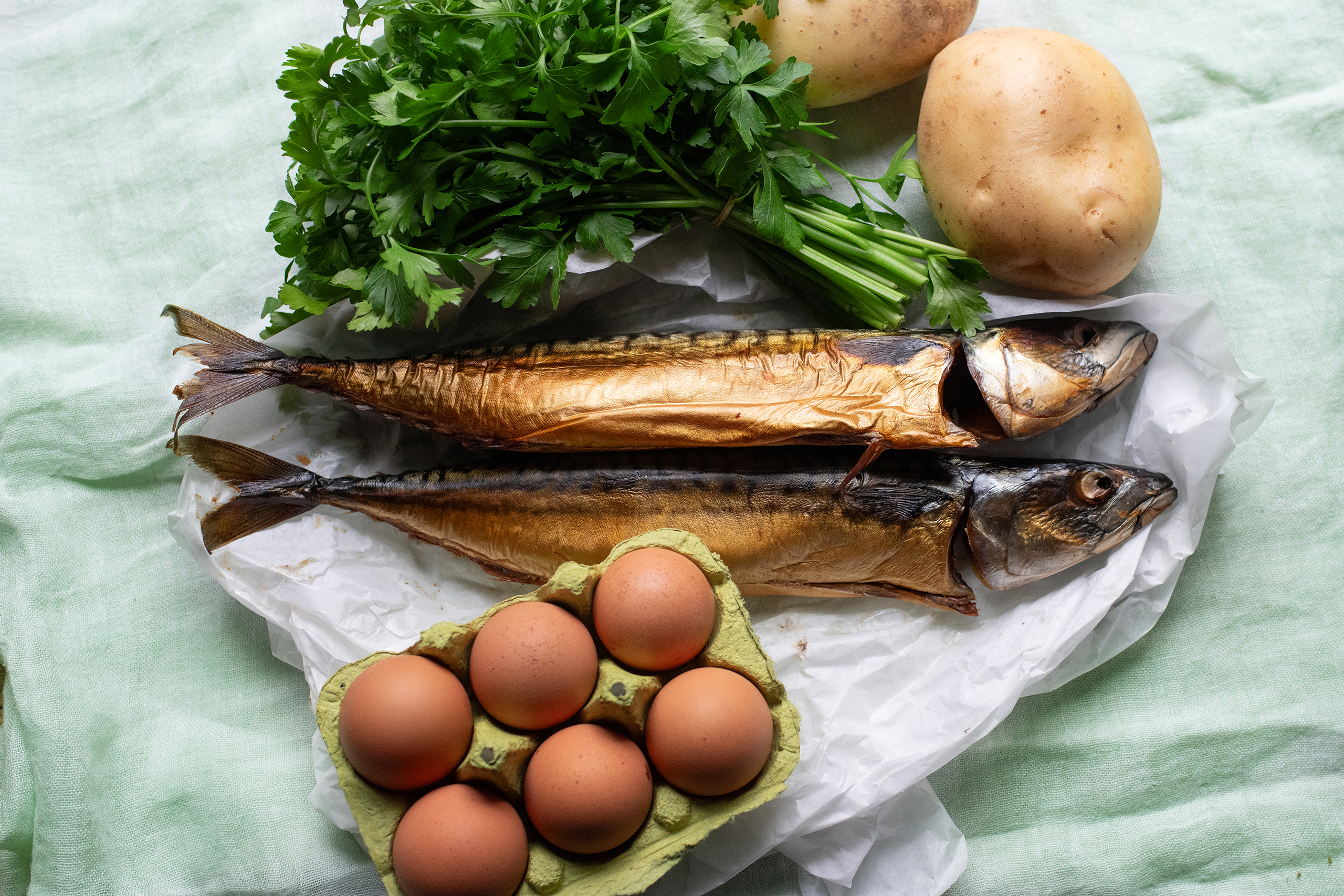



There has been much to do outside of late, pruning fruit trees and mulching the garden beds, heavy work that is best done in the cold months. It’s work I particularly enjoy when I know there is hearty food to come in to. The thought of a starch-based meals of potato, beans or pasta will keep me going when I’m cold and wet. Twice this week I have made fish and potato suppers. First, a smoked haddock chowder and then potato cakes with parsley sauce, plump cushions of mashed potato speckled with parsley and spring onion. Soft inside, crisp outside, served with smoked mackerel and parsley sauce and eaten gratefully as each one came from the pan.
The mash was made with a potato ricer (I could have used a traditional hand-masher), then thickened with flour and eggs. The green element was cooked first, until soft and dark. They bore their cargo of smoked fish, but I could have topped them with rashers of crisply marbled streaky bacon or fried mushrooms. There was little need for a sauce, but I have a love of an old-fashioned parsley sauce, cooked slowly with bay leaves and peppercorns, lovingly stirred. It is the oldest and best of the sauces for a winter fish supper. Think fishcakes, fish pie, smoked haddock.
A cabbage the size of a hat was the most useful of this week’s vegetables. Its outer leaves, dark green and tinged with mauve, were shredded and fried with grated ginger, garlic and soy sauce as a side dish to Korean dumplings, then the heart of cabbage was cut into wedges and briefly steamed, before being slapped on the griddle until the edges charred. I tossed them with chilli jam as they came off the heat.
This has been a week of trying to keep warm. A thin stew of simmered lamb on the bone with carrots and parsnips came afloat with plump dumplings freckled with chopped sage. Slices of potato and celeriac baked in the oven for an hour or more with vegetable stock, thyme and grain mustard – and there were at least two hot puddings.
One of the puddings was a classic rice pud, baked in the Aga with a bay leaf and served with damson jam. The second, a sponge pudding of sherry-soaked sultanas, was spiced with ground ginger and served with custard. A baked version of a classic steamed pudding, altogether lighter, quicker and easier, but just as big a treat.
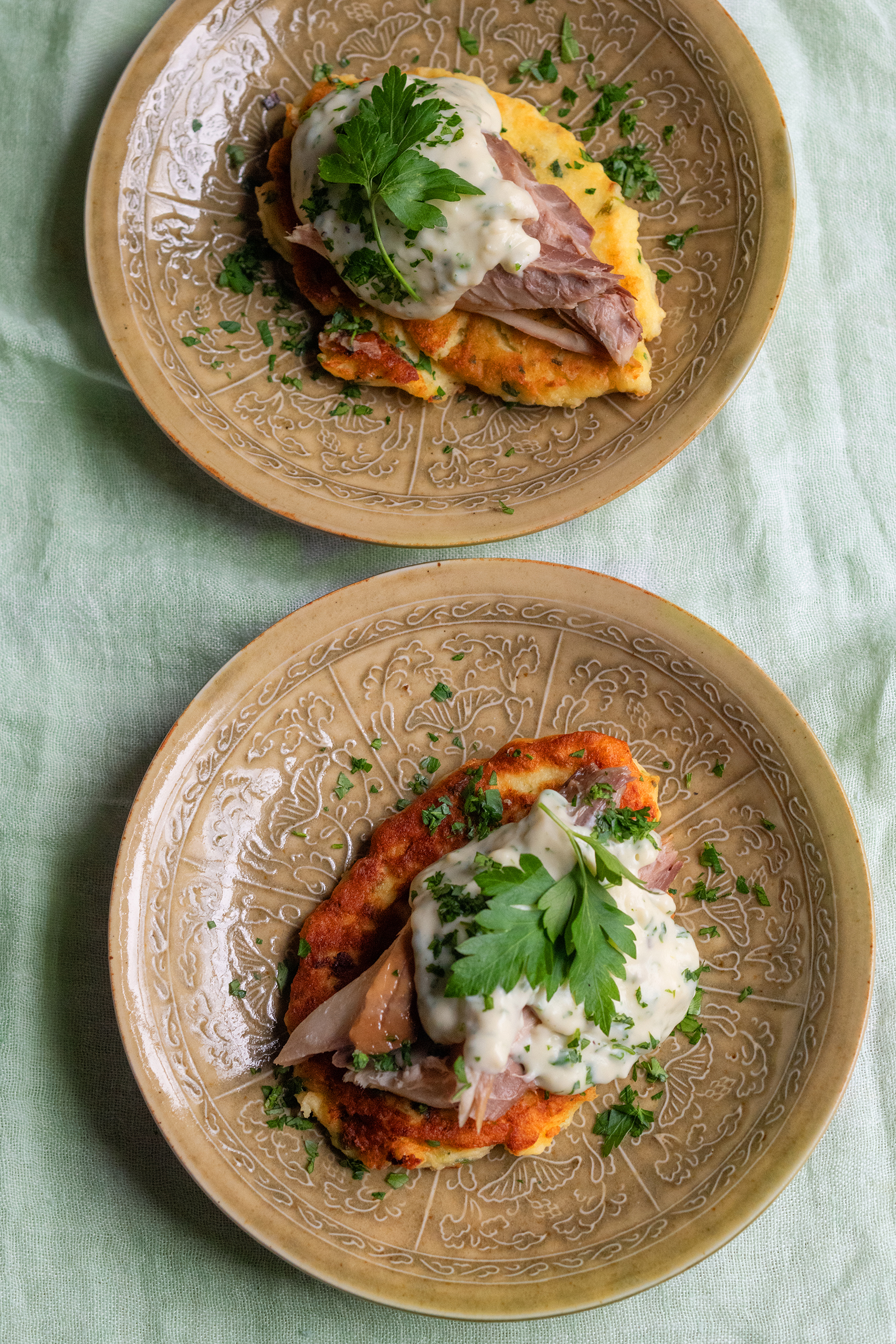
‘Eaten gratefully’: potato cakes, smoked mackerel and parsley sauce
Potato cakes, smoked mackerel and parsley sauce
Makes 6, serves 3. Ready in 1 hour.
The most successful way to turn the potato cakes in the pan is to do so with a wide, flat spatula in one, swift, confident move. If you find them too fragile to handle, then make them a little smaller in size.
potatoes 750g, floury
spring onions 90g
olive oil 3 tbsp
parsley 25g
thyme leaves 1 tsp
eggs 3, large
plain flour 75g
olive oil a little
smoked mackerel 1, large (about 650g)
For the sauce:
milk 500ml
bay leaves 3
black peppercorns 5
butter 50g
plain flour 50
parsley 50g
Peel the potatoes, cut them them into large pieces, then cook in deep, well salted, boiling water until tender (about 20 minutes).
While the potatoes are boiling, r oughly chop the spring onions. Warm the oil in a shallow pan, then stir in the spring onions and leave them to cook over a moderate heat, until soft and their flavour has mellowed; about 10-15 minutes.
Remove the leaves from the parsley, finely chop, then stir into the spring onion together with the thyme leaves. Season with salt and black pepper and continue cooking for a minute or two.
Make the parsley sauce. Pour the milk into a deep saucepan, drop in the bay leaves, scrunching them in your hand as you go, then add the whole peppercorns. Warm the milk over a moderate heat, removing it just before it comes to the boil. Leave the milk to infuse with the aromatics.
Melt the butter in a medium-sized, heavy-based pan over a moderate heat, then mix in the flour and let it form a thickish paste, stirring almost constantly. Pour in the milk, removing the aromatics as you go, blending all the time. If the sauce remains lumpy, then whisk firmly until smooth. Lower the heat and let the sauce bubble gently, giving it the occasional stir for a good 10 minutes.
Remove and finely chop the leaves from the parsley, then add them into the sauce. Season with salt and a little ground black pepper, then set aside and keep warm.
Drain the potatoes thoroughly, then mash them. You can do this with a vegetable masher, which will give you a smooth, firm mash, or you can put them through a potato ricer, which gives a smoother, blissfully light and fluffy mash.Your choice. Stir the spring onions and herbs into the mashed potatoes. Leave to cool for 5 minutes.
Separate the eggs, putting the whites into a large mixing bowl. Beat the whites with a whisk until fluffy, but not stiff enough to stand up. Mix the yolks with a fork, then add them into the mashed potato, followed by the flour, making sure the flour is well mixed in. Fold in the beaten egg whites, then set aside for 10 minutes.
Peel the skin from the smoked mackerel and remove the bones. Break the flesh into large pieces.
Warm a thin film of olive oil in a nonstick pan. Take a large spoonful of the batter (about a sixth of the mixture) and place it in the hot oil, followed by a second, then smooth into rounds or ovals lightly with the back of a spoon. I think they look better if they are rough-edged. Cook for 3 or 4 minutes until the underside has turned golden in patches, then turn them over, using a flat spatula. Leave to cook for a further 3 or 4 minutes, then transfer to a plate to keep warm. Repeat the process until you have used up all the batter.
Place two pancakes on each of three plates. Divide the smoked mackerel between the pancakes, then spoon over some of the parsley sauce and eat.
Newsletters
Choose the newsletters you want to receive
View more
For information about how The Observer protects your data, read our Privacy Policy