
On a rainy winter afternoon, locals emerge gingerly from the underground car park at Arezzo’s Piazza del Popolo. They’re aiming for the steep, cobbled streets of the city centre. But one by one they pause, mid-dash, to peer through the vast windows of LIS10 Gallery.
For years this concrete-walled space was the unused storage area of Arezzo’s theatre, but since September its brutalist walls have been bursting with colour. LIS10 specialises in contemporary African art, and now bright paintings by Aboudia, from Côte d’Ivoire, and Cameroon’s Ajarb Bernard Ategwa hang alongside works by 20th-century Italian greats including Guttuso and Vedova. A bust of the Ivorian artist and activist Laetitia Ky perches beside an ancient Roman head.
It’s a boundary-pushing blend of the old and the new that you might not expect to see in Tuscany’s fourth-largest city.
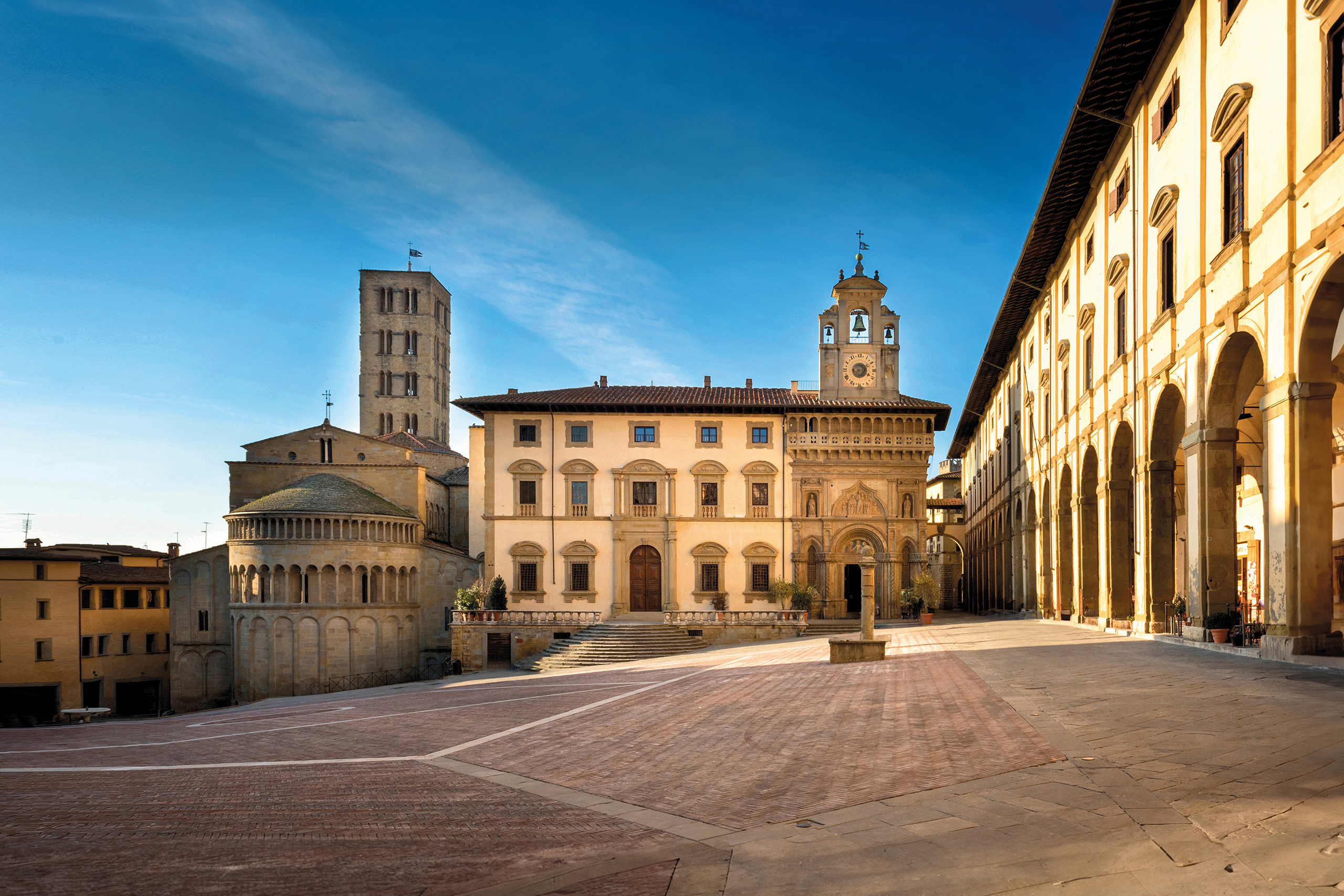
But Arezzo, 50 miles south-east of Florence, at the foot of the Apennine mountains, is no regular provincial town. It has been a centre of artistic innovation since Etruscan times, and was an incubator for new ideas during the Renaissance, thanks to local artist Giorgio Vasari’s friendship with the Medici clan. LIS10’s decision to relocate from Milan’s hipster Lambrate neighbourhood to Arezzo (it also has galleries in Paris and Hong Kong) is rubber-stamping the city’s changing status.
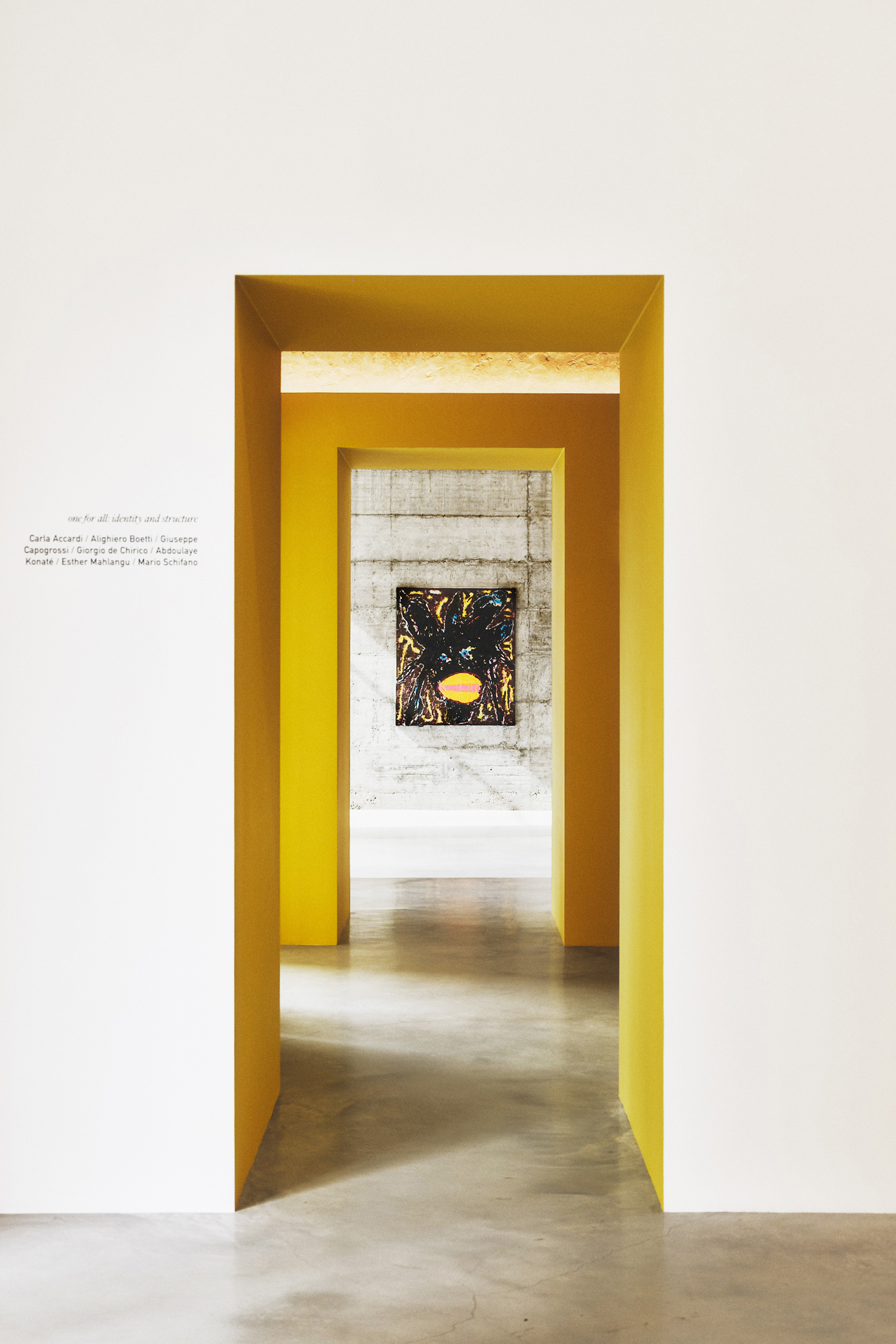
New look: prior to housing LIS10 Gallery this brutalist, concrete-walled space was the unused storage facility of the city theatre
“We’re very proud of old art in Italy, but sometimes contemporary art can’t find a space,” says the gallery’s director, Gabriele Chianese. “Arezzo was ready. People are very curious, and we wanted clients to discover a city that isn’t on the usual circuits.” Its next exhibition, in April, will be by the South African artist Esther Mahlangu, whose geometric mural has been causing a stir at London’s Serpentine Galleries. The plan is to continue the dialogue between contemporary African artists such as the South African artist Esther Mahlangu and 20th-century Italians.
That’s par for the course for Arezzo, whose inhabitants, the Aretini, have always built on the past. The city has long been famous for its goldsmiths; the city’s archaeological museum is located in a 14th-century monastery whose sickle shape derives from the Roman amphitheatre over which it is built. Medieval skyscrapers are folded in with hulking Renaissance palazzos, churches are stuffed with Renaissance art. Nowhere will you feel this more than in Santa Maria della Pieve, a stately cross of romanesque and gothic architecture with dark stone walls, high slit windows and a gold-swaddled altarpiece by the painter Pietro Lorenzetti. Its saints are clad in colourful swirling fabrics: a pink and blue robe for the Madonna that could be a Pucci kaftan, and Saint Augustine sporting a mint-green cloak and a model’s smoulder.
The altarpiece was restored in 2020, and is perhaps the most dazzling example of Arezzo’s post-pandemic glow-up. Last year, Santa Maria della Pieve’s exterior – a wedding cake of arches spiralling towards the sky – was restored, while Piero della Francesca’s 15th-century frescoes at the basilica of San Francesco were cleaned.
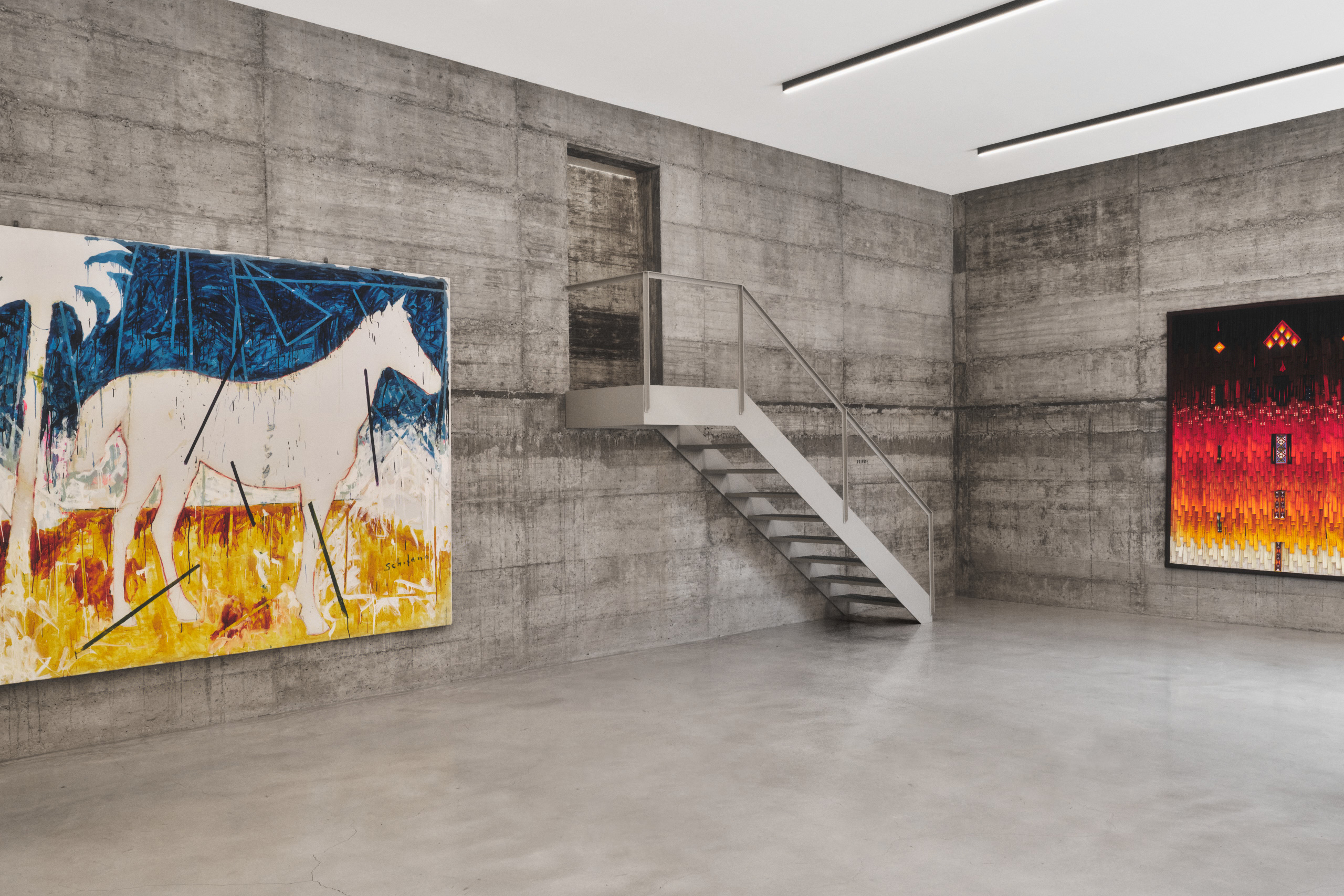
Artful mix: LIS10 Gallery’s blend of old and new adds to the beauty of Tuscany’s fourth-largest city
Up the hill is Rosy Boa, a gallery that opened in 2022 in a cement-walled postwar building. Its co-founder Matilde Puleo had always worked in contemporary art, and grabbed her chance to open a gallery in her adoptive hometown. “In Italy we do culture through blockbuster exhibitions,” she says. “Art becomes a reason to sell cities through tourism, but it excludes young people and people who live here.”
Rosy Boa exhibits Italian artists, and artists resident in Italy, in a something-for-everyone mix: landscape photography by an elderly Aretino alongside erotic surrealist paintings, for example. There might be a street-art installation or a three-day festival of noise. “Arezzo is more real than Florence or Siena,” says Puleo. “It’s a misura d’uomo [on a human scale].”
Arezzo is more real than Florence or Siena. It’s a misura d’uomo [on a human scale]
Arezzo is more real than Florence or Siena. It’s a misura d’uomo [on a human scale]
Although it’s long been known for its art (a Cimabue in the basilica of San Domenico, Vasari’s frescoed former home), Arezzo has shifted into the 21st century over the past decade. At the restaurant Essenza Dario e Anna on Arezzo’s main square, chef Luca Scoscini adds molecular cooking to Italian classics, whether it’s ultrasonically cooked ossobuco or tiramisu from a nitrogen canister. He moved his restaurant from the city outskirts in 2019.
“Back then, Piazza Grande was dead. People never came here. But I like a challenge,” he says. Now the chef also runs two other joints on the square: Vasari Café, a popular bar, and the enoteca L. Indigeno.
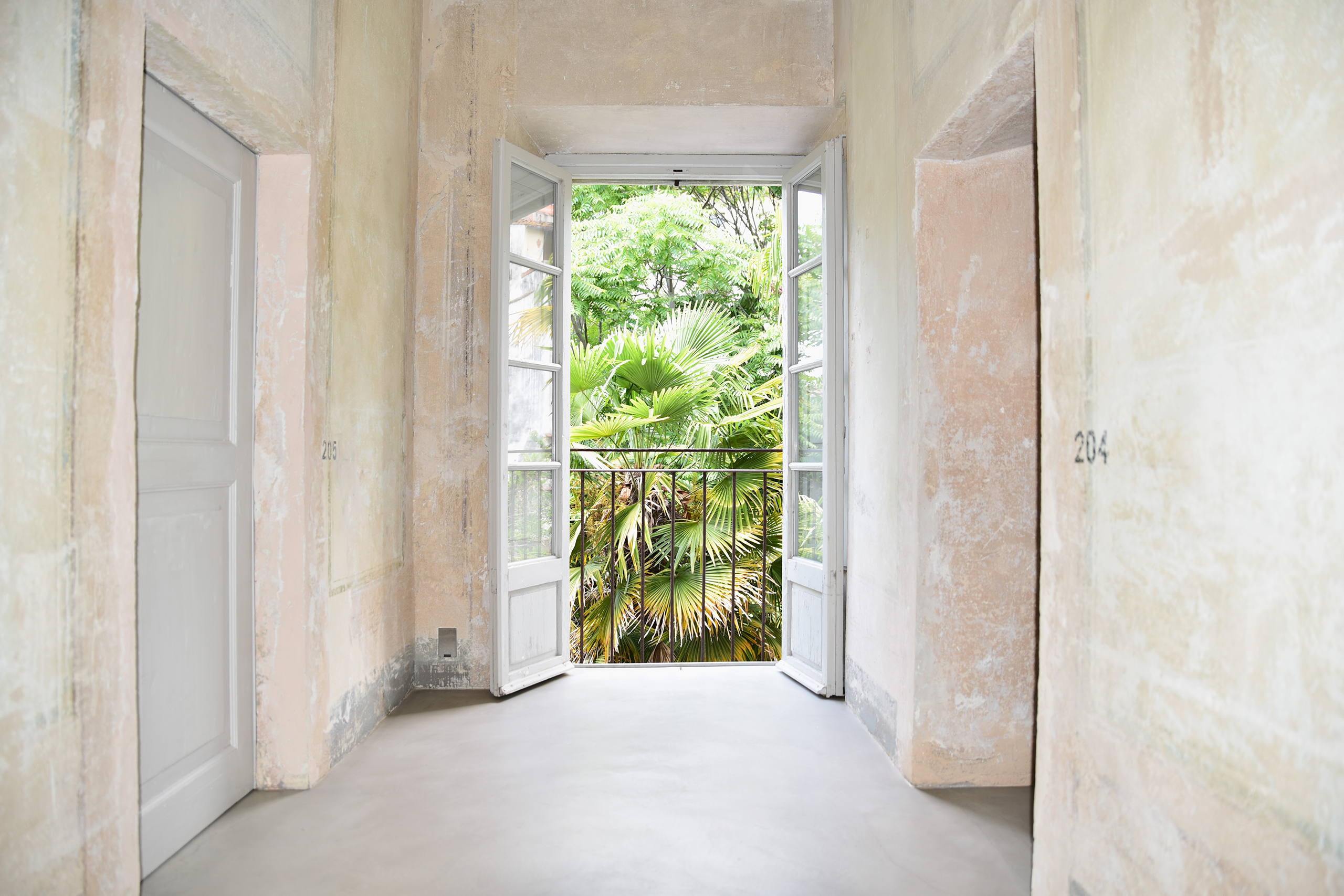
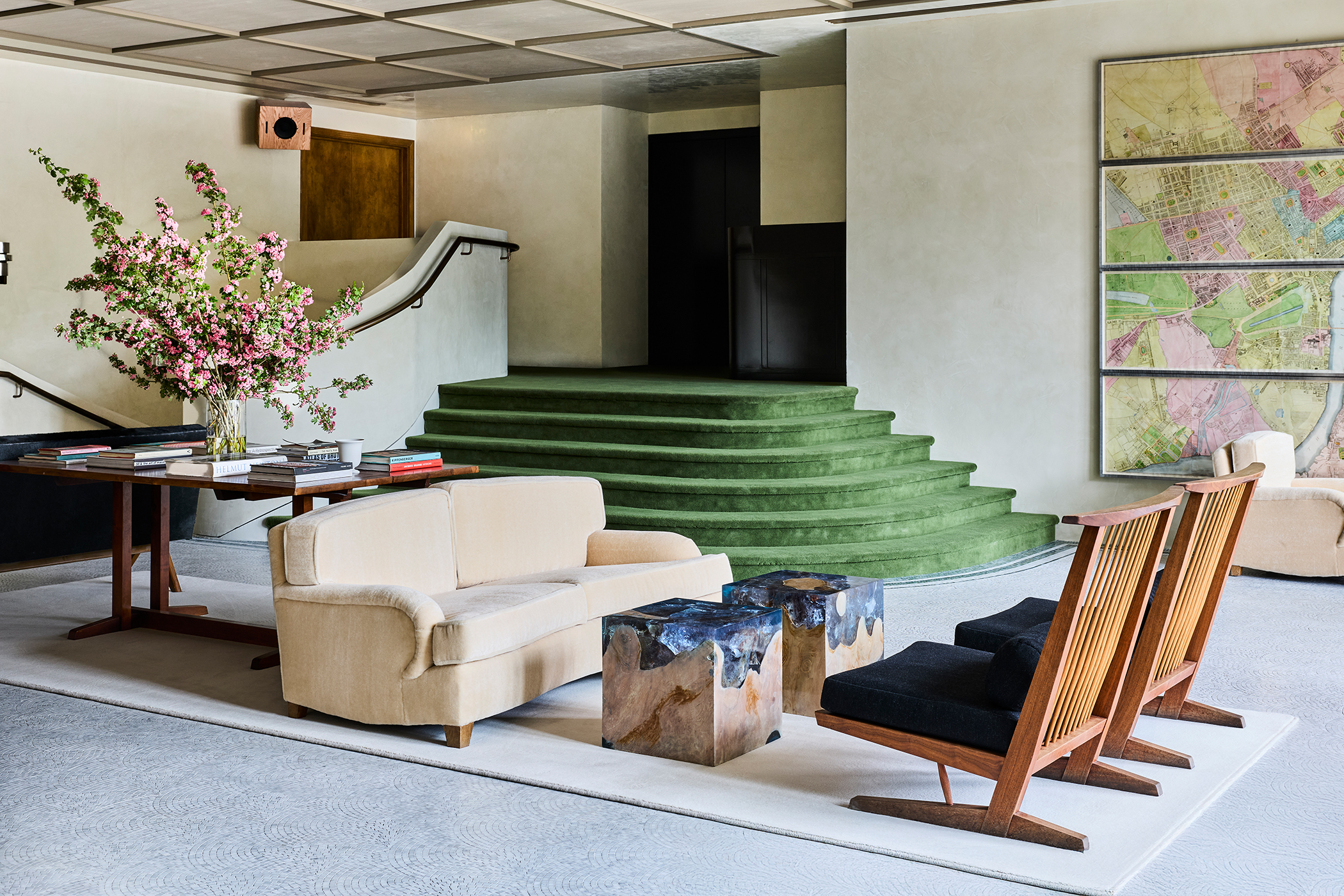
Green shoots: Sugar Rooms look out on to a garden, and a courtyard bar comes alive at aperitivo time
Another person playing a role in the city’s current revival is Patrizio Bertelli, chairman of the Prada Group, who swept into his hometown rescuing businesses that had gone under during Covid. In 2023 he bought the landmark Caffè dei Costanti (yet to reopen); a beloved newspaper stand in Piazza San Jacopo; and La Capannaccia, a trattoria outside town.
A year earlier he had snapped up La Buca di San Francesco, a legendary Arezzo restaurant that has entertained everyone from Charlie Chaplin to Jeanne Moreau. Today, La Buca di San Francesco, which is located in a cellar next to the San Francesco basilica, pairs traditional Arezzo dishes such as arrosto morto, a Renaissance-era braised-meat stew, with treats from the Bertelli family recipe book. Even the house wine, produced nearby, is the family’s own.
But Bertelli isn’t the only fashion guru in Arezzo. Sugar, a concept store founded by Beppe Angiolini in 1978, is regularly rated among the world’s most beautiful boutiques. Its home is Palazzo Lambardi, an 18th-century mansion on the vertiginous Corso Italia, an old Roman thoroughfare.
Across two floors, Miu Miu and Alaïa dresses are strung from frescoed ceilings, Jimmy Choos are racked up in the chapel, and a Crucifixion by the Giotto-like Spinello Aretino sits in a niche beside Moncler macs.
Downstairs, by a courtyard bar that comes alive at aperitivo time, there is a Roman mosaic of frolicking ducks and dolphins. In 2024 Angiolini opened Sugar Rooms: 10 bedrooms on the top floor, the beds and peekaboo bathrooms slotted between walls that have been stripped back to reveal scraps of original paintwork.
All this would have gone down a storm in Rome or Florence, but Angiolini has never wanted to leave his hometown. “There’s so much beauty scattered through Arezzo, but you have to discover it,” he says. “It’s not all picture perfect. It’s a real city.”
Newsletters
Choose the newsletters you want to receive
View more
For information about how The Observer protects your data, read our Privacy Policy