
Photograph by Philip Lee Harvey
Two people have made Corsica famous: Napoleon Bonaparte, who was born on this proud, volcanic island and, some would say, betrayed it; and the anthropologist Dorothy Carrington. Arriving in 1948, Carrington set about getting to know the “granite island”, the title of her lively, beady-eyed travelogue, published in 1971 and now a classic. Travelling on local buses and on foot, she met seers and murderers, shepherds and fishermen. She fell for the cerulean sea. She never sat still.
I don’t know what got into her. On my last trip to Corsica, to the unspoilt Valinco Gulf in the southwest of the island in early October, I lay about, morning, noon and afternoon. I blame the time of year, and the sea and our beautiful villa that sat on the edge of it, the views from the top balcony all I’ll ever need. The light that Matisse found so transformative during his extended honeymoon on the island in 1898 is softer in the autumn – both on the skin and on the mountainous Mediterranean island’s natural palette of reds and ochre, gold, turquoise and emerald.
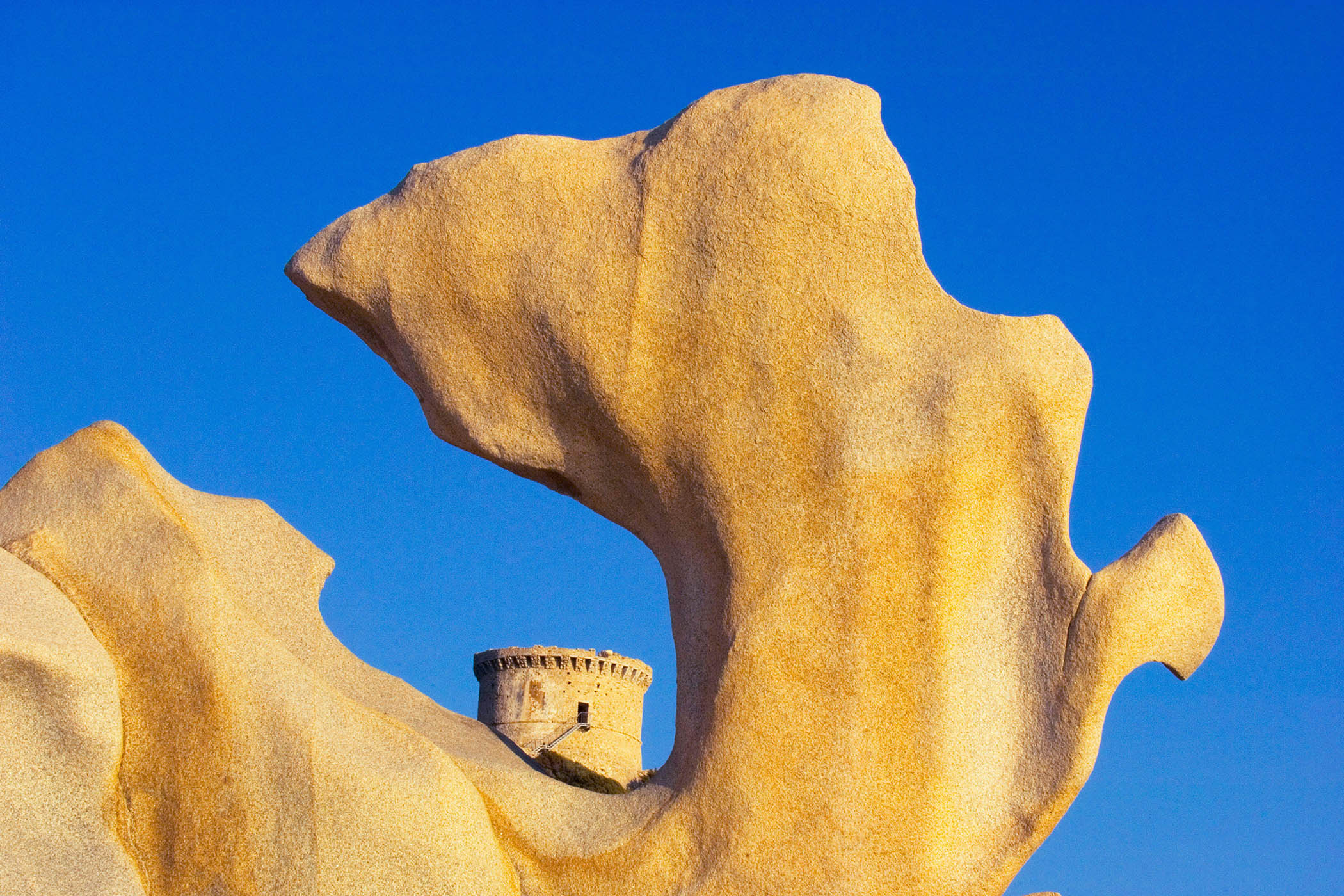
An unusual rock formation near Propriano
There was a tiny cove at the foot of our villa’s lawned garden and though we had a huge pool to lie by back at the Beach House – a five-bedroom affair with a big, modern kitchen that made cooking feel glamorous – we kept the pool for after-dinner dips and the hammock for shaded siestas. We made the cove our own: we took our morning coffee there, and our naps, and then our negronis, the hours marked by a swim out to the horizon and back again, over and over. Two kayaks came with the villa and we took them out every day, towards Propriano Bay that stretched out to our left, or past the golden beach next to our cove and on towards Porto Pollo a little further up the Valinco Gulf.
But how to describe a sea so mesmerising that the idea of leaving it – to walk through chestnut-filled forests or, shudder, to hike the 180km GR20 mountain trail – was anathema? Baby-bath warm and bejewelled-blue, for sure, but also “so blue that one would eat it” – Matisse’s words nail how Corsica’s translucent sea makes you hungry for more.
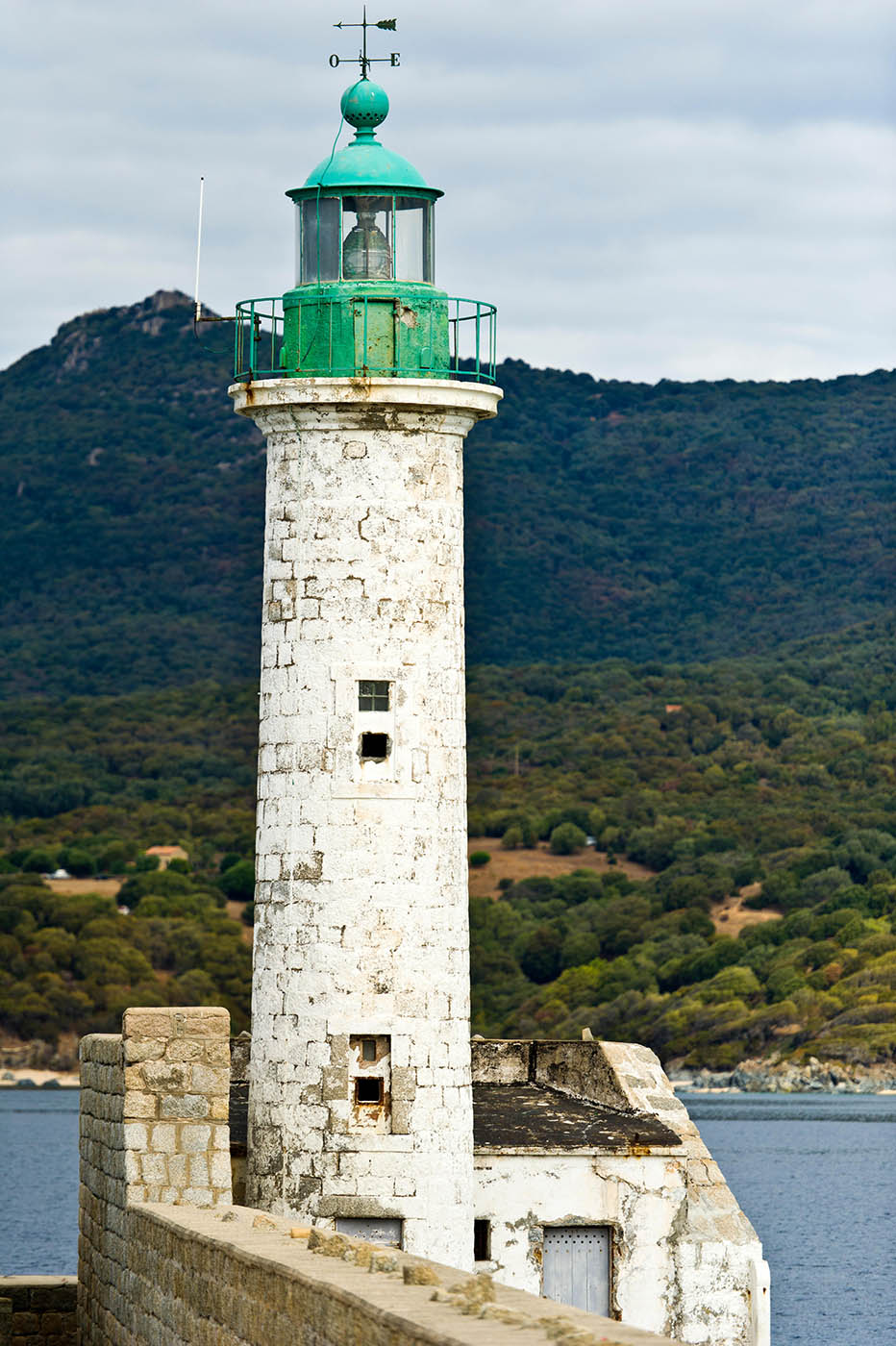
The lighthouse at Propriano
For us, come lunchtime, we ate altogether more substantively, picking up local produce from the endless suppliers who announced “produits Corses” for sale down side-roads off the corkscrew coastal road. Back at our villa, the long dining table heaved with fresh prawns, mountain cheeses, fig jam, AOC honey from the ancient town of Sartène, olives, bread and savoury tarts made with brocciu (a mild, French ewe’s-milk cheese, also used in the island’s famous fiadone, a lemon ricotta cheesecake) from the nearby bakery. From the supermarket in Propriano, the harbour town a 15-minute drive away, we also picked up fresh ravioli with brocciu and mint and beignets brocciu – the moreish soft-cheese fritters that you can eat any time, really, as well as deli-counter celeriac, which is my favourite thing from French supermarkets. For dessert, we had castagnaccio, or chestnut cake, and clementines. There was always a bottle of Patrimonio rosé on the go, for which I have to thank our French wine merchant back in grey north London who told me that, on the mainland, it is preferred to Provençal rosé.
Not all Corsicans are happy to think of France as the mainland, of course, given its history, which is immortalised in its food, architecture and the geographical variants of the Corsican dialect Corsu, which shares the road signs with French ones. Castagnaccio, for example, is derived from the Italian for chestnut and the cake itself is Ligurian. Colonised first by the Pisans, and then, until 1755, by the Genoese, Corsica enjoyed a brief stint as a democratic republic under Pasquale Paoli. In 1769, it came under French rule.
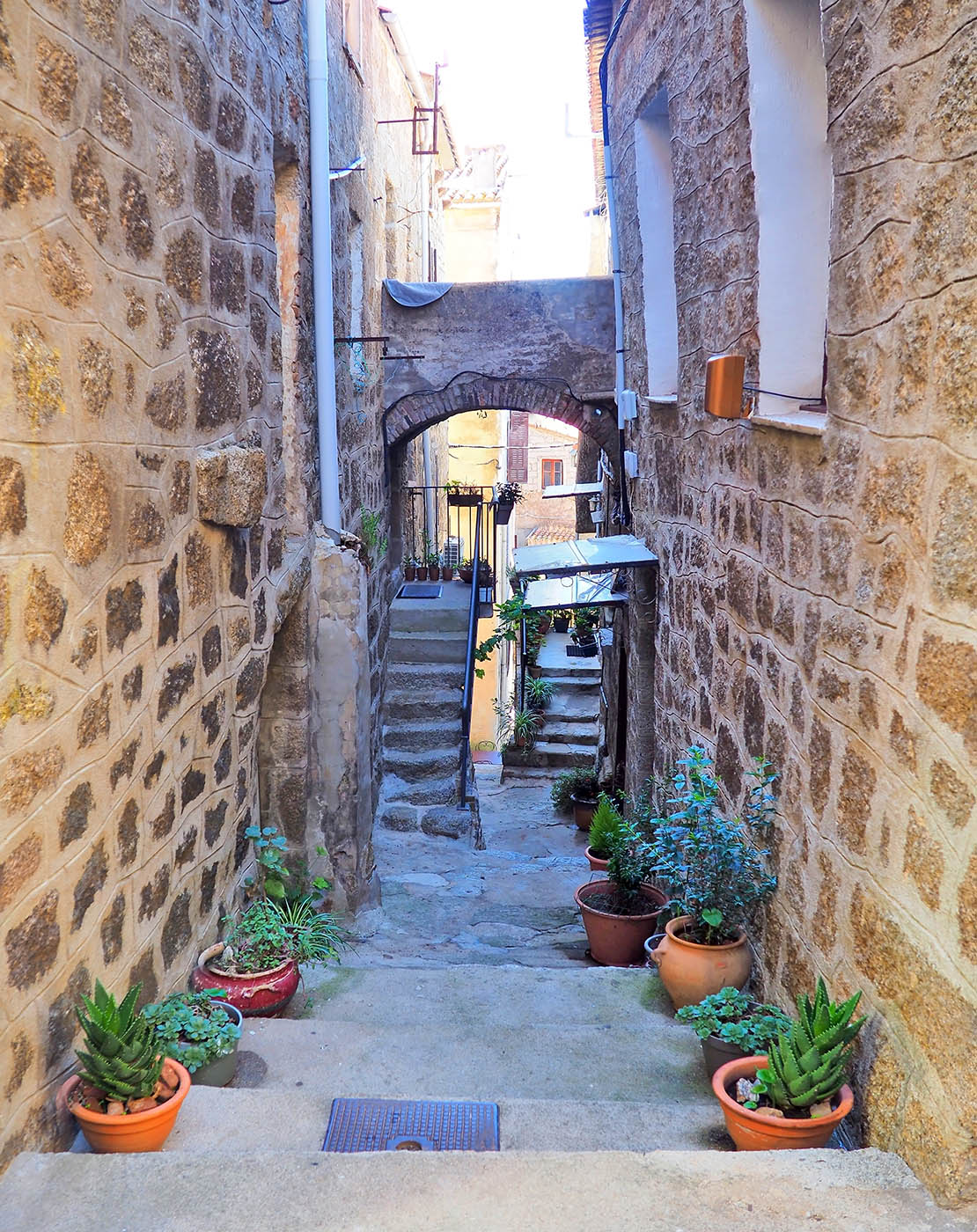
A narrow street in the pretty town of Sartène
Three days in, we did leave our cove – to have breakfast in a café overlooking yet another glorious white-sandy beach, this one at Porto Pollo, a quiet, best-kept secret full of locals, across the bay from Propriano. In the summer, you could jump on a ferry to Marseille from here and enjoy some slow, crowd-free travel, though this part of Corsica is far from glitzy. You’ll find that in the ancient fortress town of Bonifacio in the south, with its clifftop position, magnificent citadel and stunning beaches, or Porto-Vecchio, the island’s answer to St Tropez in the southeast. Porto Pollo was low-key and a little scruffy and we liked it for that.
A 15-minute drive away is Filitosa, home to the Neolithic settlements and statue-menhirs (standing stones, carved with human features) and torri – or towers – that Dorothy Carrington made famous. Afterwards, we went into Propriano to play padel – hardly a Corsican tradition, you might say, but sometimes, en vacances, it’s OK to catch a global trend. Besides, we had chestnut cake to work off.
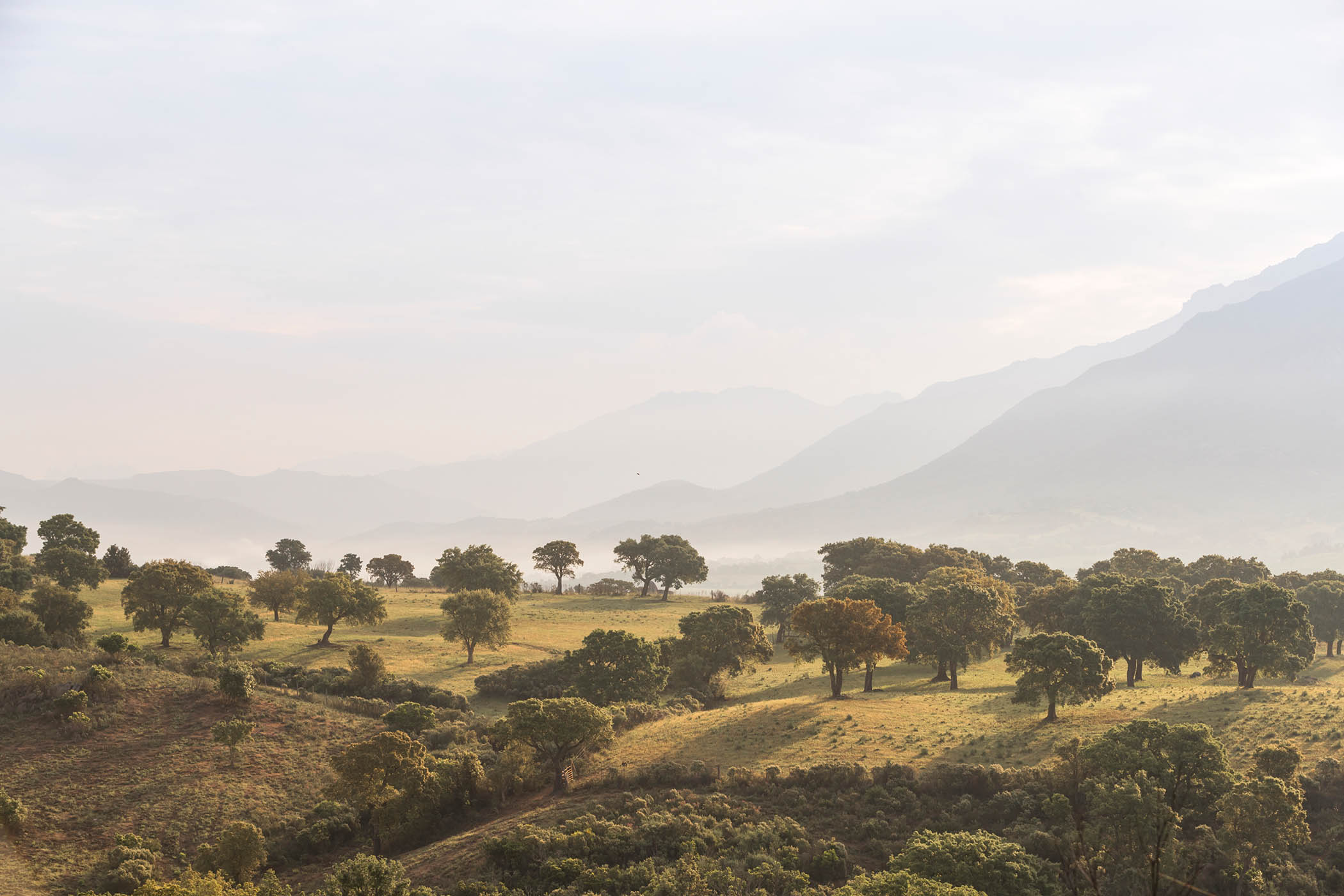
Landscape around Sartène, Corsica, France
Unfortunately, some pros were playing on the adjacent court, our balls went everywhere but the glass walls, and I, giggly at the suppressed memory of how weepingly bad I had been at both real tennis and squash as a teenager, wished I was a different, sporty person.
Nothing for it but to return to proper tourism, so off we went to Sartène, a mountaintop hamlet and wine region 14km inland from Propriano. Once described by Carmen author Prosper Mérimée as “the most Corsican of Corsican cities”, Sartène has a well preserved old town, quaint restaurants hidden down alleyways, and a 16th-century echauguette (lookout tower) for pirate-spotting. We instead spotted tourists as we sat in the café-filled Place Porta, the main square, with a tasty glass of Sartènais wine. Opposite, posted on the door of the Église Sainte Marie, was a poster advertising traditional polyphonic singing. The dates didn’t work for us, but I’d come back to Corsica just to hear a live performance of this primal music, sung by male-voice choirs. Rooted in Gregorian chant, it is deep and soulful. Listen to a recording and the island’s identity and resilience, forged from a harsh landscape of desert and maquis scrubland and mountains, as well as from sunshine and sea, rings out.
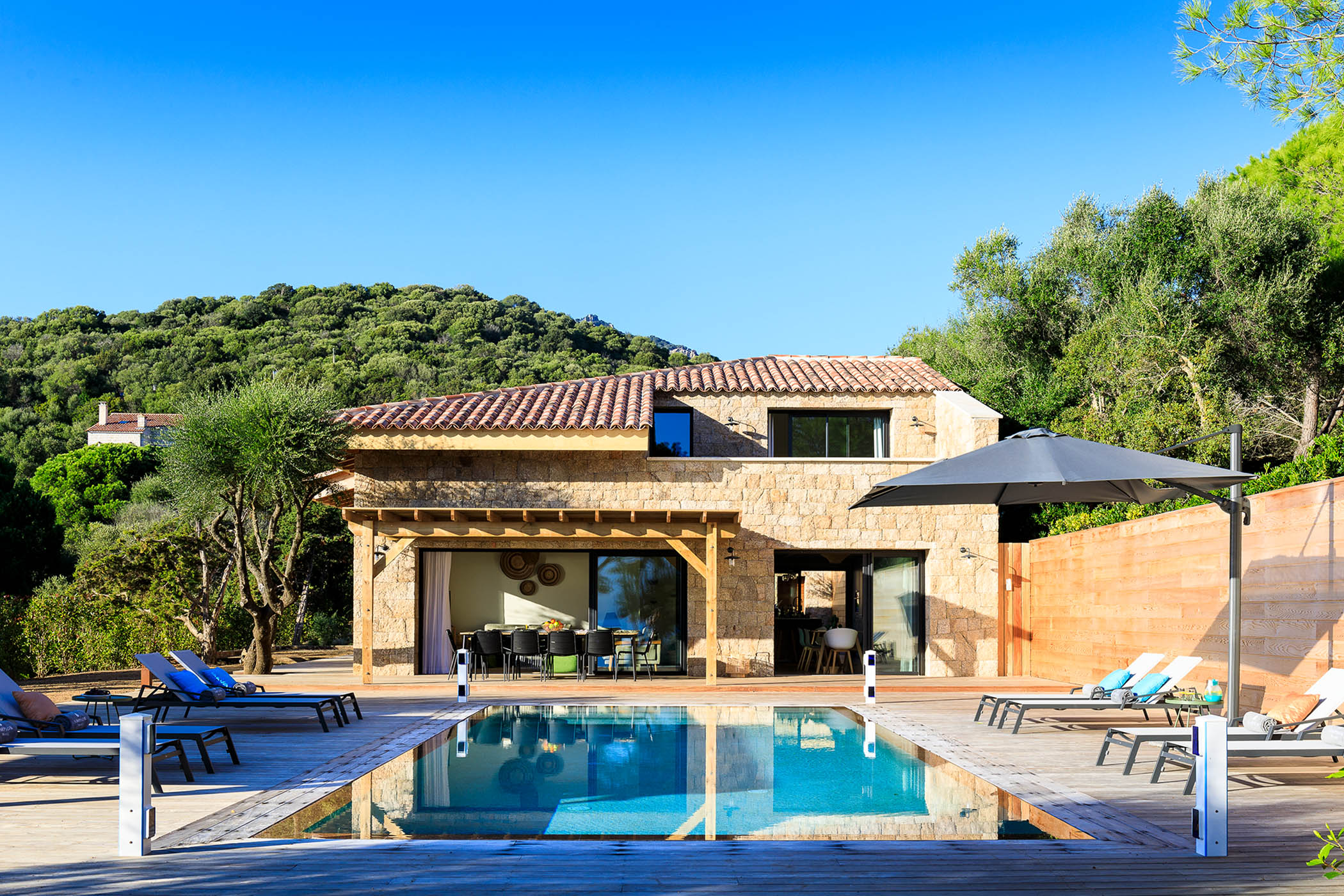
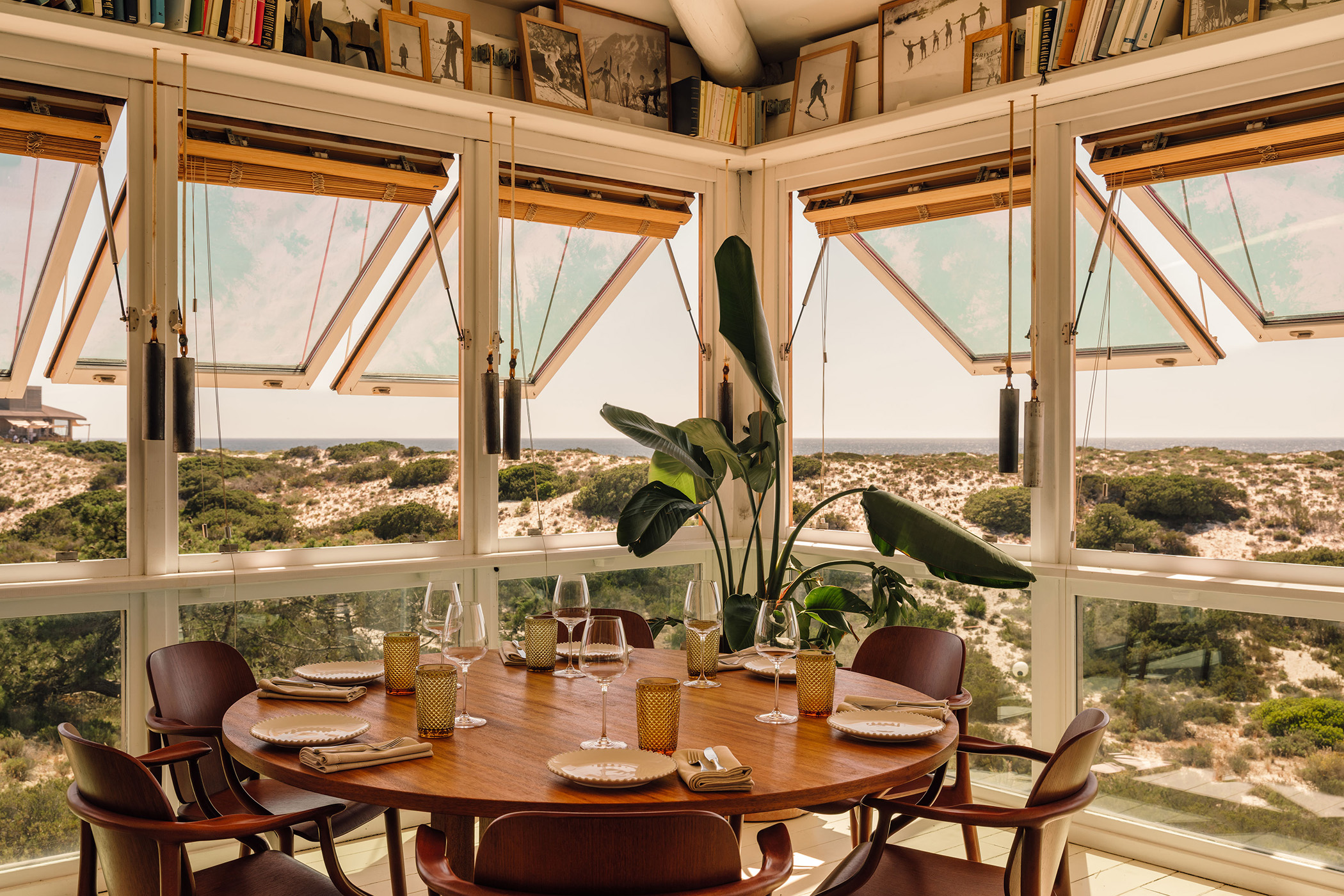
Take it easy: the Beach House sleeps up to 10 and is just a short walk from the beach
We were able to take in the monumental coastline during an unmissable two-hour boat trip we took from Cargèse, a more bijou hill town with a pretty harbour, 100km north of Propriano. Local boat tour company U Filanciu (ufilanciu.fr) took us out to see the Calanques de Piana, the red granite sea stacks and cliffs that are part of the Unesco-listed Scandola Nature Reserve. We dipped into caves, spotted eagles’ nests and counted several Genoese watchtowers. Afterwards, for our holiday’s final hurrah, we had a fresh seafood lunch at U Rasaghiu, which has a prime spot overlooking the harbour. Back at the Beach House, we had our farewell drinks on the top balcony and looked out to sea. It was dark by then, but we knew the edible blue sea would be waiting for us – and promised to return.
For details on the Beach House, visit simpsontravel.com. For more local information, go to ouestcorsica.com
Newsletters
Choose the newsletters you want to receive
View more
For information about how The Observer protects your data, read our Privacy Policy