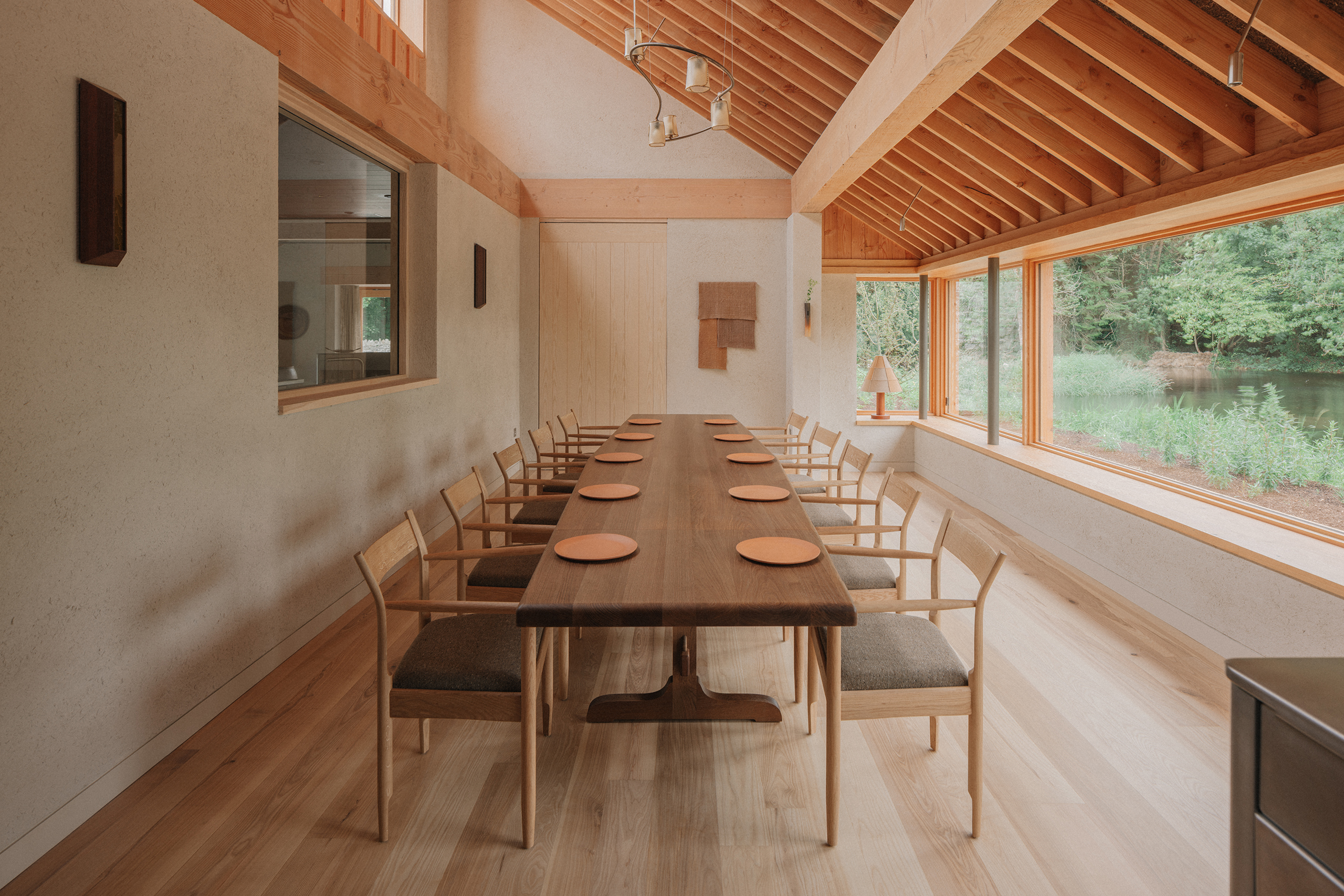


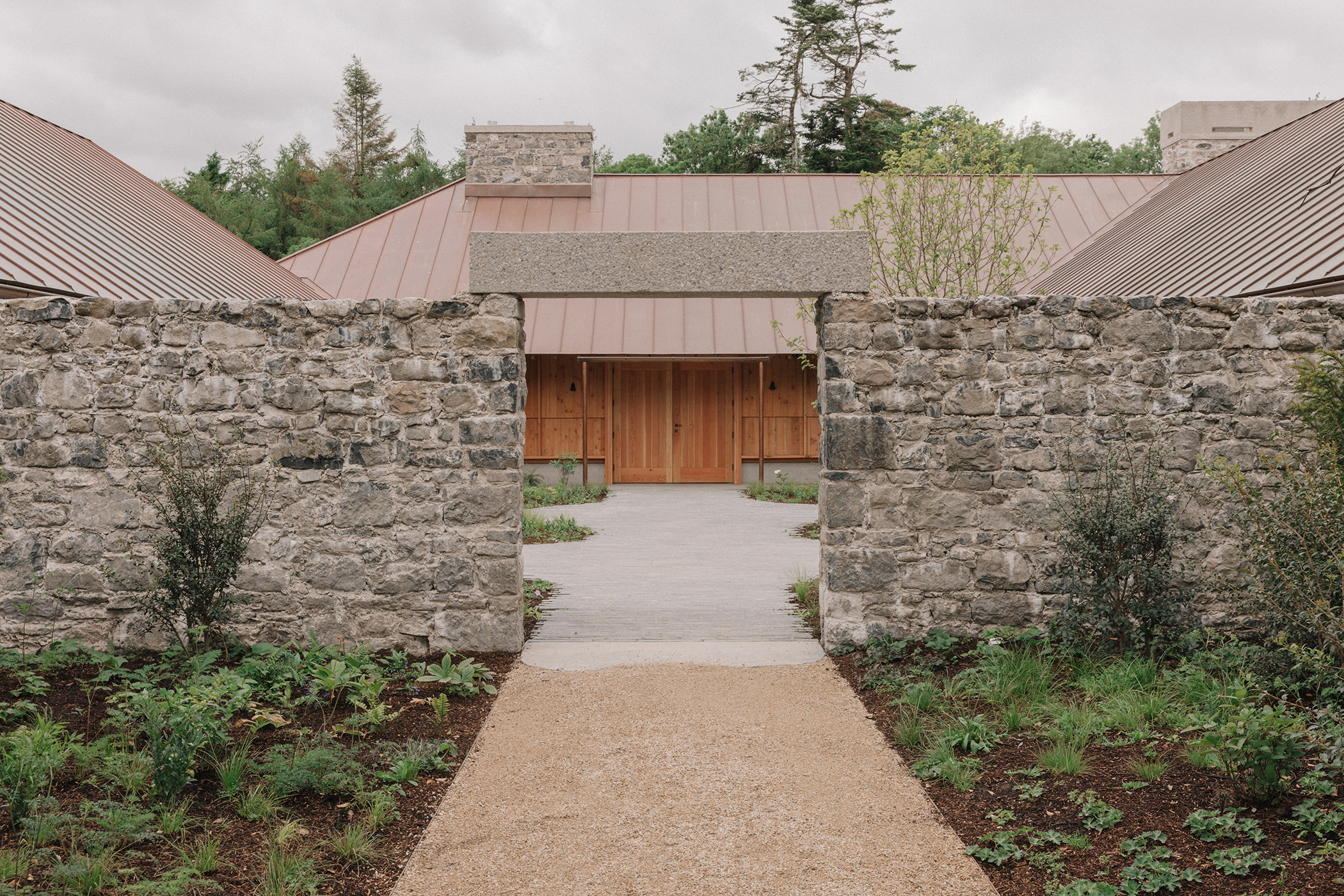
Omós, a 16-room guesthouse and restaurant run by ex-Noma chef Cúán Greene, lies on the outskirts of Abbeyleix, a heritage town fringed by some of the last ancient woodlands in the Irish Midlands and a peat bog formed in the last Ice Age. “It feels like we’re in the middle of nowhere here,” Greene, a Dublin native, said when I visited recently. “The middle of nowhere, but the heart of Ireland.” Named after the Gaelic word for homage, duty and respect, the project is a tribute to the “no-locked-doors” warmth of Greene’s home country, married with “a sense of detail” acquired during his travels everywhere from Madrid to the Faroe Islands, Kyoto to Quintana Roo. For the past six years he’s been establishing a network of suppliers – dillisk seaweed harvesters on the Aran Islands; a heritage-grain mill in Monaghan – all while travelling the length and breadth of Ireland to meet the craftspeople whose wares now fill his Ómós’s rooms: willow baskets by Tipperary’s master weaver Hanna Van Aelst; tables handcarved by Michael Murphy from a single oak in Wicklow; native-clay tableware by Cork-based ceramist Siobhán Joyce.
When I visited in the run-up to the July opening, the 4.2-acre site was a hive of activity. Inside the kitchen, ingredients were being stacked in dedicated larders – sea kale, Scots pine cones, sweet woodruff – while Irish artists’ works were being hung around the guesthouse. Outside, the last aromatic herbs were being planted in a sun-trap courtyard beside the restaurant – nasturtium and oysterleaf, rose geranium and green shiso – while a Douglas-fir sauna inspired by the country’s sweathouse tradition was heating up by the site’s millstream.
Greene’s fingerprint is on every inch of the property, down to the scent that greets you when you enter the guesthouse: a blend of parsley root, vetiver and spiked lavender, which encapsulates the “greenness and freshness” of the landscape. In many ways, it’s a project Greene has been working towards his entire life. He spent his formative years in Dublin, where his mother and father, the artist Róisín de Buitléar and the designer Terry Greene, instilled a deep respect for the Gaelic language and Irish culture more broadly. But it was only when the family impulsively moved to a dilapidated villa in Saint-André-de-Roquelongue with “no heat and no electricity” that a 12-year-old Cúán began to appreciate what makes his native country’s hospitality unique. “Even if there was no plaster on the walls and the fridge ran on an extension cord from the neighbours’ house, the focus was always just on taking care of people,” he told me.
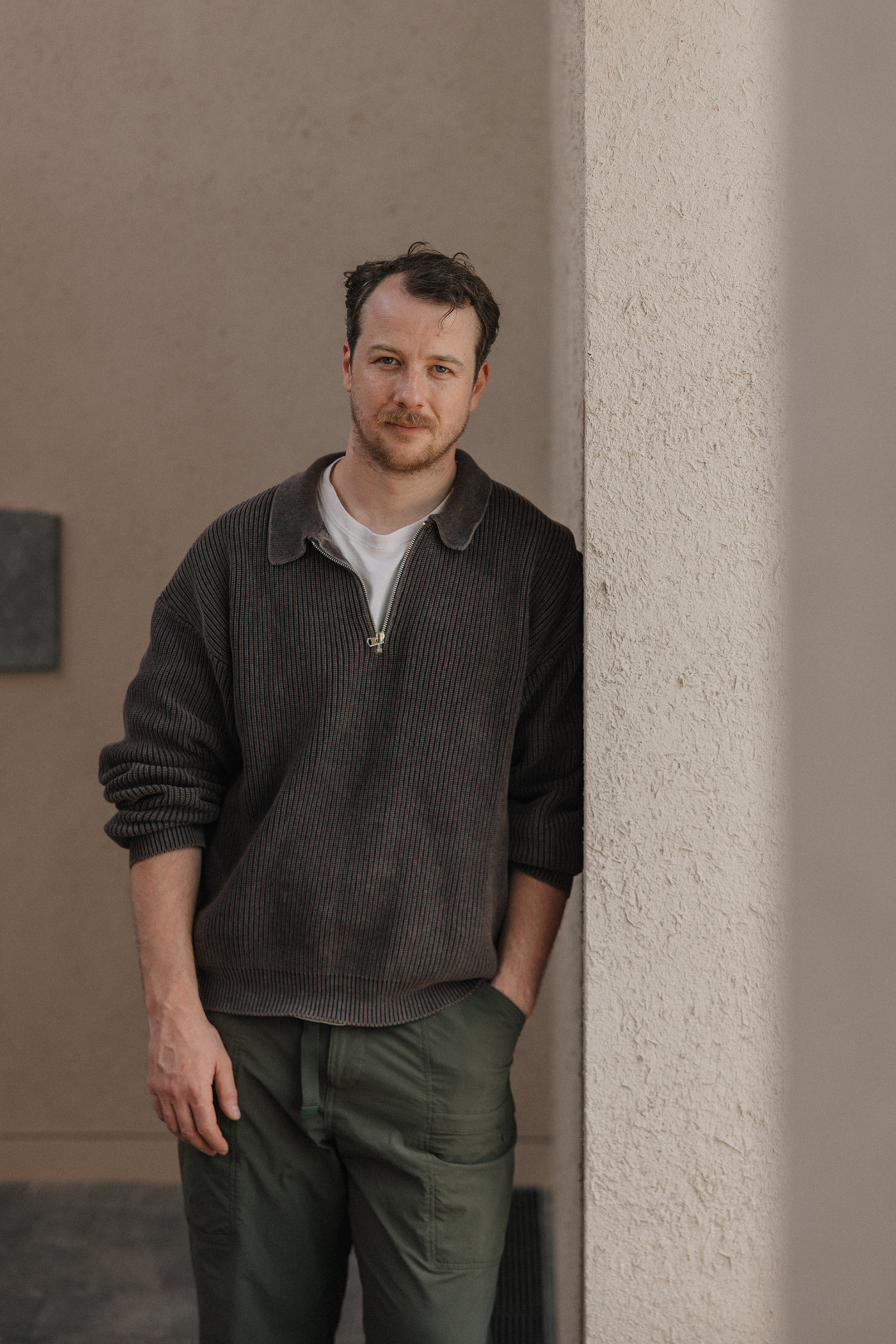
Cúán Greene
Increasingly, Greene found himself in the kitchen, helping to make Irish staples such as potato-and-greens-based colcannon for guests. By his teens, he’d applied to do a three-month stage at a Narbonne bistro over the summer holidays, where, in between learning the brigade system and manning the garde-manger section, he settled on becoming a chef, applying to culinary school back home at the Dublin Institute of Technology. Even before he’d graduated he launched a pop-up restaurant in a Docklands apartment with friends (“very originally called… Dublin Pop-Up,” he said), where he caught the attention of the national press with dishes plated on Irish moss and beach stones. Still, despite his classical training, he felt there was more for him to learn elsewhere. In 2016 he relocated to Copenhagen, landing a job at Geranium the same month that it received its third star, “the most overwhelming thing ever”.
But Noma was always his goal, and within a year he’d moved over as a chef de partie. For three months a team of “absolute ninjas” schooled him in the various uses of blackcurrant leaves and how to make garums with koji at the restaurant’s Christianshavn headquarters, before he headed to Tulum in Mexico to work on Noma’s 2017 pop-up along the Riviera Maya, bright-red crabs scuttling through the jungle-shaded dining room while he prepped mamey seeds for the 15-course menu.
Greene could have worked anywhere but felt ‘this sense of duty to come back to Ireland’
Greene could have worked anywhere but felt ‘this sense of duty to come back to Ireland’
If René Redzepi has recently been accused of fostering a toxic culture at Noma, Greene is radically committed to promoting staff wellbeing at Ómós. Nobody on the kitchen team will work more than four days a week. Having just one dinner service a night eases pressure on the chefs, who operate in spaces flooded with natural light and sit down for nourishing, communal meals during each shift. Greene has been working with a therapist to ensure he’s ready to handle the pressure of leading a fine-dining kitchen with grace, with further support from his wife Eva, a former employee of MAD, the Noma-seeded food-worker nonprofit.
Greene could have applied to any restaurant on the World’s 50 Best list after leaving Noma in 2019, but he felt “this sense of duty to come back to Ireland – to create somewhere here with a lasting sense of place.” He assumed it might be decades before he could bring that idea to fruition. Instead, just a few years after moving home, he catered a dinner for Limerick-born entrepreneur John Collison, the current owner of the Abbeyleix estate, including what used to be its agent’s home. Built in 1885 and known as Millbrook House, the building had fallen into disrepair, and Collison had the idea of turning it into a hospitality project. He just needed the right person to spearhead it. Greene signed on as co-owner and executive chef in 2022.
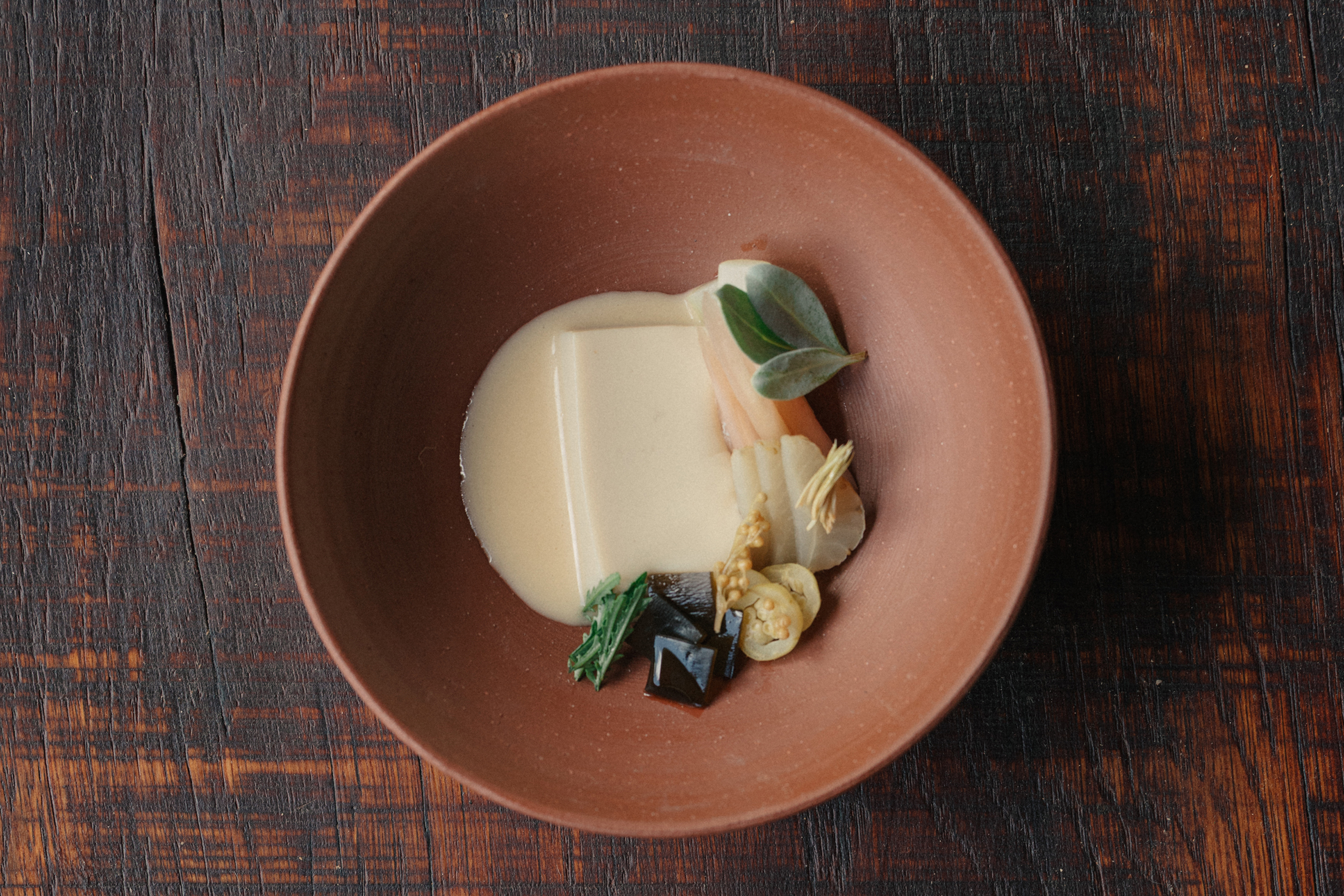
Much of what the garden produces will find its way into Ómós’s menus. “What we’re doing with the food is really a tribute to the Irish larder,” he told me. The Irish Mammy Salad, like a ploughman’s but with rolled ham, has been reinvented for the menu with lacto-fermented gooseberries; myoga, a type of Japanese ginger, grown in the wetlands of Cork; and Mangalitsa ham, the Wagyu of pork, from Northern Ireland. Then there will be Greene’s riff on a chicken kiev, “a dish that brings up a lot of memories for Irish people,” but made with snails from the same farm that supplies Noma, and, on the simpler end of the scale, a faultless plate of Irish potatoes, their floury texture played up with a blob of Jersey butter and a tangle of mint and lovage.
“I’ve worked in places where dropping a fork will get you a darting eye from a manager,” Greene said with a shrug. “But the environment we’re trying to nurture at Ómós is different.” He paused for a moment. “In the end, for all of the work that’s gone into Ómós, what we’re trying to do isn’t that complicated. It’s just about making people – staff, guests, everyone – feel looked after.”
Newsletters
Choose the newsletters you want to receive
View more
For information about how The Observer protects your data, read our Privacy Policy