
Pigalle isn’t about fashion or attitude, like the Marais,” says Jean-Baptiste Giraud, a regular at Le Mansart café. “It’s a spirit.” He drains the last of his lager (it’s 10.30am on a Tuesday), leaves a few coins on the table and disappears into the drizzle, guitar case in hand. He is heading north, in the direction of the neighbourhood’s handful of instrument shops and the Phono Museum, which traces 140 years of sound recording. The terrace of the 1950s café is already packed with locals sitting under its lipstick-red awning, as on most days.
There’s nothing showy about the food and drink here, but the swirling backlit ceilings, Formica tables and zinc counter keep people coming back, whether for a pre-dinner glass of pinot noir or a plate of post-gig saucisson and frites. These days Pigalle has a handful of noteworthy restaurants on its fringes (Caillebotte, which has one of the best lunchtime prix-fixe menus in town; the vintage Cuisine with its Asian spin on local staples; and Brion, which does simple updated French dishes), but food hasn’t always been why people came to Pigalle.
‘The idea was to create a place that never closes. A club, but also a regulars’ spot’
‘The idea was to create a place that never closes. A club, but also a regulars’ spot’
A cluster of streets at the foot of Montmartre, Pigalle has been the centre of Paris nightlife since the late 1800s. The sex shops and pocket-sized strip clubs – relics from the area’s red-light past – still glow after dark, bringing enough grit to unsettle the uninitiated. In the 1930s, nearly 200 brothels operated in the neighbourhood. Absinthe flowed in private clubs such as at Villa Frochot (now a cabaret-restaurant) with its dazzling Hokusai-style stained glass, and opium was smoked in pocket-sized bars.
“When I worked at Rock & Folk magazine on rue Chaptal in the 1980s, it wasn’t exactly an area you’d stroll through,” recalls Christophe Nick, a journalist and documentary-maker. “You’d keep your head down, almost skimming the walls. It was bleak; a playground for criminals.”
Next month marks the return of one of the neighbourhood’s era-defining fixtures: the Bus Palladium, a club made famous by its unruly nights (Dalí once reportedly arrived with a panther) and avant-garde curation of artists (such as prominent French rock bands Téléphone and Les Rita Mitsouko) is set to reopen in a new guise as part hotel, part club. “Le Bus” as local call it, first opened in 1965 under James Arch, a 23-year-old visionary, and lasted just six months – long enough to imprint itself on the Pigalle scene. Reopening in 1973, Le Bus continued being a place where beatniks, factory workers, bourgeoisie, models, writers and night owls all collided. At the time, there were no free radio stations and no real counterpoint to French variété or chanson. There was nowhere else to hear new music being made in real time.
The Bus was where record labels came to scout new talent. Serge Gainsbourg immortalised it in song, Mick Jagger celebrated his birthday here, the Beatles played here. “There were very few places like Le Bus Palladium in the 1970s and 1980s – it was where young people came to exist,” Nick recalls. “Rock music in Paris was just beginning. It wasn’t a place you went for a drink before a concert or hung out afterwards. But it held 200 people who came for the music – there was no other reason to come to Pigalle. It was prolific.” He pauses. “Catherine Ringer [half of Les Rita Mitsouko] got so carried away once that, mid-song, she reached under her skirt and threw her tampon into the crowd.”
By the 1990s, “the whole of Pigalle was pulsating,” he says. Hotels, bars and restaurants had begun to take hold as the area was cleaned up. Fast-forward to 2022: the Bus Palladium, which had become more of a run-of-the-mill club with DJ nights, had lost its lustre and closed its doors.
The Bus’s rebirth began over a game of backgammon between longtime owner Christian Casmèze, who inherited the building from his grandfather, and Nicolas Saltiel, founder of the hotel group Chapitre Six (who own a handful of eclectic Paris hotels, including the moody Monsieur George) and had worked at the Bus in his youth. “With the Bus’s music, there was something very physical, almost addictive about it. You didn’t hear anything like it anywhere else in Paris. People came back just for that,” remembers Casmèze, of his very first night at the club.
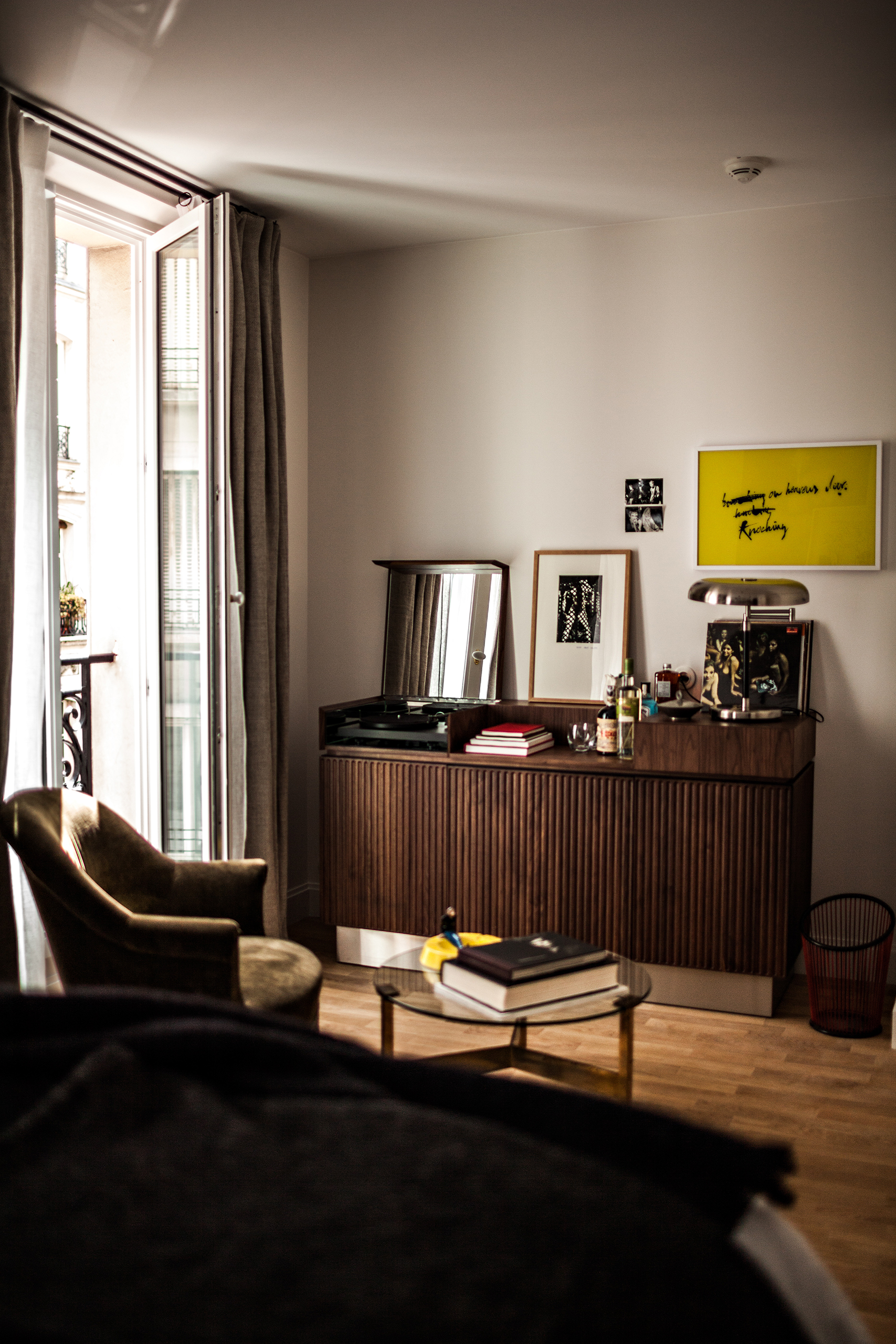
On track: the hotels lean into the area’s musical DNA, with in-room record players at Le Pigalle
And so the duo called upon Studio KO (behind projects including the Yves Saint Laurent museum in Marrakech) to redesign the venue as a hotel for a midnight crew. “The idea was to create a place that never closes. A club, but also a regulars’ spot, a community,” explains Saltiel. “A place where the light never goes out.”
The two-floor building is now four storeys high. On the top floor is the Rock Suite, which is the size of a Parisian family flat overlooking Pigalle’s neon signs. Inside the hotel bedrooms are cork walls, raw concrete ceilings, powder-pink carpets and Ojas speakers for playlists curated by Parisienne model and music producer Caroline de Maigret. There’s a small rooftop, a restaurant led by chef Valentin Raffali, the name behind Marseille-based natural wine bar and table-to-book Livingston.
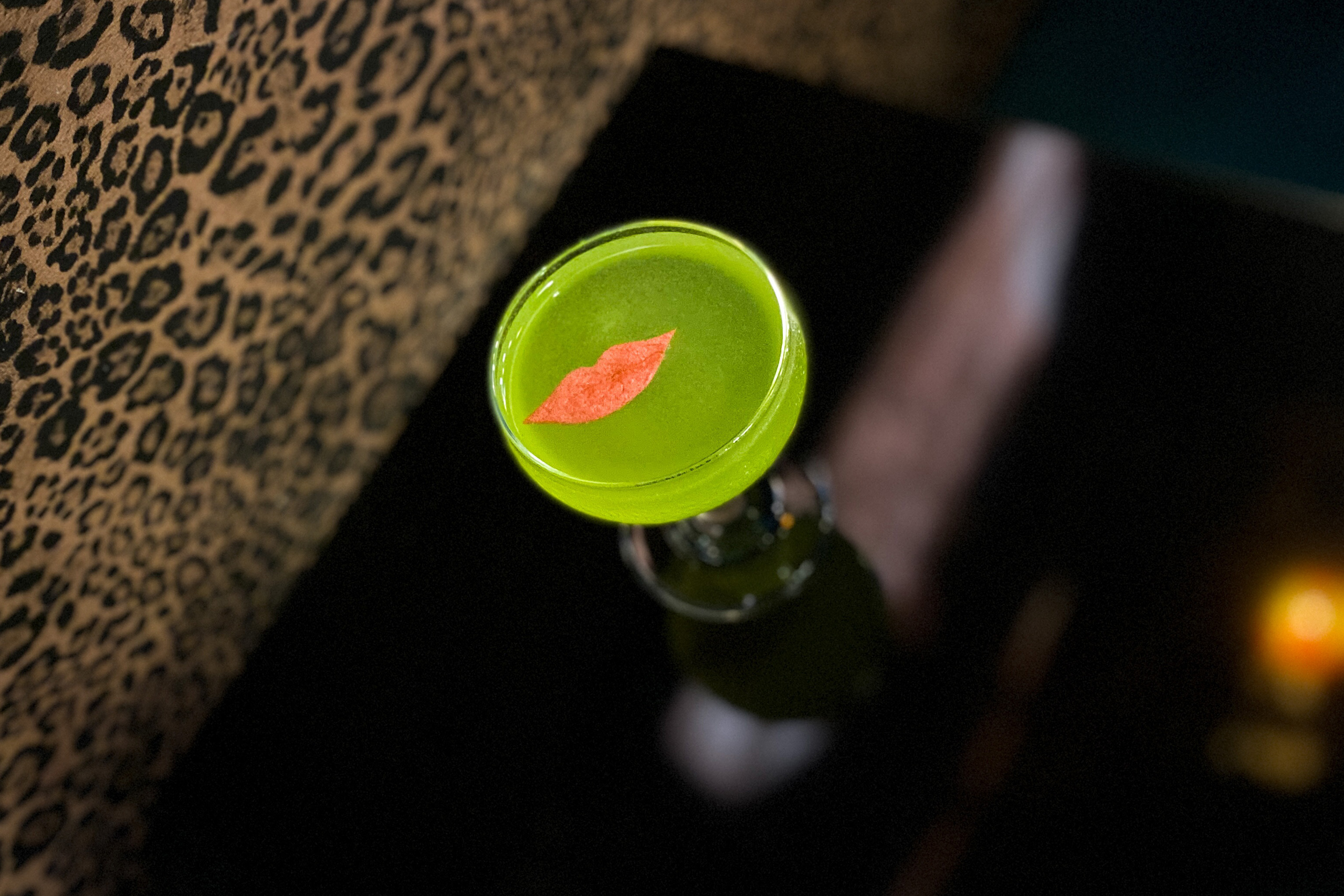
Going green: a Wicked Kiss cocktail at Sister Midnight
In the basement, the club, still the centrepiece of the new Bus, will host a roster of nights designed for a fantasy guestlist – think Tilda Swinton vibes. “We’ve kept certain elements – lights, a neon sign, a pinball machine – as emotional touchstones, not as relics, and the entrance is free,” says Saltiel. “Everything in this project revolves around the Bus. It’s the heart. What needed to evolve was the way to make it live today,” Saltiel explains. “The defining moment – the point when we knew we’d pulled it off – was when James Arch, the founder of the Bus, came by at the end of the works. He told us he felt the same energy as back in the day: the dancing, the music, the sense of sharing. That was essential.”
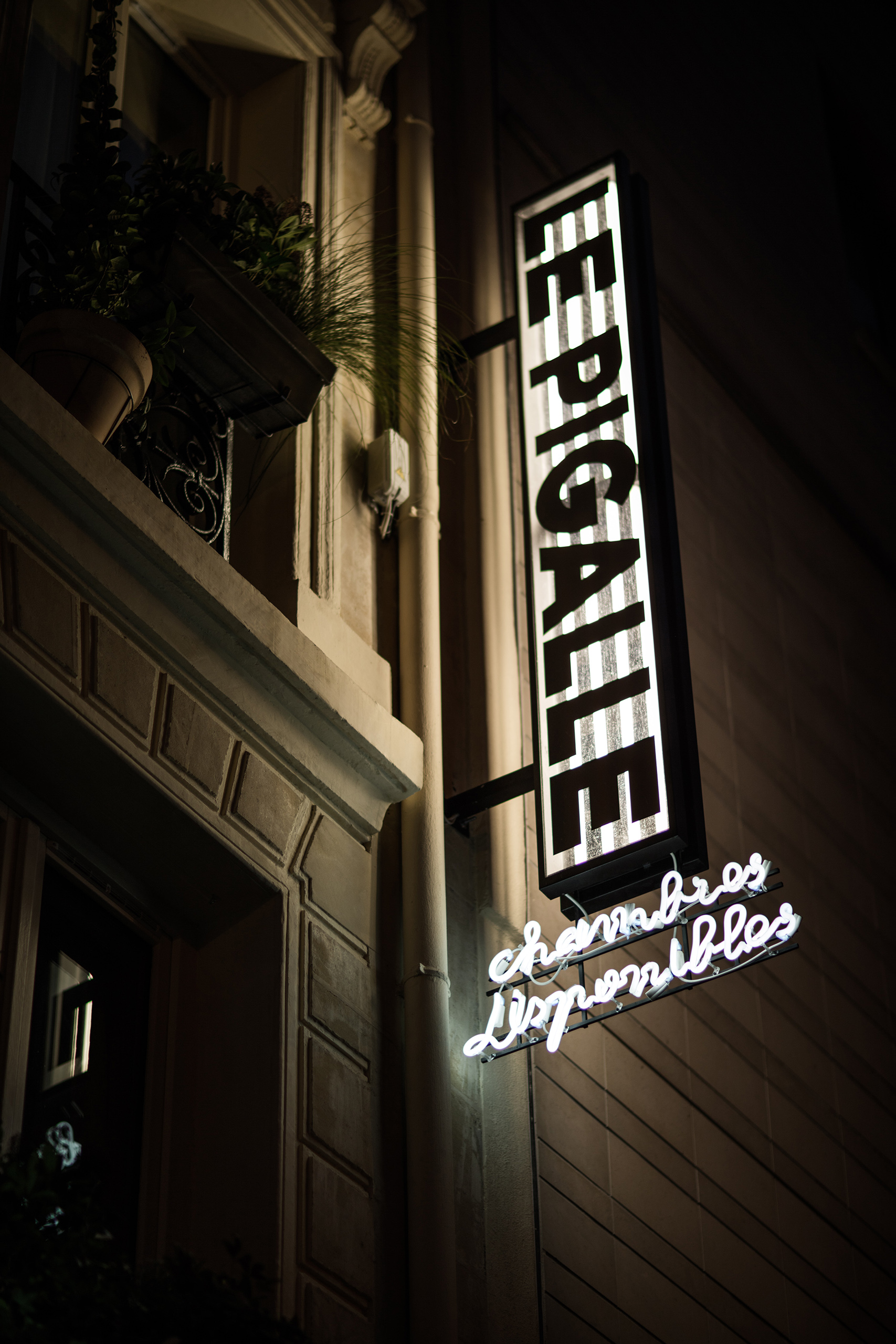
The Bus Palladium will not be the area’s first hotel, and most also lean into the neighbourhood’s musical DNA. For instance, Hôtel Amour glows pink at night, its conservatory bar a mix of locals and A-listers. Le Pigalle provides record players in its rooms while Hôtel Rochechouart has an incredible rooftop bar and a private club, Mikado, with DJ nights in the basement. As of last year there is also Massé, which feels lived in, as if a band has just stepped out, and the Élysée Montmartre with a hidden passage connecting directly to neighbouring music venue Le Trianon.
After dark, Pigalle still feels like the centre of Paris, at the Machine du Moulin, one of the city’s biggest nightclubs, tucked in the belly of the Moulin Rouge, or the Bar à Bulles, at the top with a terrace just behind the windmill. The cocktail bars to know include 1970s-inspired cabaret at Sister Midnight and the bistro-like Classique. If lip-shaped urinals and neon drinks are more your thing, the vintage Lipstick bar makes for a fun night. Crowds of young locals still congregate at Fourmi bar pre- and post-concert. For something a little wilder, book to go dancing at Madame Arthur cabaret with its cast of drag queens on the stage.
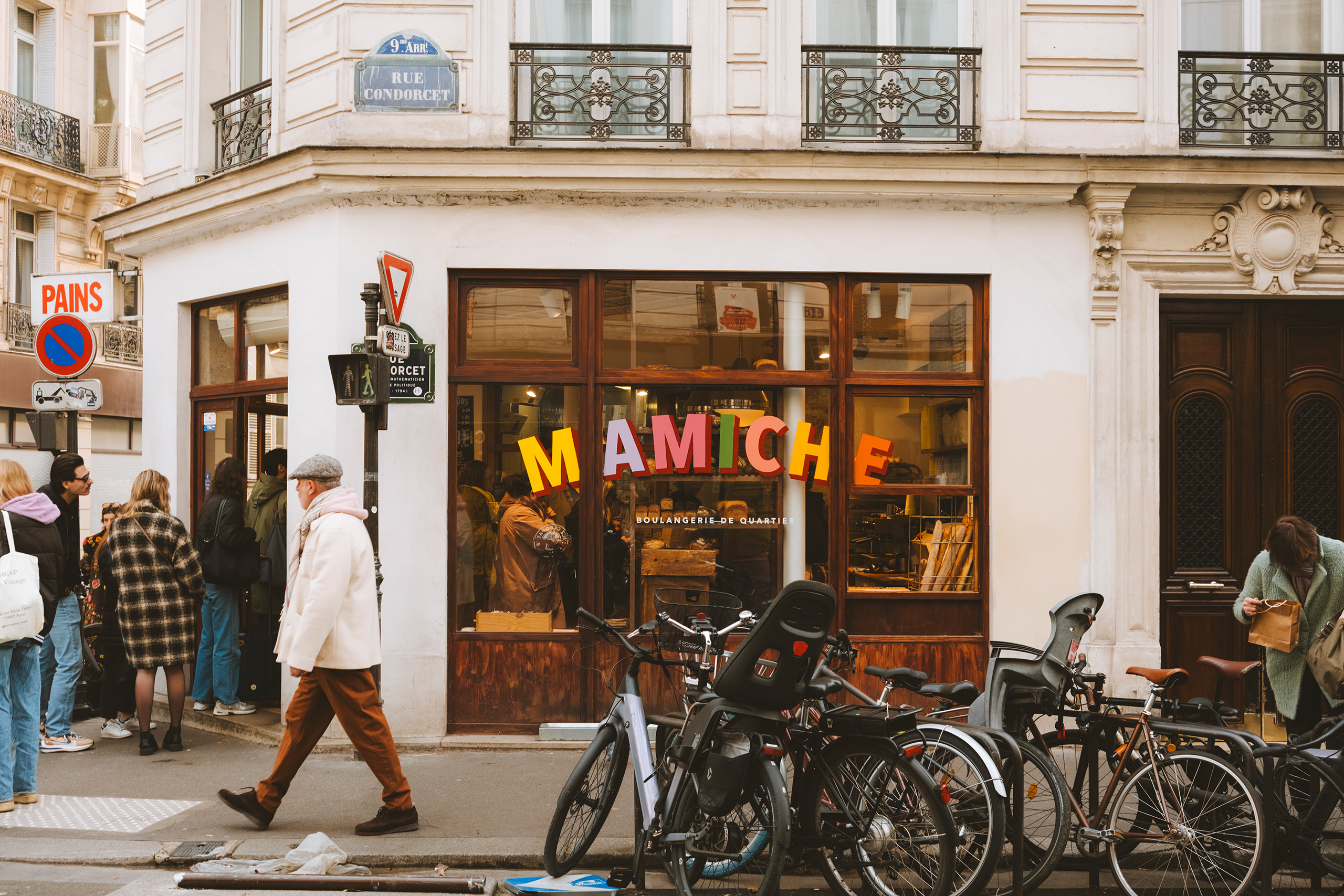
Pigalle may be cleaner today, its edges softened, but it has never been fully tamed. Change creeps in from rue des Martyrs, packed with bakeries (the Prince de Paris ham sandwich at Mamiche is excellent) and cheese shops (a lot of the city’s best restaurants get theirs from Marie Quatrehomme).
But despite this, Pigalle’s core, one steeped in letting loose rather than fashion or art or food, persists. And Le Bus is plugging into what the neighbourhood has always done best: turning up the volume, mixing worlds, and leaving room for a little chaos.
Photographs: Joann Pai, James Arch; Benoit Linero; Cobey Arner
Newsletters
Choose the newsletters you want to receive
View more
For information about how The Observer protects your data, read our Privacy Policy